
Google Maps Fuel Prices: Find Cheaper UK Petrol Now
Google Maps now shows petrol and diesel prices at UK filling stations. Learn how Fuel Finder data can help drivers compare costs as pump prices rise fast.

The Parking Ticket Pal Editorial Team
17 October 2026
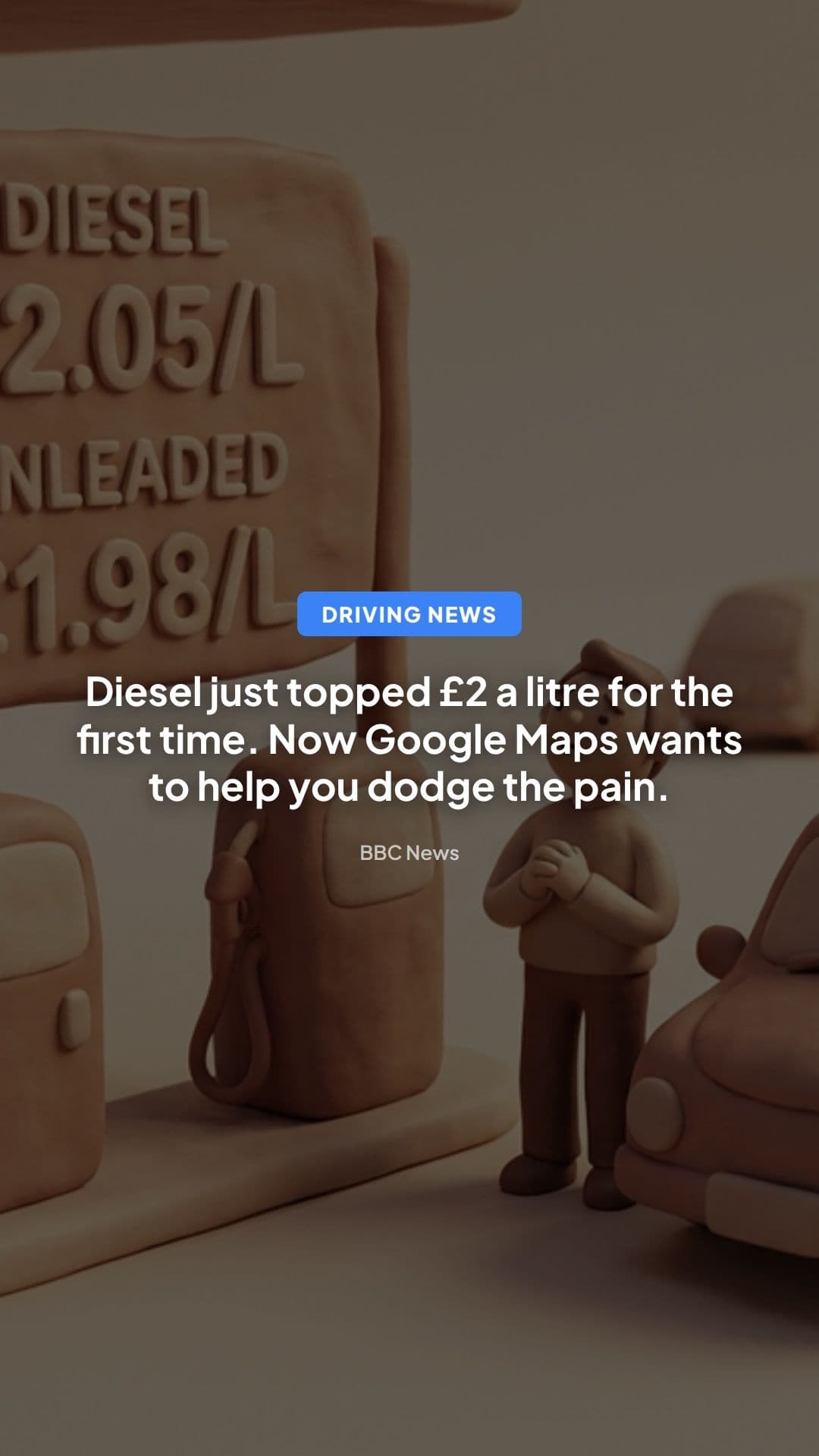
Google Maps now shows petrol prices. Here's how to use it without losing money (or points)
You're running low on fuel, the diesel gauge is flirting with the red, and you're staring at a forecourt sign that makes your eyes water. Until recently, finding out whether the station two miles down the road was cheaper meant a phone call, a dedicated app, or gambling on the drive. Now the answer may be sitting in the app you already use for directions.
BBC News reports that Google Maps has begun displaying UK petrol-station prices using data from the government's Fuel Finder scheme, just as diesel prices approached £2 per litre. It sounds like a small feature update. In practice it could change how millions of us choose where to fill up, and it raises some legal and practical questions that deserve a proper look.
What has actually happened
The headline facts are simple. Google Maps, the navigation tool most British drivers already have on their phones, is now surfacing fuel prices for UK petrol stations. The prices come from the government's Fuel Finder scheme rather than from Google collecting them itself.
That second point matters. Fuel Finder is a government-backed system designed to make forecourt prices transparent and comparable. The idea is that retailers report their prices into a central data feed, and that open data can then be used by apps, comparison sites and mapping services. Google Maps is simply the highest-profile name to plug into it so far.
The timing is hard to ignore. With diesel nudging towards £2 a litre, drivers are more price-sensitive than they have been in years. If you want a wider look at what that means for household budgets, our earlier piece on diesel prices hitting £2 a litre covers the pressure points. Here, the focus is on what happens when price data moves from specialist apps into the mainstream.
Why it matters more than it looks
Transparency changes behaviour
Fuel retailing has long relied on a certain amount of friction. If comparing prices means opening a separate app or driving around, plenty of people simply fill up at the nearest or most convenient station. Put prices directly into the map you're already using and that friction nearly disappears.
In principle, that should increase competition between nearby forecourts. Stations that sit well above their neighbours become more visible, and drivers have an easier route to the cheaper option. Whether that translates into lower prices across the board is a separate question. We looked at the wider debate in whether Fuel Finder will actually bring pump prices down, and it's worth remembering that transparency is a tool, not a guarantee.
The data is only as good as what goes in
Here is the catch. A map that shows a price looks authoritative, but it can only reflect what retailers have reported. If a station is slow to update, or doesn't report properly, the number on your screen could be out of date. Our coverage of hundreds of petrol stations breaking Fuel Finder rules is a useful reminder that compliance has not been perfect.
So treat the price in the app as a strong guide, not a promise.
The cheapest price isn't always the cheapest trip
With diesel near £2, a few pence per litre feels meaningful. But a detour burns fuel too. As a simple illustration, saving 5p a litre on a 50-litre fill is £2.50. If chasing that saving adds several miles to your journey, you may have spent more in fuel than you saved. The same logic applies to your time.
The practical lesson is to compare stations along or near your existing route, rather than crossing town for a marginal difference. Our guide to cutting fuel costs by driving at 60mph is a reminder that how you drive can matter as much as where you fill up.
The legal angle
A price feature on a map might not sound like a legal matter, but there are several areas where the law touches it.
Using your phone while driving
The most important point is also the one most easily overlooked. Since March 2022, it has been illegal in Great Britain to hold and use a phone or similar device for any purpose while driving. That covers far more than calls and texts. Scrolling a map, tapping a station listing or comparing prices while holding the handset can fall within the offence.
The penalty for holding and using a phone at the wheel is a fixed penalty of £200 and six penalty points, and for newer drivers that can be enough to put a licence at risk. Official guidance on the offence and the narrow exemptions is available through GOV.UK and the Highway Code. We've also set out the detail in our guides to the 2026 mobile phone and hands-free rules and the £200 Highway Code mobile phone rules.
Using a phone as a sat nav is allowed in principle if it is secured in a cradle and you are not holding it. But being allowed to have a mapping app running does not mean you can interact with it however you like. Even with a device mounted, a driver who is distracted or not in proper control of the vehicle can still be prosecuted under separate offences, which can carry penalty points and, depending on the circumstances, a court-imposed fine. Whether a particular situation amounts to an offence is ultimately a matter for the police and courts.
The sensible habit is to do your fuel comparison before you set off, or when safely parked. If you are driving with a passenger, they are the obvious person to handle the phone.
Is the app price legally binding?
Not in the way many people might assume. The price you actually pay is the price displayed at the pump or the till when you buy. A figure on a third-party map is information supplied by someone else, drawn from data a retailer has reported. If it turns out to be wrong, that is frustrating, but it isn't a promise that the forecourt must honour.
Forecourts do have obligations about how they present prices. Rules on price marking and the broader consumer protection framework, including provisions against misleading pricing under the Digital Markets, Competition and Consumers Act 2024, are there to protect shoppers. If you believe a retailer has displayed misleading prices, Trading Standards (via the Citizens Advice consumer service) is the usual route for raising it. This is general information rather than advice on any particular dispute.
Drive-offs and the forecourt environment
Rising prices bring knock-on problems, and forecourt drive-offs are one of them. Filling up and leaving without paying can amount to the criminal offence of making off without payment. If you ever realise you've left without paying by mistake, contact the station promptly and pay. Our report on drive-off petrol thefts rising as prices jump explains why forecourts are increasingly watchful.
What drivers should know in practice
Here are the habits worth building if you plan to use the new feature.
1. Check before you drive, not while driving. Pick your station at home, at work or when parked. This keeps you on the right side of the phone law and makes for a calmer journey.
2. Cross-check the number. Treat the displayed price as a guide. If you pull in and the pump price is noticeably higher, you can usually decide whether to fill up or move on. Prices you see at the pump when you buy are what count.
3. Count the detour. Before leaving your route, ask whether the saving justifies the extra miles. A small saving on a small tank rarely stacks up.
4. Watch what's between you and the cheap station. This is where motoring law quietly bites. A cheaper forecourt might sit inside or beyond a clean air zone, a bus-lane corridor, a red route or a restricted street. A £2 saving on fuel can be wiped out by a penalty charge notice. Check the zone and signage if you are heading somewhere unfamiliar. Our overview of London bus lane fines shows how easily the wrong turn gets costly.
5. Be careful where you park and queue at the forecourt. Some forecourts are covered by private parking enforcement, with ANPR cameras and rules on how long you can stay. Lingering to compare prices on your phone, or queuing in the wrong place, can in some cases trigger a charge. If that happens, our guides to Euro Car Parks petrol queue fines and the CMA's probe into parking fines in petrol station queues explain how the system works and what to look for.
6. Don't forget the loyalty and supermarket angle. Supermarket forecourts sometimes offer discounts through loyalty schemes or spend thresholds. A headline price on a map may not reflect those offers, so the real price for you could be different.
Looking ahead
This is a significant step, but it's best seen as the start of a journey rather than the end.
More apps will follow. Once open fuel price data is available, other navigation and comparison tools can build on it. Competition between those tools could push features such as price alerts, cost-per-trip calculators and smarter route suggestions.
Data quality will be the story to watch. If the information feeding these maps is accurate and timely, drivers get a genuinely powerful tool. If reporting is patchy, trust erodes quickly. Enforcement of the Fuel Finder rules, and how robustly it's applied, will shape whether the scheme earns its reputation.
Pressure on pricing behaviour may grow. Greater visibility makes it easier for drivers, journalists and regulators to spot where prices look out of step with neighbouring stations. That may sit alongside wider scrutiny of fuel markets, such as the issues raised in the CMA's look at petrol prices. It would be premature to promise that prices will fall, but sunlight on pricing is rarely bad news for consumers.
Driver behaviour will need to catch up. The biggest risk may be human. A feature that invites you to compare and tap while on the move is, for some, an invitation to break the phone law. Expect police and road-safety groups to keep reminding drivers that a handy feature doesn't change the rules.
The bottom line
Google Maps showing fuel prices is a genuine convenience at a moment when drivers need all the help they can get. Used well, it can save you a little money on every tank. Used carelessly, it can cost you far more through a £200 fine and six points, a penalty charge notice on a detour, or a forecourt parking charge.
Plan before you drive, treat the price as a guide rather than a guarantee, and make sure the cheaper route doesn't take you through a restricted zone. For official rules on phone use and driving offences, GOV.UK and the Highway Code remain the authoritative sources, and if you face a penalty you want to challenge, independent advice is worth seeking.
This article is general information about UK motoring and parking rules and is not legal advice.
Written by
The Parking Ticket Pal Editorial Team
Source-checked parking guidance
Ready to Challenge Your Ticket?
Let our AI analyse your PCN and generate a professional appeal letter in minutes.
Start Free Appeal