
Highway Code Mobile Phone Rules: £200 Fine Explained
The Highway Code’s tougher mobile phone rules ban filming, music selection and gaming at the wheel—even at red lights. Understand the £200 fine and six points.

The Parking Ticket Pal Editorial Team
13 October 2026
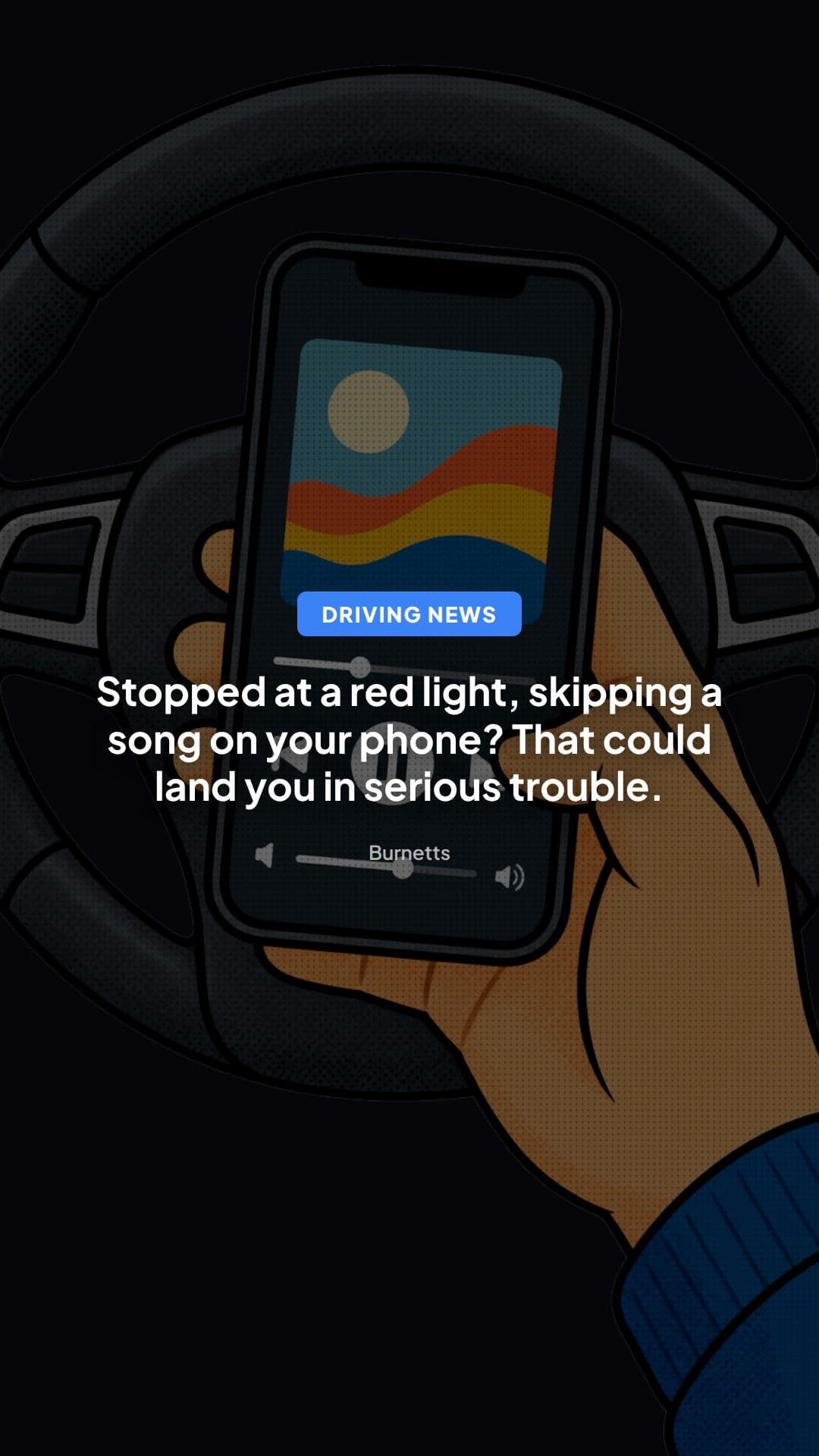
Phone at the Lights? Why "Just Changing the Song" Can Cost You Six Points
You are sitting at a red light, the queue is going nowhere, and your playlist has just served up a track you hate. Your thumb drifts towards the screen. It is one second, you are not moving, and surely nobody could object.
The law says otherwise. Following coverage of Highway Code and mobile-phone changes, including an article from law firm Burnetts, many drivers are discovering that the rules on phone use behind the wheel are much wider than the old "no calls, no texts" understanding. Taking a photograph, recording video, choosing music or playing a game on a handheld device can all land you with a £200 fine and six penalty points, even when the car is stationary at a red light.
Let's look at what changed, why the old rules had a gap, and what the practical consequences are.
What happened: the net got wider
According to the Burnetts summary, the strengthened rules now cover activities such as:
- Taking photographs
- Recording video
- Selecting music
- Playing games
Crucially, these apply while driving, including when you are stopped at a red light.
For years, many motorists assumed the offence was about talking or texting. Anything else, such as scrolling a playlist or filming something, felt like a grey area. That assumption had a legal basis, and it is worth understanding why it no longer works.
Why it matters: the loophole that had to close
The old offence was framed around using a phone to make or receive "interactive communication". In the 2019 case of DPP v Barreto, a driver filmed the aftermath of a collision on his phone. The High Court found that because filming was not "interactive communication", it fell outside the then-wording of the regulation, and his acquittal stood.
That decision caused understandable alarm. A driver could, on one reading, record video or fiddle with an app without committing the specific offence, even though doing so was plainly distracting.
The government responded with an amendment to the Road Vehicles (Construction and Use) Regulations 1986, which came into force in Great Britain on 25 March 2022. The prohibition now covers holding and using a hand-held device for any function, not just calls and messages. That is why photos, video, music selection and gaming are now squarely in scope.
The Highway Code was updated alongside this to explain the rules in plain language. It is a good reminder that the Code itself is guidance. Many of its "must" rules reflect underlying law, and breaches of the Code can be cited as evidence in proceedings under the Road Traffic Act 1988, though they do not in themselves create criminal liability.
The legal angle: what the law actually says
The offence
Regulation 110 of the Construction and Use Regulations makes it an offence to drive while using a hand-held mobile phone or similar device, or to supervise a learner driver who does so. "Using" is now interpreted broadly, to include holding the device and using it for any of its functions.
The penalties
- Fixed penalty: £200 and six points on your licence
- If the case goes to court: a maximum fine of £1,000 (£2,500 for drivers of buses or goods vehicles), plus the possibility of disqualification
- Licence endorsement code: CU80, which will show on your driving record
The new driver trap
Six points is also the threshold that matters for recently qualified drivers. Under the Road Traffic (New Drivers) Act 1995, if you reach six or more points within two years of passing your first test, your licence is automatically revoked. You would have to reapply for a provisional licence and retake both theory and practical tests. For a new driver, a single phone offence can therefore mean far more than a fine.
For everyone else, six points is half the way to a 12-point totting-up disqualification, and points generally stay on your record for years. If you already have points, a phone offence has a much bigger practical effect.
"But I was stationary"
This is the point that catches most people out. In law, you are generally still "driving" when stopped at traffic lights, queuing in traffic, or when your engine has cut out through a stop-start system. The offence is not about whether the wheels are turning.
The exception is when you are genuinely parked and the engine is off, in a safe place. That is why the standard advice is to pull over somewhere appropriate rather than rely on a red light. (For more on this, see our earlier piece on why drivers can be fined at lights.)
Exemptions that do exist
The law recognises a few limited situations:
- Calling 999 or 112 in a genuine emergency where it is unsafe or impractical to stop
- Contactless payment at a drive-through, or at a barrier or car park entrance, while the vehicle is stationary, where you are using the device to pay for goods or services
Even where an exemption applies, you should still not be distracted from controlling the vehicle. These are narrow carve-outs, not general permission.
Hands-free is not a free pass
The rule targets hand-held use, but that does not mean hands-free is risk-free in legal terms.
Police can still prosecute under other offences if they believe your phone use meant you were not in proper control of the vehicle. These include driving without due care and attention, and failing to have proper control under regulation 104 of the Construction and Use Regulations. Those offences carry their own penalties, including between three and nine points for careless driving, and potentially more serious charges if a collision occurs.
The Highway Code is also explicit that a device used as a sat nav must be secured in a cradle and positioned so that it does not block your view of the road, and that you should not hold it while driving. Setting the destination before you move is simple, but it matters.
What drivers should know: practical advice
Rather than treat this as a list of orders, think of it as a way to reduce your risk. Here is what is worth considering.
1. Set everything before you move. Choose your playlist, start your podcast, enter your destination and start any recording apps before turning the key. A pre-drive routine takes less than a minute.
2. Use voice control or built-in systems carefully. Voice commands and car infotainment screens are not covered by the hand-held offence in the same way. But they are still capable of distracting you, and an officer can still consider whether you were in proper control. Keep interactions brief and do not take your eyes off the road for long.
3. If it has to be done, park properly. A red light, a queue or a layby with the engine running does not generally count. Look for a safe place where you can legally stop and switch off the engine.
4. Mount your phone if you use it for navigation. A cradle that holds the device within your view without obstructing the road is the sensible approach. Do not hold it, even briefly, to tap or swipe.
5. Do not film incidents while driving. If you see a collision or something you want to record, the Barreto loophole has gone. Park safely first or, if you have one, rely on a dash cam, which is generally treated differently because it is not hand-held.
6. Think about passengers. Passengers using their own phones are fine. The offence concerns the person driving, or supervising a learner. If you want to share the music choice, handing the job to a passenger is the safest route.
7. Check your insurance position. A conviction for a phone offence must generally be declared to insurers, and many people find premiums rise. Check your policy wording and speak to your insurer or broker if you are unsure.
If you are stopped or issued a notice
This article is general information, not advice on any individual case. But a few points are useful to know:
- You have the right to understand what you are accused of and the evidence behind it.
- A fixed penalty is an offer, not an automatic conviction. You can choose to contest the matter in court, though doing so brings the risk of higher penalties if you lose.
- If the stakes are significant, for example because you are a new driver, already have points, or rely on your licence for work, it is sensible to speak to a motoring solicitor before deciding what to do.
- Official guidance on penalty points and the law is available at GOV.UK, and the Highway Code is freely available there too.
Our guide on smartwatches and the law is also worth a read, as wearable devices raise similar questions about what counts as "hand-held".
Looking ahead: where this is going
The direction of travel is clear. Lawmakers, the police and road-safety campaigners have increasingly treated distraction as a core road-safety issue, and the 2022 change was a deliberate response to a court decision that had left a gap.
A few trends are worth watching:
- Better detection. Police forces and some roads authorities have trialled camera technology designed to spot phone use. If this expands, the old idea that nobody will notice at the lights becomes less reliable.
- Interaction with new vehicle tech. As cars carry bigger screens and more features, the line between a permitted built-in system and a distracting one is likely to attract more debate.
- Tougher enforcement culture. Penalties of £200 and six points already put phone use among the more serious everyday motoring offences. Any future change in either direction would likely be consulted on and publicised, so keep an eye on official channels.
For further background, see our overview of UK mobile phone driving laws and hands-free rules.
The bottom line
The headline message from the Burnetts article is simple. Photos, video, music selection and games count, and a red light does not protect you. The penalty of £200 and six points is enough to cost a new driver their licence and to push an experienced driver much closer to a ban.
The fix is cheap: sort your phone out before you set off, mount it if you need it, and if something genuinely cannot wait, find somewhere safe and legal to stop. The song can wait for the next straight.
This article is for general information only and does not constitute legal advice. If you are facing a prosecution or fixed penalty, consider seeking advice from a qualified motoring solicitor and check current guidance on GOV.UK.
Written by
The Parking Ticket Pal Editorial Team
Source-checked parking guidance
Ready to Challenge Your Ticket?
Let our AI analyse your PCN and generate a professional appeal letter in minutes.
Start Free Appeal