Mobile Phone Law: Why Drivers Can Be Fined at Lights
UK drivers can be fined for using a mobile phone while stationary at traffic lights or in queues. Learn the rules, penalties and key exceptions for motorists.

Amara Okafor
18 August 2026
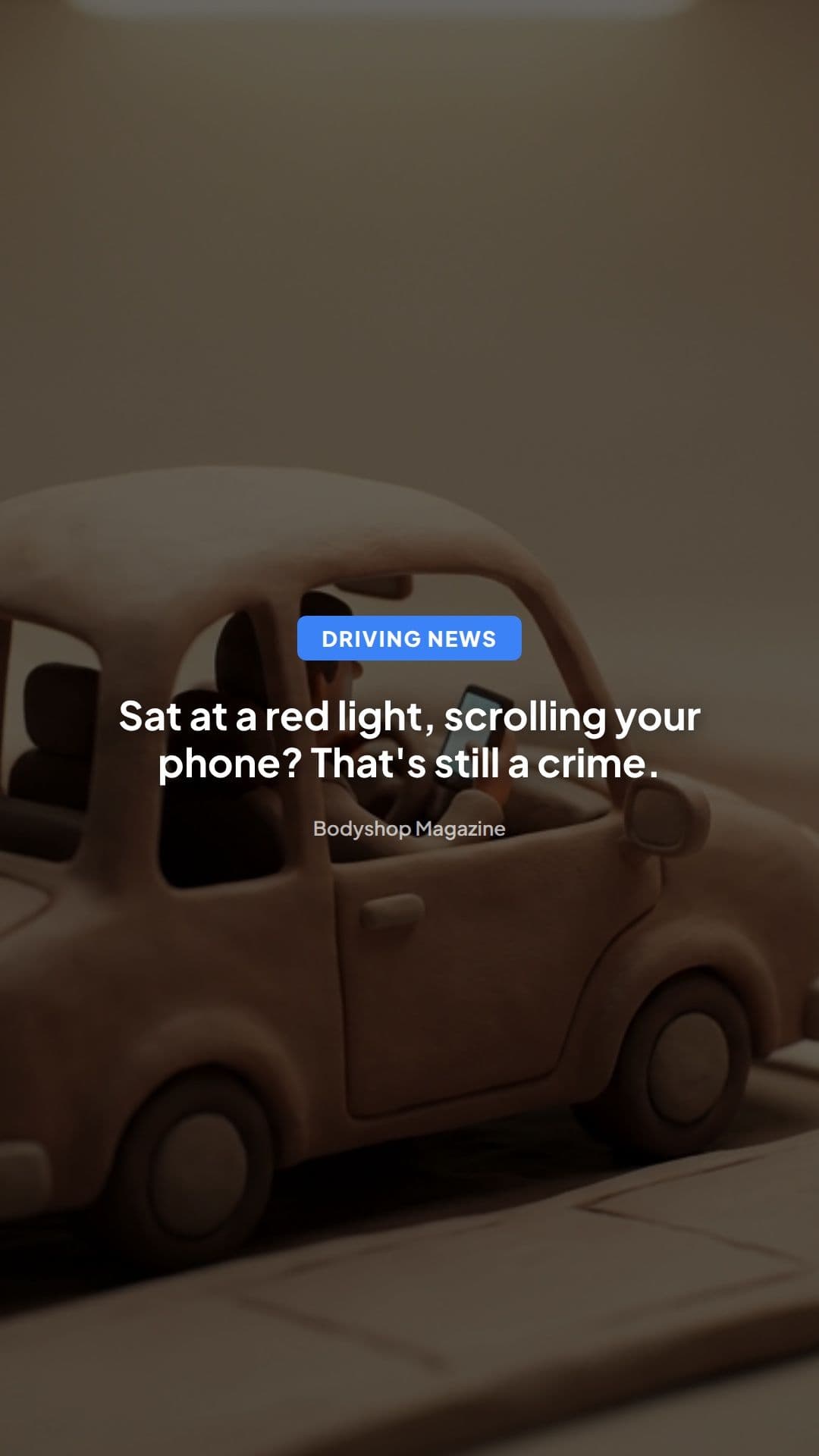
Stopped at the Lights? Your Phone Can Still Land You a Fine
Picture this: you're third in the queue at a red light, engine idling, and your phone buzzes on the passenger seat. You glance down, thumb the screen to see who's texted, and look back up just as the lights change. No harm done, right? You weren't driving. The car wasn't even moving.
Wrong. As a fresh warning highlighted in Bodyshop Magazine makes clear, that split-second check could cost you six penalty points and a £200 fine, exactly the same penalty as if you'd been doing it at 70mph on the motorway. The idea that being stationary somehow puts you outside the law is one of the most persistent and expensive misunderstandings on Britain's roads.
What Happened
The warning centres on a simple but widely misunderstood point of law: being "in charge of a vehicle" does not require the vehicle to be moving. Drivers can commit a mobile phone offence while sitting in traffic, waiting at a red light, or stuck in a queue for a roundabout, provided the engine is running and they are not legitimately parked.
The list of prohibited actions goes well beyond making a call. According to the guidance highlighted in the report, drivers can be prosecuted for scrolling through social media, taking photographs, checking notifications, sending messages, and even browsing the internet, all while the vehicle is stationary in traffic. The key legal test isn't whether the car is moving. It's whether the engine is switched on and the driver is using a handheld device for any interactive function while notionally still "driving" in the eyes of the law.
This distinction catches out a huge number of otherwise careful drivers. Many assume that because they're not actually steering or accelerating, a quick glance at a phone during a lull in traffic is harmless. The law disagrees, and enforcement increasingly reflects that.
Why It Matters
This isn't a niche technicality. Traffic queues, red lights, level crossings, and stop-start motorway congestion are exactly the moments when drivers are most tempted to pick up a phone, precisely because it feels safe to do so. That's also when many phone-related offences are actually detected, since a stationary vehicle gives police officers and increasingly automated camera systems a clear, unobstructed view into the cabin.
The consequences are far from trivial. A mobile phone offence carries an automatic six penalty points and a fixed penalty of £200 for most drivers, rising significantly if the case goes to court. For newly qualified drivers within two years of passing their test, six points is enough to trigger licence revocation under the New Drivers Act, meaning they'd have to sit both the theory and practical tests again from scratch. For everyone else, accumulating 12 points within three years risks a driving ban regardless of how the points were earned.
There's also a knock-on effect that many drivers underestimate: insurance. A mobile phone conviction sits on your licence for four years and must be declared to insurers, who typically respond with significantly higher premiums. The financial sting of a £200 fine is often dwarfed by years of increased insurance costs that follow.
Enforcement has also become smarter. Many police forces now deploy AI-enabled cameras specifically designed to detect handheld phone use through windscreens, including when vehicles are stationary in queues. These systems don't care whether you're doing 60mph or sitting motionless at a red light, they're looking for the same tell-tale posture: head down, phone in hand.
The Legal Angle
The core offence sits under Regulation 110 of the Road Vehicles (Construction and Use) Regulations 1986, as amended, which was significantly tightened in 2022 to close a loophole that had allowed some phone-related actions, such as photography, to escape prosecution. The updated law makes it an offence to use a handheld device for almost any interactive function while driving, not just calls and texts. Photography, filming, scrolling through playlists, checking sports scores, and browsing apps are all explicitly covered.
Crucially, the legislation defines "driving" broadly enough to include being in control of a vehicle with the engine running, even if it isn't moving. The only genuine exemption is when a vehicle is safely parked with the engine switched off, or in a small number of specific circumstances, such as calling 999 in a genuine emergency where it is unsafe to stop.
This means idling at traffic lights, sitting in a supermarket car park queue waiting to move, or crawling through roadworks all count as "driving" for the purposes of this law. Being stuck in traffic doesn't create a legal grey area. It's still an offence.
It's worth noting this sits alongside separate, related legislation on distraction generally. Even where a specific handheld device offence doesn't apply, such as using a phone in a dashboard cradle, a driver can still be prosecuted for careless driving under the Road Traffic Act 1988 if their phone use causes them to fail to have proper control of the vehicle. For a broader breakdown of how hands-free and handheld rules differ, and the specific exemptions that do exist, our guide to the UK's mobile phone driving laws sets out the fuller legal picture. Enforcement volumes have also been rising sharply in recent years, a trend we cover in more detail when looking at illegal mobile phone use hitting an eight-year high.
This isn't strictly limited to phones either. Devices like smartwatches can, in certain circumstances, raise similar legal questions if used interactively while driving, something worth understanding if you rely on wearable tech behind the wheel.
What Drivers Should Know
The practical upshot is straightforward, even if it runs against instinct for many drivers.
Treat "engine on" as "phone off". The safest working assumption is that if your engine is running and you're in the driver's seat, your phone should not be in your hand for any reason, regardless of whether you're moving.
Stationary doesn't mean safe from prosecution. A red light, a level crossing, a queue for a car park barrier, or bumper-to-bumper traffic on a motorway are all situations where the law still applies in full.
Mounted devices are different, but not risk-free. Using a phone in a proper cradle for satnav purposes, without touching it, generally falls outside this specific offence. However, if fiddling with a mounted phone causes you to drive carelessly, a careless driving charge can still follow.
Genuinely switch off if you need to use your phone. If you absolutely need to check a message or make a call, the only fully safe option is to find a legitimate place to stop, switch off the engine, and deal with it there. A layby, a car park, or simply waiting until you've reached your destination are the only routes that keep you clearly on the right side of the law.
Passengers can hand things over, but you still can't act on them. Having a passenger hold your phone and read out a message is fine. Taking the phone from them to type a reply while stationary in traffic is not.
Don't assume enforcement is rare. With more sophisticated camera technology being rolled out and officers specifically briefed to watch for phone use in queuing traffic, the chances of being caught in these "low risk" moments are higher than many drivers assume.
Looking Ahead
As roads become more congested and enforcement technology becomes more sophisticated, the gap between what drivers assume is safe and what the law actually permits looks set to narrow further. Cameras that can detect handheld phone use through a windscreen don't distinguish between a driver doing 70mph and one stuck behind three cars at a red light, and that's precisely the point.
For most drivers, the sensible response isn't complicated. Build the habit of putting the phone somewhere out of reach before you set off, glovebox, bag, or a dashboard mount used purely for navigation. If a message genuinely can't wait, wait until you can switch off and stop properly rather than gambling on a few seconds at a red light. The law has already closed the loophole. It's now up to drivers to close the gap in their own habits.
Written by
Amara Okafor
Council Liaison Officer
Ready to Challenge Your Ticket?
Let our AI analyse your PCN and generate a professional appeal letter in minutes.
Start Free Appeal