
60mph Rule: How UK Drivers Can Cut Fuel Costs Today
Fuel prices are rising again. Discover why driving at 60mph can improve mpg, plus fuel-saving tips for UK motorists facing higher petrol and diesel costs.

The Parking Ticket Pal Editorial Team
21 September 2026
The 60mph Rule: Why Slowing Down Could Save You Hundreds at the Pump
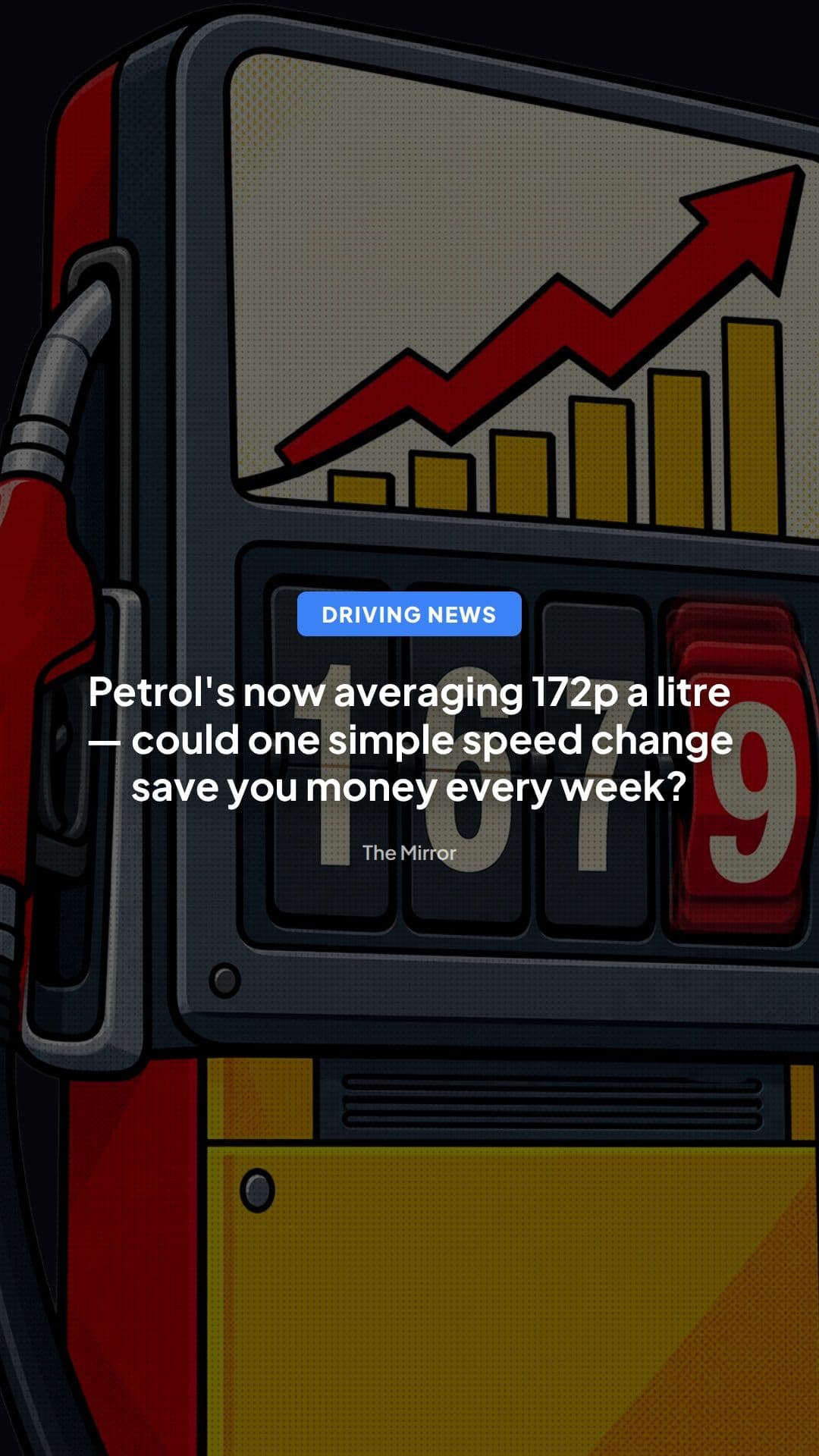
Fuel prices have crept back into the headlines, and once again drivers are being told that the simplest way to cut their motoring costs isn't a new car or a loyalty card, it's their right foot. According to a recent report in the Mirror, a motoring expert is urging drivers to stick to around 60mph wherever it's safe and legal to do so, arguing that this single habit could make a meaningful dent in fuel bills as pump prices climb. It sounds almost too simple to be true, but the physics behind it is sound, and there's a good deal more to unpack than the headline suggests.
What the Advice Actually Says
The core recommendation is straightforward: where speed limits allow, driving at roughly 60mph rather than pushing towards 70mph on motorways and dual carriageways can significantly improve fuel economy. The advice isn't about breaking limits or driving dangerously slowly, it's about voluntarily easing off within a range that's already legal, particularly on faster roads where the difference in wind resistance is most pronounced.
This isn't a new discovery. Eco-driving techniques have been promoted by motoring organisations and the DVSA for years, and "smooth, moderate speed" has long featured in official advice on cutting fuel consumption. What's changed is the urgency. With fuel costs squeezing household budgets, this kind of practical, no-cost advice is resurfacing because it genuinely works, and because many drivers have simply forgotten (or never learned) why speed has such an outsized effect on what comes out of their wallet at the pump.
Why It Matters: The Physics Behind the Pump Price
The reason speed matters so much comes down to aerodynamic drag. As a car moves faster, the air resistance it has to push through doesn't increase in a straight line, it increases roughly with the square of the speed. That means the jump from 60mph to 70mph creates a disproportionately large increase in the energy your engine has to produce, and therefore the fuel it burns, compared with the jump from 50mph to 60mph.
In practical terms, this is why motorway driving is often less efficient per mile than a well-paced A-road run, even though motorways feel faster and smoother. Engines are also typically at their most efficient in a specific rev range, and constant acceleration, braking, and speed changes (the kind you get in heavy traffic or aggressive driving) burn noticeably more fuel than settling into a steady, moderate pace.
This matters more than ever given how fuel costs have been behaving lately. Many households have already been hit by fuel price spikes driven by global oil markets, taxation, and supply pressures, something we've covered in detail elsewhere on rising pump prices and forecourt costs. When every extra penny per litre adds up over a full tank, shaving even 5 to 10 percent off your consumption through driving style alone is one of the few savings genuinely within a driver's control, unlike wholesale prices, duty rates, or VAT.
The Legal Angle: What You Can and Can't Do
It's important to be clear about what this advice actually means in legal terms, because "drive at 60mph" can easily be misread.
There is no law requiring you to drive at 60mph. The national speed limit for cars on single carriageway roads is 60mph, and on motorways and dual carriageways it's 70mph. The advice to adopt "around 60mph" is a voluntary fuel-saving choice on roads where the limit is higher, not a new rule or restriction. You are not breaking any law by driving at the posted limit, whatever that may be.
At the same time, deliberately driving significantly slower than other traffic, particularly on a motorway, isn't necessarily risk-free from a legal or safety standpoint either. The Highway Code (Rule 146) states that drivers should not "unnecessarily obstruct" other road users, and driving at a crawl in a fast-moving lane, hogging the middle or right-hand lanes, or ignoring the flow of traffic can create hazards and, in extreme cases, attract a charge of careless driving under the Road Traffic Act 1988. The key word from the original advice is "where safe and legal", meaning drivers should apply this within the existing speed limit framework, adjusting their pace to suit conditions rather than treating 60mph as some kind of blanket target regardless of road type or traffic flow.
It's also worth noting that speed limiters, average speed cameras, and smart motorway variable limits already shape a lot of motorway driving behaviour. On stretches with active speed enforcement, sticking closer to the lower end of the permitted range isn't just fuel-efficient, it also reduces your exposure to speeding tickets and the three penalty points and fine that typically follow a speed camera offence.
What Drivers Should Know: Practical Fuel-Saving Habits
Beyond simply lifting off the accelerator, there's a broader package of eco-driving habits that reinforce the same principle: smoothness and moderation save fuel. Some practical takeaways include:
- Anticipate the road ahead. Reading traffic further in advance means less harsh braking and re-accelerating, which is one of the biggest drains on fuel efficiency.
- Keep revs moderate and change gear earlier in manual cars, or let automatic transmissions do their job without flooring the accelerator.
- Check tyre pressures regularly. Under-inflated tyres increase rolling resistance and can measurably worsen fuel consumption, quite aside from the safety and tyre-wear implications.
- Remove unnecessary weight and roof boxes when they're not in use, since both add drag or extra load the engine has to work against.
- Use air conditioning sensibly. At low speeds, open windows create more drag than running the air conditioning; at higher speeds, the reverse tends to be true.
- Plan routes to avoid unnecessary stop-start driving, since idling and repeated acceleration from a standstill are among the least efficient things an engine does.
- Combine short journeys where possible. A cold engine uses more fuel per mile than one that's already up to temperature, so several short trips can be less efficient than one longer, combined journey.
None of these are radical changes, but together with a more measured approach to speed, they can add up to a genuinely noticeable saving over weeks and months, particularly for drivers doing significant motorway mileage. For those regularly filling up on fast A-roads or during peak travel periods, it's also worth being aware of how fuel prices tend to shift around busy periods, something we've explored in our coverage of fuel costs during peak getaway weekends.
Looking Ahead
Advice like this tends to resurface every time fuel prices make headlines, and that's unlikely to change while pump prices remain sensitive to global oil markets, exchange rates, and fuel duty policy. What's notable is that unlike many of the bigger structural issues affecting UK drivers, such as fuel duty freezes, VAT, or wholesale pricing, this is one lever drivers can pull themselves, immediately, without waiting on policy decisions from the Treasury or oil companies.
That said, it's worth keeping a sense of proportion. Driving style adjustments can meaningfully improve miles per gallon, but they won't offset a genuinely sharp rise in forecourt prices on their own. Drivers who want to manage motoring costs more holistically should treat this as one part of a wider approach, alongside comparing local fuel prices, maintaining their vehicle properly, and staying alert to wider market trends that continue to influence what we all pay at the pump.
Ultimately, the 60mph rule isn't a gimmick or a legal requirement, it's a reminder that basic physics still applies to modern motoring. In a period where fuel costs feel increasingly out of drivers' hands, easing off the accelerator is one of the few genuinely free changes left to make.
Written by
The Parking Ticket Pal Editorial Team
Source-checked parking guidance
Ready to Challenge Your Ticket?
Let our AI analyse your PCN and generate a professional appeal letter in minutes.
Start Free Appeal