Fuel Finder: Will UK pump prices actually fall in 2026?
Motoring groups disagree on whether the Government-backed Fuel Finder app will cut UK petrol and diesel prices. We unpack the claims, data and likely impact.

Emma Thompson
30 June 2026
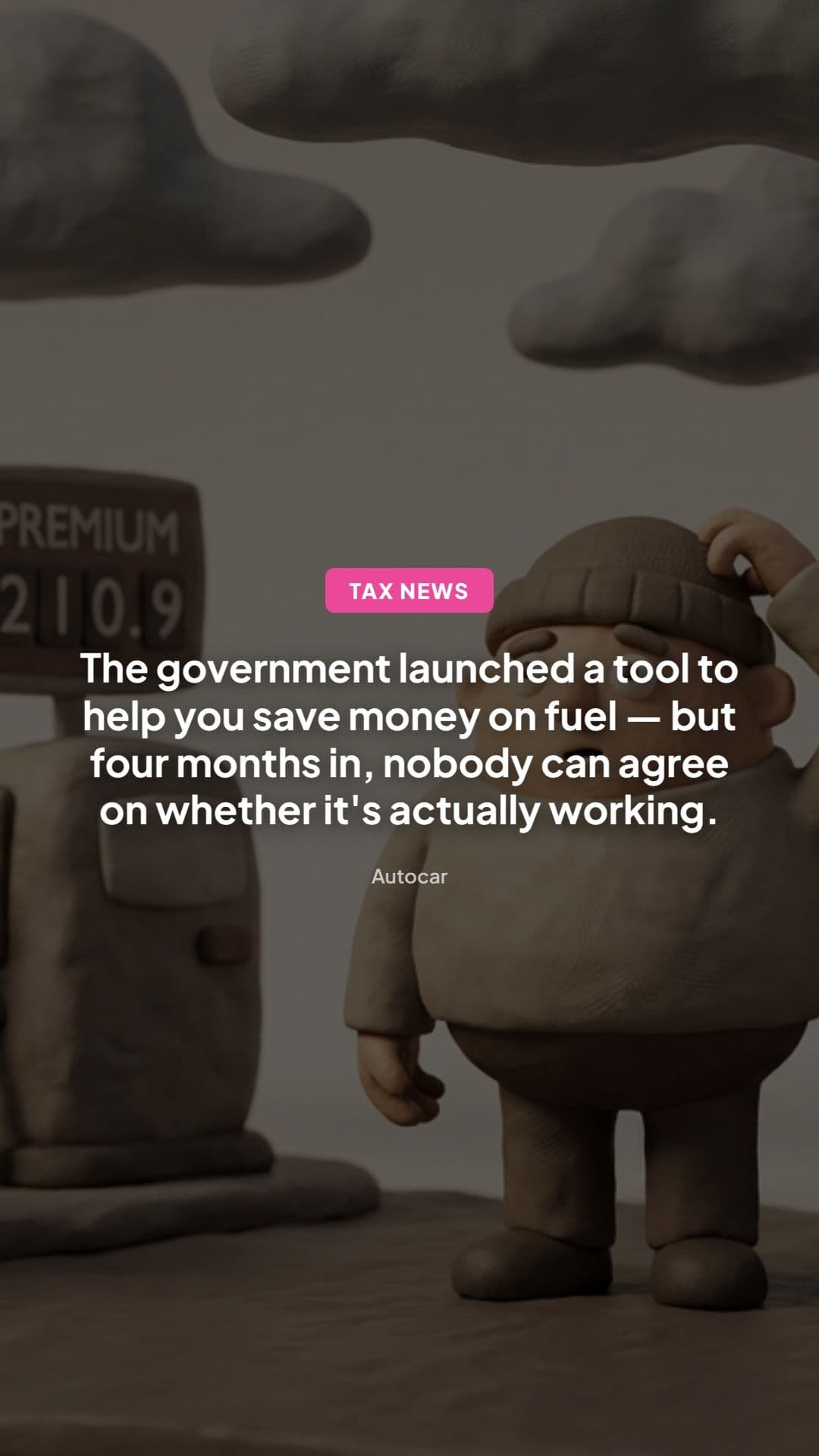
Fuel Finder: Will the Government's New Petrol Price Tool Actually Save You Money?
Every driver knows the sinking feeling of pulling into a petrol station, watching the pump tick past £80, and wondering whether the garage down the road might have been 5p cheaper per litre. It's a frustration as old as the fuel crisis itself — and now the government thinks it has an answer. The Fuel Finder scheme promises to bring transparency to pump pricing across the UK, giving motorists real-time data on where to find the cheapest fuel in their area. But here's the problem: not everyone is convinced it will actually work.
What Is the Fuel Finder Scheme — and What's the Row About?
The Fuel Finder initiative requires fuel retailers across the UK to report their pump prices at least once per day, feeding that data into a publicly accessible platform. The idea is straightforward: if drivers can see exactly what each forecourt is charging before they set off, competition between retailers will drive prices down and the opaque pricing practices that have long frustrated consumers will be exposed.
As reported by Autocar, motoring groups are sharply divided on whether the scheme will deliver meaningful savings at the pump. On one side, advocates argue that price transparency is a proven market mechanism — that when retailers know their prices are visible and comparable, they face genuine pressure to stay competitive. On the other side, sceptics point out that the UK fuel market is dominated by a small number of supermarket chains and major oil company forecourts, and that simply publishing prices doesn't automatically create the conditions for a price war.
The debate isn't merely academic. With the average UK family spending well over £2,000 a year on fuel, even a modest reduction in pump prices would represent a tangible saving for millions of households.
Why Fuel Pricing Has Been Such a Problem in the UK
To understand why this matters, it helps to know how we got here. The Competition and Markets Authority (CMA) launched a major investigation into the UK road fuel market in 2023, publishing its findings in a landmark report that summer. The CMA concluded that the major supermarket retailers — Asda, Tesco, Sainsbury's, and Morrisons — had been slower to pass on falling wholesale costs to consumers than they were to increase prices when wholesale costs rose. In plain English: prices went up fast and came down slowly. The CMA estimated this "rockets and feathers" pricing behaviour cost UK drivers an extra £900 million in 2022 alone.
The Fuel Finder scheme was the government's direct response to that finding. It was introduced under powers in the Energy Prices Act 2022, which gave ministers the authority to mandate fuel price reporting, and it sits alongside the CMA's ongoing monitoring role. The scheme is administered by the Department for Energy Security and Net Zero (DESNZ), and compliance is not optional — retailers are legally required to report their prices.
The Legal Framework: What Retailers Are Obliged to Do
This is where things get interesting from a regulatory standpoint. Under the Motor Fuel (Transparency of Pricing) Regulations 2024, fuel retailers selling more than a certain threshold of petrol and diesel are required to submit their forecourt prices to a designated data body at least once every 24 hours. The data is then made publicly available via an application programming interface (API), allowing comparison websites, navigation apps, and the government's own platform to display prices in near-real time.
Critically, the regulations do not cap prices or set a maximum margin — they are purely a transparency measure. There is no legal requirement for retailers to lower their prices; only to disclose them. This is the crux of the disagreement among motoring groups. Transparency is a necessary condition for competition, but it is not, by itself, sufficient.
The CMA retains concurrent powers under the Competition Act 1998 to investigate and act against anti-competitive behaviour in the fuel market. If the Fuel Finder data were to reveal coordinated pricing — where retailers appear to be matching each other's prices rather than undercutting them — that could, in theory, trigger a formal investigation. Price signalling, where competitors effectively communicate their pricing intentions through public disclosures, can in some circumstances constitute a breach of competition law, though proving it is notoriously difficult.
Why Motoring Groups Are Split
The optimists — including elements of the RAC and various consumer groups — point to international evidence. When Australia introduced mandatory fuel price reporting in Western Australia in 2001, pump prices fell measurably and the spread between the cheapest and most expensive retailers narrowed. Similar results have been observed in parts of Europe and North America where price transparency laws have been enacted.
The pessimists raise a different concern. They argue that in a market with limited genuine competition — where four supermarket chains account for a disproportionate share of fuel sales — price transparency could paradoxically reduce competition by making it easier for retailers to monitor and match each other's prices without ever needing to undercut them. This is known as "tacit collusion," and it doesn't require any illegal agreement — just the ability to observe what your rivals are charging in real time.
There's also a practical concern about data quality. If retailers update their prices only once every 24 hours, a driver who acts on Fuel Finder data in the morning may arrive at a forecourt to find the price has already changed. The scheme's value depends heavily on how frequently and accurately retailers report.
What Drivers Should Know: Practical Advice for Getting the Best Price
Whether or not Fuel Finder delivers systemic change, there are concrete steps you can take right now to reduce your fuel costs:
- Use the Fuel Finder platform or compatible apps. Several navigation and comparison apps, including Waze and petrolprices.com, now integrate the Fuel Finder data. Check before you leave, not when you're already running on fumes.
- Supermarkets are usually — but not always — cheapest. The CMA's own data confirms that supermarket forecourts typically undercut motorway services and branded forecourts, but the gap varies significantly by region and by week.
- Fill up mid-week. Anecdotal evidence and some pricing data suggest that fuel prices are marginally lower on Tuesdays and Wednesdays, when demand is lower and retailers are more likely to have adjusted prices downward following wholesale market movements.
- Don't drive significantly out of your way. The fuel economy hit from a 10-mile detour to save 3p per litre will often wipe out any saving, particularly in urban stop-start traffic.
- Loyalty schemes matter. Supermarket loyalty card discounts — such as Tesco Clubcard fuel savings — can add up to more than the difference between forecourts, so factor these in.
- Report non-compliance. If you believe a retailer is not updating their Fuel Finder prices accurately, you can report this to the CMA or DESNZ. The scheme only works if the data is trustworthy.
Looking Ahead: Can Transparency Alone Fix a Broken Market?
The honest answer is: probably not on its own. The Fuel Finder scheme is a meaningful step forward, and the legal architecture behind it is more robust than many drivers realise. But transparency is a tool, not a solution. Its effectiveness will depend on whether the CMA uses the data it generates to actively monitor for anti-competitive behaviour, and whether the government is prepared to go further — potentially by introducing mandatory margin caps or stronger reporting requirements — if the scheme fails to deliver the promised savings.
There are already calls from some motoring organisations for the scheme to be extended to include wholesale margin data, not just pump prices. If consumers and regulators can see not just what retailers are charging but how much they are making per litre, the pressure for accountability becomes significantly greater.
For now, Fuel Finder represents the most meaningful intervention in UK fuel pricing transparency in a generation. Whether it translates into pounds and pence in drivers' pockets will depend less on the scheme itself and more on what happens next — in the forecourts, in the CMA's offices, and potentially in Parliament. Drivers should use every tool available to them in the meantime, while keeping a watchful eye on whether the government is prepared to act if the market fails to respond.
The Fuel Finder platform is accessible via the government's official website, and pricing data is also available through third-party apps that have integrated the API feed.
Written by
Emma Thompson
Traffic Law Specialist
Ready to Challenge Your Ticket?
Let our AI analyse your PCN and generate a professional appeal letter in minutes.
Start Free Appeal