Drive-off petrol thefts rise as UK fuel prices jump
Drive-off petrol thefts are rising at UK forecourts as prices climb after the Iran conflict. What motorists and operators can do to prevent losses and disputes.

Sarah Mitchell
21 April 2026
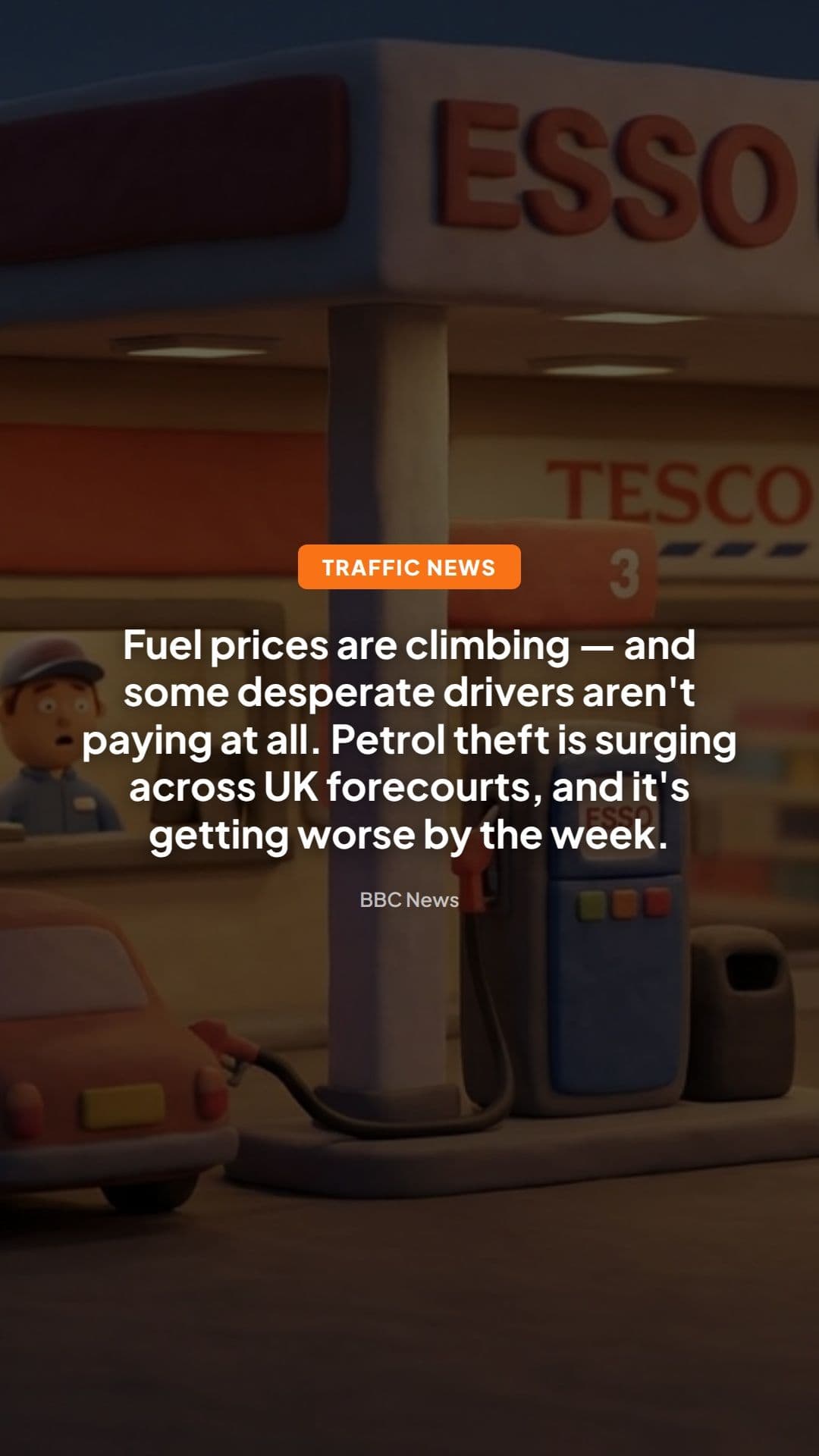
Petrol Theft Surge: What Rising Fuel Costs Mean for UK Forecourts, Drivers, and the Law
A wave of drive-off thefts is sweeping Britain's petrol stations — but the story goes far deeper than a few opportunistic motorists filling up and fleeing
The Moment at the Pump That's Costing Britain Millions
Picture the scene: a forecourt attendant watches a car pull away from pump seven without paying. It's the third time this week. By Friday, it'll be five. Multiply that across thousands of petrol stations nationwide, and you begin to grasp the scale of a problem that's quietly ballooning alongside fuel prices — one that affects not just retailers, but every law-abiding driver who fills up honestly.
According to a BBC News report, drive-off petrol thefts are surging across the UK as fuel costs climb in the wake of escalating tensions involving Iran. Some forecourt operators are now reporting approximately five drive-off incidents per week at a single station — a figure that, if representative of the wider industry, points to tens of thousands of theft events happening every month across the country. This isn't a fringe problem. It's a systemic one, and it's getting worse.
What's Actually Happening — and Why Now?
The immediate trigger is fuel price volatility linked to the Iran conflict. When geopolitical instability threatens oil supply routes in the Middle East, crude oil prices react almost instantly on global markets — and those increases filter through to UK forecourts within days, sometimes hours. We've already seen significant price rises at the pump in recent months, with petrol and diesel both climbing sharply.
When prices spike, a predictable pattern emerges. Historically, every major fuel price surge in the UK — from the 2008 financial crisis to the post-pandemic energy shock of 2021–22 — has been accompanied by a rise in forecourt theft. The correlation isn't coincidental. Financial pressure, combined with the perceived anonymity of a quick drive-off, makes fuel theft feel low-risk and high-reward to some drivers.
What makes the current wave particularly notable is its frequency and consistency. Five incidents per week per station isn't occasional opportunism — it suggests organised behaviour or, at minimum, a community of repeat offenders who've identified which stations are most vulnerable. Many smaller, independent forecourts lack the ANPR (Automatic Number Plate Recognition) camera infrastructure of supermarket fuel stations, making them softer targets.
The losses aren't trivial either. At current prices, a full tank of petrol in a typical family car costs around £70–£90. Five drive-offs per week at one station amounts to potentially £350–£450 in weekly losses — over £20,000 per year, before accounting for staff time, insurance implications, and the psychological toll on forecourt workers.
Why This Matters Beyond the Headlines
It would be easy to dismiss this as purely a retailer problem. It isn't. The consequences ripple outward in several important directions.
Prices at the pump don't just reflect crude oil. Forecourt operators factor theft losses, insurance costs, and security expenditure into their margins. When theft rises, those costs are ultimately absorbed — or passed on. Independent forecourt operators running on thin margins have limited ability to absorb repeated losses. Some may reduce opening hours, cut staff, or close entirely. In rural communities where a single local forecourt serves a wide area, that closure has real consequences for local drivers.
Insurance premiums for forecourt operators rise with increased theft claims. Again, this feeds into operating costs. There's a genuine economic chain here that connects a drive-off in Stoke to the price you pay per litre in Sheffield.
Staff safety is also at risk. Confrontations between forecourt workers and would-be drive-off thieves can and do turn violent. The Health and Safety Executive (HSE) guidance makes clear that employers have a duty to protect workers from foreseeable risks — including those posed by criminal behaviour on their premises. As incidents increase, so does the pressure on staff to intervene, which creates dangerous situations.
The Legal Angle: What Does UK Law Actually Say?
This is where things get interesting — and where many drivers may not fully understand the legal landscape.
Drive-off theft is a criminal offence under the Theft Act 1968. Specifically, it falls under Section 1, which defines theft as the dishonest appropriation of property belonging to another with the intention of permanently depriving the other of it. Fuel, once it enters your tank, belongs to the forecourt operator until paid for. Driving away without paying is, straightforwardly, theft.
The maximum penalty is seven years' imprisonment, though in practice, first-time offenders typically face fines, community service, or short custodial sentences depending on the value involved and any prior record. Repeat offenders, or those involved in organised fuel theft, face significantly harsher treatment from the courts.
There's also the Making Off Without Payment offence under Section 3 of the Theft Act 1978, which specifically covers situations where someone makes off knowing that payment is required or expected. This is often the charge used in drive-off cases because it doesn't require prosecutors to prove the original intent to steal — only that the person left without paying when they knew they should.
ANPR cameras are central to enforcement. Most major forecourts now use ANPR systems that capture your number plate when you pull in. If you drive off without paying, your plate is logged and reported to the police. Many forces operate fuel theft databases shared with forecourt operators. The No Plate, No Fuel scheme, widely adopted across the industry, requires ANPR confirmation before a pump is activated — but not all stations have implemented it, and smaller independents are often behind the curve.
What about the DVLA and civil recovery? Forecourt operators can pursue civil recovery through debt collection agencies for the value of the stolen fuel plus administrative costs. This is separate from any criminal prosecution and can result in letters demanding payment well in excess of the original fuel value. These are legally enforceable, and ignoring them can lead to county court judgements (CCJs) that affect your credit rating.
What Honest Drivers Should Know: Practical Advice
If you're a law-abiding motorist, you might wonder what any of this has to do with you. Quite a lot, actually.
Protect yourself from false accusations. ANPR systems aren't infallible. Misreads, cloned plates, and database errors can result in innocent drivers receiving civil recovery letters or even police contact. If you receive a letter claiming you drove off without paying at a forecourt you've never visited — or at a time you can demonstrate you were elsewhere — keep your receipts and bank statements. A card payment record is your best alibi.
Cloned number plates are a growing problem. Thieves increasingly use cloned plates — copying the registration of a legitimate vehicle — to conduct drive-offs without their real identity being captured. If you receive an accusation of fuel theft that you know is false, report it to Action Fraud (0300 123 2040) and your local police, and contact the DVLA to flag the issue. You may also want to check your vehicle registration against known theft databases.
At the pump, be aware of your surroundings. This sounds obvious, but incidents of pump skimming — where card readers are tampered with to steal payment details — also tend to increase during periods of financial pressure. Inspect card readers before use, cover your PIN, and check your bank statements regularly.
If you genuinely can't pay — for example, if your card is declined after fuelling — go and tell the forecourt staff immediately. Leaving without informing anyone, even with the intention of returning to pay, can be treated as a drive-off. Most operators will take your details and allow you to return. Transparency protects you legally.
Looking Ahead: Can Anything Be Done?
The industry is not without tools, but implementation is patchy. Pay-at-pump systems and pre-payment requirements — where you pay before the pump activates — are the most effective deterrents, but they require capital investment that many smaller operators struggle to justify. The Petrol Retailers Association (PRA) has long lobbied for greater government support for smaller forecourts in adopting ANPR and pre-payment technology.
There's also a question of police resourcing. Drive-off theft is, by the standards of serious crime, a low-priority offence. Forces across England and Wales are stretched, and a single tank of stolen fuel rarely triggers a rapid response. Critics argue that a more coordinated national approach — perhaps through the National Vehicle Crime Intelligence Service (NaVCIS), which already works on vehicle crime — could improve the detection and prosecution rate.
The broader economic picture matters too. If fuel prices continue to rise — and with geopolitical instability in the Middle East showing no signs of quick resolution — the conditions that drive forecourt theft will persist. The government's energy price strategy, refinery capacity, and even the pace of EV adoption all feed into the long-term trajectory of pump prices.
For now, forecourt operators are absorbing losses, investing in security where they can, and hoping for price stabilisation. For drivers, the message is straightforward: the cost of fuel theft isn't borne only by those who steal. It's distributed quietly across every honest motorist who fills up, every rural community that depends on a local forecourt, and every worker standing behind a counter watching another car disappear down the road.
The pump price you see on the forecourt sign? It's already telling you more than just the cost of crude oil.
Source: BBC News, "Petrol thefts surge as Iran war pushes up fuel costs"
Written by
Sarah Mitchell
Parking Rights Advocate
Ready to Challenge Your Ticket?
Let our AI analyse your PCN and generate a professional appeal letter in minutes.
Start Free Appeal