Euro Car Parks Petrol Queue Fines: Know Your Rights
Euro Car Parks is under CMA scrutiny over petrol queue fines. Learn what UK consumer law says, how to challenge a PCN and protect your rights as a driver.

David Chen
27 July 2026
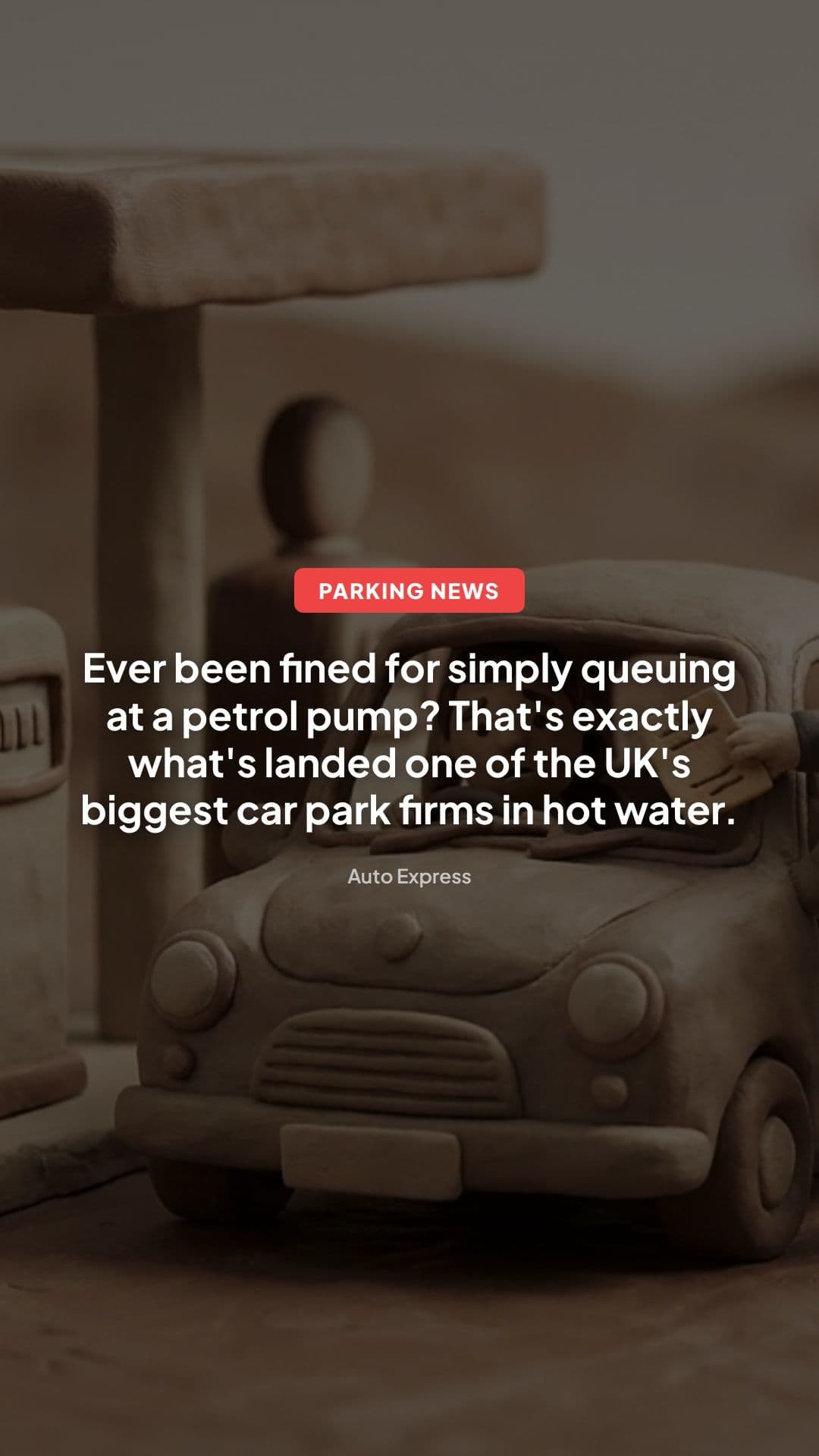
Fined for Filling Up: Why Queuing for Petrol Landed UK Drivers a Parking Charge
Picture this: you pull into a service station forecourt, engine running low, and join a short queue for the pumps because every bay is taken. Ten minutes later, having done nothing but wait your turn to buy fuel, a parking charge notice lands on your doormat. It sounds like a scenario dreamed up to illustrate everything wrong with private parking enforcement, but it is exactly what has happened to motorists dealing with Euro Car Parks, and it has now caught the attention of Britain's competition watchdog.
What Happened
The Competition and Markets Authority (CMA) is investigating Euro Car Parks after it emerged that drivers were being charged simply for queuing to reach a petrol pump. According to Auto Express, the CMA has confirmed the probe and used the case as a springboard to issue a wider warning to private parking operators across the UK: comply with consumer protection law, or expect scrutiny.
The details are as simple as they are galling. Motorists queuing for fuel, not parked in any conventional sense, not overstaying, not avoiding payment, were treated by an automatic number plate recognition (ANPR) system as though they had incurred a chargeable stay. The charge notices followed, and the drivers affected were left to either pay up or fight a penalty for the "crime" of waiting to buy petrol.
This is not the CMA's first run-in with the private parking sector. The regulator has been increasingly active in this space, and Euro Car Parks itself has previously faced financial penalties following CMA action over unclear or unfair practices. This latest investigation adds another chapter to what is becoming a sustained campaign of oversight aimed at an industry that has, for years, operated with minimal centralised regulation.
Why It Matters
To understand why this story matters beyond the individual drivers affected, it helps to understand how private parking charges actually work in England and Wales. Unlike council-issued penalty charge notices, which derive their authority from statute and traffic management legislation, private parking charges are contractual. When you drive onto a car park operated by a private firm, the signage forms an offer, and by staying (or in this case, simply being present) you are deemed to have accepted the terms. If you breach those terms, the operator claims you owe them damages for breach of contract, not a legal fine.
This contractual model is precisely why the "queuing for fuel" scandal is so significant. For a charge to be enforceable, there needs to be a genuine breach of a clearly communicated term. Charging someone who never parked, who was simply waiting in a queue to reach a pump, stretches the concept of "breach" to breaking point. It suggests either a failure in the ANPR technology to distinguish between genuine parking and queuing, or a business model that doesn't much care about the distinction as long as the charge notices keep flowing.
This matters hugely for public trust. Private parking companies already suffer from a reputation problem, and stories like this reinforce a widespread perception that some operators issue charges first and worry about fairness later. It also matters because petrol station forecourts are exactly the kind of location where drivers have little choice. You cannot simply drive away when the queue is long and your tank is empty. Being penalised for a situation the driver did not create and could not avoid is the sort of practice that erodes any remaining goodwill towards the sector.
The Legal Angle
Several layers of law and regulation are relevant here, and it is worth separating them out.
Consumer protection law. The CMA's primary tool in this investigation is not parking-specific legislation but general consumer protection law, most notably the Consumer Protection from Unfair Trading Regulations 2008 and the Consumer Rights Act 2015. These set out that businesses must not engage in unfair, misleading, or aggressive commercial practices. A charge issued for an act that does not constitute a genuine breach of contract, such as queuing rather than parking, could plausibly fall foul of these protections, particularly if the practice was systemic rather than a one-off error.
The contractual basis of parking charges. As established in the landmark Supreme Court case ParkingEye Ltd v Beavis (2015), private parking charges can be enforceable provided they are not extravagant or unconscionable and there is a legitimate commercial justification. Crucially, that case concerned a driver who had genuinely overstayed a free parking period. It did not give operators a blank cheque to charge for any ANPR-detected presence on their land regardless of context. Applying a charge to someone who never actually parked stretches the Beavis precedent well beyond its intended scope.
The Code of Practice under the Private Parking Regulations. The government has been working towards a single statutory Code of Practice for private parking, following powers granted under the Parking (Code of Practice) Act 2019. Progress has been slow and contested, with industry bodies raising concerns about implementation, but the direction of travel is clear: tighter rules on signage, grace periods, appeals, and what constitutes a legitimate charge. Cases like this one strengthen the argument for faster, firmer regulation.
Trade body membership. Most reputable private parking operators are members of either the British Parking Association (BPA) or the International Parking Community (IPC), both of which operate their own Approved Operator Schemes with codes of conduct. Charges that are clearly unjustified, such as penalising a driver for queuing rather than parking, would typically be vulnerable to challenge through the independent appeals services these bodies oversee, POPLA for BPA members and the Independent Appeals Service for IPC members.
What Drivers Should Know
If you have received a parking charge notice in circumstances similar to this, or believe you were charged unfairly for something that was not a genuine parking event, there are practical steps worth knowing about.
Do not ignore it, but do not panic either. A private parking charge notice is not a criminal fine and does not carry penalty points. It is a civil matter. However, ignoring it can eventually lead to debt recovery action or county court proceedings if unresolved, so a considered response is always better than silence.
Gather your evidence early. Fuel receipts with timestamps, dashcam footage, and even forecourt CCTV requests can all help demonstrate that you were queuing for fuel rather than parking. Time-stamped evidence is often the single most persuasive thing in any parking appeal.
Use the operator's formal appeal process first. Every operator must offer an appeals route, and if you are a member of a recognised trade body, an independent appeal beyond that is available if the operator rejects your case. Take the time to lay out clearly why no genuine breach of contract occurred.
Check the operator's accreditation. Whether a firm is a member of the BPA or IPC affects which independent appeals body you can escalate to and what standards it is bound to follow.
Report unfair practices, not just individual charges. If you believe an issue reflects a systemic problem, such as ANPR systems that cannot distinguish queuing from parking, it is worth flagging this to Citizens Advice, Trading Standards, or the CMA itself, since patterns of complaints are what regulators use to justify wider investigations like this one.
Looking Ahead
The CMA's warning to the wider parking industry is the more consequential part of this story. Regulators rarely issue blanket warnings without intending to follow through, and the private parking sector has already seen enforcement action and financial penalties in recent CMA activity. Operators who rely on ANPR without adequate safeguards for genuine edge cases, such as fuel queues, breakdowns, or drop-offs, may find themselves under increasing pressure to fix their systems or face regulatory consequences.
For drivers, the broader lesson is one of vigilance rather than automatic acceptance. Private parking charges are not the equivalent of a police-issued fixed penalty, and they can be challenged. As the promised statutory Code of Practice inches closer to reality, and as the CMA continues to flex its consumer protection powers against operators who overreach, motorists have increasingly solid grounds to push back when a charge simply does not reflect what actually happened on the ground. Queuing for petrol should never have been treated as parking in the first place, and it is reassuring, if overdue, that a regulator has finally said so.
Written by
David Chen
Consumer Rights Expert
Ready to Challenge Your Ticket?
Let our AI analyse your PCN and generate a professional appeal letter in minutes.
Start Free Appeal