CMA probes UK petrol prices: what drivers can do now
Petrol and diesel prices rose in early March 2026 as the CMA requests data on fuel margins. Learn what the watchdog probe means for UK drivers.

Fatima Benali
12 March 2026
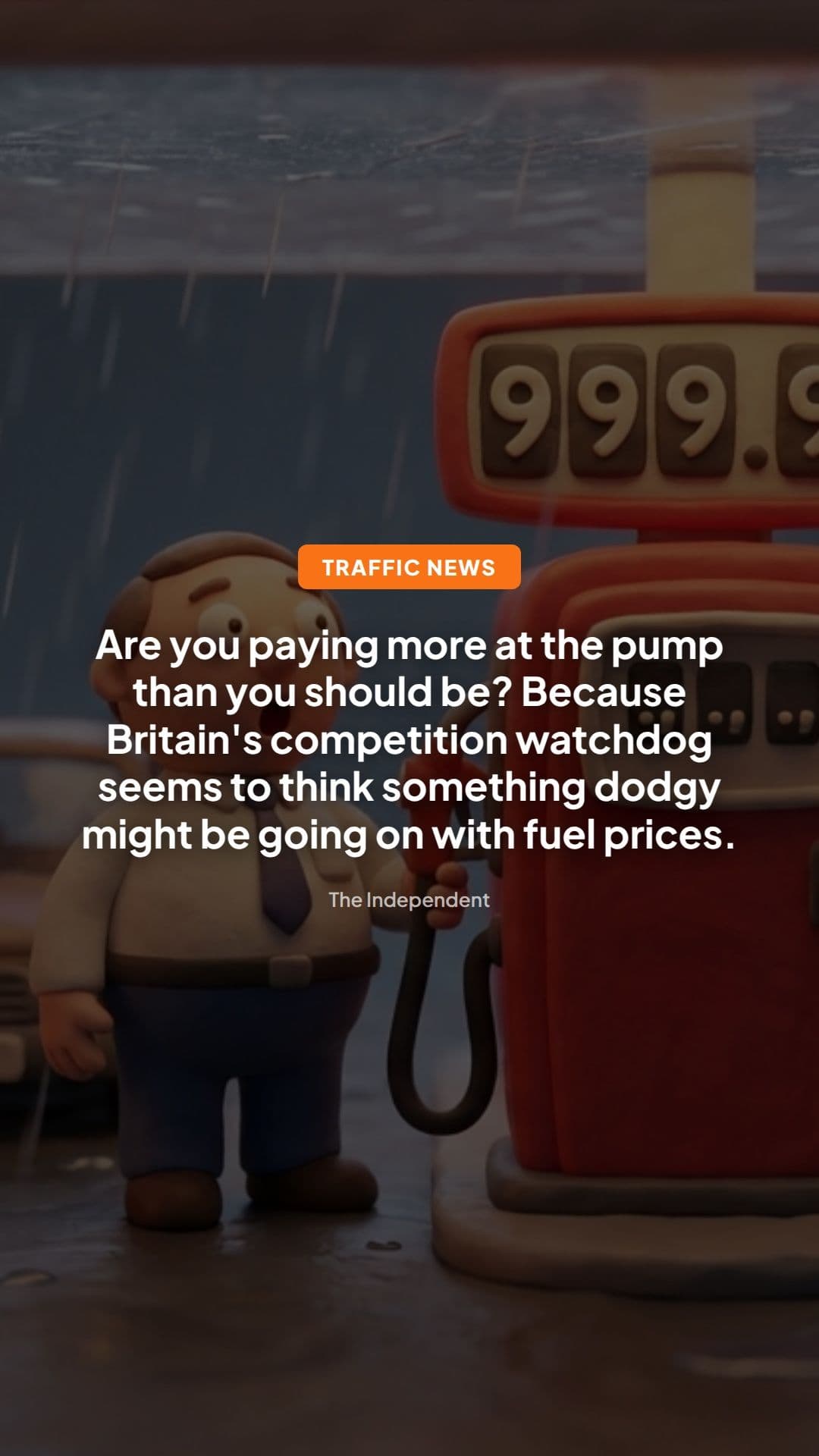
The CMA Is Finally Watching the Petrol Pump — But Will It Make Any Difference?
Every driver knows the feeling. You fill up your tank, wince at the price, and then watch in quiet fury as wholesale oil costs drop sharply — yet somehow the price on the forecourt barely budges. A week later, when crude ticks back up, the pump price rockets overnight. It's infuriating, it feels unfair, and now the UK's Competition and Markets Authority (CMA) has confirmed it is actively investigating whether that gut feeling is actually backed by evidence.
This isn't a minor footnote in the motoring news cycle. It could represent a genuine turning point in how fuel pricing is scrutinised, regulated, and ultimately — if things go well — made fairer for the millions of British drivers who have no choice but to keep filling up.
What's Actually Happening
In early March 2026, The Independent reported that the CMA had stepped up its monitoring of fuel margins and formally requested data from fuel retailers and suppliers. The watchdog is examining what's known in economics circles as "rocket and feather" pricing — a phenomenon where petrol and diesel prices shoot up rapidly when wholesale costs rise (like a rocket), but drift down only slowly when those same wholesale costs fall (like a feather).
This isn't a new accusation. Drivers and consumer groups have complained about this pattern for years. But what's different now is the CMA's renewed appetite to act. The watchdog has been granted stronger powers in recent years and is under real political pressure to demonstrate it can deliver tangible results for consumers, not just produce reports that gather dust.
The timing matters too. Pump prices have been climbing again in early 2026, driven partly by global oil market volatility linked to geopolitical tensions. Average petrol prices had been hovering around 132p per litre, with diesel tracking higher — putting renewed pressure on household budgets that are already stretched after years of elevated living costs.
Why This Matters: The Bigger Picture
To understand why the CMA's intervention is significant, it helps to understand just how much money is at stake — and how the fuel retail market actually works.
When you pull into a forecourt, the price you pay is made up of several components: the wholesale cost of refined fuel, the retailer's margin, fuel duty (currently 52.95p per litre, frozen since 2022), and VAT at 20%. The part the CMA is focused on is the retailer and supplier margin — the slice that has, according to multiple analyses, been quietly expanding even as drivers assumed they were benefiting from falling oil prices.
The CMA's own 2023 road fuels market study found that fuel retailers had pocketed an extra £900 million in profit between 2019 and 2023 compared to what would have been expected based on historical margins. That's not a rounding error — that's nearly a billion pounds effectively transferred from drivers' wallets to fuel companies during a period when many households were struggling with the cost-of-living crisis.
The watchdog subsequently created a new pump price monitoring tool, and it recommended that a statutory price reporting obligation be introduced to make fuel pricing more transparent. The government accepted that recommendation, and the Motor Fuel (Transparency of Pricing) Regulations — introduced under powers in the Retained EU Law Act and subsequently domestic legislation — have been moving through implementation. But transparency alone doesn't change behaviour. That's why the CMA's latest escalation matters.
The Legal Angle: What Powers Does the CMA Actually Have?
This is where things get genuinely interesting for anyone who cares about drivers' rights and market fairness.
The CMA operates primarily under the Competition Act 1998 and the Enterprise Act 2002. Under the Competition Act, it can investigate whether companies are engaging in anti-competitive behaviour, including tacit collusion — where firms don't formally agree to fix prices but effectively mirror each other's pricing in a way that harms consumers.
Crucially, tacit collusion is notoriously difficult to prove. Companies don't need to sit in a room and agree to keep prices artificially high; if the market structure makes it rational for every player to follow the same pricing signals, the outcome can look very similar to coordination without any explicit agreement having taken place. That's one reason fuel market investigations are complex and slow.
However, the CMA also has market investigation powers under the Enterprise Act, which allow it to impose remedies even without finding a specific legal breach — simply on the basis that the market isn't working well for consumers. This is a powerful tool, and it's the one most likely to produce structural change rather than just fines.
If the CMA finds sufficient evidence of harm, it can compel companies to change their pricing practices, require greater transparency, mandate price caps in certain circumstances, or even recommend that the government introduce new legislation. It can also refer matters to the Serious Fraud Office if evidence of criminal cartel behaviour emerges, though that threshold is high.
What Drivers Should Know Right Now
While the CMA's investigation works its way through the system — and these things do take time — there are practical steps every driver can take today to avoid overpaying at the pump.
Use real-time price comparison tools. The government's fuel price transparency initiative has encouraged the development of apps and websites that show live forecourt prices near you. Petrol Prices (petrolprices.com) and the AA's fuel price tool are both worth bookmarking. Even a penny or two per litre difference adds up significantly over a year of regular fill-ups.
Don't always trust motorway services. Motorway forecourts consistently charge a significant premium — often 15p to 20p per litre more than nearby supermarket stations. If you can safely exit and rejoin, it's almost always worth doing so.
Supermarket fuel is generally your best option. Tesco, Asda, Sainsbury's, and Morrisons have historically offered the most competitive pump prices, partly because fuel is a footfall driver for them rather than a primary profit centre. Their margins tend to be lower than independent forecourts.
Fill up mid-week if possible. Anecdotal and some data-backed evidence suggests that fuel prices tend to be adjusted upward ahead of weekends when demand is higher. Tuesday and Wednesday are often the cheapest days to fill up.
Track your fuel costs. Apps like Fuelly or even a simple spreadsheet let you monitor your real-world fuel economy over time. If your consumption suddenly worsens without an obvious mechanical reason, it's worth investigating — poor tyre pressure alone can reduce efficiency by several percent.
Consider a fuel cashback card. Several credit cards offer cashback specifically on fuel purchases. Used responsibly and paid off in full each month, these can effectively reduce your per-litre cost by 1-3%.
Looking Ahead: Will Anything Actually Change?
The honest answer is: possibly, but not quickly.
The CMA has the tools and, increasingly, the political mandate to act. The government is under pressure from drivers, from motoring organisations like the RAC and AA, and from MPs in constituencies where long commutes make fuel costs a genuine electoral issue. The combination of rising prices, a watchdog with sharpened powers, and public frustration creates conditions in which meaningful reform is more likely than it has been in years.
But the fuel retail market is complex, global commodity prices are volatile, and the companies being investigated have deep pockets and experienced legal teams. Any formal investigation will take months at minimum; remedies, if ordered, could take longer still to implement.
What the CMA's intervention does do — right now, immediately — is send a signal. Fuel retailers know they are being watched. Data is being collected. Margins are being scrutinised. That alone may encourage more competitive pricing behaviour, even before any formal findings are published.
For drivers, the message is this: the system is slowly, imperfectly, beginning to respond to years of legitimate grievance. The CMA stepping up its monitoring is genuinely meaningful. But in the meantime, the most effective watchdog you have is the one in your pocket — use the price comparison tools, shop around, and don't hand over more than you have to.
The pump price fight is far from over. But for the first time in a while, it feels like it might actually be worth having.
Written by
Fatima Benali
Dispute Resolution Specialist
Ready to Challenge Your Ticket?
Let our AI analyse your PCN and generate a professional appeal letter in minutes.
Start Free Appeal