
UK Speeding Rules: Myths That Could Cost Drivers Dearly
UK speeding rules explained: discover why the posted limit is still the legal maximum and why using a handheld phone at red lights can lead to penalties.

The Parking Ticket Pal Editorial Team
10 October 2026
Speeding Myths and Phone Rules: What UK Drivers Keep Getting Wrong
Ask a group of drivers what the "real" speed limit is on a 30mph road and you may get several answers. Some will say 33mph, because "everyone knows" there's a 10% buffer. Others will say police don't bother below 35. Then ask whether you can check your phone while stuck at red lights, and plenty will shrug and say the car isn't moving, so it's fine.
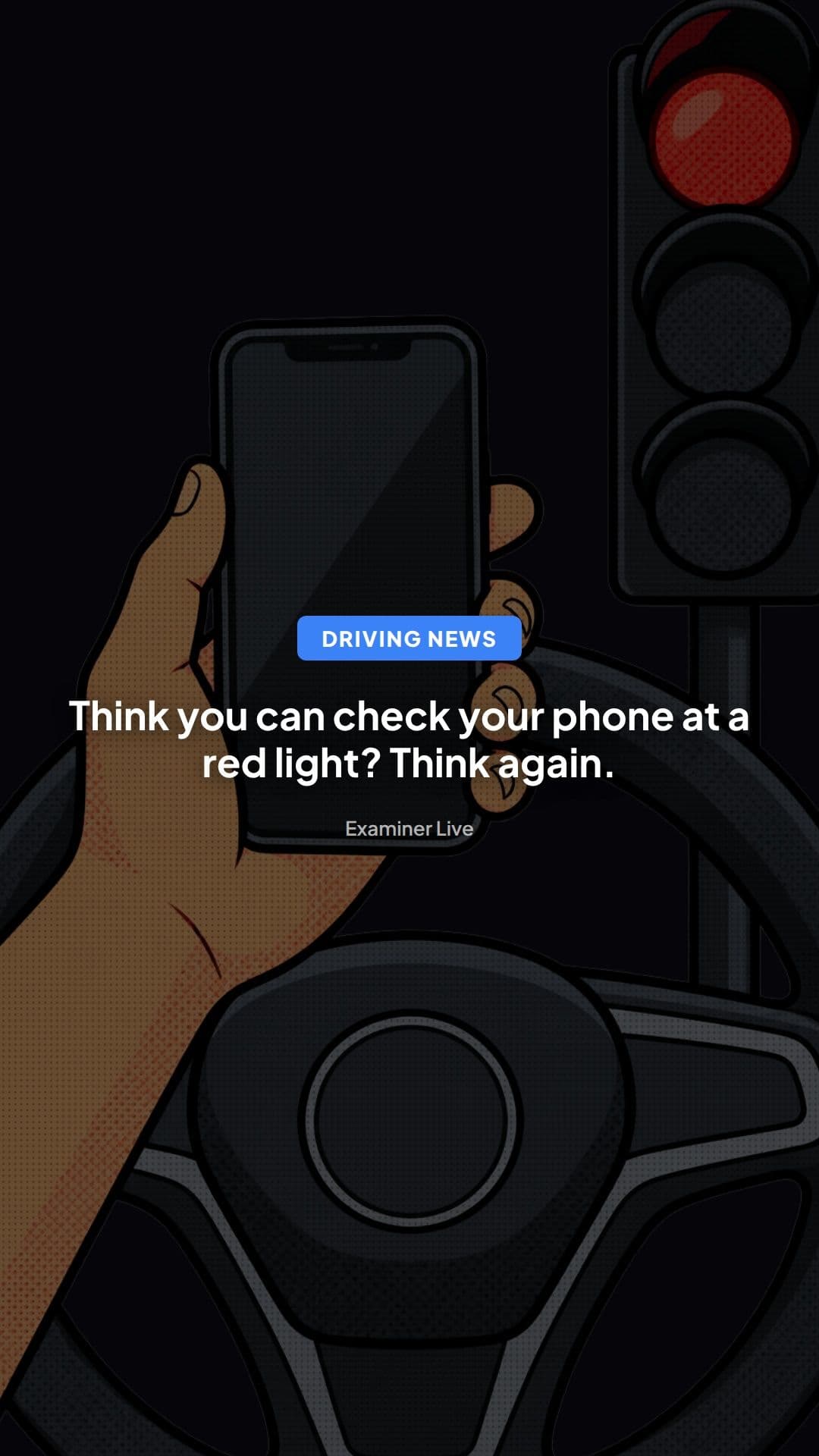
Neither belief is safe to rely on. A recent piece from Examiner Live looked at the gap between what drivers think the rules are and what they actually are. Its key points are that the posted speed limit remains the legal maximum, and that the handheld-phone ban still applies when you are stopped in traffic or at lights.
This post goes further into why these myths survive, what the law says, and what the penalties look like.
What the story is really about
The article is about folklore. Motoring is full of "facts" passed around in pub car parks and family WhatsApp groups. They tend to survive because they contain a grain of truth.
Take speeding. There is a grain of truth in the idea of a buffer, because enforcement practice does include some leeway. But leeway in enforcement is not the same thing as permission. The posted limit is the legal maximum, and exceeding it is an offence.
The phone rule works the same way. Drivers know the law is about using a phone "while driving", so they assume that if the wheels aren't turning, they aren't driving. The law doesn't see it that way.
Myth one: "There's a tolerance built into the limit"
The speed limit on a road is set by law. For most cars, that is 30mph in a built-up area with street lighting, unless signs say otherwise, 60mph on single carriageways and 70mph on dual carriageways and motorways under the national speed limit. Speeding is an offence under the Road Traffic Regulation Act 1984, and nothing in the legislation says "plus ten per cent".
So where does the 10% idea come from? It comes from guidance used by police forces. The National Police Chiefs' Council guidance has long suggested that enforcement action is normally considered at 10% plus 2mph over the limit, so about 35mph in a 30 zone. But this is a matter of police discretion and resources, not a legal allowance. Three things follow from that.
- It is not a right. An officer or camera operator can act at any speed above the limit. Some forces and some locations, such as outside schools or at collision hotspots, may be stricter.
- It can vary. Guidance is not uniform in practice, and you can't know in advance how it will be applied on a given road on a given day.
- It leaves you no room for error. Your speedometer is built to avoid under-reading, which means it usually reads slightly high. But hills, tyre wear and momentary lapses can all push you over the limit before you notice.
If you treat the buffer as a target, you are betting that nobody will enforce the law against you. That's a poor bet for a driver on a 30mph road.
Myth two: "I'm stationary, so the phone rules don't apply"
This one catches people out regularly. The offence of using a handheld phone or device is found in regulation 110 of the Road Vehicles (Construction and Use) Regulations 1986, as updated in 2022. The wording refers to using a device "while driving", and the courts and guidance treat a driver stopped at traffic lights, in a queue or in a jam as still driving. Switching off the engine is not the same as parking safely.
The 2022 update also widened what counts as use. It is no longer only about calls and texts. Holding a phone to take a photo or video, scroll through music, play a game or browse the internet can all be caught. Our own explainer on why drivers can be fined at lights and our guide to UK mobile phone driving laws and hands-free rules cover the detail, and the question of smartwatches while driving is worth a read if you wear one.
There are limited exceptions. Making contactless payments in places such as drive-throughs while stationary is permitted. Calling 999 or 112 in a genuine emergency when it is unsafe or impractical to stop is also allowed. If you have parked safely, that is a different position from sitting in a queue of traffic.
Why the "stopped" excuse fails
The logic is straightforward. A driver at lights is still in control of a vehicle that is about to move, is sharing a road, and is expected to react to what's around them. Lights change, queues shuffle forward and pedestrians step out. A driver looking down at a screen misses the moment the traffic moves, which is why those few seconds at a red light are exactly when many people reach for their phone and exactly when the law wants them not to.
The penalties, and why they matter
The consequences are not trivial, and they are the reason it's worth knowing where the lines are drawn.
Speeding
- The usual starting point for a fixed penalty is a fine of £100 and three penalty points.
- Some drivers may be offered a speed awareness course instead, but that is at the discretion of the police and depends on the speed and circumstances. It is not an entitlement.
- Higher speeds can go to court, where fines are linked to income and can be much larger, and disqualification is possible.
- Accumulating 12 or more points within three years can lead to a ban under the "totting up" rules.
Handheld phone use
- The usual penalty is a £200 fixed penalty and six penalty points.
- New drivers face a particular risk. Under the Road Traffic (New Drivers) Act 1995, a driver who reaches six points within two years of passing their first test can have their licence revoked. For a newly qualified driver, a single phone offence can end their licence.
- The case can instead go to court, where the maximum fine is higher and a disqualification can be imposed.
Many people who would never dream of driving at 90mph on a motorway are quite relaxed about the odd glance at a screen. In points terms, the phone offence is double a standard speeding ticket.
Other beliefs worth challenging
Once you start looking, there are plenty of related misconceptions.
- "Street lights mean 30mph." In general, a road with street lights spaced no more than 200 yards apart is a restricted road with a 30mph limit unless signs show otherwise. But it's a default, not a guarantee. Many roads now have 20mph limits or different limits, and the signs take priority.
- "A hands-free kit makes it all legal." Hands-free use is allowed, but you can still be stopped and prosecuted if police believe you were distracted or not in proper control. A phone in a cradle that blocks your view is a problem.
- "The camera must have flashed, so I'll know." Not all cameras flash, and some modern systems don't. Our piece on what a flash at 70mph on the M6 really means is a useful reminder that a flash is not proof of a ticket, and no flash is not proof of safety.
- "If I don't reply to the letter, it goes away." If you receive a Notice of Intended Prosecution, it normally has to reach the registered keeper within 14 days of the alleged offence. The keeper is then legally required to say who was driving, and the deadline for that is 28 days. Ignoring it can create a separate offence that carries its own penalty points.
What drivers should know and do
This is general information, not legal advice. These are the sensible takeaways.
- Treat the posted limit as the limit. Enforcement discretion is not a safety net. If you drive to the number on the sign, the question of tolerance never arises.
- Know what limit applies. Check signs, not assumptions. Limits change from road to road, and temporary or variable limits on motorways are enforceable.
- Remember that a speedometer is not perfect. If you rely on a satnav or phone app for accurate speed, remember that different tools can show slightly different readings. Staying comfortably below the limit is the sensible approach.
- Put the phone out of reach. Before you set off, switch on a driving mode or "do not disturb", set your music and route, and place the phone where you can't be tempted. If you need to deal with something, park safely first. That means pulling over somewhere appropriate, not just stopping at a red light.
- Set up hands-free properly. If you use a mount, make sure it doesn't block your view of the road, and keep any interaction to a minimum.
- Don't ignore official letters. If you get a notice or a request to identify a driver, check the dates and act within them. If the situation is complicated, such as a company car or a disputed driver, consider professional advice or official guidance from the police force named in the notice or from GOV.UK.
- New drivers, take extra care. With the six-point revocation rule in the first two years, you have less room for error than most.
If you want to see how widespread speeding is, our write-up on record speeding offences covers the wider picture, and our guide to Highway Code rules drivers often miss can help fill other gaps in everyday knowledge.
Fairness and appeals
Mistakes do happen with enforcement. Signs can be obscured, equipment can fail and paperwork can be wrong. For example, we have covered the problem of overgrown hedges hiding road signs and the risk when speed limit warning technology is wrong. If you believe you were wrongly accused, check the notice carefully, keep any evidence such as photos of the signage, and seek proper advice before deciding how to respond. But the starting point for any defence is understanding the actual law, not the folklore.
Looking ahead
Enforcement is becoming more automated and more consistent. AI-assisted cameras, average-speed systems and mobile units are all part of the picture, and as technology improves, relying on the idea that nobody is watching gets steadily riskier. The same goes for phones. As rules around devices, hands-free systems and in-car screens evolve, the safest approach is to assume that anything which draws your eyes or hands away from the road during a journey, including a stop at lights, could count against you.
The broader lesson from the Examiner Live article is that confidence is not the same as accuracy. A "fact" repeated by enough people starts to feel true, but the law is written down, and it is stricter than the folklore. The posted limit is the limit, and a red light is a pause in your journey, not the end of it. Keep your phone down, keep your speed at or below the sign, and you avoid both the penalty and the risk.
Written by
The Parking Ticket Pal Editorial Team
Source-checked parking guidance
Ready to Challenge Your Ticket?
Let our AI analyse your PCN and generate a professional appeal letter in minutes.
Start Free Appeal