
M6 Speed Camera Flash at 70mph: What It Really Means
Flashed by an M6 speed camera at 70mph? Find out why National Highways cameras activate during checks and variable speed-limit changes, and what to do.

The Parking Ticket Pal Editorial Team
23 September 2026
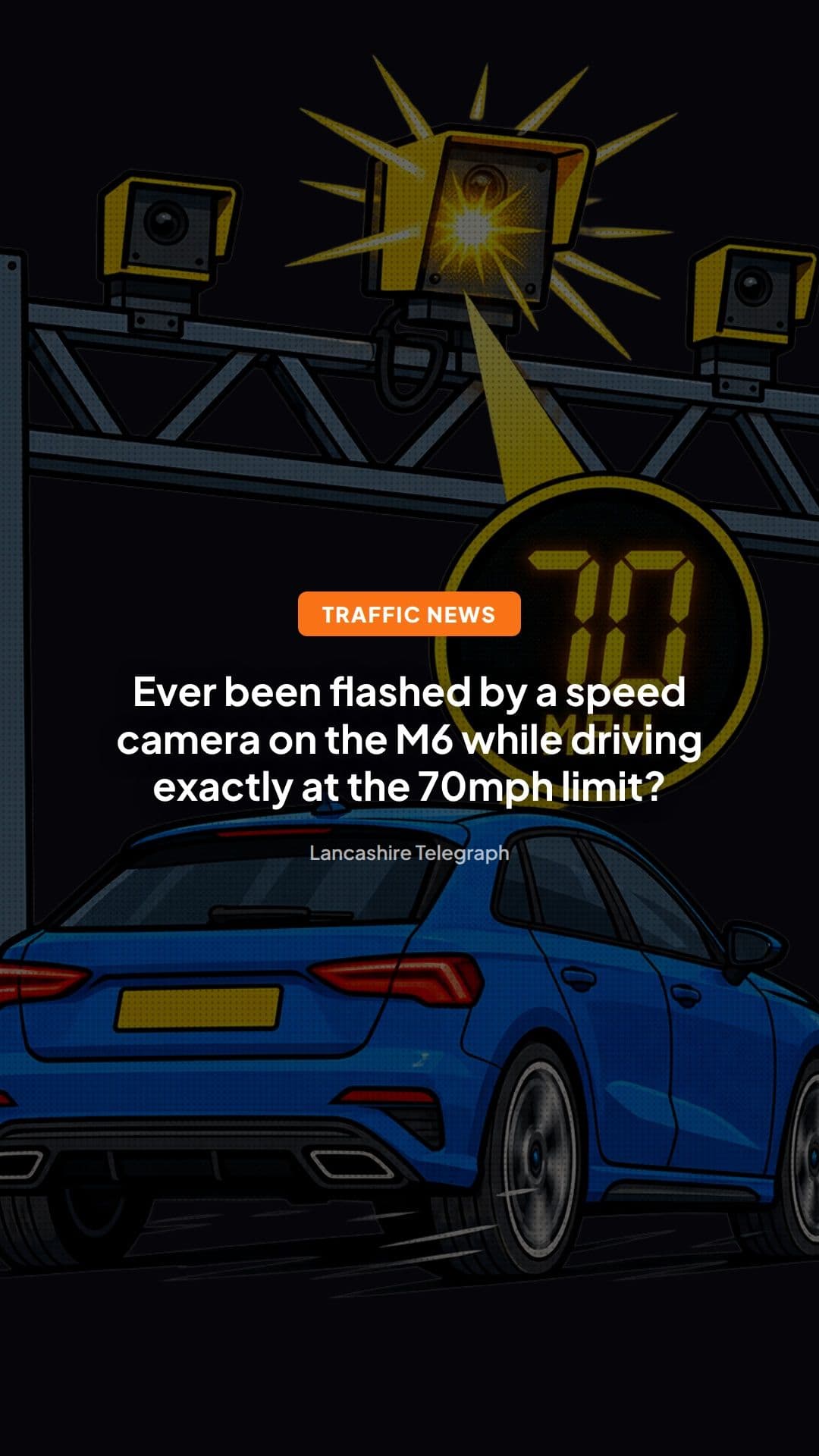
Why an M6 Driver Was Flashed by a Speed Camera at 70mph, and What It Reveals About Britain's Smart Motorway Cameras
A Flash With No Speeding
Picture the scene: you're cruising along the M6, sticking rigidly to 70mph, eyes on the mirrors, nothing untoward happening. Then, out of nowhere, a speed camera gantry flashes. Your stomach drops. Did you speed without realising? Is a fine on its way? For one motorist recently featured in the Lancashire Telegraph, this exact scenario played out, and the explanation turned out to be far less dramatic, and far more interesting, than a simple case of being caught out.
According to the report, National Highways clarified that the flash wasn't necessarily evidence of a speeding offence at all. Cameras on stretches like the M6 can activate during routine self-checks, or when variable speed limits change on the overhead gantries, even if the driver passing underneath is doing nothing wrong. In other words, the camera may have been testing itself, or reacting to a change in the posted limit, rather than reacting to the vehicle at all.
For anyone who has felt that jolt of anxiety after seeing a flash in their rear-view mirror, this is a useful, if slightly unsettling, insight into how Britain's motorway camera network actually functions.
Why It Matters: The Anxiety Gap Between Flash and Fine
Speed cameras occupy a strange psychological space in British driving culture. Unlike a police officer stepping into the road, a camera gives no immediate feedback. You don't know in the moment whether you've been caught, whether the camera was even live, or whether it was pointed at your lane at all. That uncertainty is precisely why stories like this one resonate so widely. Drivers doing everything right can still be left second-guessing themselves for days or weeks, waiting to see whether a Notice of Intended Prosecution (NIP) lands on the doormat.
This matters because the M6, like many of England's motorways, uses variable speed limit systems as part of its smart motorway infrastructure. These systems are designed to smooth traffic flow and reduce stop-start braking that causes accidents, by dropping the limit to 60, 50 or even 40mph when congestion builds ahead. The cameras mounted on the gantries above each lane are the enforcement mechanism for those temporary limits. But because the limit itself can change second by second depending on traffic conditions, and because the cameras need to be tested regularly to ensure they're working correctly, flashes that have nothing to do with an individual driver's speed are, according to National Highways' own explanation, a normal part of how the system operates.
It's a reminder that motorway camera enforcement isn't a simple binary of "you sped, so you got flashed." There's a whole layer of technical housekeeping going on above drivers' heads that has nothing to do with any single vehicle.
The Legal Angle: What a Flash Actually Means
It's worth being precise about what a camera flash does and doesn't establish in law. A flash alone is not a conviction, not a fixed penalty, and not even confirmation that an offence has been recorded against your vehicle.
Under the Road Traffic Offenders Act 1988, if the police (or, in the case of some motorway enforcement, National Highways working alongside relevant police forces) intend to prosecute for a speeding offence, they must generally serve a Notice of Intended Prosecution within 14 days of the alleged offence. If no NIP arrives within that window, in most circumstances the driver cannot later be prosecuted for that specific incident, save for limited exceptions such as where the vehicle's registered keeper couldn't reasonably be identified in time.
This is the crucial practical point for anyone who experiences a flash but nothing more: silence from the DVLA or the relevant police enforcement unit within a couple of weeks is a strong indicator that no offence has been recorded against you, or that the flash was, as National Highways describes, a self-check or a response to a changing limit rather than a genuine speed reading.
It's also worth understanding that Gatso-style and average speed camera systems, including the SPECS-type cameras often used on smart motorway stretches, rely on calibrated equipment and, in contested cases, calibration certificates can be requested. Prosecutions depend on the camera having correctly captured a genuine speed reading tied to a specific vehicle, at a specific time, against a specific posted limit. A flash triggered by internal diagnostics or a limit transition doesn't generate that kind of evidential chain, which is presumably why National Highways felt comfortable offering the explanation to reassure the driver in this case.
None of this amounts to legal advice for any individual case. If you do receive a NIP and believe there has been an error, whether relating to camera calibration, signage, or the circumstances of the alleged offence, it is sensible to seek independent advice or contact the issuing police force's dedicated ticket office, since the specifics of each case vary considerably.
What Drivers Should Know
There are several practical takeaways buried in this story that are worth bearing in mind if you drive regularly on motorways with variable speed limits.
A flash isn't a verdict. Modern camera systems, particularly those tied into smart motorway infrastructure, run self-diagnostic checks and can flash without capturing an enforceable speed reading. Don't assume the worst the moment you see light in your mirrors.
Watch the gantries, not just your speedometer. Variable limits change based on live traffic data, sometimes dropping suddenly if there's congestion or an incident ahead. It's worth glancing up at the overhead signs regularly, because the limit you were doing 70 under a minute ago may have just dropped to 50 by the time you pass beneath the next camera.
Give it two weeks. If you're worried you may have been caught, the practical answer is patience. Since a Notice of Intended Prosecution must generally be served within 14 days for a summons to follow, no post arriving in that window is a reasonably reliable sign that nothing is coming.
Keep basic records. Dashcam footage can be invaluable if you ever do need to dispute a speeding allegation, particularly one involving variable limits, since it can show what the gantry displayed at the time you passed it.
Don't ignore an NIP if one does arrive. If a notice lands, it needs a response within the specified time frame. Ignoring it doesn't make the issue disappear and can create separate legal complications around failing to identify the driver.
Looking Ahead
Smart motorways, and the variable speed limit technology that underpins them, aren't going away. National Highways continues to operate and expand sections of motorway that rely on dynamic limits rather than fixed ones, precisely because they can respond to real-time traffic conditions in ways static speed limits cannot. That means the kind of camera activity described in this story, self-checks, calibration routines, and flashes tied to limit changes, is likely to remain a feature of motorway driving rather than a one-off oddity.
For drivers, the sensible response isn't to panic every time a gantry lights up, but to understand a little more about how the system behind it works. Speed enforcement on the motorway network is more layered and more automated than many drivers realise, and a flash is often the beginning of a technical process rather than the end of a legal one. Staying alert to changing limits, keeping half an eye on the gantries, and knowing your rights around Notices of Intended Prosecution remain the best defences against unnecessary worry, and against genuine mistakes, alike.
Written by
The Parking Ticket Pal Editorial Team
Source-checked parking guidance
Ready to Challenge Your Ticket?
Let our AI analyse your PCN and generate a professional appeal letter in minutes.
Start Free Appeal