Highway Code Rules Drivers Miss: Fines and Points Explained
A DfT campaign highlights overlooked Highway Code rules. Learn which driving offences can lead to fines, penalty points and safer journeys on UK roads.

The Parking Ticket Pal Editorial Team
16 August 2026
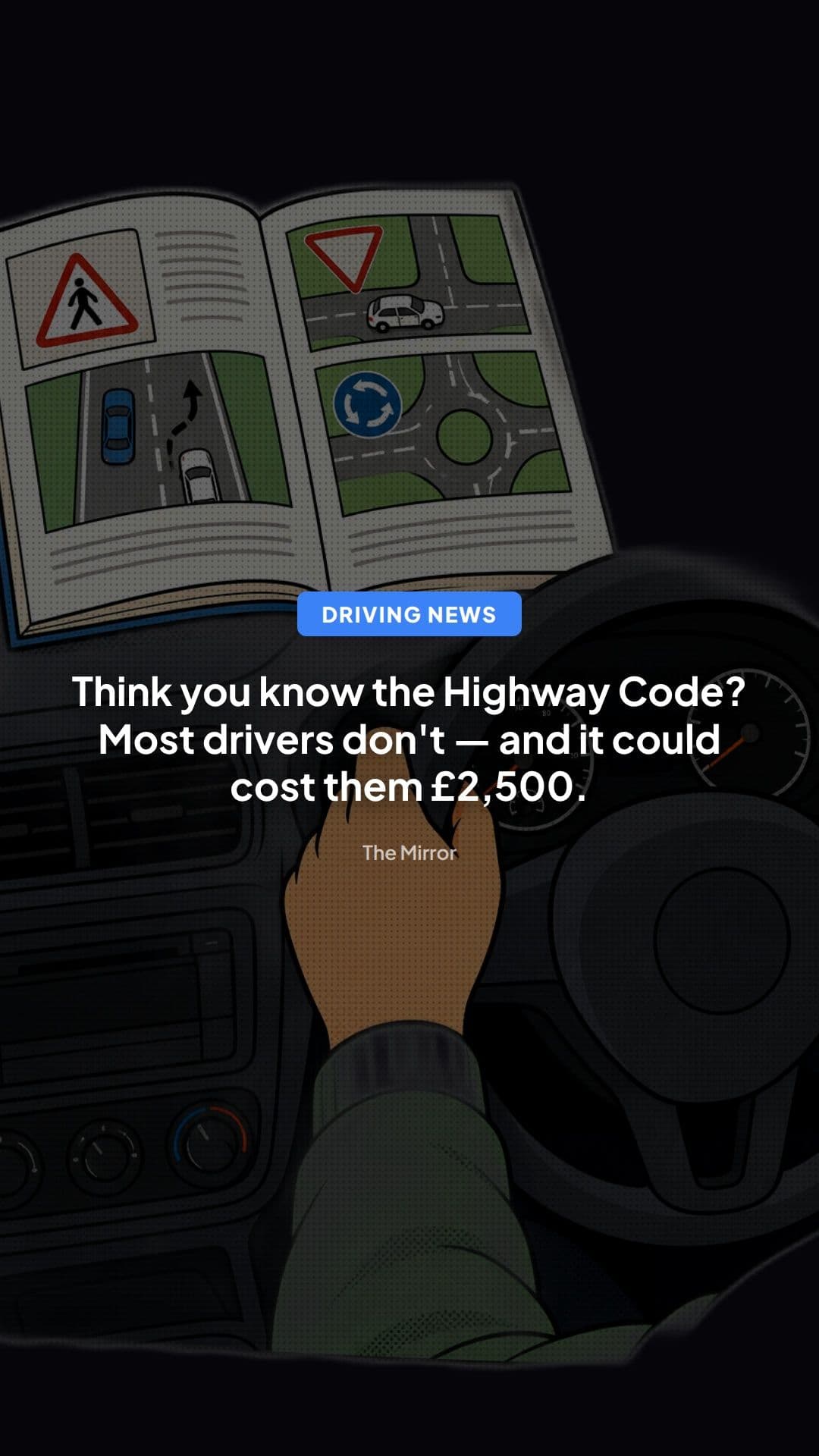
DfT Statement on 'New' Highway Code Laws Drivers 'Don't Know About': What You Need to Know
Picture this: you're driving along a quiet residential street, indicator flicking, about to turn left into a side road. A pedestrian is waiting to cross at the junction. Do you stop and let them go first, or do you nip round the corner because, hey, you were there first? If you answered the latter, you're not alone, and you're also unknowingly breaching a rule of the Highway Code that's been in force since 2022.
That's precisely the problem the Department for Transport (DfT) is now trying to tackle. According to a report by the Mirror, the DfT has issued a statement addressing growing concern that huge numbers of UK motorists remain unaware of Highway Code rules, some introduced years ago, that can lead to fines, penalty points, and even prosecution if broken. It's a wake-up call for drivers who assumed that passing their test once was the end of their road safety education.
What Happened: A Campaign to Close the Knowledge Gap
The core of the story is straightforward but troubling. Despite significant revisions to the Highway Code, most notably the sweeping changes introduced in January 2022, a large proportion of drivers have never properly absorbed the updated rules. The DfT's statement, as reported by the Mirror, acknowledges this awareness gap and signals an effort to better communicate the rules that matter, particularly those where ignorance is leading to real-world consequences such as fines and points on licences.
This isn't a case of obscure, technical rules buried deep in a 400-page document. Some of the changes reported as being poorly understood include fundamental shifts in how road users are expected to interact with one another, especially at junctions, crossings, and shared spaces involving cyclists and pedestrians.
The fact that a government department is having to issue reminders about rules that came into force years ago tells its own story. It suggests that whatever communication strategy accompanied the original changes, whether through driving instructors, media coverage, or licence renewal materials, simply didn't reach enough drivers. For a document that underpins how millions of people are expected to behave on the roads every single day, that's a significant gap.
Why It Matters: The Highway Code Isn't Just Advice
Many drivers treat the Highway Code as a sort of etiquette guide, useful for learners but largely irrelevant once you've got your licence in your pocket. That's a dangerous misconception.
While it's true that not every rule in the Highway Code carries the force of law in isolation, plenty of them are directly underpinned by legislation such as the Road Traffic Act 1988 and the Traffic Signs Regulations and General Directions. Breach one of these, and you could be looking at a fixed penalty notice, penalty points, or in more serious cases, a court summons.
Even where a specific Highway Code rule doesn't have its own standalone criminal offence attached, it can still be used as evidence in court. If you're involved in a collision and it emerges you ignored a rule such as giving way to pedestrians at a junction, that failure can be used to establish negligence in a civil claim or to support a careless driving prosecution. In other words, "I didn't know that rule existed" is unlikely to get you very far, either with the police or with your insurer.
This matters enormously for ordinary drivers going about their daily routines. Nobody sets out to break the rules deliberately, but plenty of motorists are unwittingly doing so simply because nobody told them things had changed. Given the potential financial and legal fallout, that's a risk worth taking seriously.
The Legal Angle: What's Actually Changed
The 2022 Highway Code overhaul introduced what's often referred to as the "hierarchy of road users." This places the responsibility for reducing danger most heavily on those who can do the greatest harm to others. In practice, that means drivers of large vehicles bear more responsibility for the safety of cyclists and pedestrians than the other way around, and cyclists in turn bear more responsibility for pedestrian safety than pedestrians do for their own.
Some of the specific rule changes that emerged from this hierarchy include:
- Priority for pedestrians at junctions. When you're turning into or out of a junction, you must now give way to pedestrians who are crossing or waiting to cross the road you're turning into. This is the exact scenario at the start of this article, and it's one of the most commonly misunderstood changes.
- Cyclists positioned in the centre of the lane. Cyclists are now advised to ride in the centre of quieter roads and slower-moving traffic, rather than always hugging the kerb, particularly on approaches to junctions or when riding around bends. Drivers frustrated by this shift may not realise it's a deliberate safety measure, not simple road hogging.
- Passing distances for cyclists and horse riders. Guidance now sets out minimum passing distances, generally at least 1.5 metres at speeds up to 30mph, with more space required at higher speeds.
- The "Dutch Reach." When leaving a parked vehicle, drivers and passengers are encouraged to open the door using the hand furthest from the door. This forces your body to turn, giving you a better view of approaching cyclists or pedestrians before the door swings open.
These sit alongside other rules that catch drivers out for different reasons, including the tightened mobile phone laws that closed loopholes around using handheld devices for photography or gaming while stationary in traffic. If you want a deeper breakdown of exactly what's permitted with handheld devices behind the wheel, it's worth reading up on the current mobile phone driving laws and hands-free rules, since enforcement in this area has become notably stricter.
What Drivers Should Know: Practical Steps to Stay on the Right Side of the Law
Given how easy it is to fall behind on Highway Code updates, a bit of proactive effort can save you a lot of grief later. Here's what's worth doing:
- Re-read the Highway Code, even if you passed your test decades ago. The full, current version is freely available on GOV.UK and doesn't take long to skim through, particularly if you focus on the sections covering junctions, pedestrian crossings, and cyclist interactions.
- Pay particular attention to junction behaviour. Given how many drivers still aren't giving way to pedestrians correctly, this is the single change most likely to catch you out, especially on quieter residential streets where old habits die hard.
- Don't assume a rule doesn't apply just because it's not signposted. Unlike parking contraventions, which typically rely on clear signage to be enforceable (a point that regularly comes up in PCN appeals), many Highway Code rules apply universally regardless of local signage.
- Keep an eye on wider road safety reforms. The Highway Code doesn't exist in isolation, and it's regularly reviewed alongside broader road safety measures, so it's worth staying aware of ongoing discussions.
- If you're unsure whether a specific incident could lead to prosecution or a civil claim, seek proper advice. Rules around negligence and shared liability can be complex, and general awareness of the Highway Code is not the same as understanding how it applies to your specific circumstances.
Looking Ahead: A Test of Government Communication
The DfT's willingness to acknowledge this awareness gap is a reasonable first step, but the real test will be whether the follow-up campaign actually changes driver behaviour. Highway Code updates have historically suffered from poor visibility, often announced through press releases and motoring news coverage rather than any direct, compulsory communication to existing licence holders.
There's a broader conversation to be had here about whether the UK needs a more structured approach to refreshing driver knowledge throughout a driving career, rather than relying on drivers to stumble across news articles or campaign materials. Some road safety campaigners have long argued for periodic refresher requirements, though nothing of that scale currently exists in UK law.
For now, the responsibility largely sits with individual drivers to make sure they're up to speed. Given the financial and legal risks involved, from fixed penalty notices to points that can affect your insurance premiums for years, it's a responsibility worth taking seriously rather than waiting for the next news story to prompt action.
Written by
The Parking Ticket Pal Editorial Team
Source-checked parking guidance
Ready to Challenge Your Ticket?
Let our AI analyse your PCN and generate a professional appeal letter in minutes.
Start Free Appeal