
Speeding Fines: Are Overgrown Hedges Hiding Road Signs?
One in five UK drivers blame speeding fines on overgrown hedges. We examine sign visibility, council roles and whether penalties can be challenged or reviewed.

The Parking Ticket Pal Editorial Team
13 September 2026
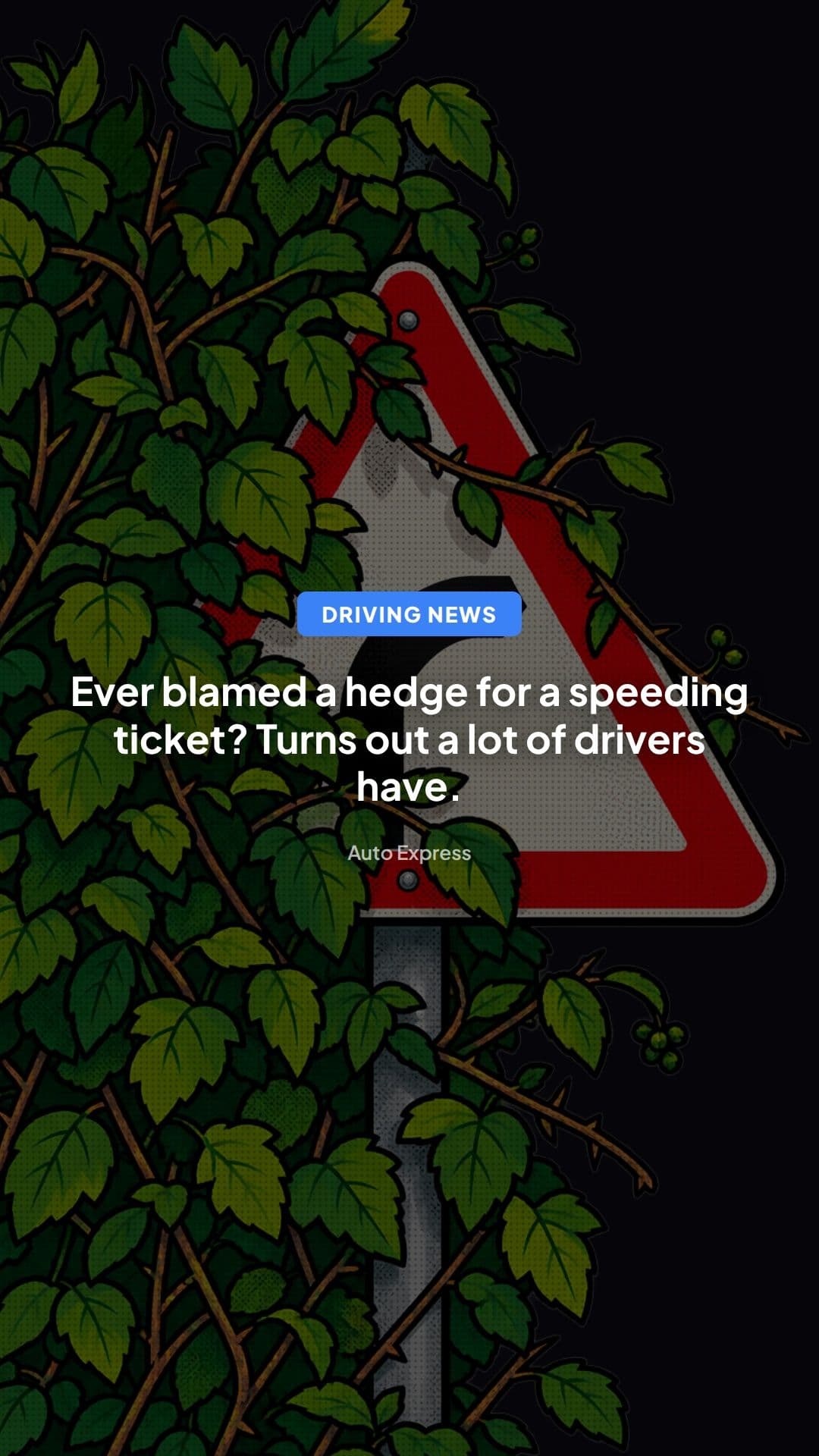
One in Five Drivers Blame a Speeding Fine on Hedges: Is "The Bush Ate My Sign" a Real Defence?
Picture the scene: a quiet country lane, dappled sunlight, and a speed limit sign buried somewhere inside three feet of unruly privet. It sounds like a minor inconvenience, the kind of thing you'd grumble about to a passenger and then forget. But according to new research from the RAC, this exact scenario is a genuine sticking point for a surprising number of UK motorists, enough that overgrown vegetation has become a recognisable excuse in the national conversation about speeding fines.
The RAC's survey found that one in five drivers who had received a speeding fine blamed overgrown hedges or foliage for obscuring the road sign that would have told them the limit. That's not a fringe complaint. It points to a genuine, widespread frustration with the state of Britain's roadside furniture, and it raises an uncomfortable question for local authorities: if a fifth of penalised drivers say they couldn't see the sign, how much of that is really down to driver error, and how much is down to a hedge nobody ever got around to cutting?
What Actually Happened
The story, first reported by Auto Express, centres on RAC research into why drivers end up with speeding convictions and how they feel about the process. Among the various reasons drivers gave for exceeding the limit, obscured signage caused by overgrown vegetation stood out as a strikingly common complaint, cited by a fifth of those surveyed. The findings tap into a long-running gripe among British motorists: that road signs, especially in rural areas, are too often hidden behind hedgerows, verges, and tree branches that nobody seems responsible for maintaining.
It's worth being clear about what the survey does and doesn't tell us. It captures driver perception, what motorists believe contributed to their fine, rather than a forensic audit of every sign in the country. Some of those drivers may well be right that a sign was genuinely unreadable. Others may be using a convenient explanation for a moment of inattention. The truth is probably a mix of both, and that's precisely what makes this such an interesting story for anyone who drives regularly on Britain's B-roads and country lanes.
Why This Actually Matters
Vegetation obscuring signage isn't just an amusing excuse trotted out on Reddit threads. It sits at the intersection of several serious issues: road safety, local authority funding, and the fairness of how speeding enforcement is applied.
Councils are legally responsible for maintaining the public highway, and that includes keeping sightlines to traffic signs clear. But highways budgets have been under sustained pressure for years, with maintenance backlogs affecting everything from potholes to verge cutting. When cash is tight, cyclical hedge trimming is often one of the first things to slip down the priority list, especially on rural routes where fewer people will complain compared to a pothole on a busy urban road.
There's also a road safety angle that cuts both ways. A speed limit sign that can't be seen isn't just a legal problem for the driver who gets caught out, it's a genuine hazard. Speed limits exist because a stretch of road has been assessed as needing a particular limit for safety reasons, whether that's a sharp bend, a school, or a residential area. If drivers genuinely can't see the sign telling them to slow down, the safety rationale behind the limit is undermined for everyone, not just the person who ends up with a penalty notice.
At the same time, speed cameras and speed awareness enforcement generate significant revenue and, more importantly, are central to reducing road casualties. If a meaningful proportion of fines are being issued in locations where signage is genuinely compromised, that's a legitimate maintenance failure that deserves scrutiny, separate from the broader debate about whether speed enforcement is too aggressive.
The Legal Angle: Can You Actually Use This as a Defence?
This is where things get complicated, and where drivers need a dose of realism.
Under the Traffic Signs Regulations and General Directions (TSRGD) 2016, speed limit signs must meet specific requirements around size, reflectivity, and positioning, and repeater signs are generally required at intervals along a route so drivers are reminded of the limit as they travel. In theory, if a sign fails to meet these regulatory standards, whether because it doesn't comply with the prescribed design or because it's not properly visible, there is scope to argue that the sign wasn't lawfully in place at all.
However, there's a crucial complication that undermines the "the hedge hid the sign" defence in a huge number of cases: the default 30mph limit. Under the Road Traffic Regulation Act 1984, any road with street lighting is automatically a "restricted road" with a 30mph limit, whether or not there's a sign at all. Drivers are expected to recognise street lighting as an indicator of the limit, which means an obscured sign on a lit road generally won't get you very far in court, because the law doesn't actually require a sign for the limit to apply.
Where the vegetation defence has more theoretical traction is on unlit rural roads where the limit is anything other than the national speed limit, for example a 40mph or 50mph zone, since these depend entirely on signage to be enforceable. If it can be demonstrated that the relevant sign, and any required repeater signs, were genuinely obscured or missing at the time of the offence, that can form part of a legal challenge. Courts have historically been sceptical of this kind of defence unless the obstruction is substantial and can be evidenced, such as through photographs taken shortly after the alleged offence, dashcam footage, or corroborating reports to the council about the same hedge.
It's also worth noting that highway authorities have duties under the Highways Act 1980, including powers to require landowners to cut back vegetation that encroaches on the public highway. If a driver believes a sign was genuinely obscured, reporting it to the relevant council isn't just good citizenship, it can create a paper trail that might support a future case, either for that driver or for others caught at the same spot afterwards.
None of this amounts to legal advice for any individual case. Anyone who genuinely believes they were fined because a sign was unreadable should seek advice on their specific circumstances, whether from a solicitor, a motoring organisation, or through the formal channels for challenging a speeding notice, rather than relying on general commentary. For a broader look at how obscured or unclear signage plays into penalty disputes more generally, it's worth reading our guide on how unclear signs can factor into an appeal, which, while focused on parking penalties, covers similar principles around signage clarity and the burden of proof.
What Drivers Should Know
A few practical points worth bearing in mind:
- Don't assume "the sign was hidden" will get you off. Courts require solid evidence, and as outlined above, the default 30mph rule on lit roads makes this defence far weaker than many drivers assume.
- Photograph problem signs promptly. If you regularly drive a route with a genuinely obscured sign, take dated photos. This is useful both for reporting the issue and as potential evidence if you're ever penalised there.
- Report overgrown vegetation to your local council. Highway authorities have statutory duties to keep signage visible, and can compel landowners to cut back encroaching hedges. A quick report could prevent other drivers being caught out, and yourself in future.
- Know your speed limit defaults. Learn the "restricted road" rule: street lighting generally means 30mph unless signed otherwise. This single piece of knowledge resolves a lot of confusion about when signage actually matters legally.
- If you're contesting a genuine case, get proper advice. Speeding offences carry penalty points and fines that scale with severity, so anyone considering a legal challenge, rather than accepting a fixed penalty or speed awareness course, should understand the risks of contesting in court rather than relying on general information.
Looking Ahead
This story is unlikely to be the last word on obscured signage. With council highway budgets remaining tight and vegetation growth an unavoidable seasonal problem, the tension between enforcement and maintenance responsibility isn't going away. If anything, growing public awareness, fuelled by surveys like this one, may put more pressure on local authorities to demonstrate that their signage is properly maintained before defending speeding enforcement in a given area.
For drivers, the sensible takeaway isn't to hope a hedge will save you from a fine. It's to understand where the law actually stands, report genuine hazards when you see them, and treat "the bush ate my speed limit sign" as, at best, a starting point for a conversation with the council, rather than a guaranteed way out of a penalty.
Written by
The Parking Ticket Pal Editorial Team
Source-checked parking guidance
Ready to Challenge Your Ticket?
Let our AI analyse your PCN and generate a professional appeal letter in minutes.
Start Free Appeal