
UK Petrol Prices Surge 8p: What Drivers Need to Know
UK petrol prices have climbed 8p in under a month, pushing average pump costs to 170.54p a litre. See what it means for drivers, budgets and fuel-saving.

The Parking Ticket Pal Editorial Team
19 October 2026
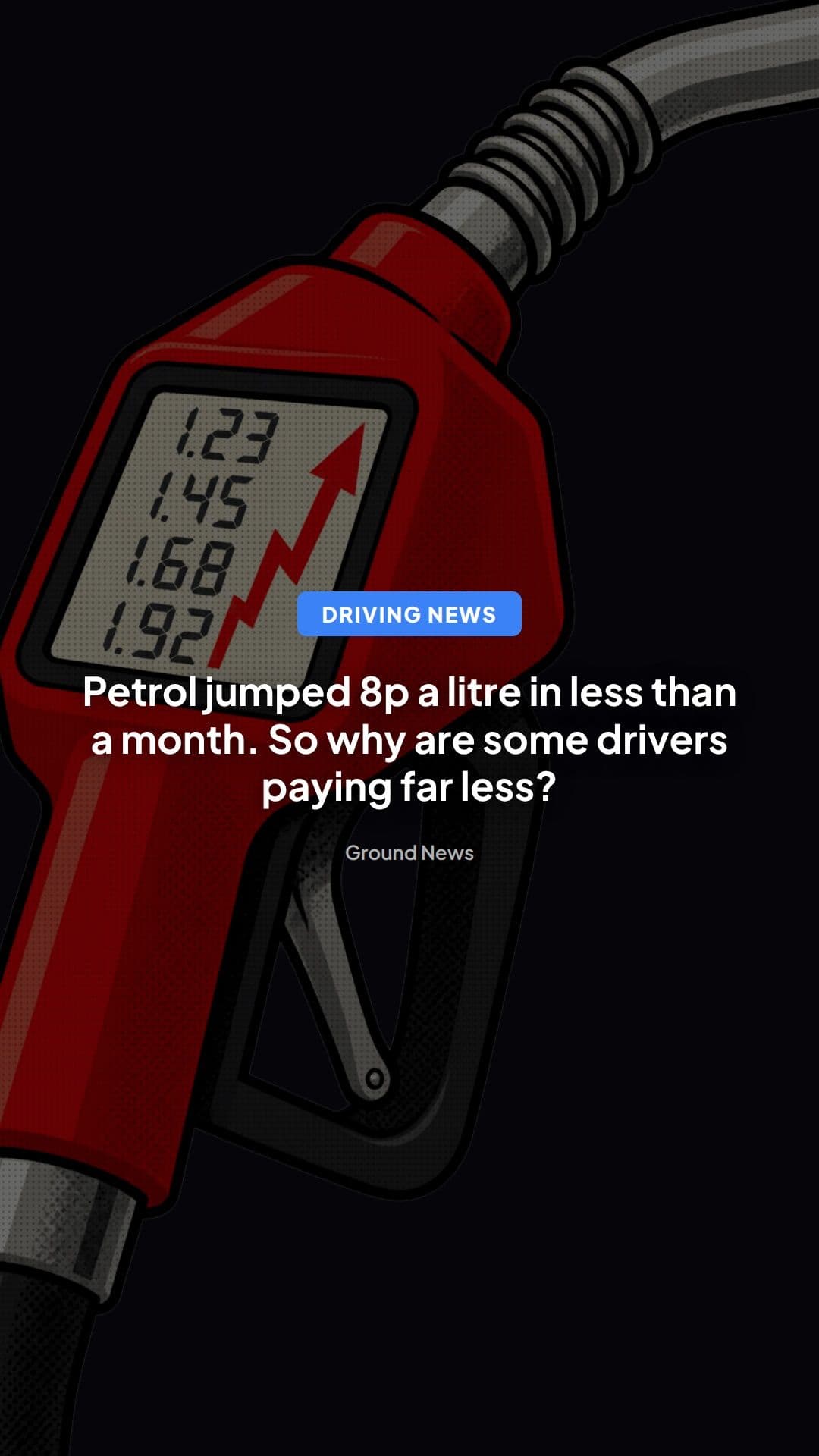
Petrol Up 8p in Under a Month: What the AA's Warning Means for Drivers
You probably haven't noticed the extra £4 or so on your last fill-up until the receipt came out. Fuel price rises rarely announce themselves. They creep up pump by pump, and then one day the number on the screen makes you wince.
That is the story behind the latest warning from the AA. According to the report on Ground News, average UK petrol has reached 170.54p per litre, with diesel at 192.86p. A typical family-car refill is now nearly £5 more expensive than at the start of September. Petrol has risen 8p in less than a month.
Headline figures only tell part of the story, though. Here is what is going on beneath them, how the sums work for your own car, and what the law says about some of the things drivers do when pump prices bite.
What happened
The core facts are simple. In under four weeks, the average price of a litre of petrol has climbed by around 8p. Diesel sits well above it at 192.86p, a gap of 22.32p per litre between the two fuels.
Put the 8p rise into everyday terms. On a 60-litre fill-up, which is a plausible size for a larger family car, 8p per litre adds £4.80. That matches the "nearly £5" in the report. If you refuel every week or two, that is a noticeable monthly hit before you have driven a single extra mile.
The source reporting does not point to one single cause, so it would be wrong to guess at one here. Pump prices generally reflect a mix of wholesale costs, currency movements, retailer margins and tax. What we can say is that the rise happened fast, and that speed is what prompted the AA's warning.
Why it matters
The tax layer makes every rise bigger
Fuel duty is charged as a fixed amount per litre. VAT, however, is charged as a percentage on top of the whole price, duty included. So when the underlying cost of fuel rises, VAT amplifies the increase at the pump. Drivers do not just pay the extra wholesale cost, they pay 20% extra on top of it. That is one reason pump prices can move more sharply than headlines about oil costs might suggest. If you want the tax angle in more depth, our piece on why drivers are paying more VAT now covers it.
The diesel gap changes the maths
Diesel at 192.86p versus petrol at 170.54p looks like an obvious win for petrol. But diesel engines are usually more efficient, so the real comparison is cost per mile, not cost per litre.
Here is an illustrative example. These mpg figures are hypothetical, not from the source, so swap in your own car's real-world figures:
- A petrol car doing 45mpg at 170.54p per litre costs roughly 17.2p per mile.
- A diesel car doing 55mpg at 192.86p per litre costs roughly 15.9p per mile.
The rule of thumb is that diesel is 13.1% dearer per litre at these prices (192.86 divided by 170.54). A diesel car therefore needs to be about 13% more efficient than a comparable petrol car just to break even on running costs. Many are, some are not, and short urban trips can wipe out the advantage.
This matters if you are weighing up a replacement car, and it matters even more if you do low mileage, where diesel's other drawbacks (such as particulate filter issues on short journeys) can outweigh any saving.
Who feels it most
A rise of this kind hits hardest where driving is not optional: rural households, shift workers, carers, tradespeople and anyone commuting to places without decent public transport. For them, an extra £5 a fill-up is a recurring bill, not a one-off annoyance.
The legal angle
Rising prices tempt people into shortcuts. Some of them carry real legal risk.
Driving off without paying
Filling up and leaving without paying is not a civil matter that forecourts shrug off. Under section 3 of the Theft Act 1978, "making off without payment" is a criminal offence. It requires dishonesty and an intention to avoid payment. Sometimes it is a genuine mistake, such as forgetting to pay or having a card declined, and forecourts will often accept payment promptly if you come back or call. But if you realise you have not paid, the sensible step is to contact the station straight away. Our article on drive-off petrol thefts rising with fuel prices looks at that trend in more detail.
Using your phone to hunt for cheaper fuel
Price-comparison apps are useful, but where you use them matters. Holding and using a handheld phone while driving is an offence, with a £200 fixed penalty and six points on your licence. The exemption for using a phone as a satnav applies only when it is properly mounted and you are not holding it. Check prices before you set off, or ask a passenger. For the specifics, see our guide to UK mobile phone driving laws and hands-free rules.
Idling to "save" on fuel (or to stay warm)
Running the engine while parked wastes fuel, which is the opposite of what you want right now. In England, councils can issue a fixed penalty for unnecessary idling under the Road Traffic (Vehicle Emissions) (Fixed Penalty) (England) Regulations 2002. The fine is modest, but the principle is clear. Wales has taken a tougher approach, as our post on Wales raising its engine idling fine to £150 explains.
Running out of fuel
Pushing a tank to the limit to stretch a cheaper fill-up is a false economy. The Highway Code expects drivers to check they have enough fuel before setting out, and running dry on a motorway is treated as avoidable rather than as a true emergency. Beyond the enforcement risk, a breakdown on a live carriageway is genuinely dangerous. A long motorway leg is the wrong place to gamble on "just enough".
Your rights at the pump
Fuel pumps are subject to weights and measures rules, and Trading Standards is the body that deals with concerns about pump accuracy. If you think a pump has dispensed less than it showed, or you were charged more than the advertised price, raise it with the site manager first, keep your receipt, and contact Trading Standards through the government's consumer advice route if it is not resolved. The government's Fuel Finder scheme, which is intended to make forecourt prices more transparent, is also worth watching. We have covered whether it will actually lower prices in Fuel Finder: will UK pump prices actually fall?
What drivers should know
Some practical points, with an eye on both the budget and the rulebook.
1. Do the 60-second maths on your own car. Work out your real-world mpg by filling the tank, resetting your trip meter, and checking after your next fill. Multiply your litres by the pump price to see your actual cost per mile. It is more reliable than the figure in the brochure.
2. Compare prices, but count the detour. A forecourt 3p cheaper per litre saves about £1.80 on 60 litres. If reaching it adds a few miles of driving, you may have saved nothing. Compare on routes you already drive.
3. Plan, do not chase. Use comparison apps before leaving home. Add a "cheap fill" to a route you were taking anyway, rather than making it a journey of its own.
4. Small driving changes add up. Smoother acceleration, correct tyre pressures, removing roof boxes and unneeded weight, and easing off at motorway speeds all reduce consumption. Our guide to the 60mph rule and cutting fuel costs goes through the numbers.
5. Mind the parking side of fuel costs. Circling for a free space burns fuel, and getting it wrong adds a penalty charge on top. A pre-booked or app-paid space can be cheaper overall than hunting. If you do receive a ticket, check the details carefully, because errors do happen. Our guide to appealing a PCN with a free template is a useful starting point. Forecourt queues can also be a parking enforcement flashpoint, as we explain in Euro Car Parks petrol queue fines and your rights.
6. Keep receipts and records. This helps if you ever need to dispute a pump charge, and if you drive for work, it supports mileage and expense claims. If you claim business mileage, check HMRC's current approved rates rather than relying on memory.
7. Do not let a card hold surprise you. Some forecourts place a temporary pre-authorisation on your card when you pay at the pump. If a larger-than-expected amount appears, it usually drops off once the final transaction posts, but check your banking app if it does not.
Looking ahead
Nobody can say with confidence where pump prices go from here, and anyone who claims certainty is guessing. The AA's warning is best read as a signal that the recent direction of travel is upward and drivers should plan accordingly, rather than as a forecast.
Several things are worth watching:
- Wholesale and currency moves, which tend to feed through to forecourts with a lag.
- Government decisions on fuel duty, which can change what you pay at the pump overnight. Our piece on fuel duty rises and what they could mean sets out the possibilities.
- Transparency measures such as Fuel Finder, and any scrutiny from the Competition and Markets Authority, which could affect how quickly savings reach drivers when wholesale prices fall.
- The wider shift in vehicle choice, as high pump prices make electric and hybrid options look more attractive. That is a long-term decision and should be made on your own mileage, charging access and budget, not on a single month of price movements.
The bottom line
An 8p rise sounds small until you multiply it by a full tank and then by every fill-up in a year. The most useful response is not panic but a bit of arithmetic and a few habit changes. Know your cost per mile, avoid the legal pitfalls that tempt drivers when budgets are tight, and plan fuel stops rather than chasing savings behind the wheel.
This article provides general information about UK motoring rules and is not legal advice. For specific concerns about a fine, a forecourt dispute or an offence, consult official government guidance, Trading Standards, or a qualified professional.
Written by
The Parking Ticket Pal Editorial Team
Source-checked parking guidance
Ready to Challenge Your Ticket?
Let our AI analyse your PCN and generate a professional appeal letter in minutes.
Start Free Appeal