Fuel Price Surge: Why Drivers Are Paying More VAT Now
Rising pump prices during the Iran war have increased drivers’ VAT bills by billions. Find out what a fuel duty rise could mean for UK motorists next year.

The Parking Ticket Pal Editorial Team
12 August 2026
Fuel Price Surge Brings Extra VAT Bill for Drivers: The Hidden Tax on Every Tank
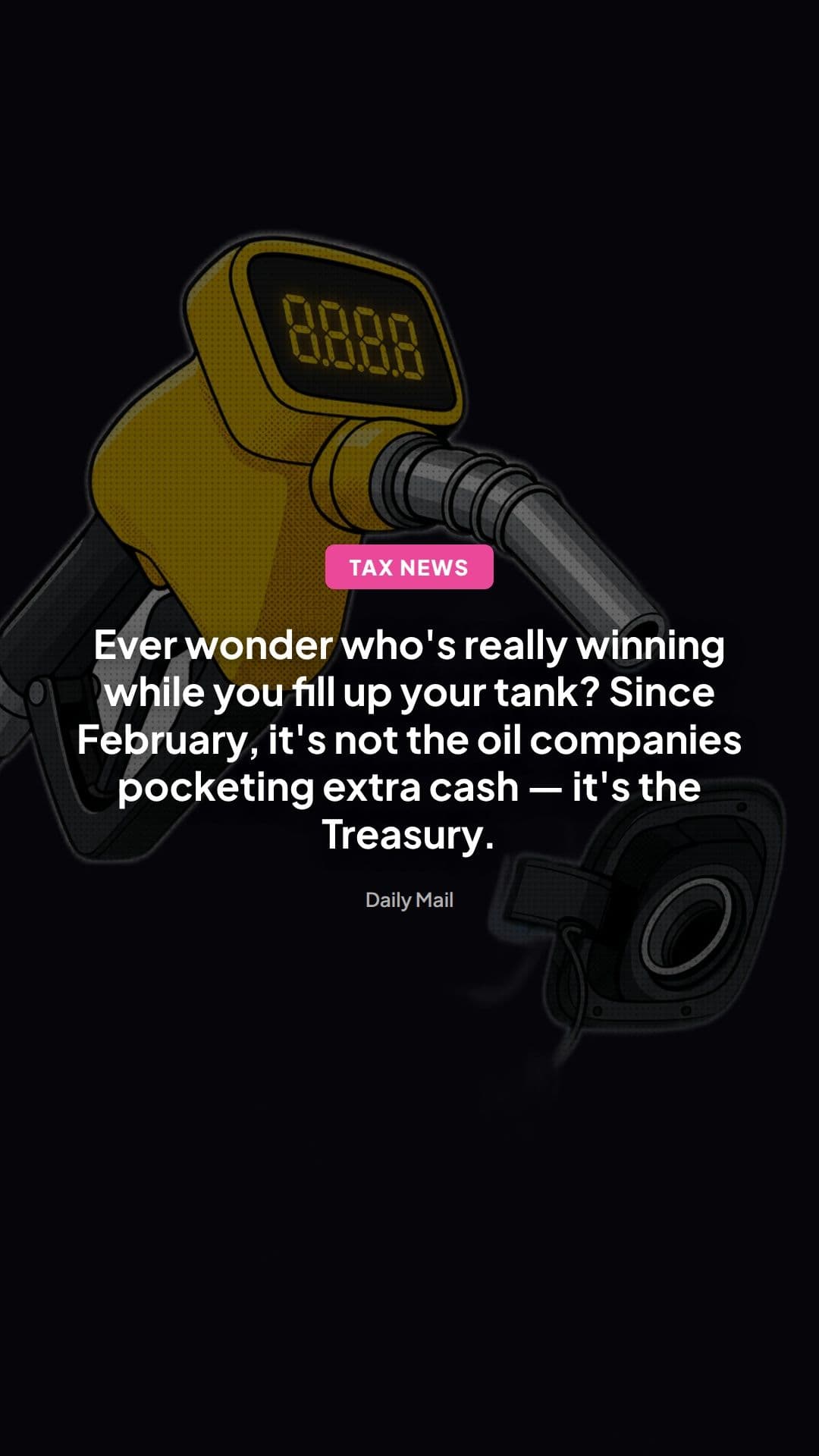
Every time the pump price ticks upward, there's a second, quieter cost hiding in plain sight. It's not fuel duty, and it's not the retailer's margin. It's VAT, charged at 20% on the entire price of your petrol or diesel, including the fuel duty itself. So when global events send oil prices spiking, the Treasury doesn't just watch from the sidelines. It collects more.
That's exactly what appears to have happened during the recent escalation involving Iran, according to analysis reported by the Daily Mail. As fuel prices climbed at UK forecourts, motorists are estimated to have handed over billions of pounds extra at the pumps, and a meaningful chunk of that increase has flowed straight into VAT receipts. To make matters worse for drivers already feeling the squeeze, Fuel Duty itself is expected to rise in the year ahead.
What Happened
The mechanics here are straightforward once you understand how fuel is taxed in the UK. Petrol and diesel prices are built from several layers: the wholesale cost of crude oil and refined product, retailer margins and operating costs, Fuel Duty (currently frozen at a set rate per litre), and then VAT charged on top of everything else, including the duty.
That last point is crucial and often misunderstood. VAT in the UK isn't applied only to the "base" cost of fuel. It's applied to the final retail price, meaning drivers are effectively paying tax on a tax. When oil markets became volatile due to the conflict involving Iran, wholesale prices rose, forecourts passed some of that increase on to consumers, and because VAT is a percentage rather than a fixed amount, every extra penny at the pump automatically generates extra VAT for the Treasury.
The analysis referenced in the Daily Mail's report estimates this windfall running into the billions when totalled across the country's fuel consumption during the price spike. It's a stark illustration of how geopolitical instability thousands of miles away can quietly boost government coffers closer to home, without a single policy change or ministerial announcement.
Layered on top of this is the forward-looking concern: Fuel Duty, which has been frozen or cut in various Budgets over the past decade, is expected to rise in the coming year. If that happens alongside continued price volatility, drivers could be facing a genuine double hit, higher duty and higher VAT on that duty, compounding the pain already felt from global supply shocks.
Why It Matters
For most households, fuel isn't a discretionary purchase. It's how people get to work, take children to school, and run errands that public transport can't easily cover, particularly outside major cities. When pump prices rise, there's no meaningful way to "shop around" your way out of the cost, especially in the short term. That inelasticity is precisely why fuel taxation is such a reliable revenue stream for government, and why price spikes caused by international conflict end up functioning almost like an unplanned tax rise on ordinary drivers.
There's also a fairness question worth sitting with. VAT on fuel duty means the government's tax take rises passively whenever oil markets are volatile, regardless of whether that volatility has anything to do with UK policy. Drivers get no say in the matter and see no corresponding benefit. It's a structural feature of how fuel is taxed, not a new policy, but moments like the recent price surge throw it into sharp relief.
This also matters in the context of the broader cost of living. Households already managing higher energy bills, food prices, and other pressures don't distinguish between "official" tax rises and quieter revenue increases baked into commodity price swings. The effect on a family budget is the same either way: less money left over at the end of the month.
The Legal and Regulatory Angle
VAT on fuel is governed by the Value Added Tax Act 1994, which sets the standard rate applied to most goods and services in the UK, including motor fuel. There is no separate reduced rate for petrol or diesel, unlike some other essential goods. Fuel Duty, meanwhile, is set out under the Hydrocarbon Oil Duties Act 1979 and is adjusted through Budget announcements by the Chancellor, typically taking effect from a specified date rather than fluctuating with the market.
Because VAT is calculated on the VAT-inclusive retail price (which already contains duty), any change in either the wholesale cost of fuel or the duty rate has a multiplying effect on the total tax burden. This isn't a hidden or improper practice. It's how the system has worked for decades, and it's been the subject of periodic criticism from motoring organisations and opposition politicians whenever fuel prices spike sharply.
There is no current mechanism that automatically caps or rebates the additional VAT generated during a price shock. Calls for a temporary VAT reduction during periods of extreme volatility have surfaced before, but any such change would require a Budget decision or emergency fiscal statement. As things stand, drivers have no statutory right to relief simply because prices rose due to external events.
For readers wanting the fuller picture on where fuel duty policy currently stands and what's been frozen, extended, or under review, our coverage of the fuel duty freeze extended to 2026 and the potential fuel duty hike situation set out the policy backdrop in more detail.
What Drivers Should Know
There's no legal remedy available to individual drivers for the extra VAT generated during a fuel price spike, but there are practical steps worth taking to limit the financial impact:
- Track prices before you fill up. Price comparison apps and websites can highlight meaningful differences between forecourts in the same area, sometimes several pence per litre, which adds up over a year of regular driving.
- Consider the timing of larger fills. If prices are on a clear upward trend tied to an ongoing geopolitical event, filling up sooner rather than waiting can sometimes save money, though this is never guaranteed and shouldn't be treated as financial advice.
- Review your driving habits. Simple changes such as reducing harsh acceleration, keeping tyres properly inflated, and removing unnecessary weight from the vehicle can meaningfully improve fuel economy, softening the impact of price rises.
- Factor tax rises into budgeting. With Fuel Duty expected to increase in the year ahead, it's worth building a buffer into household budgets now rather than being caught out when the change takes effect.
- Watch official announcements. Fuel Duty changes are confirmed through Budget statements from HM Treasury. Following official government guidance, rather than relying solely on media speculation, will give the clearest and most accurate picture of what's actually changing and when.
For those wanting a wider view of how pump prices have been moving and what's driving them, our reporting on petrol prices surging amid the US-Iran situation and the broader trend of rising UK fuel prices offers useful additional context.
Looking Ahead
The pattern here is likely to repeat. Global oil markets remain sensitive to conflict, sanctions, and supply disruptions, and the UK's tax structure means every price spike carries an automatic VAT dividend for the Treasury. Unless there's a fundamental change to how fuel is taxed, something no government has seriously pursued despite periodic pressure, drivers will continue to shoulder both the market cost and the tax consequence whenever instability pushes prices higher.
The looming Fuel Duty increase adds another layer of uncertainty. If it goes ahead as expected, it will land at a time when many households are already stretched, and it will interact with VAT in exactly the compounding way described above. Motoring groups are likely to renew calls for restraint or reform, but any decision ultimately rests with the Chancellor at the next fiscal event.
For now, the most practical response for drivers is awareness rather than action: understanding why prices move the way they do, recognising that a chunk of any increase quietly becomes extra tax revenue, and planning household budgets with that reality in mind. Keeping an eye on official Budget announcements and trusted fuel price trackers remains the best way to stay ahead of changes that are, ultimately, largely outside any individual driver's control.
Written by
The Parking Ticket Pal Editorial Team
Source-checked parking guidance
Ready to Challenge Your Ticket?
Let our AI analyse your PCN and generate a professional appeal letter in minutes.
Start Free Appeal