
New MOT Rules: Could Drivers Get Points on Their Licence?
Drivers without a valid MOT could face penalty points or vehicle seizure under Department for Transport proposals. Find out what the possible rule changes mean.

The Parking Ticket Pal Editorial Team
18 November 202610 min read
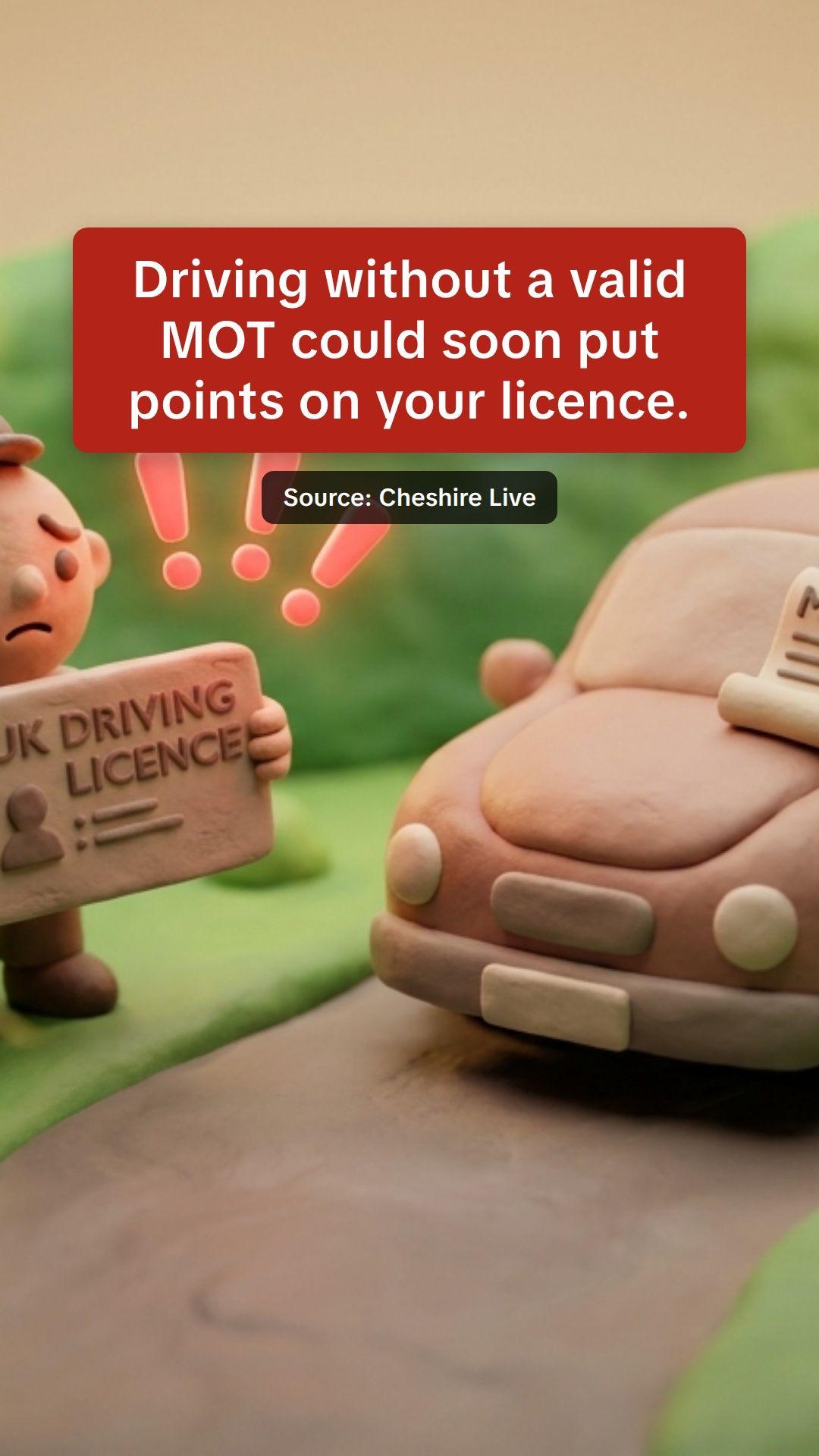
Drivers Face New MOT Rule Which Could See Points on Licence: What the Proposed Crackdown Means
Most drivers have let an MOT lapse at some point, even if only for a few days. You spot the date on the reminder, tell yourself you will book it next week, and then life gets in the way. Under current rules that mistake usually costs you a fine at worst. According to a Cheshire Live report, that could change, with the Department for Transport (DfT) considering penalty points and even vehicle seizure for driving without a valid MOT.
This is a consideration, not yet a law. It is still worth understanding, because the review reportedly covers much more than MOTs.
What has been reported
The DfT is considering tougher penalties for driving without a valid MOT. The options reportedly include penalty points and vehicle seizure. The proposed review is also said to cover:
- Uninsured driving
- Cloned number plates
- Drink and drug driving
- Medical fitness to drive
- Seatbelt offences
The summary does not say what the new penalties would be, how many points might apply, or when any change could happen. Nothing is settled, and any change would need to go through the proper legislative process. Treat the headline as a direction of travel, not a rule you can be fined under tomorrow.
What happens today if your MOT runs out
Under the Road Traffic Act 1988, it is an offence to use a vehicle on the road without a valid MOT certificate where one is required. In general terms:
- The maximum fine is £1,000.
- There are currently no penalty points for the lack of an MOT alone.
- If the vehicle is found to be dangerous, penalties are much heavier. That can mean a fine of up to £2,500, three penalty points and potentially a driving ban.
There are two well-known exceptions. You may drive to a pre-booked MOT appointment, and you may drive to a garage for repairs required after a failed test. If your car fails with a "dangerous" defect, you generally should not drive it away at all, other than as the rules allow for repair.
That is why points would be a real shift. Today, an expired MOT is treated as an administrative failing for most people. Points would put it closer to offences such as using a mobile phone at the wheel, and that matters because points stay on your record and feed into insurance costs and "totting up" bans.
Why the government may be looking at this
The summary does not say why the DfT is considering these changes, so I will not put words in its mouth. But the wider context is clear enough.
The MOT is a basic safety check covering brakes, tyres, lights, steering and emissions. A car without one is not necessarily unsafe, but the system relies on every driver turning up each year. Enforcement has moved on a lot too. Automatic number plate recognition (ANPR) cameras can check plates against DVLA and insurance databases in seconds, so the old assumption that nobody notices an expired MOT is increasingly shaky. We covered that trend in our piece on how cameras are targeting MOT, tax and insurance offences.
Seizure is a significant escalation. Police can already seize vehicles driven without insurance or a valid licence under section 165A of the Road Traffic Act 1988, and the DVLA can clamp or remove untaxed vehicles. Extending something similar to MOT offences would take a lapsed certificate from a paperwork problem to a potential loss of your vehicle. For background on how seizure works in practice, see when your car can be seized instantly and what the DVLA can do about untaxed vehicles.
The wider review: what else is on the table
The MOT headline has grabbed the attention, but the other areas in the review are arguably just as significant.
Uninsured driving
This is already one of the most heavily penalised motoring offences. Driving without insurance usually carries six penalty points and a fixed penalty of £300, or a court case with an unlimited fine and possible disqualification. Separately, the continuous insurance enforcement scheme targets registered keepers whose vehicles are not insured, even if the car is not being driven. Keepers of an uninsured, non-SORN vehicle can face a fixed penalty and then prosecution if they do not respond.
If the review proposes tougher penalties here, it would be building on an already strict regime.
Cloned number plates
Cloning is where criminals copy the registration of a genuine car. The innocent owner often ends up with speeding notices, parking charges and toll or congestion bills for journeys they never made. Tougher penalties would target the offenders, but the more pressing issue for ordinary drivers is proving you are the victim. If this has happened to you, our guides on proving a cloned plate PCN and how to fight bogus fines from plate cloning cover the practical steps.
Drink and drug driving
Both are already serious offences. The legal limit in England, Wales and Northern Ireland is 35 microgrammes of alcohol per 100 millilitres of breath, with a lower limit of 22 in Scotland. Drug driving is covered by section 5A of the Road Traffic Act 1988, which sets specified limits for certain controlled drugs. A conviction for either typically carries a minimum 12-month ban. If you are curious about the debate on lowering limits, see our explainer on the lower drink-drive limit.
Medical fitness
Drivers are legally required to tell the DVLA about medical conditions that could affect their ability to drive. Failing to do so can lead to a fine of up to £1,000, and may complicate insurance if there is an accident. Reform in this area could touch on how and when fitness is checked, which links to wider debates about licence renewal and eye tests for older drivers. The summary does not say what is proposed, so it would be premature to assume any particular age group is being targeted.
Seatbelt offences
Wearing a seatbelt is a legal requirement for drivers and passengers in most circumstances, with limited medical and other exemptions. Drivers are responsible for ensuring children under 14 are properly restrained, while older passengers are responsible for themselves. Penalties are a fixed penalty or a court fine of up to £500. Leicestershire's use of camera vans against belt offences shows how enforcement is changing here too.
Practical advice for drivers
None of this is legal advice, and the position may change if the proposals go ahead. But there are sensible habits worth adopting whatever happens.
1. Check your MOT status regularly. You can look up any vehicle's MOT history and expiry date free on GOV.UK using the registration number. Do it today. It takes about a minute.
2. Set your own reminders. Do not rely solely on the garage or a text from a third party. Put the date in your phone calendar with a prompt a month ahead.
3. Know the early-test rule. You can generally take your car for its MOT up to a month (minus a day) before it runs out and keep the same renewal date. That gives you a buffer if the car fails and needs work.
4. Book properly if you are cutting it fine. If your MOT has expired, driving to a pre-booked test is allowed, so keep your booking confirmation. Otherwise, avoid driving the car until it is sorted.
5. Do not ignore advisories. A pass with advisories is not a clean bill of health. Tyres close to the legal limit or worn brake components can become dangerous defects by next year's test.
6. Beware of "ghost" certificates. Fake or unverified MOTs exist, so verify any certificate you are shown if you are buying a used car. Our piece on spotting a fake MOT explains what to look for, and the new MOT photo rules are designed to tighten testing standards.
7. Check your insurance and keeper details. Make sure your policy is in force, your address is current with the DVLA, and any off-road vehicle has a SORN. Incorrect records can trigger penalties through automated systems.
8. Check your policy terms. Some insurers may take a dim view of a car being driven without an MOT, particularly after an accident. Read your documents or ask your insurer directly if you are unsure.
What this could mean going forward
Several questions remain unanswered, and they will decide how significant this review turns out to be.
- Would points be automatic or discretionary? A short lapse is very different from driving a car that is plainly unroadworthy for months. A sensible regime would distinguish between them.
- How would seizure work? Police powers for uninsured vehicles come with release fees and storage charges. Whether anything similar would apply to MOT offences is unknown.
- What about the honest mistake? Many people with a lapsed MOT simply forgot. Ministers will have to decide how far to punish carelessness as opposed to deliberate evasion.
- Will there be consultation? Significant changes to penalty points normally involve public consultation, giving drivers and motoring groups a chance to respond.
The direction is clear: more automated checks, closer data matching and stiffer consequences for people who drive outside the rules. For responsible drivers who keep up with the basics, little changes. For those who tend to leave things until the last minute, this is a good moment to tighten up.
The bottom line
A lapsed MOT is cheap and easy to avoid, and may soon be more expensive to ignore. Until the DfT confirms what, if anything, will change, the current rules still apply: up to a £1,000 fine, much more if the car is dangerous. Check your expiry date, book early and keep your paperwork in order.
For official information on MOT rules, vehicle tax and licence obligations, use GOV.UK or contact the DVLA directly. If you are facing a prosecution or a serious penalty, speak to a qualified solicitor rather than relying on general guidance.
Written by
The Parking Ticket Pal Editorial Team
Source-checked parking guidance