Over-70 Driver Eye Tests: What the New Rules Could Mean
Drivers aged 70+ could face compulsory eye tests every three years under proposed UK road-safety reforms. Find out what the plans may mean for licence renewal.

The Parking Ticket Pal Editorial Team
28 August 2026
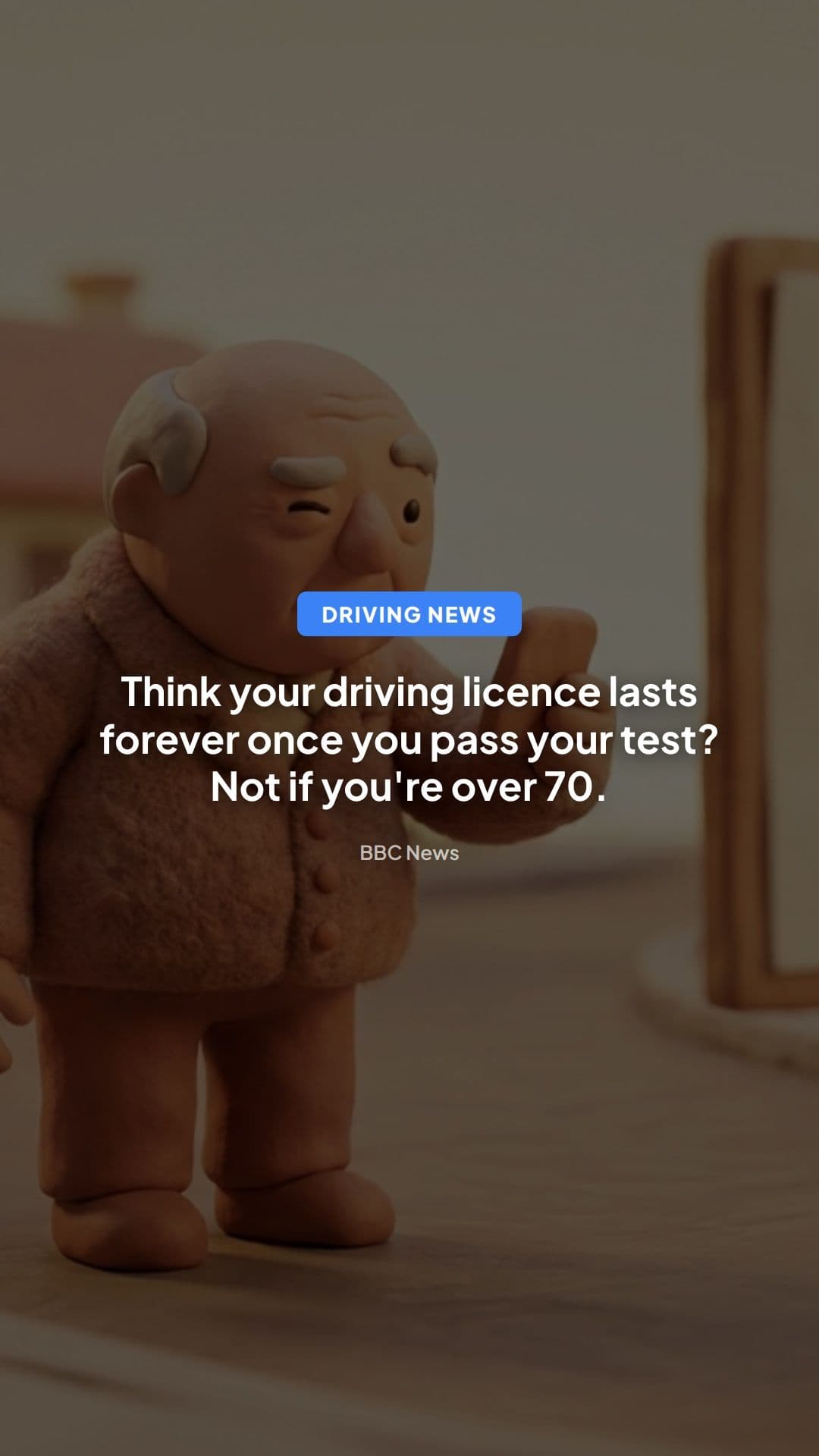
Drivers Over 70 Face Mandatory Eye Tests Every Three Years: What the Proposed Reforms Mean
Picture this: you turn 70, a letter drops through your door reminding you to renew your driving licence, and you tick a box confirming your eyesight is up to scratch. No optician, no test, just your word. For decades, that has been the reality of Britain's approach to older drivers' vision. Now, according to the BBC, that could be about to change.
Proposed road-safety reforms would require drivers aged 70 and over to complete a formal vision test every three years, rather than simply declaring their eyesight is fine. It sounds like a small administrative tweak. In practice, it could reshape how millions of older motorists renew their licences and reignite a long-running debate about age, safety, and fairness on Britain's roads.
What's Actually Being Proposed
Here's the bit that often gets lost in the headlines: the requirement to renew your licence at 70 and every three years afterwards already exists. That has been the case in the UK for a long time. What's under review is how your eyesight gets checked during that renewal.
Currently, the process relies on self-certification. When you renew at 70 (using form D46P or the online service), you're asked to confirm you meet the minimum eyesight standard for driving, which includes being able to read a number plate from 20 metres away and meeting a specified visual acuity. There's no requirement to visit an optician, present evidence, or undergo any independent assessment. You simply tick the box.
The reform being discussed would replace or supplement that self-declaration with an actual vision test carried out by a professional, likely at renewal points every three years once a driver hits 70. In effect, it moves eyesight checks for older drivers from an honesty system to a verified one.
It's worth noting this is a proposal, not yet law. Road-safety reforms of this kind typically go through consultation, parliamentary scrutiny, and secondary legislation before they take effect, so there's no immediate change for drivers renewing their licence this year. But the direction of travel is clear, and it's one that road-safety campaigners and medical bodies have pushed for over many years.
Why This Matters More Than It First Appears
Self-certification has always had an obvious weakness: it depends entirely on people accurately judging their own decline. Eyesight conditions such as cataracts, glaucoma, and macular degeneration often develop gradually. Many people simply don't notice how much their vision has deteriorated until it's tested properly, because the brain compensates and daily routines mask the change. That's a very different problem to someone deliberately lying on a form.
Britain's driving population is also ageing. More people are holding licences into their 70s, 80s, and beyond, often because they rely on their car for independence, work, or caring responsibilities in areas with limited public transport. That's not inherently a safety problem. Age alone doesn't make someone a dangerous driver, and plenty of older motorists are exceptionally careful and experienced behind the wheel. But the risk of undiagnosed or unmanaged vision problems does increase with age, and self-declaration has always struggled to catch that reliably.
It's also worth putting the UK's system in context. Several European countries already require periodic medical or vision assessments for older drivers as part of licence renewal, rather than relying on self-certification. The UK has historically taken a lighter-touch approach, trusting drivers to be honest and only intervening when there's specific evidence of a problem. This proposal would nudge Britain closer to the more formalised model used elsewhere.
The Legal Position Right Now
Understanding the current rules helps explain why this reform is being discussed. Under Section 92 of the Road Traffic Act 1988, every driver, regardless of age, must meet a minimum eyesight standard to legally hold a licence. This includes reading a number plate at a set distance and meeting specific visual acuity requirements, with glasses or contact lenses permitted if that's how you normally correct your vision.
Crucially, it's a criminal offence under Section 96 of the same Act to drive with uncorrected defective eyesight below the legal standard. Police officers also have the power to conduct a roadside eyesight check, typically the number plate test, if they have any concern about a driver's vision. Failing that test can lead to immediate licence revocation on the spot, not simply penalty points.
There's also a separate duty to notify the DVLA of certain medical conditions, including some eye conditions, under existing licensing law. Failing to do so can result in a fine of up to £1,000, and if you're involved in a collision where undeclared poor eyesight is a factor, the consequences can be far more serious, including prosecution for driving without due care or dangerous driving. If you're unclear on how DVLA notification obligations work more broadly, it's worth reading our piece on the DVLA driving licence code that can lead to a hefty fine, since the same principle of proactive disclosure applies here.
The self-certification renewal process for over-70s sits alongside these duties but doesn't actively test compliance with them. That's precisely the gap this proposed reform is aimed at closing.
What Drivers Should Know and Do Now
Even before any new law takes effect, there are sensible steps worth taking, particularly if you're approaching 70 or renewing your licence soon.
Get your eyes tested regularly regardless of the rules. The NHS recommends eye tests roughly every two years for most adults, and more frequently for people with certain conditions or over a certain age. Waiting for a legal requirement to force the issue isn't in anyone's interest, least of all yours.
Be honest on your renewal declaration. Self-certifying inaccurately isn't just a technicality. If you're later involved in an incident and it emerges your eyesight didn't meet the legal standard, your insurer may refuse to pay out, and you could face criminal liability.
Know the number plate test. You should be able to read a standard number plate from 20 metres in good daylight, wearing glasses or contact lenses if you normally need them. If you're not confident you could pass that test right now, it's worth getting checked before you next get behind the wheel.
Understand your notification duties. Certain diagnosed eye conditions must be reported to the DVLA, separate from the routine renewal process. If in doubt, the DVLA's own guidance or your GP or optician can advise whether a condition needs declaring.
Don't assume a clean bill of health lasts forever. Vision can change noticeably within a three-year window, particularly for people managing age-related conditions. Regular checks matter more than the paperwork.
None of this constitutes legal advice tailored to your individual circumstances. If you have specific concerns about a medical condition and your entitlement to drive, the DVLA's official guidance and your GP or optician are the right first port of call, not a blog post.
Looking Ahead
If this reform progresses, expect a formal consultation process, likely input from bodies representing older drivers, opticians, and road-safety charities, and probably a phased introduction rather than an overnight switch. There will almost certainly be pushback too. Critics may argue that testing based purely on age is a blunt instrument, given that plenty of younger drivers have undiagnosed vision problems as well, and that resources might be better spent on universal, evidence-based checks rather than an age threshold. Others will welcome any move that closes the gap between the law on paper and what actually happens at renewal time.
For now, the message for drivers over 70, or anyone approaching that milestone, is simple: don't wait for legislation to catch up with common sense. If you haven't had your eyes tested recently, book an appointment. It's a far better outcome than discovering the hard way, whether through a police roadside check, a DVLA medical review, or worse, that your vision no longer meets the standard the law already demands of you.
For more on where UK motoring law is heading more broadly, our roundup of driving law changes coming in the next year is a useful starting point, and our explainer on other proposed licensing shake-ups covers additional reforms that could affect drivers of all ages.
Written by
The Parking Ticket Pal Editorial Team
Source-checked parking guidance
Ready to Challenge Your Ticket?
Let our AI analyse your PCN and generate a professional appeal letter in minutes.
Start Free Appeal