Number Plate Cloning Scam: How to Fight Bogus Fines
UK drivers are being hit with bogus parking fines after number plate cloning. Learn how to spot the scam, challenge PCNs and protect your vehicle record.

The Parking Ticket Pal Editorial Team
7 September 2026
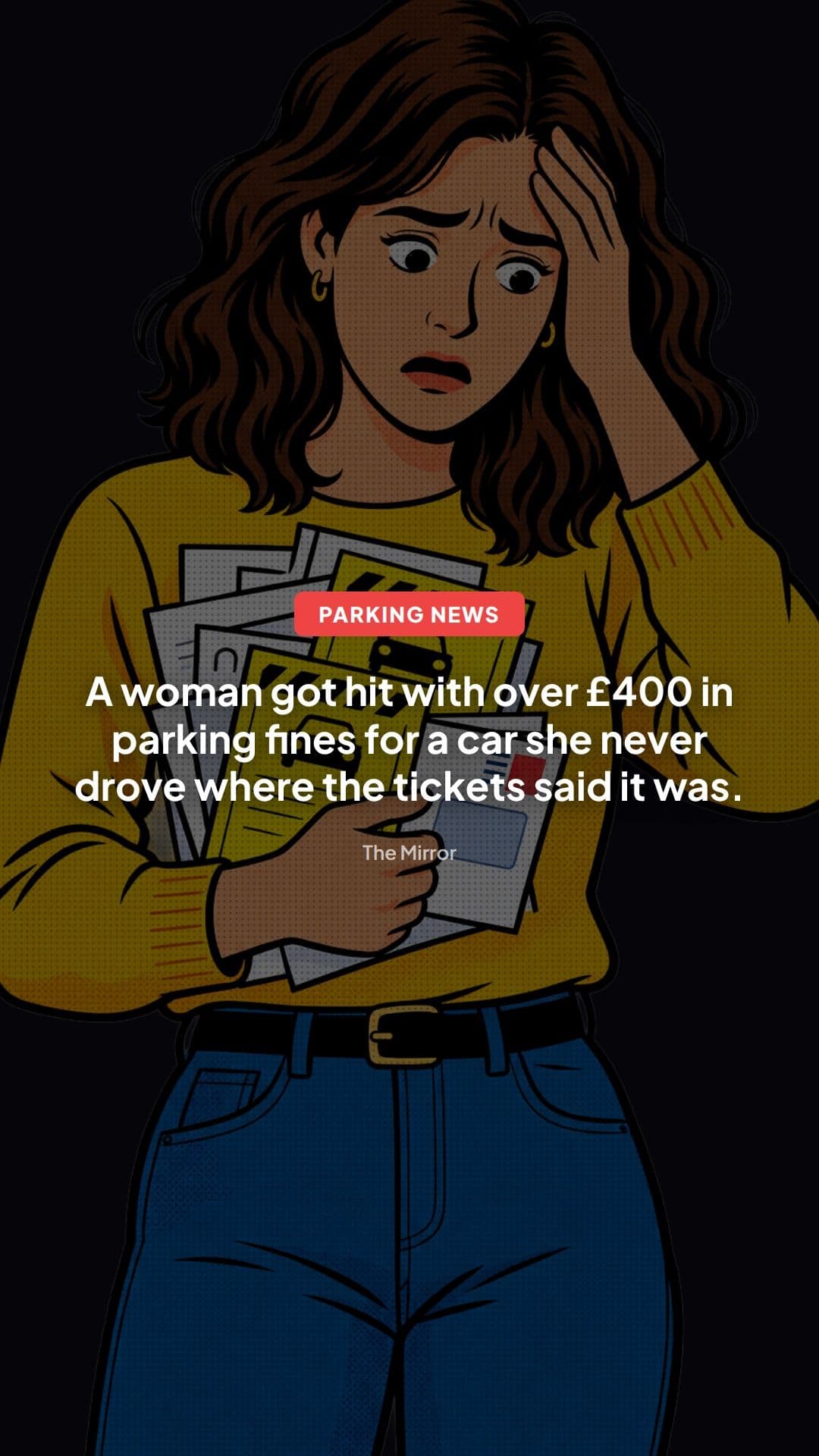
The Perfect Crime: How Plate Cloning Turns Innocent Drivers Into Criminals Overnight
Imagine opening your post to find a parking fine for a street you've never driven down, in a town you've never visited, on a date when your car was safely parked outside your own house. Now imagine that happening again. And again. Until the letters start arriving from debt collectors rather than councils, and the total owed creeps past £400.
This is exactly what happened to a driver whose story was reported by The Mirror, after criminals cloned her number plate and used it to dodge parking charges across the country, leaving her to pick up the bill. It sounds like a rare and bizarre stroke of bad luck. In reality, it's a growing and largely invisible form of fraud that could be happening to any driver reading this right now, without them having the faintest idea.
What Happened
According to the report, the driver in question began receiving parking penalty notices for locations she had never visited. The fines mounted up, eventually totalling more than £400, all stemming from a criminal who had physically copied her registration plate and fitted it to another vehicle. Every time that cloned car was caught on camera overstaying, parking illegally, or otherwise breaching parking rules, the penalty notice was generated automatically and sent to the registered keeper: her.
This is the quiet horror of number plate cloning. Unlike a stolen car, where the theft itself is usually the alarming event that triggers a police report and insurance claim, a cloned plate causes no immediate disruption to the victim's life. Their car still sits on the driveway. Their journey to work is unaffected. The first sign that anything is wrong is often a brown envelope on the doormat, followed by another, and another.
The Mirror's warning comes as councils and private parking operators increasingly rely on Automatic Number Plate Recognition (ANPR) cameras to issue penalties without any human ever laying eyes on the vehicle. That efficiency is precisely what criminals are exploiting. A camera does not know, and cannot know, whether the plate it has just photographed is genuine or a cheap duplicate bought online and screwed onto a different car.
Why It Matters
Plate cloning is not a new phenomenon, but its consequences have grown sharper as enforcement has become more automated. A decade ago, a traffic warden physically checking a vehicle against its documents might have spotted a mismatch. Today, an ANPR camera reads a plate, cross-references it against the DVLA database, and fires off a Penalty Charge Notice (PCN) or Notice to Keeper entirely on the strength of those characters. If the plate matches your car on paper, the system assumes it is your car, full stop.
This matters for three reasons.
First, the financial burden falls on entirely innocent people. A single PCN can run to £70 or more before discounts, and multiple fines from a single cloning spree can quickly spiral into hundreds of pounds, as this case demonstrates.
Second, plate cloning is not limited to parking fines. Criminals use cloned plates to avoid speeding tickets, congestion charge and ULEZ penalties, and even to escape liability after using a vehicle in more serious crimes, from fuel theft to burglary getaways. A driver who becomes a victim of cloning may find themselves fielding queries not just from parking firms but potentially from the police.
Third, and perhaps most unsettling, victims often have no way of knowing they have been targeted until the letters start arriving. There is no alert system that tells you your plate has been duplicated. Unlike a compromised bank card, there's no fraud detection team monitoring for unusual activity on your registration.
The Legal Angle
Under UK law, the registered keeper of a vehicle is not automatically liable for every penalty issued against that registration. This is a crucial point that many drivers don't realise. Both the Traffic Management Act 2004, which governs council-issued PCNs, and the framework under which private parking operators pursue Parking Charge Notices, allow a keeper to challenge liability if they can demonstrate the vehicle was not theirs, or that someone else was in control of it, or that it wasn't actually present at the location in question.
Crucially, private parking firms rely on "keeper liability" provisions under Schedule 4 of the Protection of Freedoms Act 2012 to pursue the registered keeper when they cannot identify the driver. But that liability is not absolute. If you can prove your vehicle was elsewhere, or that the plate was cloned, that presumption can be successfully challenged.
For council PCNs, formal representations can be made directly to the local authority, and if unsuccessful, escalated to the independent Traffic Penalty Tribunal (or London Tribunals in the capital). For private charges, appeals typically go through POPLA or the Independent Appeals Service (IAS), depending on which trade body the operator belongs to.
Proving a plate has been cloned generally means gathering evidence that shows your car could not have been at the location when the alleged offence occurred. This might include:
- Timed and dated photographs or CCTV showing your car elsewhere
- Fuel or shop receipts placing your car in a different location
- A statement from your employer or a family member confirming your whereabouts
- Dashcam footage from the relevant period
- A crime reference number from reporting the cloning to Action Fraud or the police
It's also worth noting that if fines go unpaid and unchallenged, they can eventually be escalated to bailiff enforcement, at which point the stress and cost multiply considerably. Anyone facing that situation should understand the formal process for disputing liability, including statutory declarations where a PCN has proceeded to enforcement without your knowledge.
What Drivers Should Know
The uncomfortable truth is that there is no foolproof way to prevent your plate from being cloned. Criminals can photograph a plate in a car park, a supermarket, or even a passing photo on social media, then order a duplicate from unscrupulate plate suppliers who don't check documentation properly. However, there are sensible steps drivers can take to reduce the risk and to respond quickly if it happens.
Check your vehicle's record regularly. Services linked to the DVLA and MOT history checker can flag unusual activity, and it's worth periodically confirming your vehicle's details are correct and haven't been tampered with in any official database.
Don't ignore unfamiliar penalty notices. It's tempting to assume a fine for a location you've never visited is a mistake that will simply go away. It won't. Respond promptly, in writing, setting out clearly why the notice cannot relate to you or your vehicle.
Gather evidence early. If you suspect cloning, start collecting proof of your car's whereabouts on the dates in question before memories fade or CCTV footage is deleted.
Report it to the police. Cloning is a criminal offence, and a crime reference number strengthens any formal appeal considerably. Action Fraud is the appropriate first point of contact in England, Wales and Northern Ireland.
Consider a second, official plate check. Number plate suppliers are legally required to verify buyers against DVLA records before producing plates, but enforcement of this rule is patchy. If you're concerned, some drivers opt for tamper-resistant screws or theft-deterrent plate fixings, which make it harder for criminals to lift a plate directly off a parked vehicle.
Don't just pay up to make it go away. Paying a fraudulent fine can feel like the quickest fix, but it does nothing to stop further cloned penalties arriving, and may even be treated as an admission of liability further down the line.
Looking Ahead
Cases like this are likely to become more common rather than less, simply because enforcement technology is advancing faster than the safeguards around it. ANPR cameras are cheaper and more widespread than ever, covering everything from council-run streets to supermarket car parks and motorway services. Every new camera is, in effect, another potential trigger point for a cloned plate to generate an unwarranted fine.
There have been calls from motoring groups for tighter regulation of number plate suppliers, including mandatory identity verification at the point of sale, which could make it considerably harder for criminals to obtain convincing duplicates in the first place. Until such reforms take hold, however, the burden of proof and the practical hassle of disputing bogus fines remains squarely on the innocent driver's shoulders.
The wider lesson from this story is a sobering one: in an age of automated enforcement, your number plate has effectively become a second identity, and one that criminals can steal just as easily as a password or a wallet. Vigilance, prompt action, and a clear understanding of your rights to challenge keeper liability are, for now, the only real defences drivers have.
Written by
The Parking Ticket Pal Editorial Team
Source-checked parking guidance
Ready to Challenge Your Ticket?
Let our AI analyse your PCN and generate a professional appeal letter in minutes.
Start Free Appeal