
Jaguar Type 01 EV: Will It Fit Typical UK Parking Spaces?
Jaguar’s 5.2-metre Type 01 EV is built for US buyers, but can it fit UK parking bays? We examine space standards, access and driver considerations today.

The Parking Ticket Pal Editorial Team
10 October 2026
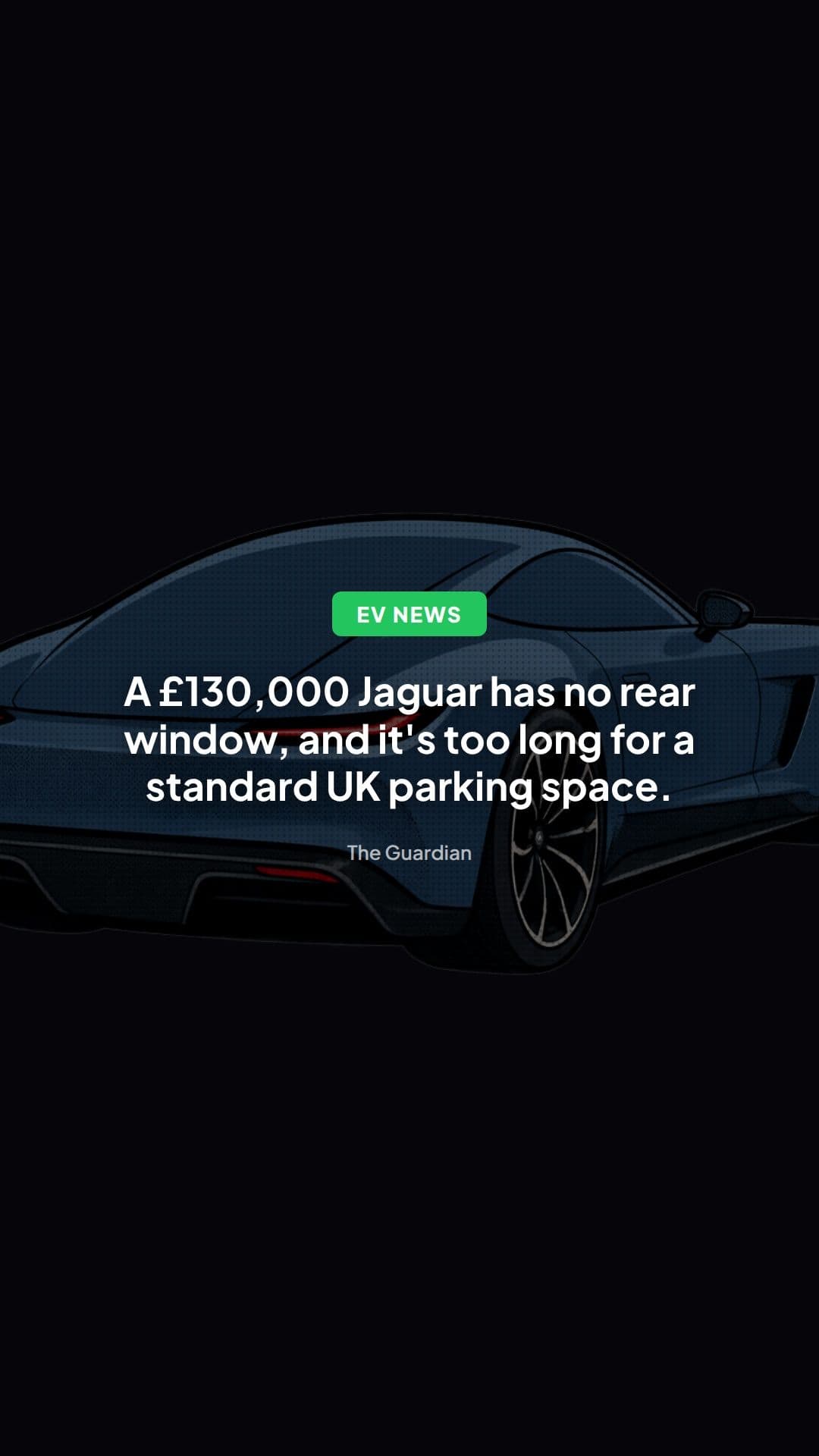
Jaguar's Type 01 EV is aimed at America, but its 5.2-metre length raises a very British question
Britain's parking spaces were laid out for a very different kind of car. Jaguar has now unveiled a large electric model aimed at affluent American buyers, and at more than 5.2 metres long it is, according to The Guardian, unlikely to fit many UK parking spaces.
Most of us will never buy a car like this, but the story is a useful prompt. What actually happens if your car is longer than the bay? Who is responsible, and can you be fined?
What happened
Jaguar has launched the Type 01, an electric model pitched at wealthy, younger US customers. The Guardian's reporting highlights two things: the strategic focus on America, and the car's sheer size. At over 5.2 metres, it is a long vehicle by any European standard.
I will stick to what the source supports. The Guardian's point is that the car is unlikely to fit many UK parking spaces. Whether and how the Type 01 will be sold in Britain is not something to speculate about here. The story still matters to UK drivers, because it shows where the car market is heading and how far that has drifted from the infrastructure we park in. It also fits the wider shift at Jaguar Land Rover towards the American market, which we covered in our look at JLR's pivot to hybrids for US growth.
Why it matters: the bay was not built for this
Put the numbers side by side. Many UK car parks use bays of roughly 4.8 metres by 2.4 metres. This is a commonly cited design dimension for perpendicular bays, and it appears in government and industry design guidance, though it is not a legal requirement for every car park. If a bay is 4.8 metres long and a car is 5.2 metres, the arithmetic is simple: at least 40 centimetres of the car has to go somewhere else.
In practice that means:
- Nose or tail over the kerb or footway, which can cause problems of its own.
- Overhang into the aisle, which narrows the space for other drivers to manoeuvre.
- Crossing the bay line, which is where parking enforcement tends to start.
Older multi-storey car parks, supermarket bays and many on-street parallel bays were designed when typical cars were much smaller. Parallel on-street bays are often around 6 metres long, so a 5.2-metre car might technically fit, but with little room to manoeuvre in or out.
This is not just a Jaguar issue. Growing vehicle size has become a live debate in UK towns, and we have written about it in carspreading and how bigger SUVs are reshaping UK streets. Some councils are already looking at pricing parking by vehicle size or weight, as covered in Bath's plan to charge larger cars more.
EVs add a further twist. They tend to be heavy because of their batteries, and a long wheelbase adds to the footprint. Bigger cars are being built, but the car parks are staying the same size.
The legal angle: what the rules actually say
There is no single national law that says "a car must fit in a bay". What happens depends on whether you are parking on a public road, in a council car park or on private land.
On-street and council bays
On-street bays are created by traffic orders and marked in line with the Traffic Signs Regulations and General Directions 2016. Councils enforce them under the Traffic Management Act 2004 in England and Wales (outside London, the equivalent powers sit with the relevant authorities, and London boroughs and TfL use the London-specific regime).
If a bay is marked, you are generally expected to park wholly within the markings. Failing to do so can lead to a penalty charge notice. The relevant contravention codes are:
- Code 24, parked on-street not correctly within the markings of the bay. See our guide to PCN code 24.
- Code 86, the off-street equivalent. See PCN code 86.
If your car is physically longer than the bay, it cannot be wholly within the lines. That does not automatically mean you have a defence, and it does not automatically mean you will be fined. Councils must still prove the contravention, and each case turns on its own facts, such as the actual markings, the signs and the evidence. Appeals are decided by independent adjudicators, such as the Traffic Penalty Tribunal for most of England and Wales outside London, and London Tribunals for London. Our guide to formal representations for PCNs explains how that process works.
Overhanging the pavement or road
Overhang can create separate issues. Pavement parking is already prohibited in London under the Greater London Council (General Powers) Act 1974, and the government has been working on wider powers for councils in England. See pavement parking rules and the crackdown. Beyond parking penalties, leaving a vehicle where it obstructs the highway can raise offences such as wilful obstruction under the Highways Act 1980. Police and councils have discretion, but a long car sticking out into a road or across a footway is the kind of thing that attracts attention.
Private car parks
Most supermarket, retail park and hospital car parks are private land. Here the operator is not enforcing a traffic order. It is enforcing a contract, set out on its signs. The Supreme Court decision in ParkingEye v Beavis [2015] UKSC 67 confirmed that a clearly signed parking charge can be enforceable, so terms and signage matter a great deal.
If a sign says "park within the markings" and your car cannot physically do so, the situation is awkward. It might raise arguments about whether the terms were reasonably capable of being met, or about how clear the signage was. I cannot say how such an argument would fare in any particular case, and outcomes depend on the evidence. Operators who belong to an accredited trade association have an independent appeals route (POPLA for British Parking Association members), and the differences between the two bodies are explained in BPA vs IPC membership. For unclear signage generally, see how to use unclear parking signs as a defence.
It is also worth knowing that the government has been moving towards a new private parking code, which has implications for how charges are applied. Our post on private parking charges and the new code has the latest picture.
Vehicle width, not length, is what is tightly regulated
For completeness, UK vehicle regulations set limits on the width of cars, and heavier vehicles face length limits. A car over 5 metres long does not break any rule simply by existing. The problem is where you can put it.
What drivers should know
You do not need a Type 01 for this to be relevant. Plenty of long SUVs, estates and pickups already push the limits of standard bays. A few practical points:
1. Know your car's real dimensions. Check the manufacturer's published length, width and, importantly, width with mirrors out. Do not rely on a guess. Length is not shown on the V5C logbook.
2. Measure the places you actually park. Your driveway, garage, workplace bay and the car park you use weekly all matter. A garage that is 5 metres deep will not take a 5.2-metre car, however tempting the sales brochure. If you are planning a home charger, think about where the cable and wallbox will sit relative to a long car. If you park partly over a pavement outside your home, read parking across a driveway and dropped kerb rules and driveway parking mistakes that risk a fine.
3. Choose bays strategically. End-of-row bays, bays beside a wall or kerb with open space beyond, and parallel bays tend to be more forgiving than standard perpendicular ones. Many drivers of large vehicles also favour drive-through or end bays so they do not need to reverse out into a narrow aisle. Avoid blocking aisles or footways, which creates risks for other people.
4. Document the situation. If you do get a PCN, evidence matters. Photograph the bay markings, kerb, signs and your vehicle's position, with dates and times. Our essential guide to avoiding parking fines is a good starting point, and informal PCN appeals have strict timeframes, so do not leave it.
5. Watch for size-based charging. Some councils are exploring or have introduced parking charges linked to vehicle size, weight or emissions. Check local permit and tariff rules before you assume a large EV will get the same price as a small one. In some areas, residents' permits are tiered. Our guide to resident parking permit traps covers the basics.
6. Get proper advice if the stakes are high. If you face a large charge, court papers or repeated enforcement, speak to an appropriate adviser, and check official guidance from the relevant tribunal or Citizens Advice. This post is general information, not legal advice for your situation.
Looking ahead
The Type 01 is one headline, but the trend behind it is clear. Vehicles are growing, EV batteries are adding bulk, and carmakers are chasing buyers in markets where roads and parking spaces are built on a larger scale. Britain, with its narrow streets and historic car parks, is the opposite of that.
Several things could follow:
- Design standards may be revisited. Planners and car park operators may face pressure to widen bays in new developments, though retrofitting existing car parks is expensive.
- Pricing by size may spread. With councils already experimenting, bigger vehicles could increasingly face higher charges.
- Enforcement disputes may increase. As more vehicles struggle to fit marked bays, the question of how markings, signage and enforcement interact will probably come up more often at tribunals and appeals.
- Carmakers may need to tailor models. Whether companies adapt designs for Europe is a business decision, and we have seen manufacturers do this before, as in our post on how Vauxhall can adapt Opel cars faster for UK road rules.
For now, the practical lesson is simple. Before you buy a big car, check that it fits the life you actually live: the driveway, the garage, the supermarket, and the high street. A car that dazzles in a showroom can be a headache in a standard bay, and the penalty notice does not care how impressive the badge is.
The full original report is available from The Guardian.
This article is general information about UK motoring and parking rules, not legal advice. For decisions about a specific penalty or dispute, refer to official guidance or seek professional advice.
Written by
The Parking Ticket Pal Editorial Team
Source-checked parking guidance
Ready to Challenge Your Ticket?
Let our AI analyse your PCN and generate a professional appeal letter in minutes.
Start Free Appeal