Carspreading: How Bigger SUVs Are Reshaping UK Streets
Britain’s bigger cars and SUVs are squeezing parking bays and streets. Explore carspreading, pedestrian safety risks and UK solutions to rein in vehicle size.

Sophie Dubois
20 July 2026
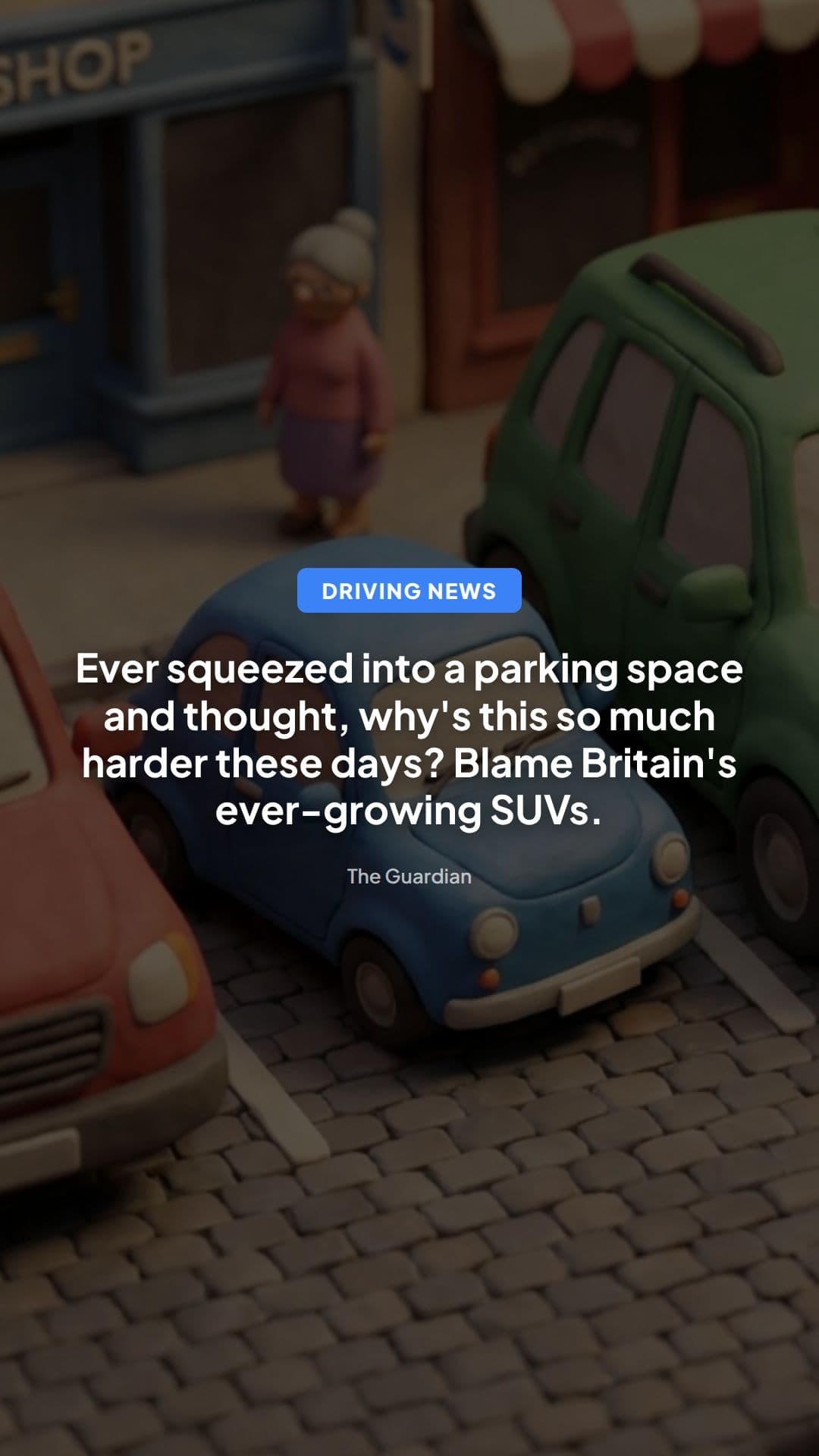
Britain's cars are getting bigger, and it's making our streets more dangerous
Stand on any residential street in Britain today and you'll notice something: the cars are enormous. Not just a handful of Range Rovers and Discovery models either. Family hatchbacks have swollen into crossovers. School run runabouts have morphed into vehicles that dwarf the driveways they're supposed to fit on. This isn't your imagination. It's a phenomenon now being called "carspreading", and according to a recent Guardian analysis, it's quietly reshaping our roads, our parking spaces and, more worryingly, our safety.
The bigger picture: how our cars outgrew our streets
The Guardian's commentary piece lays out an uncomfortable truth. Vehicles sold in the UK have been getting steadily larger, heavier and taller for years, driven largely by the seemingly unstoppable rise of the SUV. What was once a niche vehicle for off-road enthusiasts and farmers has become the default choice for millions of ordinary drivers doing nothing more adventurous than the weekly supermarket shop.
This matters because British infrastructure, from parking bays to residential streets to multi-storey car parks, was designed decades ago around a very different fleet. The average car of the 1970s or 1980s was smaller in every dimension. Roads were laid out, parking bays painted, and garages built to those proportions. Fast forward to today and many drivers now own vehicles that barely fit in a standard bay, overhang onto pavements, or block sightlines for pedestrians and cyclists trying to cross the road.
The article's core argument is that this growth isn't a neutral consumer trend. It has real consequences: less usable road and pavement space, greater difficulty parking, and crucially, increased danger to anyone outside the vehicle. Taller, heavier vehicles with higher front ends are known to cause more severe injuries to pedestrians in a collision compared with lower, lighter cars. The bonnet height alone changes where an impact lands on a person's body, often hitting vital organs rather than legs.
Why this is more than just an annoyance for other drivers
It's tempting to file this under "mild inconvenience", the sort of thing you moan about when you can't get your trolley between two parked cars. But the implications run much deeper than parking etiquette.
First, there's the pedestrian safety angle. The Guardian piece points to the heightened risk that larger vehicles pose to those on foot or on bikes. This isn't a fringe concern. Campaigners and road safety researchers have been raising alarms for years about the disproportionate danger SUVs and large pickups present in urban environments, where interactions with pedestrians are frequent and often happen at low speed but close proximity, such as at junctions, school gates and zebra crossings.
Second, there's the space problem. Councils design parking bays to standard dimensions, typically around 4.8 metres by 2.4 metres for a standard bay. Many of today's best-selling SUVs and pickups push right up against, or beyond, those limits. The knock-on effect is more vehicles encroaching on pavements, more disputes over bay space, and more difficulty for councils trying to fit the same number of vehicles into car parks and on-street bays that were never designed for today's average car size.
Third, there's an environmental and infrastructure cost. Heavier vehicles cause more wear to road surfaces, contributing to the pothole crisis that's already stretching council budgets. They also tend to consume more fuel or, in the case of electric SUVs, require bigger batteries, adding further weight and straining charging infrastructure designed with smaller vehicles in mind.
What the law actually says about vehicle size and parking
Here's where things get genuinely interesting from a legal and regulatory standpoint. In the UK, there's remarkably little that directly restricts how large a private vehicle can be, provided it complies with type approval rules for road use. Manufacturers must meet certain safety and emissions standards, but there is no blanket rule capping the physical footprint of a passenger car sold for UK roads.
Where size does become legally relevant is at the point of parking and enforcement. Local authorities set the dimensions of parking bays, and Traffic Regulation Orders (TROs) govern how streets are used, including restrictions on vehicle types in certain zones. Some residential parking schemes and low-traffic neighbourhoods already include restrictions aimed at heavier or larger vehicles, though these tend to focus on goods vehicles rather than SUVs.
The Highway Code also places general duties on drivers to park considerately, without obstructing the pavement or causing a hazard. Rule 244 reminds drivers not to park where they would obstruct pavements or reduce visibility, something that becomes far more likely when a vehicle's sheer bulk overhangs a bay. Councils can and do issue Penalty Charge Notices for vehicles that encroach on pavements or obstruct sightlines, regardless of size, but there's no specific "your car is too big" offence.
The Guardian article's suggestion for tackling carspreading centres on introducing measures that would discourage oversized vehicles, whether through parking charges scaled to vehicle size and weight, congestion charging differentials, or planning requirements for new developments to account for larger footprints. Some London boroughs have already begun experimenting with weight-based parking permit charges, an approach that could spread if it proves effective at nudging buyer behaviour.
It's worth noting that any such reform would need proper consultation and legislative backing at a local or national level. Nothing described in the source article represents a change in law today. It's a proposal for how to address a genuine and growing problem, not a summary of existing rules.
What drivers should know right now
While there's no need to panic about a sudden crackdown on large vehicles, there are practical points worth keeping in mind if you drive, or are considering buying, a larger car or SUV.
Check before you buy. If you're upgrading to a bigger SUV, measure your usual parking spot, whether that's a driveway, a garage, or your regular street bay. Many larger models now exceed the width of a standard UK garage door, and squeezing into a shared driveway or narrow residential bay can be trickier than showroom brochures suggest.
Mind your overhang. Parking is one of the areas where vehicle size creates the most friction with existing rules. If your car overhangs a dropped kerb, blocks a pavement, or reduces visibility at a junction, you can still be issued a PCN under existing regulations regardless of how big your vehicle is. The size of the car is not a valid excuse if you've breached a parking restriction.
Watch for differential charging. Some councils and private car parks are beginning to introduce charges linked to vehicle size or weight. If you drive a larger SUV or pickup, don't assume your parking costs will stay the same as a smaller car in every location. It's worth checking local signage and tariff boards carefully before you park.
Consider the safety implications beyond your own vehicle. If you're driving a taller, heavier car, extra vigilance around pedestrians and cyclists matters more than ever. Blind spots tend to be larger, stopping distances longer, and the consequences of any collision more severe.
Watch for planning changes. If the Guardian's proposals gain traction, don't be surprised if future new-build housing developments start factoring in different parking bay dimensions, EV charging provision, or restrictions aimed at limiting the number of oversized vehicles per household. Keep an eye on local planning consultations if this issue matters to you.
Looking ahead
Carspreading is unlikely to reverse itself without deliberate intervention. Manufacturers profit more from SUVs than from smaller cars, and consumer preference for perceived safety, space and status shows no sign of waning. That means any meaningful change will likely have to come from policy, whether through parking charge reform, planning requirements, or safety regulation that accounts for pedestrian risk more explicitly than it currently does.
For now, drivers navigating an already complex patchwork of parking rules, congestion zones and enforcement regimes should simply be aware that vehicle size is fast becoming part of the conversation, not just an issue of convenience, but one of safety, infrastructure cost and fairness on Britain's increasingly crowded streets. Whether that translates into concrete legal change remains to be seen, but the debate the Guardian has reignited is unlikely to go away quietly.
Written by
Sophie Dubois
Traffic Law Specialist
Ready to Challenge Your Ticket?
Let our AI analyse your PCN and generate a professional appeal letter in minutes.
Start Free Appeal