Pavement Parking Rules: What the 2026 Crackdown Means
Expected 2026 pavement parking changes could give councils stronger enforcement powers. See what the proposed crackdown may mean for UK drivers and pedestrians.

The Parking Ticket Pal Editorial Team
6 September 2026
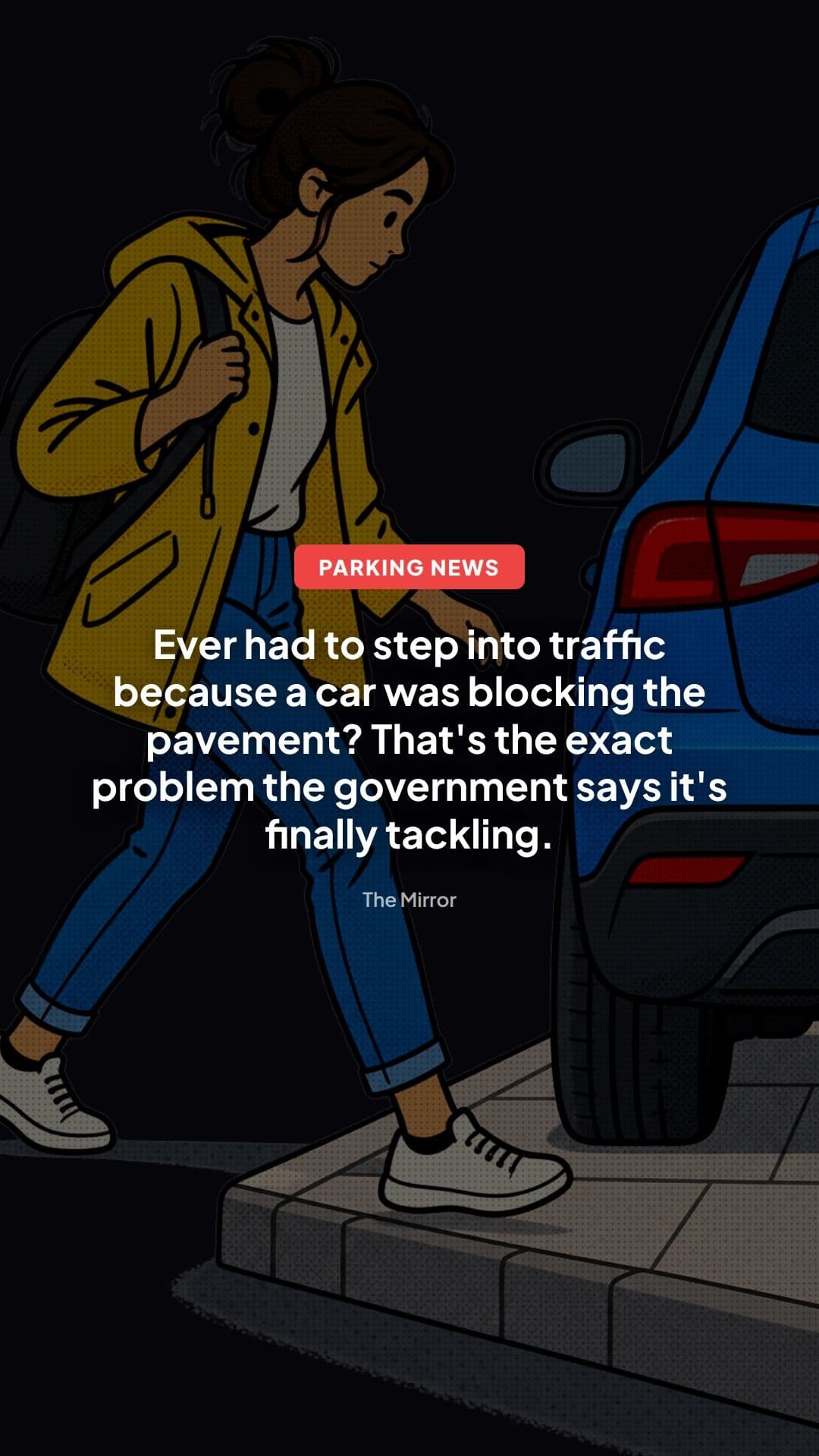
Huge Pavement Parking Changes Coming, and Brits Agree
Walk down almost any residential street in Britain and you'll see it: a car with two wheels up on the kerb, leaving barely enough room for a pushchair, let alone a wheelchair user or someone with a guide dog. For decades, this has been treated as a grey area of British motoring, tolerated, grumbled about, but rarely punished outside London. That's about to change.
According to reporting from The Mirror, new measures expected later in 2026 would hand councils across England far greater powers to enforce pavement-parking restrictions, as part of a broader government push against inconsiderate and obstructive parking. And crucially, the public appears to be firmly on board with the idea.
What's Actually Happening
The core of the story is deceptively simple: ministers are moving towards giving local authorities outside London the same kind of enforcement teeth that London boroughs have enjoyed for decades. At the moment, if a council in Manchester, Leeds or Bristol wants to stop drivers parking on the pavement, it typically has to go through the cumbersome process of introducing a Traffic Regulation Order (TRO) street by street, complete with public consultation, signage costs and lengthy delays. There's no blanket, easy-to-enforce ban.
Compare that to London, where Section 15 of the Greater London Council (General Powers) Act 1974 has banned pavement parking across the capital since the 1970s, subject to specific exceptions signposted by councils. The new measures reported by The Mirror would effectively extend a version of that logic nationwide, giving councils a more straightforward legal mechanism to fine drivers who mount the kerb, without needing a TRO on every single road.
This has been a long time coming. The Department for Transport ran a consultation called "Pavement Parking: Options for Change" as far back as 2020, gathering views from disabled people's organisations, motoring groups and local authorities on how to tackle the problem. The wheels have turned slowly since then, but the direction of travel has been consistent: something needs to give, and it looks like 2026 is when it finally will.
Why This Actually Matters
It's tempting to file this under "minor administrative tweak," but the real-world impact of pavement parking is significant and often overlooked by drivers who see it as a harmless convenience.
For wheelchair users, people with visual impairments, parents with buggies and elderly residents using mobility aids, a pavement blocked by a parked car isn't an inconvenience, it's a genuine barrier to getting around safely. Many are forced into the road to get past, putting them in the path of traffic. Guide dog charities and disability campaigners have been vocal for years about this exact scenario, and it's a large part of why this reform has cross-party and public support.
The Mirror's reporting notes that Brits broadly agree with tightening the rules, which lines up with what you'd expect. Pavement parking sits in that rare category of motoring issues where drivers themselves, when asked in the abstract, tend to support crackdowns, even though many admit to doing it themselves out of habit or necessity on narrow streets.
There's also a practical council-finance angle here. Local authorities have increasingly relied on parking enforcement revenue to plug budget gaps, and giving them a clearer, cheaper legal route to issue Penalty Charge Notices (PCNs) for pavement obstruction is likely to be attractive to cash-strapped town halls. Whether that's framed as road safety or revenue generation probably depends on who you ask.
The Legal Angle: A Patchwork That's Finally Being Untangled
To understand why this reform matters, it helps to understand just how messy the current legal position actually is.
Outside London, there is no general ban on pavement parking in England. Instead, enforcement has historically relied on a combination of:
- The Highway Act 1835, which makes it an offence to "wilfully drive" upon a footway, a law that predates the motor car by decades and is enforced by police rather than councils, with fines that are minimal and largely symbolic in practice.
- Traffic Regulation Orders under the Traffic Management Act 2004, which allow councils to introduce specific parking restrictions on particular streets, but only after a consultation process that can take months and cost thousands of pounds per road.
- Obstruction offences, which require proof that a vehicle is actually causing an obstruction to pedestrians, a much higher bar than simply being parked with wheels on the kerb.
This patchwork explains why pavement parking enforcement varies wildly depending on which side of a borough boundary you happen to live on. London drivers have operated under a de facto pavement parking ban since 1974. Scotland took its own decisive step with the Transport (Scotland) Act 2019, which introduced a national pavement parking ban that came into force with enforcement powers being rolled out from 2023 onwards. England, by contrast, has been left relying on a Victorian obstruction law and piecemeal local orders.
The reform being discussed for 2026 would likely give councils in England powers closer to those already used in London and Scotland, allowing civil enforcement officers, rather than police, to issue PCNs for pavement parking without needing a bespoke TRO for every street. This matters because civil enforcement is faster, cheaper for councils, and far more likely to actually happen than waiting for police resources to be diverted to parking matters.
It's also worth understanding that any new pavement parking rules will almost certainly come with exceptions. Wide pavements, certain loading situations, and streets where parking on the road simply isn't feasible due to width may need specific dispensations. Councils are also expected to retain the ability to signpost exemptions where limited pavement parking is genuinely necessary, much as some London boroughs already do.
What Drivers Should Know Right Now
While the detail of the legislation is still to be finalised, there are some sensible things drivers can do to stay ahead of this shift.
Check for existing local restrictions. Even without a national ban, many councils already have TROs in place on specific streets, and pavement parking there can already result in a PCN. Don't assume that because nationwide reform hasn't landed yet, your street is automatically fair game.
Understand that "everyone does it" won't be a defence. Once councils gain broader powers, the sheer commonality of pavement parking on a given street is unlikely to protect anyone from enforcement. Fines will apply per vehicle, per incident.
Be alert to fresh signage and lining. When new enforcement regimes come into force, councils typically roll out new signage, sometimes with grace periods and public awareness campaigns before fines start being issued in earnest. Keep an eye on local council announcements in your area during 2026.
Consider access, not just legality. Even where pavement parking is technically tolerated for now, leaving insufficient space for a wheelchair or pushchair could expose a driver to an obstruction-related complaint under existing law, quite separate from any new civil enforcement regime.
If you do receive a PCN for pavement parking, don't assume it's unbeatable. As with any parking penalty, the validity of signage, the wording of any local order, and the specific circumstances of where and how the vehicle was parked can all be relevant to a challenge. Anyone facing a genuinely disputed fine should look at the official appeals routes for their council, whether that's an informal challenge, formal representation, or an appeal to the Traffic Penalty Tribunal, rather than assuming payment is the only option.
Looking Ahead
If these measures land as expected later in 2026, it will mark one of the more significant shifts in everyday parking law that England has seen in years, arguably more consequential for ordinary drivers than headline-grabbing changes to city centre congestion charges or clean air zones, simply because pavement parking touches almost every residential street in the country.
The direction of travel suggests England is finally catching up with the approach already embedded in London and Scotland: treating pavements as pedestrian space first, parking space only by exception. For drivers, the sensible move now is not to panic, but to start paying attention. Watch for local consultations, note any new signage appearing on your street, and get into the habit of leaving a clear path on the pavement regardless of whether enforcement has technically arrived in your area yet.
Public opinion, according to The Mirror's reporting, is already leaning firmly towards support for the change. Councils gaining the tools to act on that sentiment is likely to be a matter of when, not if.
Written by
The Parking Ticket Pal Editorial Team
Source-checked parking guidance
Ready to Challenge Your Ticket?
Let our AI analyse your PCN and generate a professional appeal letter in minutes.
Start Free Appeal