PCN Code 24: Not Parked Within Markings – UK Guide
PCN code 24 for not parked correctly within markings? Learn what it means, evidence to check, common exemptions, and how to appeal UK council tickets.

Emma Thompson
14 March 2026
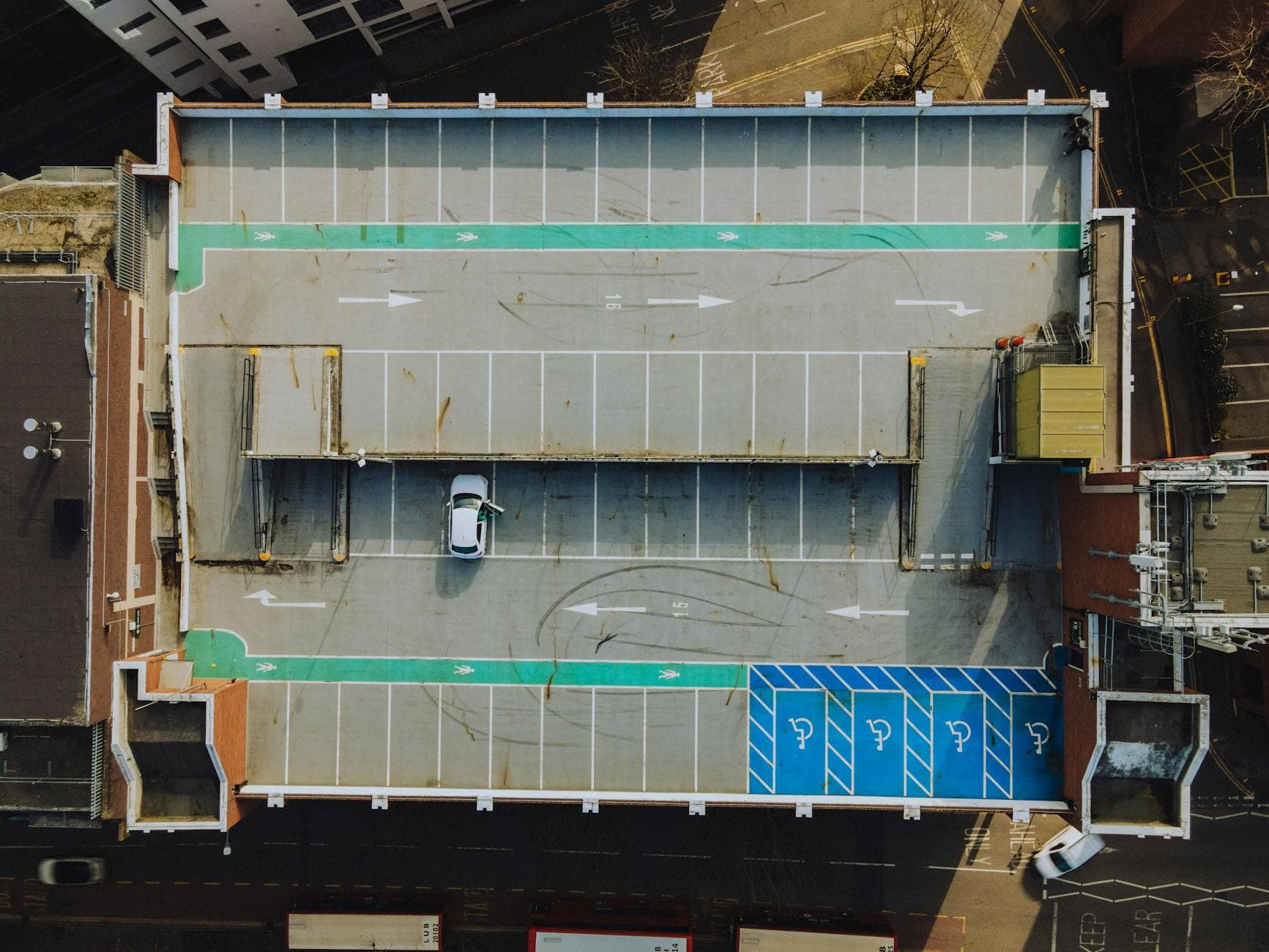
PCN Code 24: Not Parked Within Markings – Your Complete UK Guide
You've come back to your car, spotted a yellow envelope under the wiper, and your stomach has dropped. The PCN says "Code 24 – not parked correctly within the markings of the bay or space." But here's the thing — your car was in a bay. You didn't park on double yellows or block a dropped kerb. You just… weren't perfectly centred. Surely that can't warrant a fine?
It absolutely can. And it happens far more often than you'd think. But the good news is that PCN code 24 is also one of the more appealable contraventions — if you know what to look for and how to argue your case.
What Does PCN Code 24 Actually Mean?
PCN code 24 is issued under the Civil Enforcement of Parking Contraventions (England) Regulations 2007, which sits under the broader framework of the Traffic Management Act 2004. It applies to on-street parking bays and spaces marked with white lines, and it's used by councils across England (outside London) and by London boroughs alike.
The contravention is straightforward in theory: your vehicle must be entirely within the marked bay. If any part of your car — a wheel, a bumper, even a side mirror if it's low enough — crosses the white line into an adjacent space or onto a yellow line, a Civil Enforcement Officer (CEO) can issue a PCN.
In practice though, "not parked within the markings" can mean several different things:
- A wheel touching or crossing the white line of the bay
- The car straddling two spaces
- The front or rear bumper overhanging the end of the bay
- Parking diagonally so part of the vehicle sits outside the designated space
The penalty is typically a lower-level contravention, meaning the fine is usually £50 outside London and £65 in London (reduced to half if paid within 14 days).
Why Do These PCNs Get Issued — and Are They Always Fair?
Here's where it gets interesting. CEOs are required to issue a PCN if they observe a vehicle not fully within the markings. But the degree to which a vehicle is outside the bay matters enormously when it comes to appealing.
Consider these common scenarios:
Scenario 1: The bay markings are faded or damaged. If the white lines are barely visible, how is a driver supposed to park accurately within them? This is a legitimate defence — and councils have a duty to maintain their road markings.
Scenario 2: The bay is too small for the vehicle. Some older bays were designed when cars were significantly smaller. A modern SUV or long-wheelbase van may physically be unable to fit entirely within a standard bay.
Scenario 3: Another vehicle was already badly parked. If a neighbouring car was already over the line, it may have forced you to park slightly outside the markings on your side. This is called a mitigating circumstance and can support a successful appeal.
Scenario 4: The CEO's observation was wrong. It happens. A photo taken at an angle can make a vehicle look out of position when it wasn't. Always check the photographic evidence carefully.
The Evidence You Need to Check First
Before you do anything else, request the CEO's evidence. You're entitled to see the photographs taken at the time of the contravention. Most councils provide these automatically with the PCN or via an online portal.
When reviewing the photos, ask yourself:
- Is the angle misleading? A wide-angle or low shot can distort perspective significantly.
- Are the bay markings clearly visible? If they're faded, cracked, or partially obscured, that's relevant.
- Can you see exactly which part of the vehicle is allegedly outside the bay? Vague photos without a clear view of the tyres and lines are weak evidence.
- What's the timestamp? Check whether the CEO observed the vehicle for a reasonable period before issuing the PCN.
Pro tip: Take your own photos immediately if you receive a PCN on the spot or return to the scene as soon as possible. Photograph the bay markings, the surrounding vehicles, and any signage. This contemporaneous evidence can be invaluable in your appeal.
How to Challenge a PCN Code 24
The UK parking appeals process follows a set structure, and understanding the stages gives you the best chance of success.
Stage 1: Informal Challenge (Within 14 Days)
This is your first opportunity to contest the PCN, and it comes with a financial incentive — the fine is halved if you pay within 14 days, but the clock pauses while your challenge is being considered. Submit your informal challenge in writing (email or via the council's online portal) and include:
- Your name, address, and vehicle registration
- The PCN number and date of issue
- A clear, concise explanation of why the PCN was incorrectly issued
- Any supporting evidence — photos, measurements, witness statements
If the council rejects your informal challenge, they'll issue a Notice to Owner (NTO). Don't ignore this. You now have 28 days to make formal representations.
Stage 2: Formal Representations
Formal representations are more serious than an informal challenge — the council must respond with a Notice of Acceptance or a Notice of Rejection. If they reject your representations, they must also issue a Notice of Rejection that explains why and confirms your right to appeal to an independent tribunal.
Make your representations as detailed as possible. Reference the specific grounds — faded markings, disproportionate enforcement, misleading photographic evidence — and attach all supporting documentation.
Stage 3: Independent Tribunal Appeal
If the council won't budge, you can take your case to an independent adjudicator:
- London Tribunals (formerly PATAS) — for PCNs issued in Greater London
- Traffic Penalty Tribunal — for PCNs issued by councils in England outside London
Both services are free to use, and adjudicators are genuinely independent. They regularly overturn council decisions where the evidence is weak or the markings are inadequate. You can submit your appeal online and request a hearing if you prefer to argue your case in person or via video.
Pro tip: Adjudicators take a dim view of councils that issue PCNs based on barely visible bay markings. If you have photos showing degraded lines, use them prominently in your tribunal submission.
Common Grounds for a Successful Appeal
Based on how these cases typically play out, the strongest grounds for appealing a PCN code 24 include:
- Faded or unclear bay markings — the council has a duty to maintain road markings to a legible standard
- The bay was physically inadequate — too short or narrow for a standard vehicle
- Another vehicle's poor parking caused the issue — document this with photos
- Misleading or inconclusive photographic evidence — challenge the CEO's observation
- Procedural errors — incorrect vehicle details, missing information on the PCN, or failure to follow correct issuing procedures
- Exceptional circumstances — a medical emergency, mechanical breakdown, or similar situation
What Happens If You Ignore It?
Don't. A PCN that goes unanswered escalates quickly. After the Notice to Owner stage, the council can issue a Charge Certificate, increasing the fine by 50%. After that, the debt can be registered at the Traffic Enforcement Centre (TEC) and passed to enforcement agents (bailiffs). The cost and stress escalate dramatically — so always respond within the deadlines.
Your Action Plan: What to Do Right Now
- Don't pay immediately — paying is an admission of the contravention and ends your right to appeal
- Request the photographic evidence from the council if it hasn't been provided
- Return to the scene and photograph the bay markings, signage, and surrounding area
- Note the date, time, and any relevant circumstances while they're fresh in your memory
- Submit an informal challenge within 14 days — clearly and concisely, with all supporting evidence
- Keep copies of everything — every letter, email, and photo
- Escalate to formal representations if your informal challenge is rejected
- Use the independent tribunal as a last resort — it's free, it's fair, and councils don't always win
PCN code 24 might feel like a petty fine for an imperfect park, but the appeals process exists precisely for situations where enforcement has been heavy-handed or the circumstances don't justify the penalty. Know your rights, gather your evidence, and don't assume the council is automatically correct.
Written by
Emma Thompson
Traffic Law Specialist
Ready to Challenge Your Ticket?
Let our AI analyse your PCN and generate a professional appeal letter in minutes.
Start Free Appeal