
20mph Limits Cost Councils £42m: Are They Really Worth It?
Councils spent £41.9m on 20mph limits in three years, yet 174 roads later reverted. Explore costs, safety evidence and the impact on UK motorists in detail.

The Parking Ticket Pal Editorial Team
14 November 202610 min read
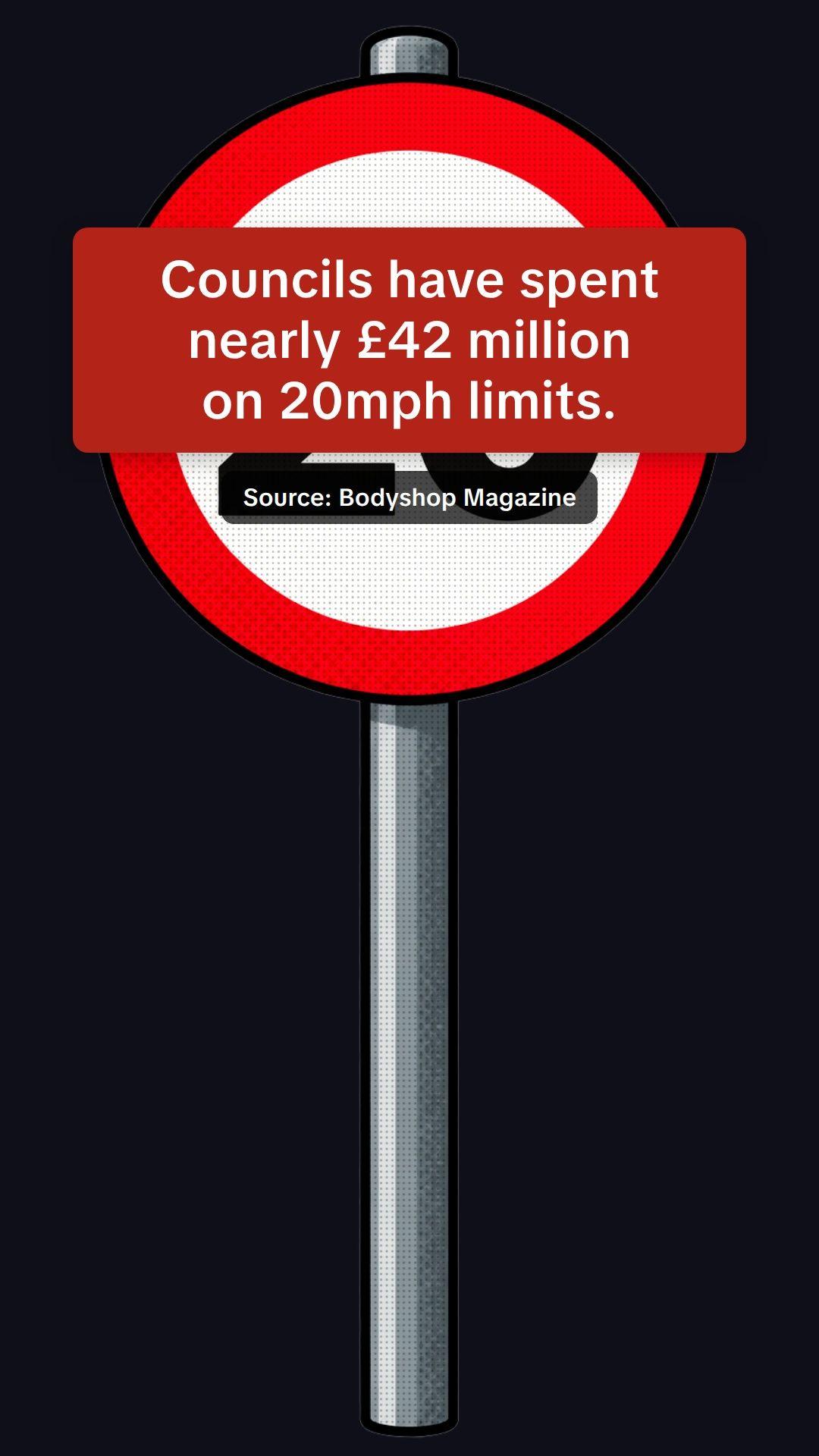
£42m on 20mph limits: where the money went and what drivers should know
Few road signs divide opinion like a little red circle with a "20" in it. To some residents it means safer streets for children. To plenty of drivers it means a limit that feels too low on roads built for 30 or 40. Now there is a price tag to argue about as well.
According to reporting in Bodyshop Magazine, freedom-of-information data shows UK councils spent more than £41.9m introducing 20mph limits over three years, including £16.7m in the most recent year. The same data found that 174 roads later went back to higher speed limits.
Those numbers raise obvious questions about value for money. They also raise a quieter one that matters more to anyone with a licence: how are these limits actually created, and what happens to you if you break one?
What the figures tell us (and what they don't)
Let's stay with what the source actually reports. Three years of spending adds up to nearly £42m, and the latest year accounts for £16.7m of it. Simple subtraction means the previous two years together came to roughly £25.2m. So the most recent year was the single biggest, which suggests the pace of introduction has not slowed.
The 174 roads that later returned to higher limits are the headline for critics. But the summary does not tell us several things:
- How many roads in total received a new 20mph limit
- Why each of the 174 was reversed
- How much the reversals themselves cost
- How the spending splits between signs, road markings, traffic calming, consultation and legal processes
Without those details, it would be wrong to claim that a particular share of schemes "failed". A road might revert because a limit was set too widely, because of a change in the road's function, because of new evidence, or because of local political pressure. Each of those is a different story.
Why it costs so much
A 20mph limit might look like a cheap change, since councils just need to put up a few signs. In practice, several things add to the bill.
The legal process. In England and Wales, councils set most speed limits through a Traffic Regulation Order under the Road Traffic Regulation Act 1984. That involves drafting the order, publishing notices, taking objections and formally making the order. The procedural rules sit in the Local Authorities' Traffic Orders (Procedure) (England and Wales) Regulations 1996.
Signs and markings. A limit is only as enforceable as it is visible. Repeater signs, roundels painted on the carriageway and gateway features all cost money, and they need maintenance.
Physical measures. Some schemes include speed cushions, raised tables or chicanes. These are much more expensive than signs alone.
Consultation and monitoring. Public engagement, speed surveys and before-and-after data collection all take staff time and budget.
Reversing a limit is rarely free either. A new order is usually needed, along with new signage and often a fresh round of consultation.
The legal framework in plain English
Understanding the law helps cut through the political noise.
How limits are set
Local highway authorities decide on speed limits for their roads. The Department for Transport's Setting Local Speed Limits guidance tells them how to approach that decision, looking at factors such as road function, collision history and the mix of road users. It is statutory guidance that authorities must have regard to, but it is not a rigid rulebook, which is one reason approaches vary so much from area to area.
That variation explains why a 20mph limit can appear on one council's A road and be rejected by the neighbouring authority. It also explains why 20mph limits are spreading across UK towns and cities at an uneven pace.
Signs matter
For a speed limit to be enforceable, it needs to be properly signed in line with the Traffic Signs Regulations and General Directions 2016. A limit that is missing signs, hidden by foliage, or inconsistently marked can be open to challenge. We have looked at related problems in our piece on overgrown hedges hiding road signs.
Speeding is a criminal matter
This catches many drivers out. A 20mph limit is not enforced through a council parking-style penalty charge notice. Speeding is a criminal offence under the Road Traffic Regulation Act 1984, and enforcement sits with the police. The usual outcome for a lower-level offence is a fixed penalty of £100 and three penalty points, although the police can offer a speed awareness course instead in some circumstances. Higher speeds can lead to a court summons, larger fines and potentially disqualification.
Police forces generally follow National Police Chiefs' Council guidance, which allows a margin of tolerance, commonly described as 10% plus 2mph. On a 20mph road, that is 24mph. But this is guidance on enforcement discretion, not a legal allowance. Legally the limit is 20mph, and a driver doing 23mph is still technically speeding. For more on this, see our guide to UK speeding rule myths that could cost drivers dearly.
Wales has already gone through this
Wales made 20mph the default limit on restricted roads in September 2023. After significant public backlash, the Welsh Government later issued revised guidance that gave councils more flexibility to return certain roads to 30mph. It is a useful case study in how a blanket approach can generate pressure to roll back, which may be part of the picture behind the reversals in the new figures, though the source does not say so.
Why the debate is so heated
Both sides can point to genuine arguments, and it is worth being fair to each.
Supporters argue that lower speeds reduce the severity of collisions, particularly for pedestrians and cyclists, and make residential streets feel safer. Our overview of 20mph limits as safer streets or tougher enforcement covers that case in more detail.
Critics argue that blanket limits can feel arbitrary, that compliance drops where a limit does not match how a road looks and feels, and that the money would be better spent elsewhere, such as on potholes. The AA has called for reform of blanket limits, which we covered in AA calls for urgent reform of blanket 20mph speed limits.
The truth is probably that outcomes depend heavily on how a scheme is designed. A targeted limit outside a school, with clear signs and a road layout that supports it, tends to attract less opposition than a wide area limit imposed on a road that looks like it was built for faster traffic. But that is a general observation, not something the spending data itself proves.
What drivers should know
1. Never assume the limit
With councils adding limits and, in some cases, reversing them, your memory of a road may be out of date. A route you drove at 30mph last year might now be 20mph, or the reverse. Look for repeater signs and roundels on the road, and do not rely on habit.
2. Treat satnav limits as a guide only
Navigation apps and in-car speed warning systems do not always update quickly. Our article on speed limit warning tech being wrong explains why you remain responsible for the limit shown on the actual road sign.
3. Know the time limits if you receive a notice
If the police intend to prosecute for speeding, a Notice of Intended Prosecution generally has to be served within 14 days of the alleged offence. If you are the registered keeper, you will usually be required to identify the driver within 28 days of a request under section 172 of the Road Traffic Act 1988. Ignoring that request is a separate offence and can carry its own penalty points. These are general rules, and details can vary by situation.
4. If you think the signage was inadequate, keep evidence
Photograph the road, the signs (or lack of them) and any obstruction as soon as you can, ideally with dates and location details. Whether a signage defect is a viable defence depends on the facts, so if you are facing a prosecution, speak to a qualified solicitor or a motoring law specialist rather than relying on a general article like this.
5. Check the type of enforcement before you respond
Many drivers confuse speeding enforcement with civil penalty charge notices. They work differently, with different routes of challenge. If you are unsure which you have received, look at the paperwork's heading and issuing body, and consult official government guidance on speeding penalties at GOV.UK.
6. Speed awareness courses are a discretionary offer
If you are offered a course, it usually involves a fee and is subject to eligibility rules, including that you have not attended one recently. It is not a right, and it is not available in every case.
Looking ahead
The spending data lands at a politically sensitive moment. Debate over default 20mph limits is live in Westminster, and we looked at what MPs are proposing in 20mph default limit in England: what MPs are proposing. Meanwhile, some local authorities are weighing whether to keep or loosen their own schemes, as in our look at whether Croydon's 20mph restrictions could be removed.
Several questions are likely to shape what happens next:
- Evidence. Will councils publish robust before-and-after data to justify the costs?
- Targeting. Will authorities move from broad area limits to more selective ones?
- Cost of reversal. If more roads revert, taxpayers could pay twice for the same stretch of tarmac.
- Consistency. Drivers generally cope better with limits that follow clear, predictable logic. Patchwork rules breed confusion and, in turn, accidental offences.
For motorists, the practical reality is simple. Whatever the politics, the limit on the sign is the limit you will be held to, and enforcement does not wait for the debate to settle. The £42m figure will keep fuelling arguments about value for money, but the safest approach on any road is to know what the sign says and drive to it.
This article is general information about UK motoring rules and is not legal advice. If you are facing a prosecution or a penalty, consult official guidance at GOV.UK or a qualified legal professional.
Written by
The Parking Ticket Pal Editorial Team
Source-checked parking guidance