
Croydon 20mph Limits: Could Restrictions Be Removed?
Croydon Council is reviewing its 20mph limits, with some roads potentially returning to 30mph. See what this could mean for drivers, schools and road safety.

The Parking Ticket Pal Editorial Team
9 November 2026
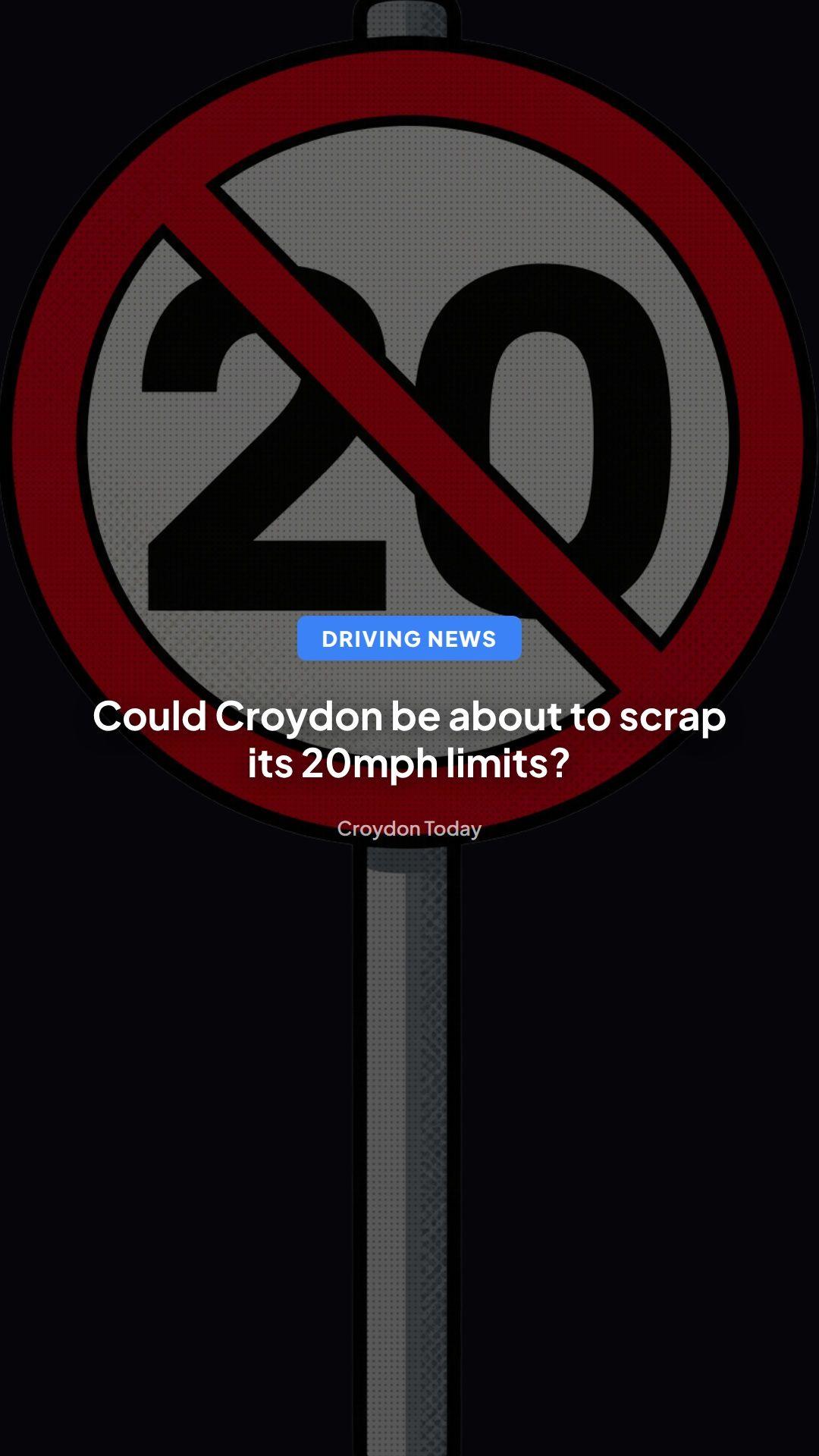
Croydon Wants to Rethink Its 20mph Limits: What Drivers Need to Know
Few road signs divide opinion like a red-ringed 20. Some see a lifesaving measure for residential streets. Others see a slow crawl past empty pavements. Now Croydon, one of London's largest boroughs, has put that argument back on the table.
According to Croydon Today, the council has told Transport for London (TfL) it may revoke some of its existing 20mph limits. The idea is to review the borough's current 20mph network, potentially removing some limits while retaining or reintroducing restrictions in selected places, particularly around schools.
Nothing has been scrapped yet, and the detail matters. Here is what the proposal could mean, how speed limits are changed in law, and what drivers should do in the meantime.
What has actually been proposed
The source reporting describes a review, not a final decision. Three points stand out:
- A review of the existing network. Croydon has 20mph limits in place already, and the council is looking at whether all of them are justified.
- Possible removal of some limits. The word is "some", not "all". There is no suggestion in the source that the whole network is going.
- A school-focused safety net. Limits could be kept or reintroduced where the case is strongest, with schools singled out.
That points towards a more targeted approach. Instead of a blanket low limit across wide areas, a borough might lean on lower limits only where there is a clear reason, such as a school entrance, a busy crossing or a dense residential pocket.
The source does not tell us which roads are under review, when changes could happen, or what evidence the council will rely on. Until those details emerge, any claim about where limits will rise or fall is speculation.
Why TfL is involved
London's roads are split between authorities. Boroughs such as Croydon manage most local streets. TfL manages the red route network and sets its own rules there. TfL also holds the purse strings and approval process for many borough transport schemes, which is why a borough might signal its intentions to TfL.
For drivers, the practical point is that a "Croydon 20mph limit" can mean different things depending on whose road you are on. A borough-managed residential street and a TfL-controlled main road can sit a few hundred metres apart with different regimes and different decision-makers. Any review may therefore play out differently road by road.
Why it matters
The 20mph debate is not going away
Across the UK, authorities have been adopting lower limits, and others have been questioning them. Croydon's move fits a wider pattern of councils weighing up whether wide-area limits are delivering what they promised, or whether a more selective approach would be easier to understand and enforce.
The tension is easy to see. A 20mph limit on a quiet residential street may be widely accepted. The same limit on a wide, straight road with few pedestrians can feel arbitrary. Drivers who feel a limit is arbitrary are more likely to ignore it, and that is an argument often made for matching limits to the character of the road. The counter-argument is that consistent, simple limits are easier to understand and that lower speeds reduce the severity of collisions. Both views have genuine supporters, and a review is where that argument gets tested locally.
Schools are the pressure point
Singling out schools makes sense politically and practically. Few people argue against slower traffic outside a primary school at drop-off time. It is also where a "retain or reintroduce" approach could produce the most visible result, including potentially part-time or timed arrangements instead of 24-hour limits. That could mean a driver faces 20mph at 8.30am and a higher limit at 8pm on the same stretch. Where that is the case, the signs will be doing the legal work, and reading them properly becomes essential.
The legal angle
I am setting out the general framework here, not advice on any individual case.
How speed limits are set
In Great Britain, roads with street lighting are generally subject to a 30mph limit by default under the Road Traffic Regulation Act 1984, unless signs show otherwise. A local 20mph limit is created by a traffic regulation order made by the highway authority, and it has to be signed correctly to be enforceable. Signing rules are set out in the Traffic Signs Regulations and General Directions 2016. In broad terms, 20mph limits are shown by roundel signs, with repeater signs at intervals, though zones with physical traffic-calming features can follow different signing rules.
The Department for Transport publishes guidance for local authorities on setting local speed limits. It is guidance, not law, but councils are expected to have regard to it when deciding where limits are appropriate.
Changing or revoking a limit is a process
A council cannot simply wave a limit away. Varying or revoking a traffic order generally involves a statutory procedure, including public notice and an opportunity for people to comment, under the procedural regulations for traffic orders in England and Wales. Signs and road markings then have to be changed to match.
This matters for drivers because the order and the signs must line up. If a limit is revoked on paper but the old signs stay up, it can create confusion, and the opposite can be just as messy. Enforcement depends on the legal order being in force and the signage being adequate.
What happens if you exceed a limit
Speeding is a criminal matter enforced by the police, not a council civil penalty. The standard fixed penalty is £100 and three penalty points, with the possibility of a speed awareness course at the police's discretion, or a court prosecution for more serious cases. Points stay on a licence for several years, and accumulating 12 within three years can lead to disqualification under the "totting up" rules.
You may hear that there is a 10% plus 2mph "tolerance". Police guidance has used a threshold along those lines, which for 20mph would work out at 24mph. But this is enforcement guidance, not a legal defence. The limit is the limit, and forces can and do act below any guideline figure.
Where PCNs come in
Most 20mph enforcement is by police, but school-related restrictions can also involve civil rules. Some councils run "school streets" schemes that restrict motor vehicles at set times, enforced by camera with penalty charge notices. Those are separate from speed limits and rely on their own traffic orders and signs. If Croydon reshapes its approach around schools, it is worth checking which type of restriction applies at a given location, because the consequences and the appeal routes are different. A speeding offence goes through the police and courts. A civil PCN goes through the council and, ultimately, an independent tribunal.
What drivers should do now
1. Do not assume anything has changed. Until the council completes the formal process and updates the signs, the existing limits stand. A news story about a review is not a change in the law.
2. Trust the signs, not your memory. If a limit is changed, removed or made part-time, the signs are the legal reality. Drivers who rely on "it used to be 20 here" are exposed. Regular routes deserve a fresh look whenever roadworks or council notices appear.
3. Watch for timed or conditional restrictions. A school-focused approach could mean limits that apply only at certain times or on certain days. Read the plate beneath the sign carefully, and note whether term-time wording applies.
4. Keep an eye on consultation notices. Statutory notices are usually posted on lamp posts and published on the council's website. If you drive, cycle or live in Croydon, this is the point where you can have a say. Councils are required to consider objections, even if they are not obliged to agree with them.
5. Remember that "it feels pointless" is not a defence. If a limit is signed and in force, arguing that it was unnecessary will not get you far with the police or a court. If you think a limit is wrong, the route is to respond to a consultation or contact your councillor, not to exceed it.
6. If you receive a notice, check what type it is. A Notice of Intended Prosecution for speeding and a council PCN for a school street breach are entirely different things with different deadlines. Read the document carefully, note the dates, and use official guidance or independent advice if the stakes are high, particularly where licence points are involved.
Looking ahead
Several things are worth watching in the coming months.
The evidence. The strongest reviews rely on local data about speeds, collisions and community feedback. The public statements around this review, and any published assessments, will show whether changes are driven by measured outcomes or by political pressure.
The detail on schools. "Particularly around schools" is a broad phrase. Will limits be 24-hour or timed? Will they be backed by cameras, signage or physical measures? The answer shapes both safety outcomes and the risk of drivers being caught out.
TfL's response. Because TfL is the one being told, its stance will matter, especially on roads under its control and where funding is linked to borough plans.
The national picture. Government policy on speed limits and local powers continues to shift, and other boroughs will be watching Croydon. A selective, school-first model could become a template, or a cautionary tale.
For now, the sensible approach for drivers is simple. Treat the proposal as a signal, not a rule change. Keep to the posted limit on every road, check the signs on familiar routes, and if you have strong views, use the consultation to make them heard.
This article is general information about UK motoring rules and is not legal advice. For guidance on a specific penalty or notice, consult official sources such as GOV.UK or a qualified professional.
Written by
The Parking Ticket Pal Editorial Team
Source-checked parking guidance
Ready to Challenge Your Ticket?
Let our AI analyse your PCN and generate a professional appeal letter in minutes.
Start Free Appeal