
Princess Alexandra Hospital Parking Charges Rise in Harlow
Princess Alexandra Hospital parking charges rise on 17 November. See the new Harlow tariffs, free 20-minute stay and who remains exempt from fees in detail.

The Parking Ticket Pal Editorial Team
17 November 202611 min read
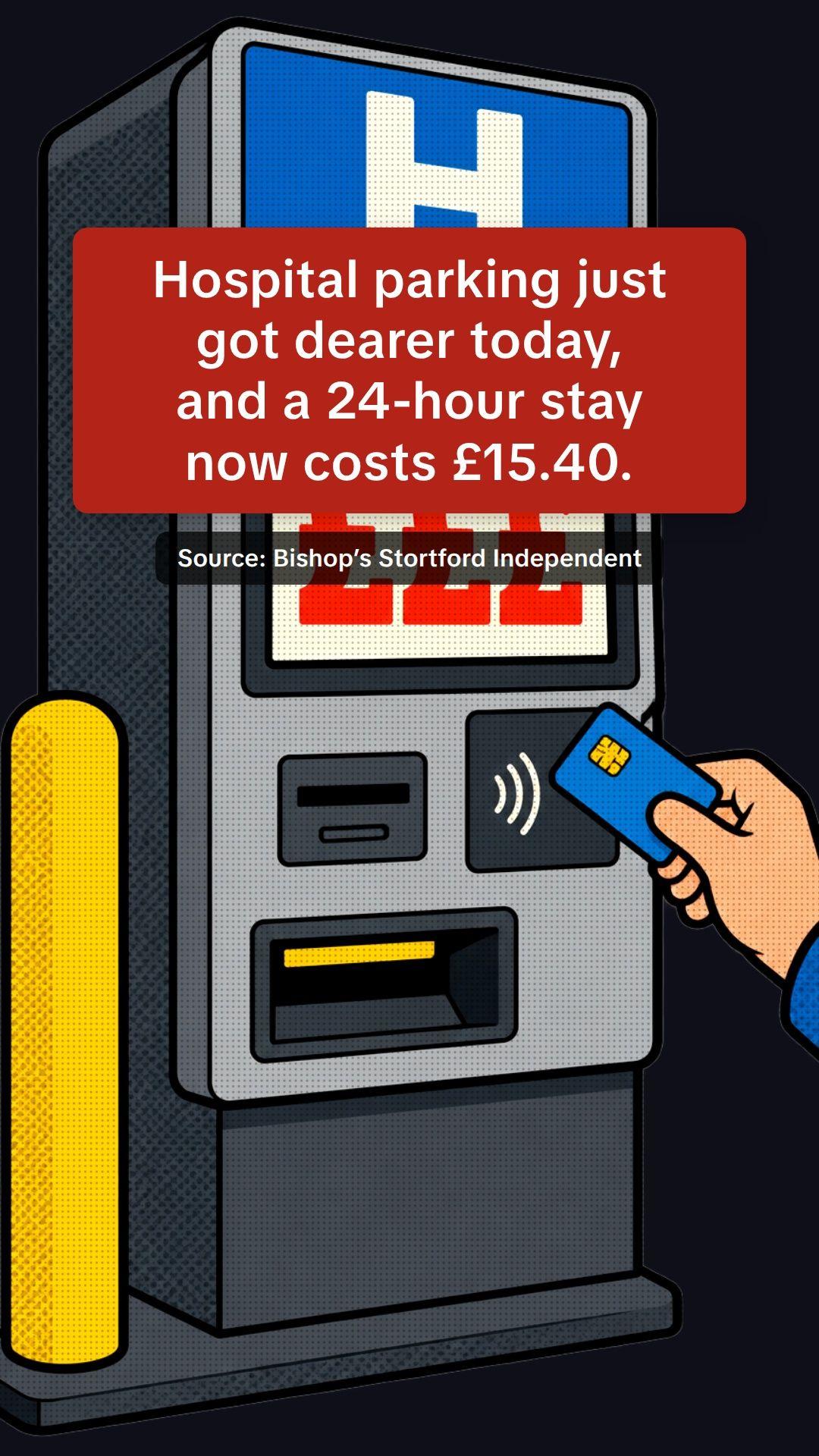
Princess Alexandra Hospital parking charges rise: what patients and visitors should know
Nobody chooses to go to hospital for the car park. You go because you're ill, anxious, or supporting someone who is. Yet the first practical hurdle is often the same: where do I leave the car, and what will it cost? From 17 November, that question gets slightly more expensive for anyone visiting Princess Alexandra Hospital (PAH) in Harlow.
The increase is modest, but it touches on bigger questions about NHS parking, who gets concessions, and what happens when something goes wrong at the pay machine. This article covers all three.
What has actually changed
According to the Bishop's Stortford Independent, parking tariffs at Princess Alexandra Hospital will go up on 17 November. The rises range from 10p to 40p, depending on how long you stay. In other words, the longer bands do not all rise by the same amount, so the effect on your wallet depends on the length of your visit.
Some things stay the same:
- The first 20 minutes remain free. This is the most useful part of the tariff for quick drop-offs and pick-ups.
- Blue Badge holders still park free.
- Several other eligible groups will continue to receive free parking.
I haven't reproduced the full tariff table here because the source summary doesn't give every band. Check the hospital's own signage, website or pay machines for the exact figures before you travel.
Why a small rise still matters
A rise of 10p to 40p is hardly dramatic on a single visit. The real impact is cumulative, and it depends on who you are.
Consider a few typical hospital car park users:
- Someone attending a long course of outpatient treatment, such as repeated appointments over weeks or months.
- A relative visiting a patient on a ward every day for an extended stay.
- A parent with a child in hospital, who may be there for hours at a time and unable to leave.
- Staff, who usually have separate arrangements but are also affected by site-wide parking policy.
For these people, small increases to each tariff band can add up over a long period. That is why concessions matter more than headline prices, and why it is worth knowing exactly what you may be entitled to.
There is also an unavoidable feature of hospital parking: you can't predict how long you'll be. Clinics overrun. A "quick" blood test turns into a consultation. A relative's discharge takes three hours longer than planned. Hospital tariffs are therefore different from a supermarket or town-centre car park, where you control your own timing.
The wider picture: NHS parking in England
Hospital parking charges in England are set by individual NHS trusts. Charges have been a long-running source of public frustration, and other regions have taken a different approach. Scotland and Wales have moved towards free hospital parking for most people, while England has left the matter largely to local trusts, with national guidance on who should be exempt.
We've looked at the scale of the issue in our piece on NHS parking charges and the money they raise, and at other trusts raising prices, such as Queen Elizabeth the Queen Mother and King George hospital fee rises and Hull hospital charges. PAH is part of a pattern of trusts adjusting tariffs, often citing the costs of running and maintaining car parks.
It is also worth remembering that trusts commonly say that money from parking is reinvested in patient services or used to cover car park running costs. Whether that justifies charging patients and visitors is a political argument, and one this article won't settle. What you can control is knowing your rights under current guidance.
The legal angle: what rules apply?
Free parking is mostly policy, not statute
There is no single law saying a hospital must provide free parking to Blue Badge holders or anyone else. In England, concessions come mainly from NHS England guidance on car parking principles for trusts. That guidance sets out groups who should generally be offered free or reduced-price parking. These typically include:
- Disabled people, including Blue Badge holders
- Frequent outpatient attenders
- Visitors of people who are very seriously ill or in hospital for extended periods
- Parents or carers staying overnight with a child
- Staff working night shifts
Individual trusts decide how to apply the principles in practice, which is why concessions differ from hospital to hospital. At PAH, the source tells us Blue Badge holders and several other eligible groups remain free, but you should confirm exactly who qualifies and what proof is needed.
One point of clarity about Blue Badges: the national scheme was designed primarily for on-street parking. Free parking in a hospital car park is a concession offered by the site operator, not a universal legal right. That is why the details of each car park's policy matter.
Who enforces the rules?
Hospital car parks are private land, even though they sit within NHS sites. That means that if you overstay or don't pay, the consequence is usually a parking charge notice (PCN) issued under contract law, not a council penalty charge notice. Some trusts manage car parks themselves. Others contract an operator.
Private parking enforcement generally relies on these principles:
- Contract and notice: The terms are on signs at the entrance and around the site. By parking, you accept them.
- Keeper liability: If the operator doesn't know who was driving, they can pursue the registered keeper only if they follow the strict procedure set out in Schedule 4 of the Protection of Freedoms Act 2012.
- Reasonableness of the charge: In ParkingEye v Beavis [2015] UKSC 67, the Supreme Court upheld a parking charge on private land because it served a legitimate interest and was not extravagant. It does not mean every charge is automatically enforceable. Signage, the amount, and whether the operator has followed the rules all still matter.
If the operator is a member of an accredited trade association, you can usually appeal to the operator first and then to the independent appeals service attached to that body. For a step-by-step explanation, see our guides on how the POPLA appeals process works and what to do about private parking charges. The rules for private operators are also changing, including grace periods and charge caps. See what the new private parking rules mean.
This article is general information, not legal advice. If a charge is substantial or you feel it was unfair, official guidance and independent advice organisations are the right next stop.
What drivers should know: practical tips
1. Use the free 20 minutes wisely
The first 20 minutes being free is helpful for dropping someone off or collecting a patient who is ready to go. It is not a guarantee that you can leave the car and be back in time for an appointment. Allow time to walk from the car park to the entrance, which at large sites can be several minutes in each direction.
2. Check whether you qualify for a concession
Do not assume you will be charged, and do not assume you won't. Groups such as frequent outpatient attenders or parents staying overnight with a child often have to apply or get a ticket validated. Free parking is rarely automatic for anyone except those with a visible Blue Badge, and even then you may need to register your details or display the badge correctly.
Questions worth asking at reception or the patient services team:
- Am I eligible for free or discounted parking?
- Do I need to register my vehicle or get a validation?
- How do I claim back what I've already paid if I only found out later?
Our post on a hospital parking charge cancelled after a maternity permit shows how eligibility issues can be resolved after the event. Blue Badge holders may also find our guide to Blue Badge holder rights helpful.
3. Pay accurately and keep proof
Many hospital car parks now use ANPR cameras and pay by registration number. A single mistyped character can turn into a PCN. Always:
- Double-check your registration before confirming payment.
- Keep the receipt, or screenshot your app confirmation.
- Note the time you arrived and when you paid.
If you do receive a charge despite paying, the evidence is what counts. We've covered this in parking fines for keying errors.
4. Be aware of when you're leaving
Tariffs depend on the length of stay, so being a few minutes over a band can cost you. If you are waiting for a discharge or an overrunning appointment, consider topping up through the payment system (if it allows) rather than gambling on getting back in time. Check the signs, because some car parks require payment before you leave and others on exit.
5. If you receive a charge, don't ignore it
Ignoring a PCN does not make it disappear, and the sums can grow if the matter escalates. If your visit was clearly medical, say so in your appeal. Operators and trusts have discretion, and there are examples of charges being cancelled once the context is explained. See our article on hospital charges cancelled after an NHS apology for context. Keep your correspondence factual and calm, and include appointment letters or similar evidence.
6. Think about alternatives where practical
If your appointment is straightforward and you aren't in need of the closest parking, public transport, a lift, or being dropped off within the free 20 minutes may be cheaper. For many patients this is not realistic, particularly if they are unwell or have mobility needs, so it should be a choice rather than an expectation.
Looking ahead
The increase at PAH is small, but it fits a national trend of trusts reviewing tariffs, and the debate over whether patients should pay to park at hospitals is unlikely to go away. Three things are worth watching:
- Concessions and consistency. Differences between trusts can leave patients confused about what they're entitled to. Clearer, better-publicised rules would help.
- Private parking reform. The wider shake-up of private parking enforcement, including a statutory code of practice, may influence how hospital car parks run by contractors are managed and how appeals work.
- Technology. The more car parks rely on ANPR and apps, the more important accurate data entry and good evidence become.
For now, the practical message is simple. Know the free 20 minutes, check your eligibility for concessions, and pay carefully. If something goes wrong, keep your evidence and appeal calmly. A few minutes of preparation before you drive to the hospital can save a lot of stress when you arrive.
This article is general information about UK parking and motoring rules and does not constitute legal advice. For specific problems, consult official guidance or an independent advice service.
Written by
The Parking Ticket Pal Editorial Team
Source-checked parking guidance