New private parking rules: £100 cap & 10-min grace
UK private parking fines are changing: 10-minute grace periods, clearer signs, £100 cap (£60 in 14 days) and a new appeals charter. Dates inside.

James Wilson
12 May 2026
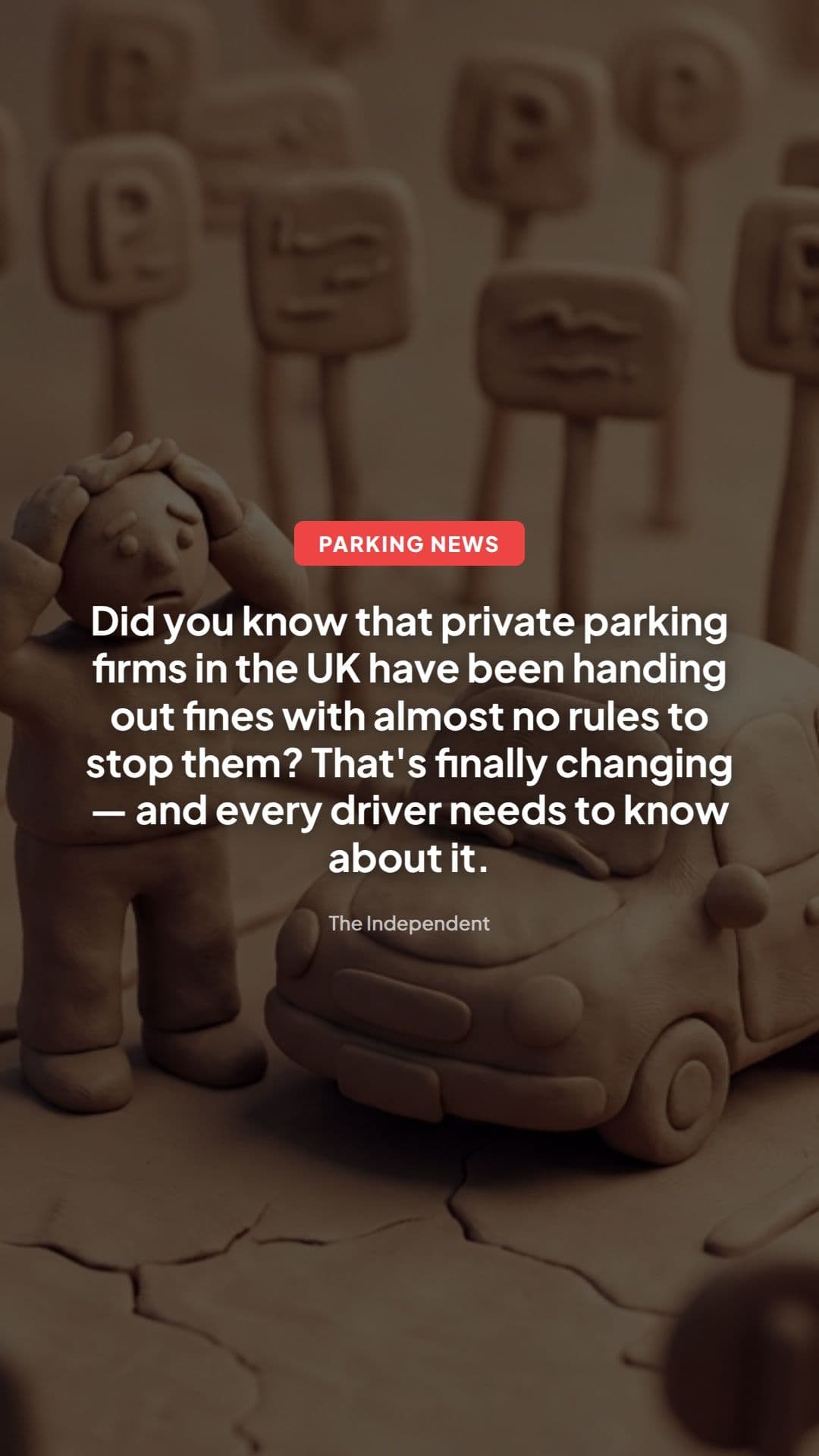
Parking Fines Are Changing: What Every UK Driver Needs to Know About the New Private Parking Code
The Moment That Changes Everything
Picture this: you've nipped into a retail park for what you thought was a quick 15-minute errand. Traffic was bad, the queue longer than expected, and you were back at your car 12 minutes after your paid time expired. Two weeks later, a £100 demand lands on your doormat from a private parking company you've never heard of.
For millions of UK drivers, that scenario isn't hypothetical — it's a lived reality. Private parking enforcement has become one of the most contested, complained-about industries in Britain, generating tens of thousands of penalty charge notices every single day and spawning an entire ecosystem of debt collection letters, appeals processes, and legal disputes.
That is, until now. A sweeping overhaul of the rules governing private parking is finally taking shape — and if you drive in Britain, this is arguably the most significant change to parking law in a generation.
What's Actually Changing
The new Private Parking Code of Practice, reported in detail by The Independent, introduces a set of binding standards that private parking operators will be legally required to follow. The headline measures are:
- A mandatory 10-minute grace period after paid or permitted parking time expires, during which no ticket can be issued
- A cap on private parking charges at £100 — or just £60 if paid within 14 days
- Clearer, standardised signage requirements to ensure drivers genuinely understand the terms before they park
- An Appeals Charter, creating a more structured and transparent process for challenging tickets
The rollout is phased: new car parks must comply from October 2025, while existing sites have until the end of 2026 to bring themselves into line.
This isn't a voluntary industry pledge or a gentleman's agreement. These are enforceable standards, and operators who breach them face consequences — including the loss of the data access rights that allow them to obtain registered keeper details from the DVLA in the first place.
Why This Matters: A Decade of Abuse
To understand why this reform is so significant, you need to appreciate just how badly the private parking sector has behaved. Since the landmark Protection of Freedoms Act 2012 — which abolished wheel clamping on private land — parking companies shifted their enforcement model almost entirely to ticketing and debt pursuit. The result was an explosion in private parking notices.
The industry has, in many cases, operated in a legal grey area that has been enormously profitable. Unlike council-issued Penalty Charge Notices (PCNs), which are underpinned by statute and subject to independent adjudication through bodies like the Traffic Penalty Tribunal, private parking tickets are contractual claims. In theory, you owe the money only if a court decides you've breached the terms of a contract formed when you parked.
In practice, however, many drivers simply paid up — often because they didn't realise they had the right to challenge, or because they feared the escalating threats from debt collection agencies. The letters are deliberately designed to look official. The language is deliberately intimidating.
Complaints to the British Parking Association (BPA) and the International Parking Community (IPC) — the two trade bodies that accredit private operators — ran into the tens of thousands annually. The Competition and Markets Authority (CMA) launched a formal investigation. MPs debated the issue repeatedly. Consumer groups documented case after case of misleading signage, retrospective changes to terms, and charges being issued for the most marginal of infractions.
The new Code is the government's response to years of this pressure.
The Legal Angle: What the Code Actually Means in Law
Here's where things get genuinely interesting — and where the detail matters enormously.
The Private Parking Code of Practice is issued under the Parking (Code of Practice) Act 2019, a piece of legislation that passed with cross-party support but whose implementation was repeatedly delayed. The Act gives the Secretary of State the power to create a statutory code that operators must follow as a condition of accessing DVLA keeper data.
That last point is the teeth of the whole system. Without DVLA data, a private parking company cannot identify who owns a vehicle. They can issue a ticket on the windscreen, but if the driver ignores it, they have no way to pursue it. Compliance with the Code isn't optional — it's the price of being able to enforce at all.
The 10-minute grace period is particularly significant legally. Previously, some operators claimed to offer grace periods voluntarily, but there was no binding minimum. Drivers who returned to their vehicles 8 minutes after expiry could — and did — find themselves ticketed. The new rule removes that ambiguity entirely.
The £100 cap also matters. There have been cases where private operators attempted to charge far more — sometimes £170 or above — on the basis that their contractual terms permitted it. The Code puts a ceiling on this, and the discounted rate of £60 for prompt payment mirrors the longstanding structure of council PCNs, making the system at least superficially fairer.
The signage requirements are arguably the most legally consequential change of all. Courts have previously found in drivers' favour where signage was inadequate, poorly lit, or placed where a reasonable person would not see it. Standardising signage requirements creates a much clearer benchmark — and, crucially, a much clearer basis for appeal when those standards aren't met.
What Drivers Should Do Right Now
The new rules don't mean you can park anywhere and ignore the consequences. But they do significantly shift the balance of power. Here's what every driver should know:
1. Know your grace period — and use it From October 2025 in new car parks, you have a guaranteed 10 minutes after your time expires before any ticket can lawfully be issued. Keep this in mind, but don't push it to the limit habitually — the grace period is a safety net, not a free extension.
2. Check the signage before you park Under the new Code, operators must display terms clearly and prominently. If you receive a ticket and the signage was inadequate — wrong location, too small, partially obscured — that is a legitimate ground of appeal. Take photographs immediately if you think this might be an issue.
3. Never pay a private ticket automatically A private parking notice is not the same as a council PCN. It is a contractual claim. You have the right to challenge it through the operator's internal appeals process and, if unsuccessful, through an independent appeals service — either POPLA (for BPA members) or the IAS (for IPC members). Under the new Appeals Charter, these processes should become more transparent and consistent.
4. Understand the cap If you do owe a legitimate charge, the maximum is now £100, dropping to £60 if paid within 14 days. Any demand for more than this from a compliant operator should be challenged immediately.
5. Keep records of everything Photograph the signs, your parked vehicle, your ticket, and any payment receipts. If you use a pay-by-phone app, screenshot the confirmation. Evidence wins appeals — and the new Code creates a framework where that evidence is more likely to be properly considered.
6. Check whether the operator is accredited Operators must be members of either the BPA or IPC to access DVLA data. If you receive a ticket from an operator who is not accredited, their ability to enforce it is severely limited. You can check membership status on both organisations' websites.
Looking Ahead: Will It Actually Work?
The reforms are genuinely welcome, but healthy scepticism is warranted. The private parking industry has a long history of finding workarounds, and the phased implementation timeline — with existing sites having until end-2026 to comply — means the old regime continues in many locations for the next 18 months or more.
There are also questions about enforcement of the Code itself. The BPA and IPC are trade bodies, not regulators in the traditional sense. If an operator consistently breaches the Code's requirements, the sanction — loss of DVLA data access — is a significant one, but the process for applying it needs to be robust and transparent.
Consumer groups and motoring organisations will be watching closely. The RAC, the AA, and organisations like Which? have all campaigned for exactly these kinds of reforms. Their continued scrutiny will be essential to ensuring operators don't simply pay lip service to the new rules while continuing business as usual.
For drivers, the message is straightforward: the law is moving in your favour. The new Code creates clearer rights, clearer limits on what operators can charge, and a more structured framework for challenging unfair tickets. Understanding those rights — and being prepared to exercise them — is now more important than ever.
The days of private parking companies operating as unaccountable fine-issuing machines should, in theory, be numbered. Whether the reality matches the promise will depend on how rigorously the rules are applied — and how confidently drivers push back when they aren't.
Source: The Independent. This post provides general information about UK parking law and the new Private Parking Code of Practice. Individual circumstances vary.
Written by
James Wilson
Legal Counsel
Ready to Challenge Your Ticket?
Let our AI analyse your PCN and generate a professional appeal letter in minutes.
Start Free Appeal