Parking Fines for Keying Errors: Your Rights Explained
Drivers are being pursued over minor car park registration errors. Learn when £100 private parking charges may be challenged and what your rights are now.

The Parking Ticket Pal Editorial Team
23 August 2026
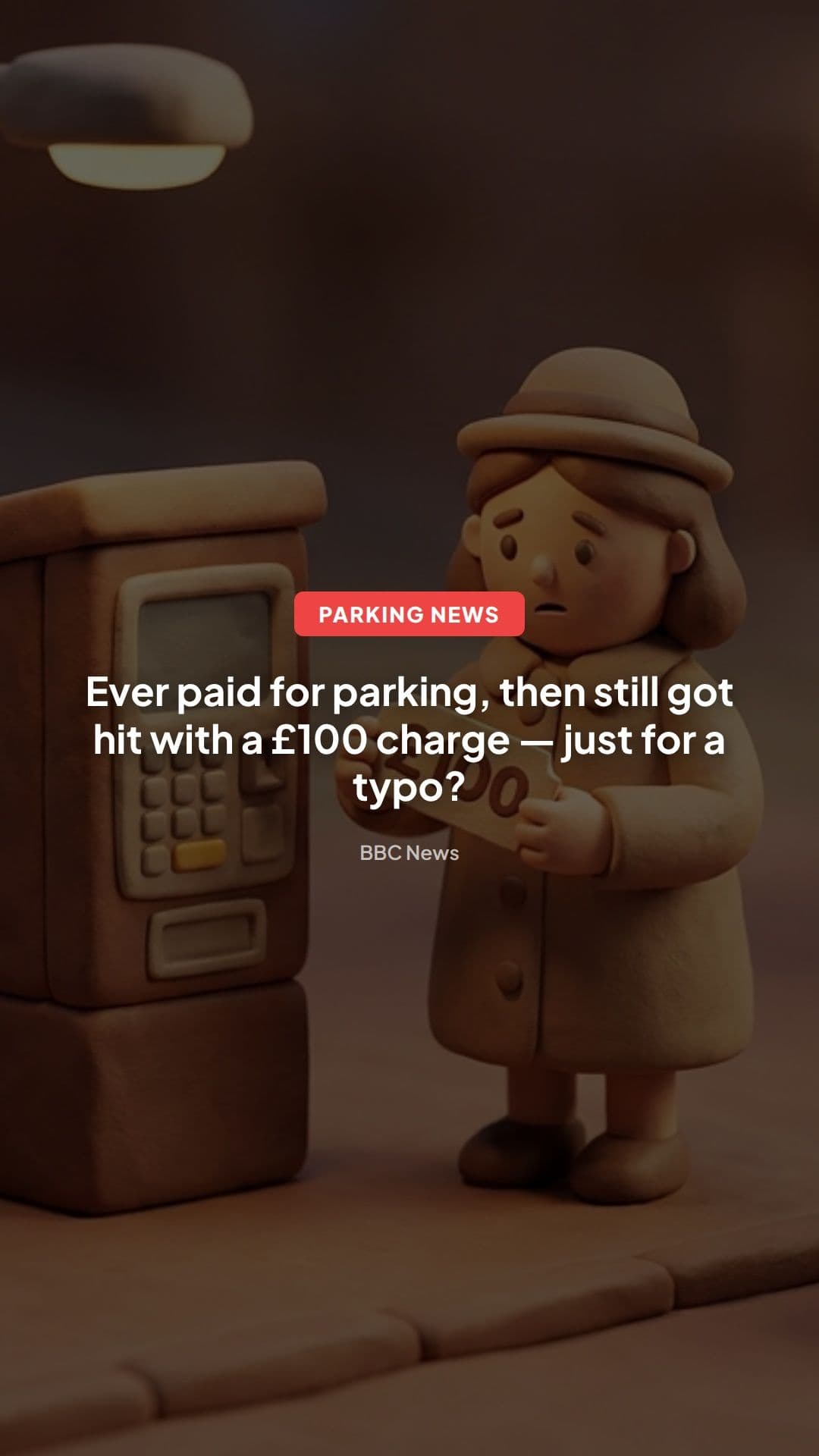
Parking Fines: Drivers Taken to Court Over Car Park Keying Errors
A Single Mistyped Digit, A County Court Summons
Picture this: you pull into a car park, tap your registration into a pay-and-display machine or a parking app, hand over your money, and drive off without a second thought. Weeks later, a letter arrives. Not a parking charge notice this time, but a county court claim form. Your crime? Getting one digit wrong when keying in your number plate.
It sounds disproportionate, and according to a recent BBC News investigation, it is happening to real drivers across the UK. Motorists who made an honest, easily verifiable typo when registering their vehicle at pay-by-plate car parks have found themselves pursued not just for the standard £100 private parking charge, but through the formal court system when they refused to pay. The BBC's report examines calls for private parking operators to exercise more common sense when it is clear the driver did pay, just for the wrong plate.
This is not a story about drivers dodging fees. It is a story about how an entirely automated enforcement system, built around Automatic Number Plate Recognition (ANPR) cameras, struggles to accommodate simple human error, and how that failure can escalate all the way to a court judgment.
What Actually Happened
The mechanics of this problem are straightforward once you understand how modern car parks work. Many pay-and-display sites have ditched paper tickets in favour of ANPR cameras that photograph your registration plate on entry and exit. To "pay", you type your registration into a machine or app, hand over your money, and the system is supposed to match your payment to your number plate.
The trouble starts when a driver mistypes a character. Perhaps an "O" becomes a "0", or two digits get transposed. The camera has correctly captured the real plate, but the payment record shows a different, non-existent vehicle. As far as the operator's software is concerned, the actual car never paid at all. A parking charge notice follows automatically, often with no human ever checking whether a payment was made around the same time for an almost-identical plate.
According to the BBC's reporting, some drivers who queried this, providing bank statements, payment app receipts, and timestamps proving they paid for the correct bay at the correct time, still found their disputes rejected. When they refused to pay the resulting charge, some operators pursued the matter through the courts rather than writing it off as an obvious clerical slip. That is the crux of the story: not that mistakes happen, but that the system's response to a demonstrably genuine mistake can be full legal escalation rather than leniency.
Why This Matters Beyond One Mistyped Plate
This issue sits at the intersection of two things the private parking industry has been repeatedly criticised for: an enforcement model that is almost entirely automated, and a compliance culture that treats every unmatched payment as a suspected non-payer rather than a possible clerical error.
Private parking charges are big business. The number of tickets issued by private operators has climbed into the tens of millions annually in recent years, and the sector has faced sustained scrutiny from consumer groups, MPs and the Competition and Markets Authority over aggressive practices, unclear signage and inconsistent appeals handling. Against that backdrop, stories like this one reinforce a familiar public perception: that some operators are more interested in maximising charge collection than in fair, proportionate enforcement.
It also matters because of what escalation to court actually means for an ordinary driver. A parking charge notice is one thing. Most people know how to challenge it through an operator's internal appeal or, for many, an independent appeals service. A county court claim is a different animal entirely. It carries the risk of a County Court Judgment (CCJ), which can affect your credit file and mortgage applications for years, along with additional legal costs stacked on top of the original charge. For a driver who genuinely paid and made an innocent typing error, that is a wildly disproportionate outcome.
The Legal Angle: Contracts, ANPR, and Court Escalation
To understand why this happens, it helps to know how private parking enforcement is legally structured. Unlike council-issued penalty charge notices, which are a statutory, administrative process, private parking charges are based on contract law. When you park on private land, you are deemed to have entered into a contract with the landowner or operator, agreeing to their terms (usually displayed on signage) in exchange for the right to park. If you breach those terms, including a term that says you must correctly register your plate when paying, the operator can pursue you for a breach of contract.
The Protection of Freedoms Act 2012 (Schedule 4) is what allows operators to pursue the registered keeper of a vehicle, rather than just the driver, provided they follow a strict process for keeper liability, including correct notice wording and timing. This is the mechanism behind almost every private parking charge letter that lands on a keeper's doormat.
The landmark case of ParkingEye v Beavis (2015), decided by the Supreme Court, is the precedent that underpins the industry's ability to charge £100 (or more) for a contractual breach without it being struck down as an unenforceable "penalty". The court found that such charges could be legitimate because operators have a genuine commercial interest in managing their car parks, even where the actual loss caused by the breach is minimal or nonexistent, as is plainly the case with a keying error where a space was legitimately paid for.
That ruling gives operators a strong legal foundation to enforce charges even for technical, minor breaches. But it does not mean every case should proceed to court, and it certainly does not remove a driver's right to defend a claim. When a case does reach the county court, usually via the small claims track for amounts under £10,000, a judge has genuine discretion to weigh the evidence. Judges have, in various reported small claims outcomes, taken a dim view of claims where the underlying breach was trivial, the driver acted in good faith, and clear evidence of payment exists. Contesting a claim through the formal defence process, rather than ignoring it, is essential if you want that evidence heard.
It is also worth noting the ongoing regulatory pressure on this sector. Government efforts to introduce a single, statutory Code of Practice for private parking operators, overseen by an independent body, have been repeatedly delayed after legal challenges from within the industry. Consumer advocates continue to argue that a stronger, enforceable code, one that explicitly requires operators to check for obvious near-matches before pursuing enforcement, would prevent exactly this kind of dispute reaching a courtroom in the first place.
What Drivers Should Know
If you have made a genuine registration error at a pay-by-plate car park, there are sensible steps worth knowing about, while recognising that every case turns on its own facts and, where a court claim is involved, professional advice may be worthwhile.
- Keep every scrap of payment evidence. Bank statements, app confirmation emails, and time-stamped receipts are your strongest proof that you paid in good faith.
- Challenge early, in writing. Respond to the operator's notice within any stated deadline, explaining the error clearly and attaching your evidence.
- Escalate to an independent appeals service if refused. Most legitimate operators are members of an accredited trade body, and their internal rejection is not necessarily the final word.
- Never ignore a court claim form. If a claim does arrive, you typically have a limited window to respond. Ignoring it can lead to default judgment and a CCJ, even if you had a good defence.
- Consider whether legal help is proportionate. For a £100 charge escalated to court, the small claims process is designed to be accessible without a solicitor, but citizens advice services and specialist parking appeal resources can help you structure a defence.
Looking Ahead
Stories like this one keep the pressure on ministers and regulators to finish the job of reforming private parking enforcement. A functioning, independently monitored code of practice, one that requires basic proportionality checks before legal action, would go a long way to preventing genuine mistakes turning into court proceedings. Until that reform is fully in place, drivers remain reliant on their own vigilance, good record-keeping, and a willingness to push back through the proper channels when an operator's automated system gets it wrong.
Written by
The Parking Ticket Pal Editorial Team
Source-checked parking guidance
Ready to Challenge Your Ticket?
Let our AI analyse your PCN and generate a professional appeal letter in minutes.
Start Free Appeal