Blue Badge holder rights in the UK: what you can do
Learn Blue Badge holder rights in the UK: where you can park, time limits, exemptions, and what to do if you get a council PCN or clamp threat.

Emma Thompson
4 July 2026
Blue Badge Holder Rights in the UK: What You Can Actually Do
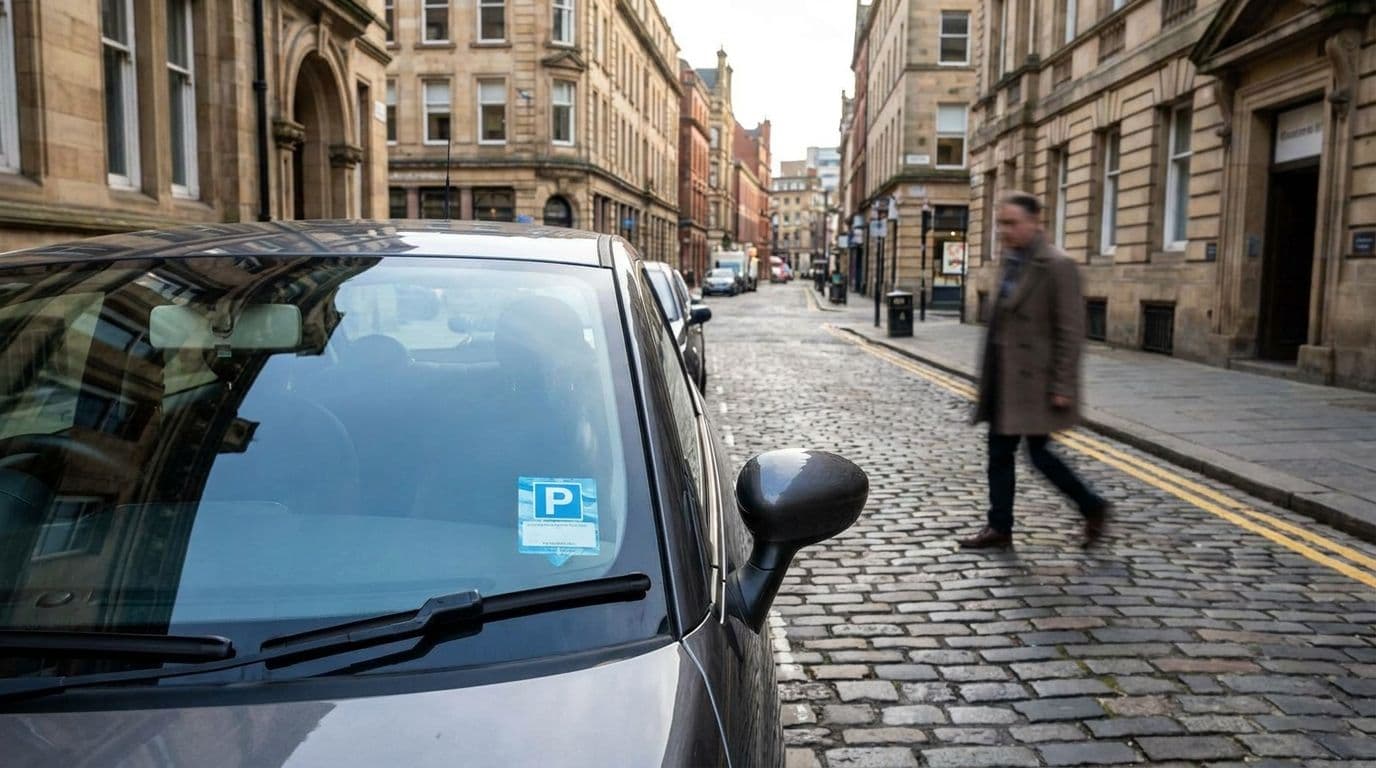
Picture this: you've driven to your local high street, found a spot near the shops, displayed your Blue Badge — and come back to find a Penalty Charge Notice tucked under your wiper. Or worse, a wheel clamp. You know your rights should protect you here, but suddenly you're not so sure what those rights actually are.
If that sounds familiar, you're not alone. Despite being one of the most important accessibility tools in the UK, the Blue Badge scheme is widely misunderstood — not just by the public, but sometimes by the very civil enforcement officers issuing tickets. Knowing your rights in detail isn't just useful; it can save you real money and real stress.
Here's everything you need to know.
What Is the Blue Badge Scheme — and Who Issues It?
The Blue Badge scheme is administered by local councils across England, Scotland, Wales, and Northern Ireland under the Disabled Persons' Parking Badges Act 2013 and associated regulations. Badges are issued to individuals (not vehicles), which means the badge must travel with the holder — you can't lend it to a friend or family member to use without you present.
Eligibility broadly covers people who:
- Receive the higher rate mobility component of PIP or DLA
- Are registered blind
- Have a severe walking disability
- Have been awarded a War Pensioner's Mobility Supplement
- Cannot operate a parking meter due to a disability affecting their upper limbs
Organisations such as care homes or charities that transport disabled people can also hold badges.
Where Can Blue Badge Holders Park?
This is where things get genuinely useful. Blue Badge holders enjoy a significant range of parking concessions that go well beyond what most people realise.
On-Street Parking Concessions
On streets with pay-and-display bays or parking meters, Blue Badge holders can generally park free of charge for as long as needed, unless local signs specify otherwise.
On single yellow lines, you can park for up to three hours — unless a sign at the nearest junction shows a loading restriction that covers the time you want to park.
Double yellow lines are where many people get confused. The rule is clear: you can park on double yellow lines for up to three hours, provided there are no kerb marks (yellow kerb blips). Those small dashes painted on the kerb indicate a loading ban, and even Blue Badges don't override a loading ban.
Pro tip: Always check the kerb before parking on double yellows. If you see yellow blips on the kerb itself — usually two short dashes — a loading ban is in force and you cannot stop there, badge or no badge.
Disabled Bays — On-Street
In on-street disabled bays, you can park free and without time limit unless the bay sign specifies a maximum stay. Always read the sign carefully; some bays are time-limited even for badge holders.
Off-Street Car Parks
In council-run car parks, Blue Badges typically grant free parking or significant discounts. However, this does not automatically apply to privately operated car parks — those follow their own rules and are not legally bound by the Blue Badge scheme. Always check the signage before assuming you're covered.
Time Limits: The Rules That Catch People Out
Here's a common misconception: many badge holders assume the Blue Badge gives unlimited parking everywhere. It doesn't.
- On single yellow lines: maximum three hours
- In designated disabled bays: subject to any time limit shown on the sign
- On double yellow lines: maximum three hours (no kerb marks)
- In loading bays: you can park for as long as loading restrictions allow — usually you can load and unload, but not park indefinitely
When you park, you must also display the clock disc set to your time of arrival. This is a legal requirement, not optional. Failing to display the clock correctly is one of the most common reasons Blue Badge holders receive PCNs — and it's one of the hardest to appeal.
Where Blue Badges Don't Apply
Knowing where your badge doesn't protect you is just as important.
You cannot use your Blue Badge to park:
- On red routes (clearways) — these are absolute no-stopping zones
- Where there are kerb marks indicating a loading ban on double yellows
- In taxi ranks or bus stops
- In pedestrian zones during restricted hours
- In spaces reserved for specific users (e.g., doctors' bays, ambulance bays)
- On zig-zag lines near schools or pedestrian crossings
Pro tip: Red routes are strictly enforced in London and many other cities. Even a brief stop to let a badge holder out can result in a PCN — the badge doesn't grant any exemption on these routes.
Got a PCN? Here's What to Do
Receiving a Penalty Charge Notice as a Blue Badge holder is frustrating, but don't panic — and don't pay immediately. Paying within the discount window (usually 14 days) locks in the penalty and removes your right to appeal.
Step 1: Check the Grounds
Ask yourself:
- Was your badge correctly displayed with the expiry date visible?
- Was your clock disc set to arrival time and clearly shown?
- Were you parked somewhere your badge genuinely applies?
- Did the officer make an error (wrong vehicle, wrong location, wrong time)?
Step 2: Make an Informal Representation
Within 28 days of the PCN, write to the issuing council. Keep it factual and evidence-based. Include:
- A copy of your Blue Badge
- Photos of how it was displayed
- Any relevant signage photos showing the restrictions (or lack of them)
- Your clock disc position if relevant
Councils are required to consider informal representations before the Notice to Owner stage.
Step 3: Formal Representation
If your informal appeal is rejected, you'll receive a Notice to Owner. You then have 28 days to make a formal representation. If that's also rejected, you can escalate to an independent adjudicator — the Traffic Penalty Tribunal (outside London) or London Tribunals (inside London). This is free to use and genuinely independent.
Pro tip: Adjudicators are not on the council's side. If the officer made a procedural error — wrong signage, incorrect observation time, badge not properly checked — you have a strong case. Always appeal if you believe you were lawfully parked.
What About Clamping?
On-street clamping by councils is rare but does happen in some areas. If your vehicle is clamped and you believe you were lawfully parked as a Blue Badge holder, do not attempt to remove the clamp yourself — that's a criminal offence.
Instead:
- Contact the council immediately and state your badge was displayed
- Request the clamp be removed while the matter is investigated
- Document everything — photograph the clamp, your badge display, and the surrounding signs
- If the clamp was applied in error, you're entitled to a full refund of any release fee
On private land, the rules are different. Private landowners can clamp vehicles, but only within strict rules under the Protection of Freedoms Act 2012 — and Blue Badge exemptions on private land depend entirely on what the landowner's signage says.
Blue Badge Misuse: Why Enforcement Matters
It's worth briefly acknowledging that badge misuse is a real problem — and councils are increasingly using AI cameras and enforcement officers to catch it. Using someone else's badge, using a deceased person's badge, or displaying a badge without the holder present are all criminal offences under the Road Traffic Regulation Act 1984, carrying fines of up to £1,000.
Legitimate badge holders suffer most from misuse — fewer available bays, increased suspicion from enforcement officers. If you witness misuse, you can report it to your local council anonymously.
Your Actionable Next Steps
Whether you're a new badge holder or a seasoned one, here's what to do right now:
- Check your badge's expiry date — badges last three years and must be renewed in advance
- Always carry a clock disc — they're free from most councils and mandatory for on-street parking
- Photograph your badge display every time you park somewhere new — it takes seconds and is your best defence
- Know your local council's rules — some areas have additional local restrictions that override national defaults
- Don't pay a PCN without appealing first — if you were lawfully parked, fight it
Your Blue Badge exists to give you genuine independence and access. Understanding exactly how it works — and how to defend it when challenged — puts that independence firmly back in your hands.
Written by
Emma Thompson
Traffic Law Specialist
Ready to Challenge Your Ticket?
Let our AI analyse your PCN and generate a professional appeal letter in minutes.
Start Free Appeal