
Hospital Parking Charge Cancelled After Maternity Permit
A high-risk pregnant driver was issued a £150 hospital parking charge despite a free maternity permit. We examine drop-off rules, cancellation and appeal rights.

The Parking Ticket Pal Editorial Team
13 November 2026
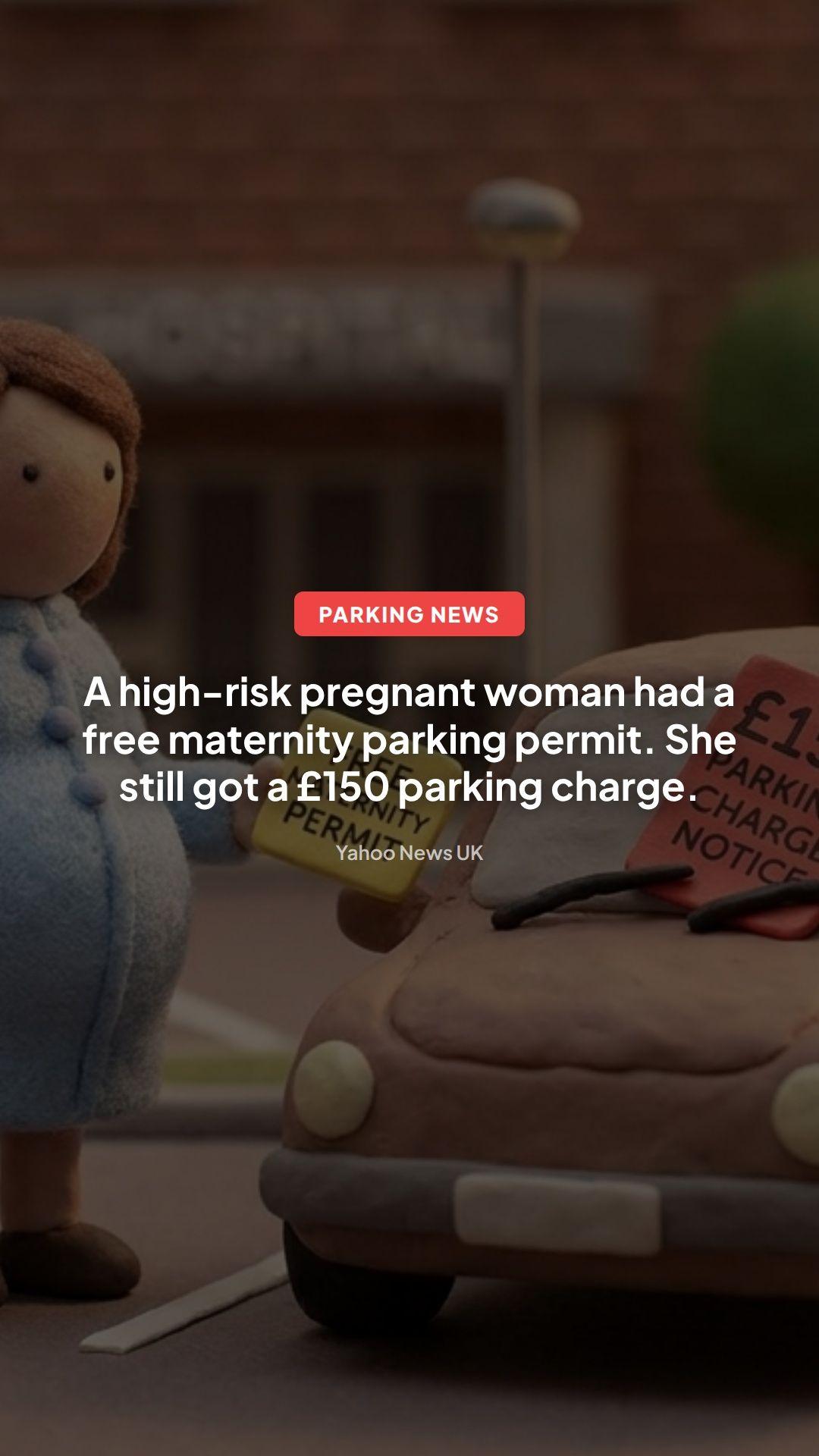
A High-Risk Pregnancy, a Free Parking Permit and a £150 Charge: What Went Wrong?
Imagine heading to hospital for maternity care while managing a high-risk pregnancy. You have been given a permit for free parking, which is a small kindness in a stressful time. Then a £150 parking charge lands on the doormat anyway.
That is the situation reported by Yahoo News UK, where a pregnant woman received a charge despite holding a permit for free maternity parking. The operator, GroupNexus, later cancelled it, pointing to a 15-minute drop-off limit. The cancellation was the right outcome, but the story raises bigger questions. How does a permit fail to protect someone? Why does a cancellation come with an explanation that leaves the underlying confusion in place? And what should other drivers learn from it?
What happened
I am working from the published outline of the story, so I will stick to what is reported and avoid guessing at the rest. A pregnant woman, described as high-risk, held a permit entitling her to free parking for maternity visits. She was nonetheless issued a £150 parking charge. After the matter came to light, GroupNexus cancelled the charge and cited a 15-minute drop-off limit.
That detail is worth pausing on. A drop-off limit is a different kind of restriction from a standard pay-and-display bay. It usually applies to a designated zone, often right outside an entrance, where the idea is that you stop briefly, let someone out and move on. A permit for free parking at a hospital would ordinarily cover the main car parks. Whether it covers a time-limited drop-off area depends on how the site and the permit scheme are set up.
So there may have been a mismatch between what the permit holder understood she was entitled to and how the site's rules were being applied. That kind of mismatch is exactly where many hospital parking disputes begin.
Why it matters
Hospital sites are a patchwork
Hospital car parks are rarely simple. A single site might include staff areas, visitor car parks, patient bays, blue badge spaces, emergency bays, drop-off zones and areas managed by different parties. Enforcement is frequently contracted out to a private company, which operates under its own signs, its own tariffs and its own list of exemptions.
In England, NHS guidance encourages trusts to offer concessions for certain groups, such as disabled people, frequent outpatient attendees and some parents of sick children. But the detail varies from trust to trust, and so do the permit arrangements. A maternity permit is a local scheme, not a national entitlement. That means the permit's terms matter enormously, and the permit holder often has only a short leaflet or a conversation with a receptionist to go on.
Parking policy also differs across the UK. Scotland and Wales have broadly moved to free hospital parking, with some exceptions linked to private finance arrangements. England has not taken that route, which is why the permit-and-concession model is so common there.
The stakes are higher for patients than for shoppers
A £150 charge is a nuisance for anyone. For someone managing a high-risk pregnancy, it is stress that nobody needs. Anxiety about letters, deadlines and escalating demands can land at precisely the wrong moment. We have looked at similar pressures in our piece on hospital parking charges being cancelled after an NHS apology, and the same pattern shows up often. Patients are vulnerable, the rules are unclear, and the charge arrives before the explanation does.
Cancellation is not the same as clarity
When an operator cancels a charge and points to a rule such as a 15-minute limit, there is an uncomfortable reading. It can suggest the charge was valid on the operator's terms, but waived because of the circumstances. Or it can suggest that the operator reviewed the permit arrangements and concluded the charge should not have been issued. The published summary does not settle which. Either way, a cancellation fixes one person's problem without necessarily fixing the system that created it.
The legal angle
This is general information, not legal advice. If you are dealing with a live charge, use the official routes mentioned below.
Private land means contract, not statute
Where a private company manages a hospital car park, the charge is usually a claim in contract or trespass, not a penalty under road traffic law. That is a fundamentally different footing from a council-issued Penalty Charge Notice. The leading case is ParkingEye v Beavis [2015] UKSC 67, in which the Supreme Court held that a charge in a private car park can be enforceable where it reflects a legitimate interest and is not extravagant, and where the terms were clearly displayed. The decision turned on its facts, including clear signage, a free-stay period and a modest charge. It does not mean every charge is automatically valid.
Signage and terms matter
For a contractual charge to stick, the driver generally needs to have had a fair opportunity to see and understand the terms. If a permit says "free maternity parking" but signs at the drop-off area impose a 15-minute limit, the question becomes what a reasonable driver would understand. Conflicting or unclear messages can be a strong point on appeal. Our guide to using unclear parking signs as a defence goes through how this argument works in practice.
Keeper liability and the Protection of Freedoms Act
Where the operator does not know who was driving, it can pursue the registered keeper under Schedule 4 of the Protection of Freedoms Act 2012, but only if it follows the strict notice requirements in that schedule. Those include what the notice must say and the timing of delivery. An operator that gets those wrong may not be able to hold the keeper liable. Our explainer on how private parking charges work and whether you have to pay covers the basics.
Trade bodies and independent appeals
Most operators belong to either the British Parking Association (BPA) or the International Parking Community (IPC), and each runs its own independent appeals service (POPLA and the IAS respectively). Which one applies depends on the operator, and it should be stated on the notice. Our comparison of BPA vs IPC membership explains why it matters, and our step-by-step guide to the POPLA appeals process is a useful companion.
Pregnancy and the Equality Act 2010
Pregnancy and maternity is a protected characteristic under the Equality Act 2010, and service providers have duties not to discriminate. Whether a particular parking policy or enforcement decision amounts to unlawful discrimination is a complex, fact-specific question, and in practice most cases like this are resolved through complaints and appeals long before anyone considers that route. It is, however, a reminder that hospitals and their contractors are expected to think about the needs of the people they serve. If you believe a policy has unfairly affected you, consider seeking advice from a specialist adviser such as Citizens Advice.
Changes on the horizon
The rules for private parking are being reshaped. The government has been developing a new statutory code of practice, with proposals including a cap on charges and a grace period. Details and timings have shifted, so check the latest position before relying on any particular figure. We track the developments in our posts on the new private parking charge rules and the 10-minute grace period.
What drivers should know
Here is how to protect yourself if you are heading to a hospital with a permit or concession.
1. Read the permit terms, then read them again. Check where the permit is valid, whether it covers every car park on the site, and whether any areas (such as drop-off zones, emergency bays or short-stay areas) are excluded. If the wording is vague, ask the hospital's parking office or the maternity unit to clarify, and ask for the answer in writing or by email.
2. Display the permit as instructed. Make sure it is visible and correctly positioned. Some schemes also require you to register your vehicle number plate, either on a tablet at reception or through an app. A permit sitting in your glovebox may not count.
3. Photograph everything. Take pictures of the permit on the dashboard, the entrance signs, the tariff board and any signs about time limits. If a charge arrives later, this evidence can be decisive.
4. Keep your appointment paperwork. Appointment letters, text reminders and scan bookings can show why you were on site and for how long. Our piece on nurses and the 266 parking fine after a lift rescue delay shows how much a clear timeline can matter.
5. Do not ignore a charge. Even if you feel certain it is wrong, respond within the deadlines. Check the notice for the appeal window, identify the operator's trade body and appeal in writing. Our guides on informal PCN appeals can help you structure your points, though the principles apply to private charges too.
6. Use the hospital as a lever. Contact the trust's parking team or the Patient Advice and Liaison Service (PALS). Hospitals often have the power to ask the operator to cancel charges issued in error, and many have a process for it. A complaint copied to your MP can sometimes help as well.
7. Do not pay out of panic. Paying can be treated as accepting the charge. If you have a legitimate reason to dispute it, take a day to gather evidence first. If you are unsure, free advice is available from Citizens Advice.
8. Be careful with drop-off zones. Even with a valid permit, a short-stay drop-off area may be governed by a separate time limit. If you are being dropped off, or dropping off a partner, check the signs before you leave the car. Our post on hospital emergency bay parking rules is a good example of how specific bays carry specific conditions.
Looking ahead
This story is a small one on the surface, but it points to a larger issue. Hospital parking sits at the intersection of healthcare, private enforcement and patient vulnerability, and it often falls between the three. Several things could improve it.
Clearer permit design. If a permit says "free parking", it should say precisely where, for how long and what it does not cover. A single sentence about drop-off zones could prevent many disputes.
Better coordination between trusts and contractors. Where the hospital issues the permit and a separate company enforces, the permit data must reach the enforcement team. Gaps in that handover are a common cause of errors.
Stronger rules for private operators. The forthcoming code of practice could bring more consistency to grace periods, charge levels and appeals. Our coverage of the CMA's actions against parking operators shows regulators are paying closer attention to how these firms behave.
Greater sensitivity for vulnerable patients. There is a strong argument that enforcement near maternity, oncology and urgent care units should be handled with a lighter touch, and that automatic review should apply when a patient can show they were attending an appointment. Some trusts already do this, and others do not.
For now, the practical message is simple. A permit helps, but it is not a shield. Know what it covers, keep your evidence, respond to any charge on time and use every channel available, from the operator's appeal process to the independent service to the hospital's own complaints route.
The woman in this story had her charge cancelled. The next driver in a similar position may not be so lucky unless they know their options and act early.
Written by
The Parking Ticket Pal Editorial Team
Source-checked parking guidance
Ready to Challenge Your Ticket?
Let our AI analyse your PCN and generate a professional appeal letter in minutes.
Start Free Appeal