
Private Parking 10-Minute Grace Period: What It Means
Private car parks are set to introduce a 10-minute grace period after paid parking ends. Learn how new rules, charge caps and deadlines affect drivers.

The Parking Ticket Pal Editorial Team
17 September 2026
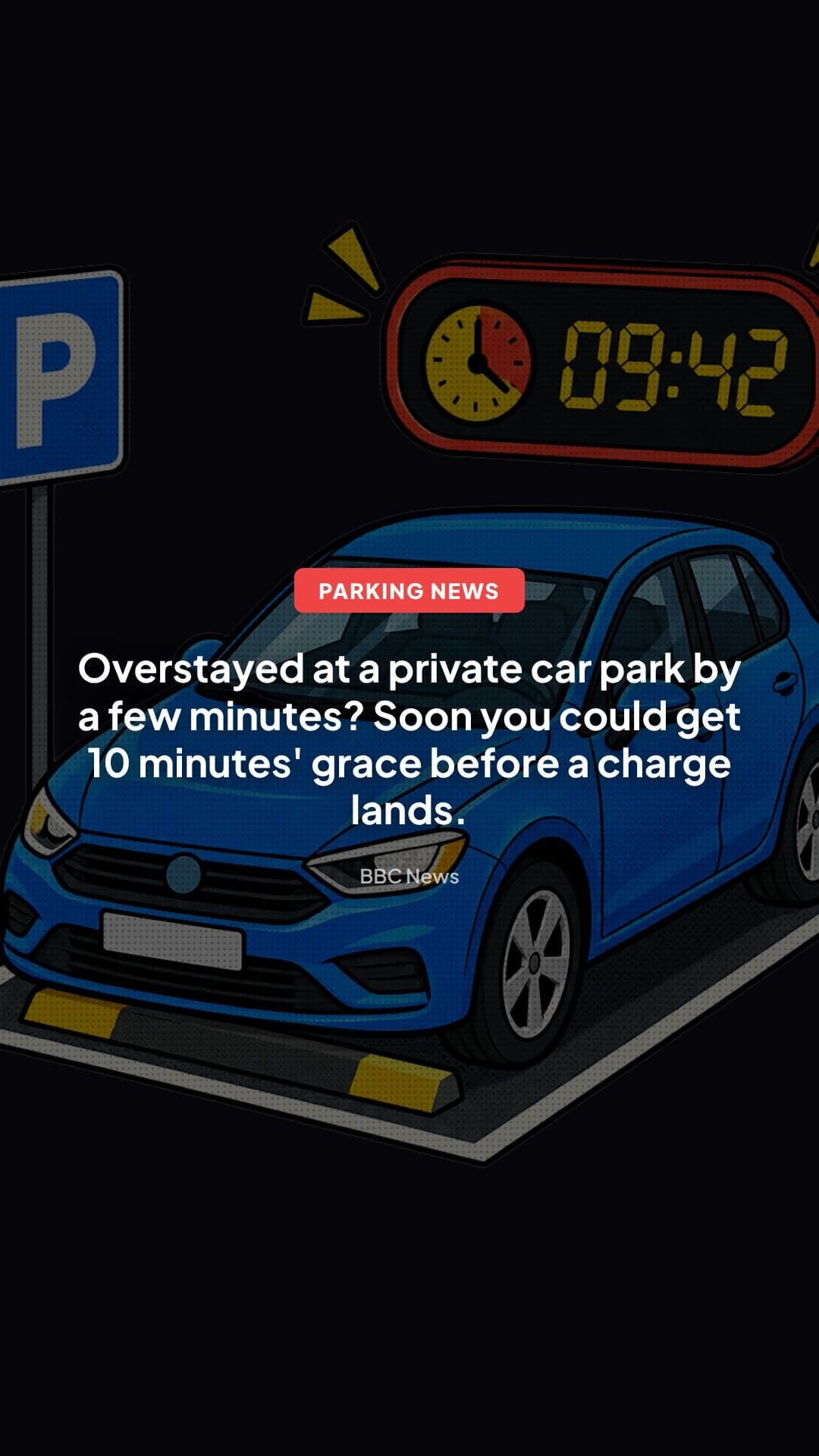
Private Car Parks to Offer 10-Minute Grace Period: What the New Rules Really Mean for Drivers
Picture the scene. You dash back to your car in a supermarket car park, two minutes after your paid session ended because the queue for a coffee took longer than expected. Weeks later, a parking charge notice lands on your doormat demanding £100 or more. For years, this has been one of the most common gripes drivers have about private parking operators, and it is finally being addressed head-on.
According to a BBC News report, private car parks across the UK are expected to introduce a mandatory 10-minute grace period before they can issue a charge once a paid parking period has ended. The story also touches on a proposed cap on charges and a timetable for operators to fall into line. It sounds like a small tweak, but it is actually the product of a long, messy, and often stalled attempt to bring fairness and consistency to an industry that has operated with remarkably little central oversight.
What's Actually Happening
The headline detail is simple: motorists who overstay a paid parking period by up to 10 minutes should no longer be automatically hit with a charge. This isn't a courtesy some operators might choose to offer. It is being framed as a rule that private car parks will be expected to follow, alongside a cap on how much operators can charge when they do issue a penalty.
This matters because, until now, the "grace period" landscape has been a patchwork. Some operators, particularly those signed up to the British Parking Association's Approved Operator Scheme, have voluntarily offered a 10-minute observation period on entry and exit. Others, especially at the more aggressive end of the industry, have issued charges within a minute or two of a ticket expiring. The inconsistency has been a major source of complaints, appeals, and frankly, public anger at what looks like fine-issuing for profit rather than genuine enforcement.
The BBC report also flags a proposed cap on the amount operators can charge, and a timetable for compliance, suggesting this isn't a voluntary aspiration but part of a wider regulatory push with actual deadlines attached.
Why This Has Taken So Long
To understand why this is news now, rather than years ago, it helps to know the backstory. Parliament passed the Parking (Code of Practice) Act 2019 with cross-party support, intending to create a single, statutory Code of Practice that all private parking operators would have to follow, replacing the separate codes run by the two main trade bodies, the British Parking Association (BPA) and the International Parking Community (IPC). If you're unsure how those two bodies differ and why membership matters, it's worth reading up on BPA and IPC membership and what it means for drivers.
That single code was meant to arrive years ago. It stalled after a legal challenge from the parking industry, which argued the government's original proposals, including a much lower charge cap, were disproportionate and had not been properly consulted on. The government went back to the drawing board, ran further consultations, and the whole process has crawled forward in fits and starts ever since. Along the way there have been various announcements about caps, grace periods, and compliance deadlines, several of which slipped.
What we're seeing now looks like the industry and government edging closer to something concrete. Given how much revenue is generated by rapid-fire enforcement, with private parking charges numbering in the millions each year, it is not surprising that operators have been reluctant to embrace faster reform.
The Legal Angle: Where This Sits Alongside Existing Law
It's worth being clear about what private parking charges actually are in legal terms, because it changes how you should think about this reform.
A charge issued in a private car park is not a fine in the way a council penalty charge notice (PCN) or a police-issued ticket is. It is, technically, an invoice for an alleged breach of contract, the contract being formed when you park on the land under the terms displayed on signage. This distinction matters because it means private parking charges are governed by contract law and consumer protection law, not by the traffic legislation that applies to council enforcement.
The Protection of Freedoms Act 2012, specifically Schedule 4, is the key piece of legislation here. It allows parking operators to pursue the registered keeper of a vehicle for an unpaid charge (rather than just the driver), provided they follow a strict process, including sending a compliant Notice to Keeper within set timeframes. If you want a deeper dive into how this keeper liability works and your rights around it, our guide to parking on private land explains the framework in detail.
Beyond POFA, the Consumer Rights Act 2015 also plays a role. Terms in a contract, including parking terms, must be fair and not create a significant imbalance to the consumer's detriment. Charges that appear punitive rather than reflective of a genuine pre-estimate of loss have been challenged successfully on these grounds, most famously in the Supreme Court case of ParkingEye Ltd v Beavis (2015), which upheld an £85 charge as enforceable but also established that charges must not be extravagant or unconscionable.
A statutory 10-minute grace period would sit on top of this framework, effectively closing off a category of charge that was always legally shaky, arguing that a two-minute overstay barely represents a breach worth £100, let alone genuine loss to the landowner.
What Drivers Should Know Right Now
Until the new code is fully in force and operators have actually implemented it, it's sensible to treat this as a direction of travel rather than a guarantee of protection today. A few practical points:
- Check the signage every time. Terms displayed on-site still govern the contract you're entering into. Photograph signs, especially the small print about grace periods and charge amounts, in case you need evidence later.
- Keep proof of payment and timing. If you receive a charge for a minor overstay, evidence such as a payment app receipt, a supermarket till receipt, or even a photo of your car showing the time can be decisive in an appeal.
- Don't assume you have to pay immediately. Private parking charges can often be challenged, and you are not automatically obliged to pay just because a letter arrives. Our guide on whether you have to pay a private parking charge in the UK sets out the realistic options.
- Use the appeals process properly. If an operator is a BPA member, you can appeal to POPLA (Parking on Private Land Appeals). If it belongs to the IPC, appeals go through the Independent Appeals Service (IAS). A well-structured informal appeal to the operator first can also resolve things quickly, and it's worth using a clear, factual template rather than an emotional letter.
- Watch out for compliance gaps. Just because a new grace period rule is expected doesn't mean every operator will apply it correctly or promptly. Errors in how charges are calculated or timed remain a common and winnable ground for appeal.
Looking Ahead
If the 10-minute grace period and a charge cap do become mandatory across the board, it will mark one of the most significant shifts in private parking regulation since POFA itself. It should reduce the number of "gotcha" charges issued for trivial overstays, something that has fuelled public resentment and mistrust of the entire private parking sector for years.
But drivers should stay realistic. Compliance timetables in this space have a habit of slipping, and a national code is only as good as its enforcement. There is also the question of how a charge cap will interact with genuinely serious breaches, such as parking without any payment at all, where operators will likely argue higher charges remain justified.
For now, the sensible approach is to keep documenting everything, understand that a charge is a civil matter you can challenge, and treat any new grace period as a welcome backstop rather than a reason to cut it fine. The rules may be changing in drivers' favour, but the burden of proof, at least for the moment, still tends to sit with the person contesting the ticket.
Written by
The Parking Ticket Pal Editorial Team
Source-checked parking guidance
Ready to Challenge Your Ticket?
Let our AI analyse your PCN and generate a professional appeal letter in minutes.
Start Free Appeal