
Havering Parking Fines Set to Rise: Drivers’ Appeal Guide
Forecasts suggest Havering parking fines could rise to 99,710 PCNs in 2026/27. Learn your appeal rights after motorists won 38.4% of adjudicated cases.

The Parking Ticket Pal Editorial Team
14 November 202611 min read
Havering Parking Fines Forecast to Jump: What the 99,710 Figure Means for Drivers
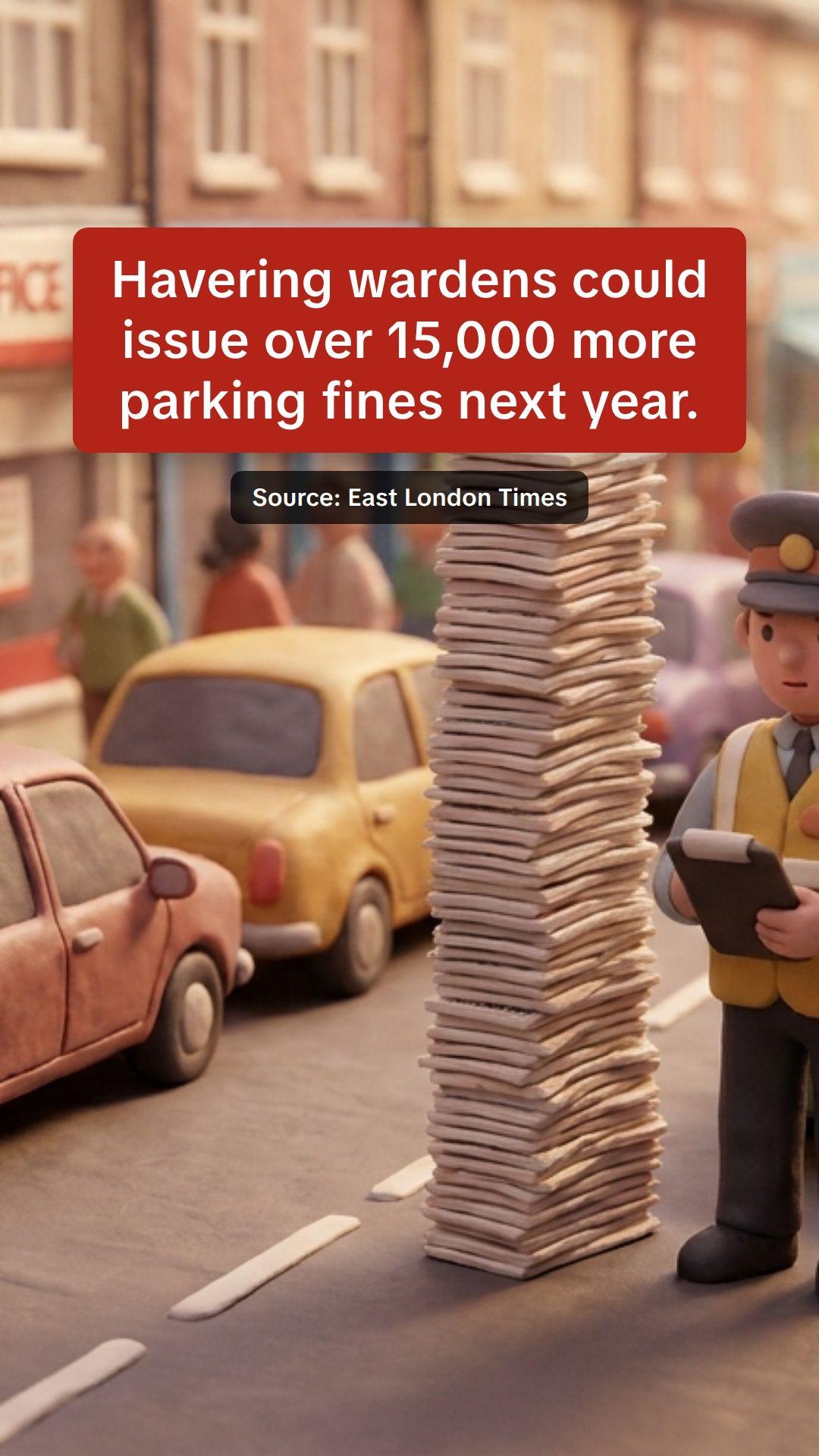
Imagine a parking ticket landing on a windscreen in Havering roughly every five minutes, around the clock, all year. That is close to what the numbers in a new forecast imply. Havering Conservatives have warned that Civil Enforcement Officers could issue 99,710 penalty charge notices (PCNs) in 2026/27, up from 84,349 in 2025/26, according to a report in the East London Times.
The same report contains a second, arguably more interesting figure: motorists won 38.4% of adjudicated appeals against Havering penalties. Taken together, the two numbers raise an awkward question. If enforcement is set to intensify, and a sizeable share of the tickets that reach an independent adjudicator are overturned, how confident should drivers be that every PCN is right?
This post looks at what the figures do and do not tell us, the rules councils must follow, and what drivers can sensibly do if a notice lands on their doormat.
What the story says
The headline numbers are simple. The forecast is for 15,361 more PCNs in 2026/27 than in the previous year, a rise of about 18.2%. That is a political warning, so it is worth treating with care. A forecast is not a count of tickets already issued, and the article itself is framed around concerns raised by the opposition group.
The second figure needs just as much care. A 38.4% success rate for motorists applies to adjudicated appeals, meaning cases that went all the way to an independent tribunal. It does not mean 38.4% of all PCNs are wrong. Most people pay, and many challenges are settled by the council earlier in the process. Cases reaching adjudication are a self-selected group: drivers who believed they had a strong argument and refused to give up after the council rejected them. Even so, a motorist winning well over a third of the time is not trivial, and it suggests that a meaningful number of challenged tickets did not survive scrutiny.
Why a rise like this happens
The source does not set out why the forecast is higher, so it would be unfair to assume a motive. But there are several common reasons a council's PCN numbers can climb:
- More enforcement capacity, whether extra officers, new vehicles or additional cameras.
- Camera-based enforcement, such as ANPR for bus lanes, school streets or moving traffic contraventions. Cameras can issue notices around the clock without an officer on the street.
- New or extended restrictions, such as controlled parking zones or changes to loading and waiting rules.
- Budget assumptions. Councils forecast income and expenditure, and enforcement forecasts sit within that.
There is also a broader context. Local authority parking income has been under national scrutiny, and our coverage of council parking profits and what drivers pay and council parking fines hitting drivers every minute shows this is not unique to one borough.
The legal framework councils must work within
Havering is a London borough, so it enforces parking under the Traffic Management Act 2004 and the regulations made under it, including the Civil Enforcement of Road Traffic Contraventions (England) General Regulations 2022 and the matching representations and appeals regulations. These set out when a PCN can be issued, what it must say, and how motorists can challenge it.
A few points are worth knowing.
Parking enforcement is not meant to be a revenue stream. Statutory guidance to councils says enforcement should be about compliance and managing traffic, not raising money. Separately, under section 55 of the Road Traffic Regulation Act 1984, any surplus from on-street parking accounts must be spent on specified purposes, such as transport, highways and environmental improvements. This is why forecasts of rising PCN numbers attract political attention: opponents often ask whether enforcement is serving traffic management or the council's budget.
A PCN must meet certain requirements to be valid. It needs to state the alleged contravention, the time and place, the amount payable, and how to pay or challenge. Mistakes on a notice do not always invalidate it, but procedural errors by the council are one of the recognised grounds of appeal.
The penalty is civil, not criminal. A PCN is a civil penalty issued to the registered keeper of the vehicle. It does not result in points on a licence, and it is separate from a private parking charge, which is a contractual matter. If you are unsure which kind you have, our guide to council PCNs versus private charges explains the difference.
How the challenge process works
For a London borough PCN, the process generally follows this pattern:
- PCN issued on the vehicle, by post, or via camera. Paying within the discount period, normally 14 days, reduces the amount by 50%.
- Informal challenge. You can write to the council at this stage. Doing so does not always freeze the discount in the way people expect, so check the wording on the notice.
- Notice to Owner. If the PCN is not paid or cancelled, the council may send this to the registered keeper. It reopens the full charge and starts the formal stage.
- Formal representations. You have 28 days from the Notice to Owner to make representations on the statutory grounds.
- Notice of Rejection, if the council refuses. This is the gateway to an appeal.
- Independent adjudication. In London this is handled by the Environment and Traffic Adjudicators (London Tribunals), and an appeal must be lodged within the time stated on the Notice of Rejection.
Ignoring the process can be costly. If a PCN is neither paid nor challenged, the charge can rise by 50% via a Charge Certificate, and the debt can be registered at the Traffic Enforcement Centre, which opens the door to enforcement agents (bailiffs). Our explainers on formal representations for PCNs and TE7 and TE9 statutory declarations cover those stages in more detail.
The statutory grounds, in plain English
Representations and appeals must usually rest on specific legal grounds. Those commonly relied on include:
- The contravention did not occur.
- You were not the owner at the time, or the vehicle had been taken without your consent.
- The penalty exceeded the amount applicable.
- The traffic order was invalid, or there was a procedural impropriety by the council.
- The PCN should not have been issued, for example because the restriction was not properly signed.
Councils and adjudicators weigh evidence, so what you can show matters more than how strongly you feel. This is where a lot of the 38.4% of wins probably come from: documents, photographs and an accurate reading of the rules.
What drivers in Havering (and elsewhere) can do
This is general information, not advice on your own case, but these practical habits tend to help anyone who parks on council-managed streets.
Photograph everything at the time. Signs, bay markings, the kerb, your vehicle's position and any payment screen. If a sign is missing, faded or confusing, a dated photo is far stronger than a recollection weeks later. Our piece on using unclear signs as a defence explains the principle.
Keep payment evidence. App confirmations, receipts and bank statements can prove a session was paid. If you made a keying error, such as a wrong registration, keep proof of what you intended. See incorrect VRM entry and how to appeal.
Read the PCN carefully. Check the contravention code, the date, the time and the location. Mismatches with where you actually were can matter. Our guide to understanding PCN codes will help you decode the wording.
Diarise the deadlines. The 14-day discount, the 28-day windows and the appeal deadline are all strict. Missing one can cost you the chance to argue your case.
Learn from real outcomes. Local decisions show how adjudicators treat common situations. For Havering examples, see our write-ups of a disc parking appeal that was allowed and a parked-without-payment win. Each case turns on its own facts, so treat them as illustrations rather than predictions.
Don't appeal blindly. A weak challenge is not penalised in the same way as a lost court case, but it can cost you the discount. Weigh the evidence honestly. If you are dealing with something complex, such as a vehicle hire dispute, a cloned plate or a stack of unpaid notices, consider independent help from a free advice service such as Citizens Advice or from a qualified adviser.
What the 38.4% should and should not make you think
It would be a mistake to read the appeal figure as proof that Havering gets many tickets wrong, and equally a mistake to dismiss it. A few balanced observations:
- A high success rate at tribunal can reflect strong cases reaching adjudication, not widespread poor enforcement.
- It can also indicate that some councils reject representations that an adjudicator later finds persuasive. Without breakdowns by contravention type, we cannot say which.
- The figure is more useful as a reminder that the first rejection is not the final word. The independent stage exists precisely because councils are judging their own tickets at the earlier stages.
If you are pursuing an appeal, it is worth being realistic. Some contraventions are clear cut, and adjudicators will uphold a PCN where the driver simply overstayed or parked on a restriction that was properly signed.
Looking ahead
If the 2026/27 forecast proves accurate, thousands more Havering drivers will receive a PCN. Whether that reflects better compliance management or heavier-handed enforcement will depend on where the notices are issued, and for which contraventions.
Several things are worth watching. First, whether the council publishes breakdowns of PCNs by type and location, which would show whether camera enforcement is driving the rise. Second, whether appeal outcomes change as volumes increase. Third, national developments: reforms to parking charges and enforcement rules are under discussion, as covered in our look at London parking fines possibly rising.
For now, the practical message is straightforward. Treat every restriction as enforceable, document your parking, act quickly on any notice, and remember that the appeals system exists for a reason. Over a third of adjudicated cases going the driver's way is a strong prompt to check the evidence before simply paying up.
This article is general information about UK parking rules and is not legal advice. For official guidance, refer to your council's PCN paperwork, GOV.UK and London Tribunals, and seek independent advice for your own circumstances.
Written by
The Parking Ticket Pal Editorial Team
Source-checked parking guidance