Council Parking Profits Hit £1.1bn: What Drivers Pay
English councils made almost £1.1bn in parking surpluses last year. Explore the figures, where the money goes and what it means for drivers nationwide today.

The Parking Ticket Pal Editorial Team
26 August 2026
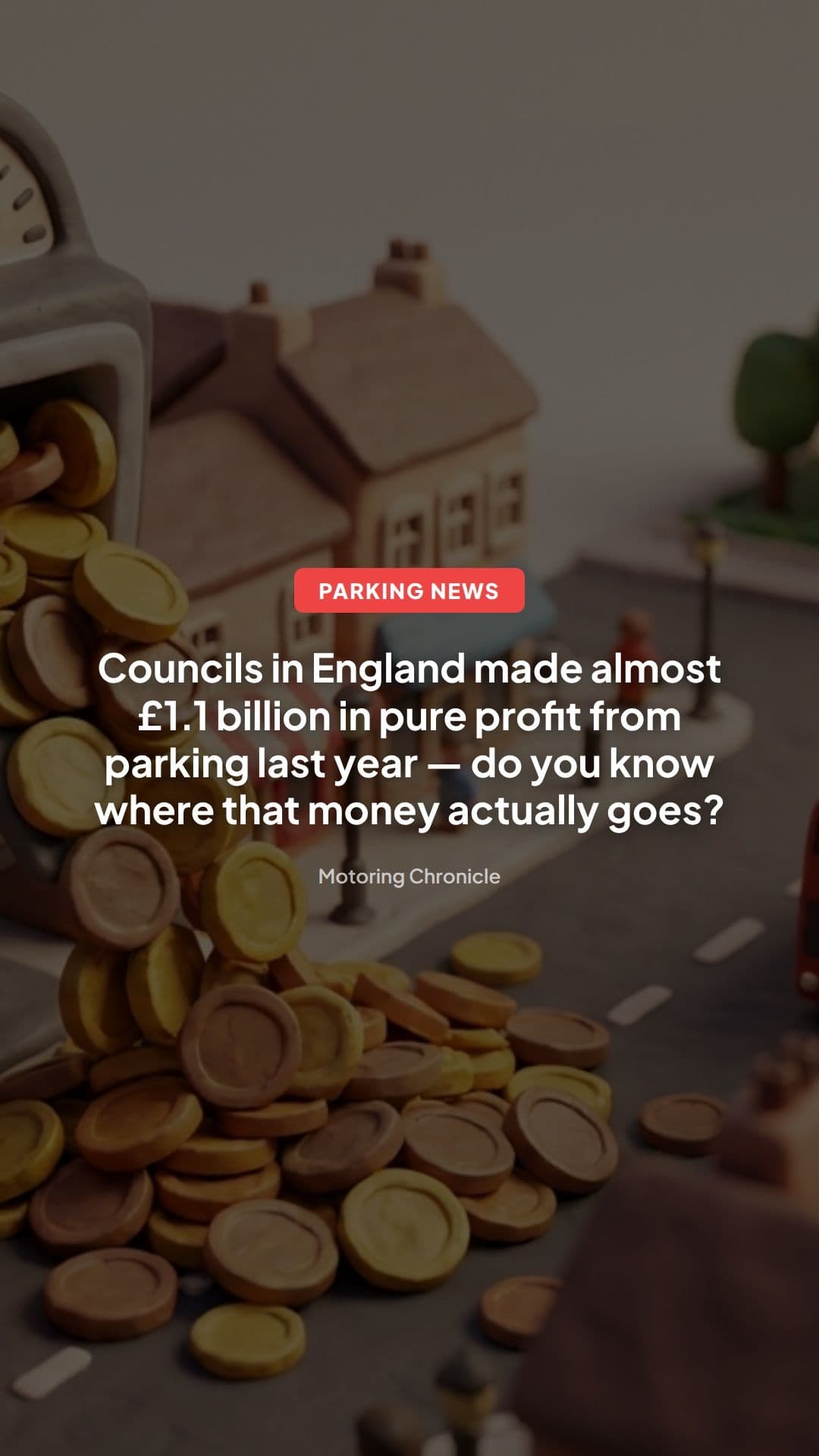
Councils Made Almost £1.1 Billion From Parking Last Year, New Analysis Shows
A Number That's Hard to Ignore
Picture every council in England quietly banking roughly £3 million each, every single day, purely from parking. That's essentially what fresh analysis reveals: English local authorities generated around £2.163 billion from on-street and off-street parking in the latest financial year, and after covering the cost of running car parks, meters, enforcement staff and back-office systems, they were left with a net surplus of almost £1.1 billion.
That's not a fine here or a meter fee there. That's a sum large enough to fund entire public services, and it raises an obvious question for anyone who has ever fed a machine on a rainy high street or received a penalty charge notice through the post: where does all this money actually go, and is the system working as intended?
What the Figures Actually Show
The headline numbers deserve unpacking. Gross parking income of £2.163 billion covers a wide mix of revenue streams: pay-and-display charges, resident permit fees, off-street car park tariffs, and penalty charge notices (PCNs) issued for contraventions such as overstaying, parking without payment, or breaching a resident bay restriction.
Once councils deduct their running costs, which is everything from wages for civil enforcement officers to the maintenance of ANPR cameras and payment machines, the figure that remains is the net surplus, and that's the near-£1.1 billion figure making headlines. In other words, roughly half of everything councils bring in from parking is pure surplus once operating costs are stripped out.
This isn't a one-off blip either. Parking has been a growing revenue line for councils for years, driven partly by rising charges, partly by more sophisticated enforcement technology, and partly by the sheer volume of vehicles on the road. What's notable about this latest analysis is just how large the surplus has become relative to total income, suggesting that parking enforcement has become an increasingly efficient, and lucrative, exercise for town halls.
Why This Matters Beyond the Headline
It's tempting to read a story like this as simply "councils are cashing in on drivers," but the reality is more nuanced, and understanding that nuance matters if you're a motorist trying to work out whether you're being treated fairly.
Local authority parking budgets have been under sustained pressure since austerity-era cuts began squeezing council finances more than a decade ago. Parking income has increasingly become one of the few discretionary revenue streams councils can lean on without central government approval for a new tax or levy. That creates an incentive structure worth understanding: the more effectively a council enforces its parking rules, the more it can generate, and legally, that surplus isn't supposed to simply vanish into general council coffers.
There's also a public interest dimension. Well-managed parking enforcement supports road safety, keeps bus routes and emergency access clear, and protects disabled bays and loading zones for those who genuinely need them. Nobody sensible argues for zero enforcement. The debate is really about proportionality, transparency, and whether some councils are chasing revenue rather than genuine traffic management outcomes, something drivers' groups have raised concerns about for years, particularly around aggressive enforcement in low-risk contraventions.
The Legal Framework Behind the Numbers
The rules governing what councils can and can't do with parking surplus are more tightly defined than many drivers realise, and they trace back to legislation that predates the current wave of camera-based enforcement.
Under Section 55 of the Road Traffic Regulation Act 1984, local authorities operating on-street parking under civil enforcement powers are legally required to ring-fence any surplus. That surplus cannot simply be absorbed into general council spending. Instead, it must be directed towards transport-related purposes, which can include things like highway maintenance, public transport improvements, road safety schemes, and environmental initiatives connected to transport.
This is an important point for drivers who feel aggrieved by rising charges or a tough enforcement regime: the law does not allow councils to treat parking as a general-purpose cash cow. Off-street car parks operate under slightly different rules and generally offer councils more flexibility, but the on-street surplus rules remain a meaningful legal constraint, and councils are required to publish annual parking accounts detailing income and expenditure, giving at least some transparency into how the money is used.
Separately, the framework for issuing and enforcing PCNs themselves comes from the Traffic Management Act 2004, which decriminalised most parking contraventions outside London (London had its own earlier civil enforcement regime) and handed councils responsibility for civil enforcement rather than the police. This is the legislation that underpins the PCN you might receive, the grounds on which you can challenge it, and the formal appeals route through the Traffic Penalty Tribunal in England outside London, or the London Tribunals service within the capital.
If you're unsure how the enforcement code on your own PCN translates into a legal contravention, our guide to understanding PCN codes is a useful starting point before you consider a challenge.
What Drivers Should Actually Know
Large national figures like £1.1 billion can feel abstract, but there are practical, grounded takeaways for anyone who parks a car regularly.
Not every PCN is correctly issued. Councils enforce at scale, using ANPR cameras and roving officers, and errors do happen, whether that's a misread number plate, a sign that's obscured or unclear, or a machine that malfunctioned at the point of payment. If you believe your ticket was issued incorrectly, you generally have the right to make informal representations first, and then formal representations if that's rejected, before escalating to an independent tribunal. Our guide to formal representations for parking fines walks through the process step by step, and there's also a free informal appeal template if you want to challenge a ticket early, when it's often cheapest to resolve.
Check the signage and lines before you park, not after. Many successful appeals hinge on unclear or missing signage rather than a factual dispute about whether the vehicle was there. Councils have a legal duty to ensure signs and road markings are clear and consistent with the Traffic Signs Regulations and General Directions, and unclear signage remains one of the strongest grounds for a challenge.
Understand the difference between a civil PCN and a criminal offence. The vast majority of parking contraventions are civil matters, meaning no points on your licence and no criminal record, even if the financial penalty stings. That's worth remembering if you're feeling anxious about a ticket landing on your doormat.
Keep an eye on rising charges. With parking surplus this substantial, and council budgets remaining tight, tariff increases are likely to remain a recurring theme across England. It's always worth checking current signage and tariff boards rather than assuming last year's rates still apply, particularly in town centres and coastal areas where charges have moved sharply in recent times.
Looking Ahead
This latest analysis lands at a moment when parking, both council-run and privately operated, is under more scrutiny than it has been in years. Government has already signalled interest in tightening rules around private parking firms, including proposals for grace periods and fee caps, and there's a broader public conversation happening about whether enforcement has become too aggressive, too automated, and too detached from genuine road safety goals.
For council parking specifically, the ring-fencing rules mean this £1.1 billion surplus should, in theory, be flowing back into transport infrastructure that benefits drivers, pedestrians, and public transport users alike. Whether that's happening consistently across all 300-plus local authorities in England is a fair question for local scrutiny, and one that residents can pursue through their own council's published parking accounts.
For individual drivers, the practical reality doesn't change much: read the signs carefully, keep your payment evidence, know your appeal rights, and don't assume a PCN is correct simply because it arrived through official channels. With numbers this large circulating nationally, staying informed about your rights as a motorist has never been more worthwhile.
Written by
The Parking Ticket Pal Editorial Team
Source-checked parking guidance
Ready to Challenge Your Ticket?
Let our AI analyse your PCN and generate a professional appeal letter in minutes.
Start Free Appeal