Incorrect VRM Entry: How to Appeal a UK Parking PCN
Entered the wrong VRM when paying for parking? Learn when a PCN can be cancelled, what evidence to use, and how to appeal in the UK.

Hannah MacLeod
12 March 2026
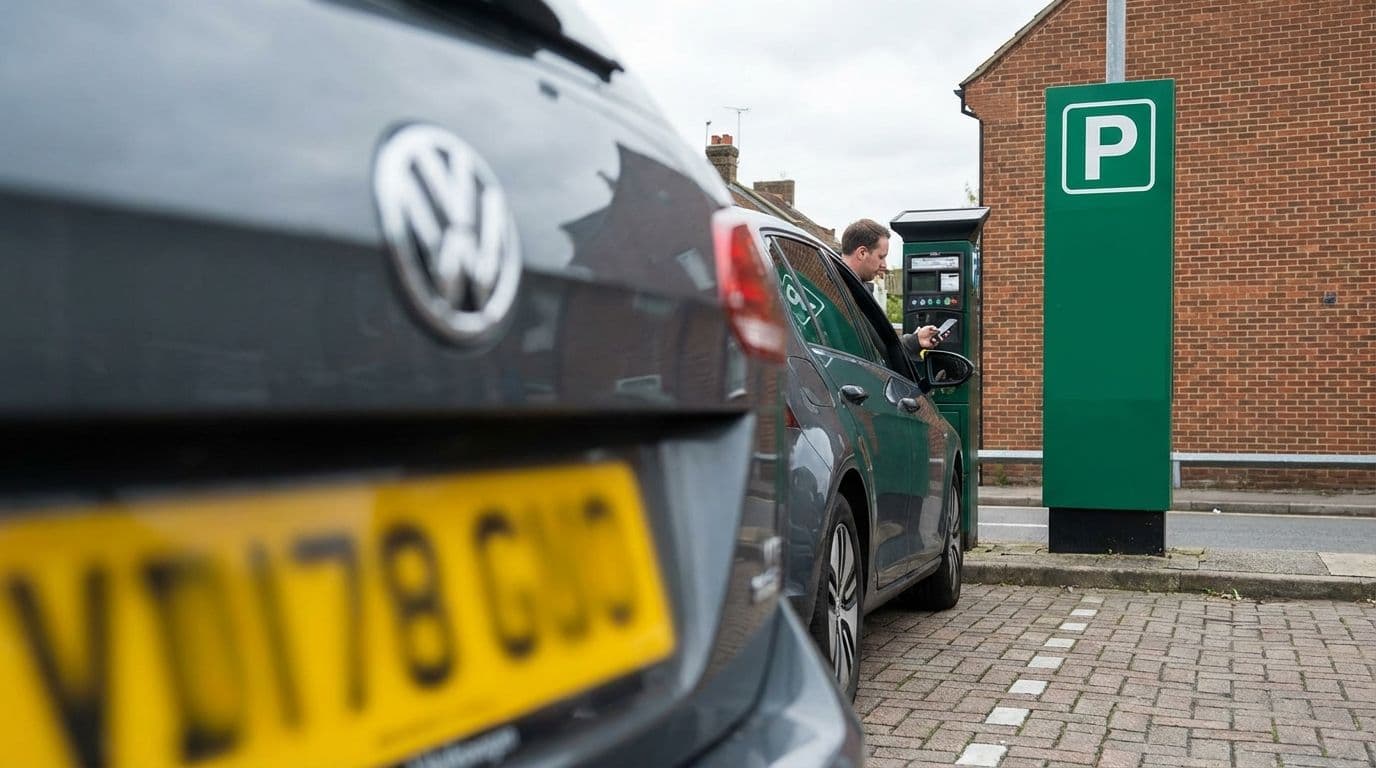
Entered the Wrong VRM When Paying for Parking? Here's How to Fight Your PCN
Picture this: you've done everything right. You found a space, downloaded the app, paid for your parking, and headed off to enjoy your day. Then, a week later, a parking charge notice lands on your doormat. You paid — you know you paid — but somehow you've still been hit with a fine.
The culprit? A single wrong digit in your vehicle registration number.
It's one of the most frustrating parking situations in the UK, and it happens to thousands of drivers every year. The good news is that a keying error doesn't automatically mean you're on the hook for the charge. With the right approach and the right evidence, many of these PCNs can — and should — be cancelled. Here's exactly what you need to know.
Why a Wrong VRM Causes Such a Problem
When you pay for parking via an app like PayByPhone, RingGo, or JustPark, the payment is logged against the vehicle registration you enter. ANPR (Automatic Number Plate Recognition) cameras or patrol officers then check whether your actual plate matches a valid, paid session in the system.
If you typed "LK21 XYZ" but your plate is actually "LK21 XYW", the system finds no valid payment for your vehicle — and a PCN is issued. The system doesn't know you made an honest mistake. It just sees an unpaid vehicle.
The same issue can arise with pay-and-display machines that require you to enter your VRM, or when registering for a car park using a barrier system. One mistyped character, and you're suddenly treated as if you never paid at all.
Minor vs. Major Keying Errors: The Distinction That Matters
Not all VRM mistakes are treated equally, and understanding the difference between a minor keying error and a major keying error is the foundation of a successful appeal.
Minor Keying Errors
A minor keying error is a small, understandable mistake — the kind where it's obvious you were trying to enter your own vehicle's registration. Think:
- Transposing two adjacent letters or numbers (e.g., "AB12 CDE" entered as "BA12 CDE")
- A single digit or letter wrong (e.g., "LK71 ABC" entered as "LK71 ABD")
- A missing or extra character due to a slip of the finger
Both the British Parking Association (BPA) and the International Parking Community (IPC) — the two main trade bodies governing private parking operators — acknowledge that minor keying errors should generally result in the charge being cancelled, provided you can show you genuinely paid for a session at that location and time.
Major Keying Errors
A major keying error is where the entered VRM bears little resemblance to your actual plate — for instance, entering a completely different vehicle's registration, or making multiple errors across the plate. In these cases, operators are less likely to cancel the charge without compelling evidence, and appeals can be harder to win.
The line between minor and major isn't always clear-cut, but as a rule of thumb: the closer the entered VRM is to your real one, the stronger your position.
Council PCNs vs. Private Parking Charges: Does It Make a Difference?
Yes — and it's worth knowing which type of PCN you're dealing with before you appeal.
Council (Local Authority) PCNs
These are issued under civil enforcement powers and are governed by the Traffic Management Act 2004. Local councils have discretion to cancel PCNs where there are mitigating circumstances, and a genuine keying error — backed by payment evidence — is widely accepted as grounds for cancellation at the informal representation stage.
If your informal appeal is rejected, you can escalate to a formal representation, and ultimately to an independent adjudicator via the Traffic Penalty Tribunal (outside London) or London Tribunals (within London). Adjudicators take a pragmatic view of genuine payment errors.
Private Parking Charges
These are issued by private landowners or their contractors and are governed by contract law, not statute. Your appeal goes first to the operator, then — if rejected — to an independent appeals service:
- POPLA (Parking on Private Land Appeals) for BPA members
- IAS (Independent Appeals Service) for IPC members
Both services have upheld appeals based on minor keying errors where payment was clearly made. The key is demonstrating that you paid in good faith for the correct location and time.
What Evidence Do You Need?
This is where most people either win or lose their appeal. A vague "I definitely paid" won't cut it — you need to back it up with documentation.
Essential evidence to gather:
- Payment confirmation — a screenshot or email receipt from the parking app showing the date, time, location, amount paid, and the VRM you entered
- Bank or credit card statement — showing the transaction at the correct time and location
- A photo of your vehicle at the location — ideally timestamped, showing your actual number plate
- The app's booking history — most apps allow you to view past sessions; screenshot this clearly
- Any confirmation emails — PayByPhone, RingGo, and similar services send booking confirmations that show the VRM used
Pro tip: If you use a parking app regularly, get into the habit of screenshotting your booking confirmation immediately after paying. It takes five seconds and could save you hours of stress later.
How to Write a Winning Appeal
Once you've gathered your evidence, structure your appeal clearly and confidently. Here's a framework that works:
- State the facts upfront — "I paid for parking at [location] on [date] at [time] for vehicle [your actual VRM]. Due to a minor keying error, I accidentally entered [wrong VRM] instead."
- Reference the relevant guidance — For private operators, mention BPA or IPC keying error guidance. For council PCNs, reference the principle of proportionality and good faith payment.
- Attach your evidence — List every document you're including and make sure it's legible.
- Make the ask explicit — "I respectfully request that this charge is cancelled on the basis that a genuine payment was made for the correct location and time, and that the error was a minor, unintentional keying mistake."
Keep it factual, polite, and concise. Adjudicators and enforcement teams see hundreds of appeals — a clear, well-evidenced submission stands out.
Pro tip: Avoid emotional language or lengthy explanations about how stressed you were. Stick to the facts and let the evidence do the talking.
What If Your Appeal Is Rejected?
Don't panic — a first-stage rejection isn't the end of the road.
- Council PCN: If your informal appeal is rejected, you'll receive a Notice to Owner. You then have 28 days to make a formal representation. If that's also rejected, you can appeal to the independent adjudicator — and this is where strong evidence of payment really counts.
- Private charge: If the operator rejects your appeal, escalate immediately to POPLA or the IAS. These independent services are not bound by the operator's view and regularly overturn decisions where genuine payment has been made.
Importantly, do not ignore the charge while you're appealing. Keep track of deadlines carefully — missing a response window can mean losing your right to appeal at the discounted rate, or even losing the appeal altogether.
Quick Checklist Before You Appeal
- [ ] Do you have proof of payment showing the wrong VRM?
- [ ] Can you show the difference between the entered VRM and your real plate?
- [ ] Do you have a timestamped photo or other evidence placing your vehicle at the location?
- [ ] Have you identified whether this is a council or private parking charge?
- [ ] Do you know which appeals body to escalate to if your first appeal fails?
Your Next Steps
- Gather your evidence immediately — payment receipts, screenshots, bank statements, and any photos
- Identify the type of PCN and the correct appeals process
- Submit your appeal promptly — within 28 days for council PCNs, or within the timeframe stated on the charge notice for private charges
- Escalate if rejected — don't accept a first refusal as final
A wrong digit in a VRM is a genuine, human mistake — and the appeals system, when used correctly, recognises that. With solid evidence and a clear, well-structured appeal, there's every reason to be confident.
Written by
Hannah MacLeod
Traffic Law Specialist
Ready to Challenge Your Ticket?
Let our AI analyse your PCN and generate a professional appeal letter in minutes.
Start Free Appeal