
Diesel Prices Hit £2 a Litre: What UK Drivers Pay Now
UK diesel prices have passed £2 a litre for the first time. See what the rise means for fuel bills, petrol costs and motorists' budgets across the UK today.

The Parking Ticket Pal Editorial Team
14 October 2026
Diesel at £2 a Litre: The Legal and Practical Fallout Beyond the Pump
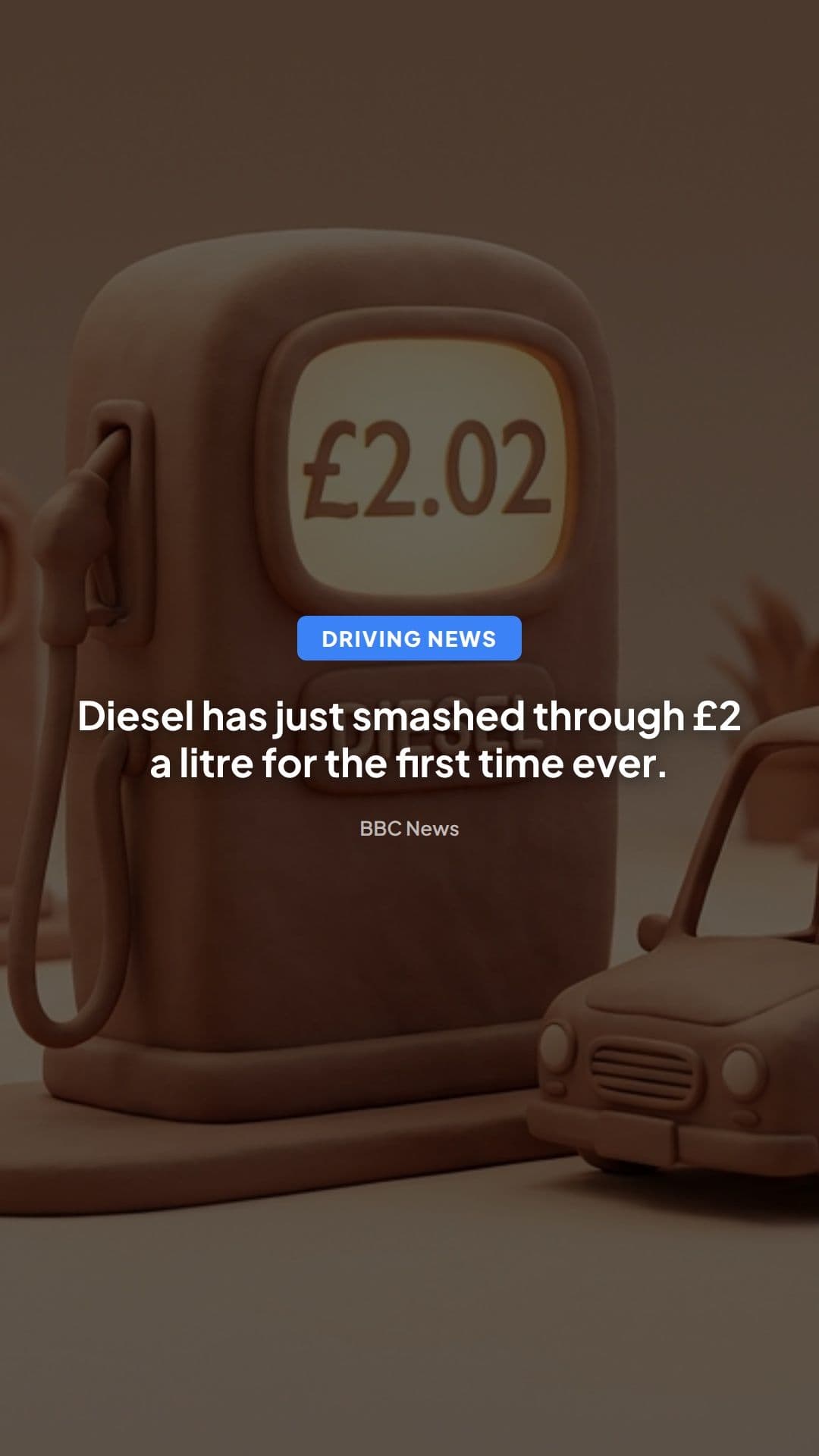
For years, £2 a litre was the number motorists half-joked about at the forecourt. Now it is real. RAC figures put the average price of diesel at 200.01p per litre, the first time the UK average has crossed that line. Petrol sits at 174.71p. For anyone who relies on a diesel car for the school run, the commute or a living, the headline is less a talking point than a line on the monthly budget.
Most coverage stops at the price. This piece looks at what a £2 diesel means for your rights, your tax position and the legal traps that tend to multiply when fuel gets expensive. It is general information, not legal advice.
What happened
According to the BBC, citing the RAC, filling an average family diesel car now costs about £110. That is substantially more than at the start of the reported international conflict that has driven up energy markets.
Two details are worth unpacking. First, £110 at 200.01p implies a fill of roughly 55 litres, so the "average" tank is a big one, and the cost lands in one hit rather than in small top-ups. Second, diesel is now about 25p a litre dearer than petrol (200.01p against 174.71p). On a 55-litre fill, that gap alone is around £14.
Diesel was historically the cheaper, more economical choice for high-mileage drivers, and many people bought on that basis. Diesel cars generally do more miles per gallon, so the gap does not tell the whole story. But the premium makes the sums much tighter than they once were.
Why £2 matters more than it looks
A psychological threshold is not just psychology. Several things happen when diesel crosses £2.
Costs ripple through the economy. Diesel powers vans, lorries, buses and delivery fleets. When it rises, the cost tends to feed into the price of goods and services, even for people who never drive a diesel car.
Behaviour changes, sometimes in risky ways. When fuel gets expensive, some drivers hunt for bargains across town, drive unusually slowly, or are tempted by shortcuts. Some of those carry legal consequences, covered below.
Diesel owners are in a squeeze. Many bought diesels when they were promoted as the sensible option. Higher pump prices now sit alongside clean air zone charges, which are set to stay in some cities for years (see our piece on how long clean air zone charges are set to continue). Resale values for older diesels may also come under pressure, though that is hard to predict.
The legal angle
Expensive fuel creates its own small legal ecosystem. Here are the areas where drivers most often get caught out.
Business mileage and your tax position
If you drive for work, the price spike raises a question: does your reimbursement keep up?
- Employees using their own car are typically paid under HMRC's approved mileage allowance payments, 45p per mile for the first 10,000 business miles in a tax year and 25p thereafter. These rates are fixed and do not move with the pump price. If your employer pays less than the approved rate, you may be able to claim tax relief on the difference. Check with HMRC or a tax adviser.
- Company car drivers who are reimbursed for business miles usually rely on HMRC's advisory fuel rates, which are reviewed periodically and vary by fuel type and engine size. These can lag behind sharp price movements, so it is worth checking the current published rates against what your employer pays.
- Free fuel for private use is taxed through the car fuel benefit charge, which uses a government-set formula rather than the actual pump price. In other words, the taxable value of the benefit does not rise just because diesel hits £2.
- Self-employed drivers can generally choose between simplified mileage expenses and claiming actual running costs. When fuel is this dear, it may be worth checking which is more favourable, ideally with an accountant.
If you use a fuel card, remember that private use of business fuel can create tax and employment consequences. Keep clear records.
Red diesel: a tempting mistake
Rebated fuel, commonly called red diesel, is dyed and taxed at a lower rate because it is meant for certain permitted uses, such as some off-road machinery. Using it in a road vehicle is generally an offence. HMRC can test fuel tanks, and penalties can include substantial fines and vehicle seizure. With diesel at £2, the temptation to cut corners may grow, and so may the enforcement attention. If you are unsure whether a particular use qualifies, check the official HMRC guidance on rebated fuels rather than relying on forecourt rumour.
Drive-offs and paying at the pump
Rising prices tend to coincide with a rise in forecourt thefts. In England and Wales, making off without payment is an offence under the Theft Act 1978. It does not matter if you simply forgot to pay. The key legal question is dishonesty, but you do not want to be the person explaining that to a forecourt manager or the police.
If you genuinely forget, go back or call the station as soon as you realise, and keep a record of when you did. For more, see our coverage of drive-off petrol thefts rising as fuel prices jump.
Also note that some pay-at-pump systems place a temporary pre-authorisation hold on your card. The hold usually drops off once the final amount is taken, but it can tie up your available balance for a time, which matters when a fill-up is £110.
Pump accuracy and pricing
Fuel pumps are measuring instruments regulated under weights and measures law. If you believe a pump has delivered less than it showed, or you were charged a different price from the one advertised, keep your receipt, note the pump number and contact the retailer and your local Trading Standards service, which you can reach through Citizens Advice. Competition and pricing questions about the wider market are matters for regulators such as the CMA, as we covered in what drivers can do as the CMA probes petrol prices.
Driving to save fuel: where the law draws a line
Efficient driving is sensible. Some "fuel-saving" habits cross into offences or invalidate common sense:
- Crawling well below the flow of traffic can be treated as inconsiderate or even careless driving under the Road Traffic Act 1988 if it causes danger or forces others to take evasive action. Lower speeds are fine where safe, but not in a way that endangers others.
- Coasting in neutral or switching the engine off downhill is a known false economy. It reduces your control and is discouraged by the Highway Code. Modern engines cut fuel use on the overrun while in gear anyway.
- Tampering with emissions equipment, such as a diesel particulate filter (DPF), to avoid repair bills can fail an MOT and may lead to penalties. It also undermines the point of the system.
For legitimate savings, our guide to the 60mph rule and cutting fuel costs covers the realistic options.
What drivers should know: practical takeaways
1. Work out your real cost per mile. Do not just look at pence per litre. Use your own miles per gallon, converted to pence per mile. A diesel that returns strong economy may still beat petrol, but an older diesel with poor economy may not.
2. Check your tyre pressures. Under-inflated tyres increase rolling resistance. Your handbook or the sticker inside the driver's door lists the correct pressures, often with a higher figure for heavy loads.
3. Cut dead weight and drag. Remove roof boxes and bike racks when not in use. Clear out the boot. These are small gains, but they add up on a 55-litre tank.
4. Think twice about long detours for cheaper fuel. Driving 10 miles to save a few pence a litre can cost more than it saves. The exercise also invites parking and queueing problems. For example, forecourts attached to supermarkets can have their own rules on stopping and queuing, which we explained in Euro Car Parks petrol queue fines: know your rights.
5. Use price comparison tools with care. Apps and sites can help you find cheaper stations, but only look at them when parked and never while driving. Handheld phone use at the wheel remains an offence.
6. Keep your diesel healthy. If your car has a DPF, regular longer runs help it regenerate. Constant short trips can cause blockages, which are expensive to fix. Avoid the temptation to "skip" servicing when budgets are tight, as that can cost more later.
7. Talk to your employer about mileage rates. If you drive for work and your reimbursement has not moved while diesel has, it is reasonable to raise it. Employers must stick to what is in your contract, but many review their policies when costs spike.
8. Do not misfuel by chasing price. Putting petrol in a diesel, or the reverse, causes expensive damage. It is not a saving, whatever the price gap.
Looking ahead
Nobody can say with confidence where pump prices go next. The reported international conflict that drove this surge has no obvious timetable, and fuel prices respond to wholesale markets, exchange rates and tax decisions. Prices can fall as quickly as they rise, though savings at the wholesale level often reach forecourts slowly, a frustration we have covered before.
What the £2 milestone does is sharpen long-running debates. Governments face pressure over fuel duty. Drivers are weighing up electric and hybrid cars, though those choices come with their own costs and uncertainties. Companies are reviewing fleets and mileage policies. And enforcement bodies, from HMRC to local Trading Standards, tend to pay closer attention when the incentive to cut corners grows.
For drivers, the sensible approach is to focus on what you can control: understand your true running costs, claim what you are entitled to, avoid false economies that risk fines or damage, and be wary of anything that sounds like a legal shortcut at the pump.
If you are unsure about tax treatment of mileage or fuel benefits, speak to HMRC or a qualified adviser. For consumer complaints about pumps or pricing, Citizens Advice can point you to the right route.
Source: BBC News, "UK diesel prices top £2 a litre for first time, RAC says", citing RAC figures.
Written by
The Parking Ticket Pal Editorial Team
Source-checked parking guidance
Ready to Challenge Your Ticket?
Let our AI analyse your PCN and generate a professional appeal letter in minutes.
Start Free Appeal