
York Christmas Market Parking Charges: What Drivers Pay
York Council’s Christmas Market parking charges reach £5.50 an hour, with a five-hour stay costing £21.10. Find out when premium rates apply.

The Parking Ticket Pal Editorial Team
12 November 2026
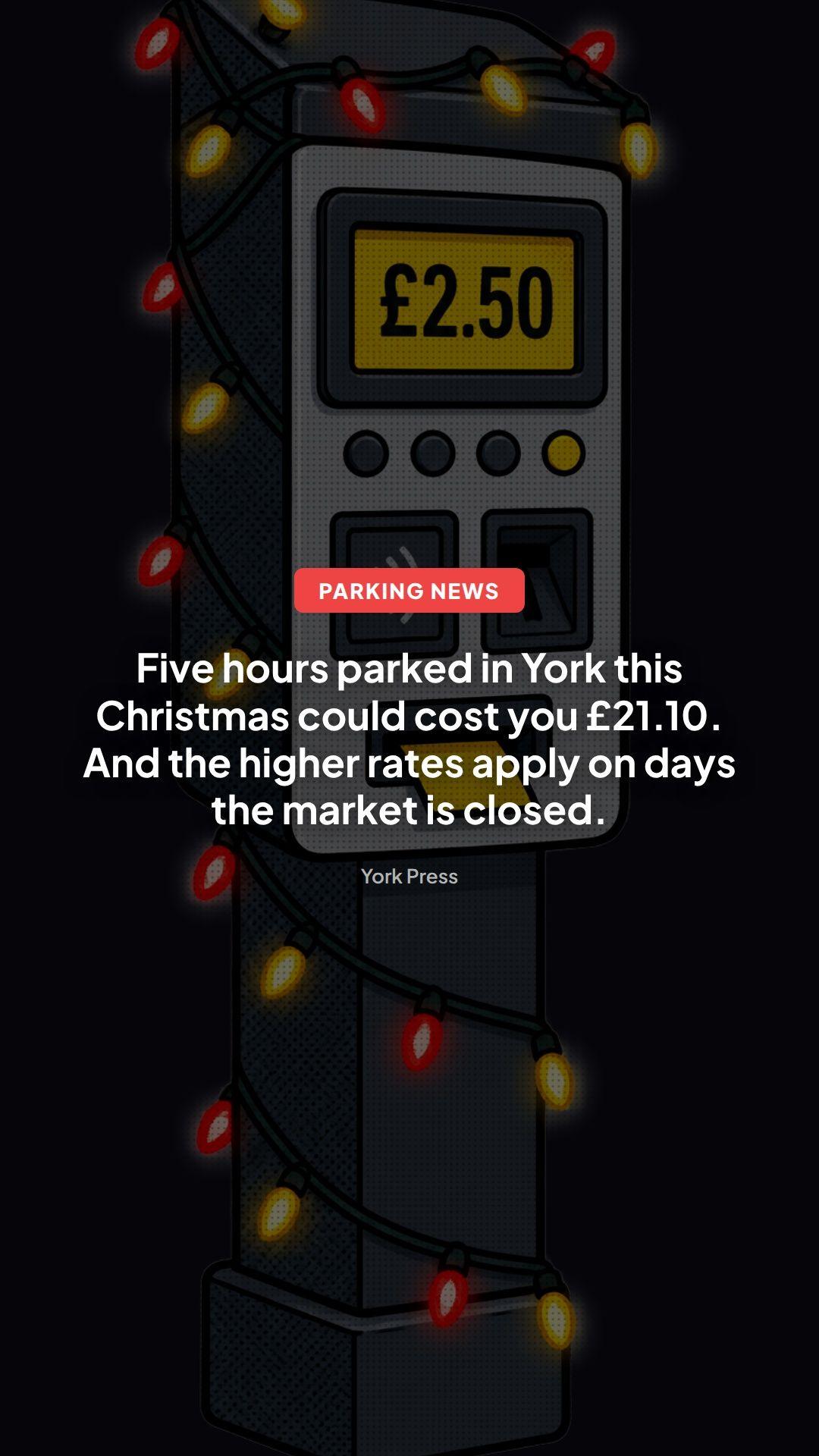
Christmas Market Parking in York: What £5.50 an Hour Really Means for Drivers
Few things test a motorist's festive spirit like paying £21.10 to leave the car for five hours. Yet that is the figure York drivers are now looking at during the Christmas Market, and it has sparked a row.
The story is a useful reminder that where you park matters as much as when, and that "premium" pricing is not the same thing as a penalty. Here is what is changing, why councils do this, and where your rights begin and end.
What has happened
According to the York Press, City of York Council is introducing premium parking rates while the Christmas Market is on. In council-managed spaces, the charge will be £5.50 an hour for the first two hours. A five-hour stay will cost £21.10. The higher rates run until 21 December.
The headline numbers are worth unpicking:
- Two hours at £5.50 an hour comes to £11.
- If a five-hour stay costs £21.10, the remaining three hours add £10.10 between them. That averages roughly £3.37 an hour, though the exact tariff structure beyond two hours is something to check on the day.
- The steepest part of the tariff therefore falls on the shortest stays. That is the classic pattern in demand-managed pricing: a quick visit is not cheap, and a long one is not proportionately dearer.
That structure tells you something about the intention. Charging more for the first couple of hours discourages people from popping in for a short browse and encourages them to either stay longer or arrive by other means. Whether it achieves that, and whether visitors and traders think it fair, is the substance of the row.
Why it matters
Pricing as a traffic tool
Councils have long justified variable parking charges as a way of managing demand rather than simply raising money. When a city centre fills with visitors, spaces become scarce, drivers circle looking for a bay, and congestion builds. Higher prices are one lever to push some people towards park and ride, trains or buses and to free up spaces for those who really need to drive.
The counter-argument is just as familiar. A seasonal event is a major draw for a historic city, and visitors, including those travelling with families, children or mobility needs, may feel penalised for turning up. Local businesses sometimes worry that high charges send shoppers elsewhere, including to out-of-town retail parks with free parking. The headline tells us the issue is contentious. We have not been given detailed positions from each side here, so it is fair to say simply that the debate follows well-worn lines.
The money question
Councils across England make large sums from parking, and that fuels public suspicion whenever charges rise. For more on the wider picture, see our look at English council parking surpluses. Under the Road Traffic Regulation Act 1984, there are rules about how surplus from on-street parking accounts can be used, generally for transport and highways-related purposes. Off-street car parks are treated differently in the accounting, which is one reason the topic generates endless argument about what the money is "for". If you want to know how York spends its parking income, the council publishes financial information and you can make a freedom of information request.
The hidden extra costs
The advertised hourly rate is rarely the whole bill. Many councils now charge a transaction fee on parking apps, so the real cost of a long stay can be higher than the tariff board suggests. We cover this in our piece on parking app fees. Check whether the car park you use applies a fee for phone payments and whether cash or card on the machine avoids it.
The legal angle
Charges are set by order, not by whim
Council car park charges are normally set under traffic orders made under the Road Traffic Regulation Act 1984. Councils must follow statutory procedures when making or varying those orders, which generally involve public notice. Under section 122 of that Act, a council must exercise its traffic functions so as to secure the expeditious, convenient and safe movement of traffic, and the provision of adequate parking facilities, so far as practicable. Premium pricing at a peak event is the sort of thing a council would normally defend as part of that duty.
What this means in practice: you cannot cancel a penalty charge simply because you think the tariff is too high. A challenge to a PCN has to rest on recognised grounds, such as the contravention not having occurred, a procedural impropriety by the council, or signage that failed to make the restriction or charge clear. If you think the price itself is unreasonable, the route is political, such as contacting your ward councillor or responding to consultations, rather than the appeals process.
Council car parks and penalty charges
Council-run car parks in England are enforced under the Traffic Management Act 2004 where the council has designated them as civil enforcement areas, with penalty charge notices issued rather than private "parking charges". Relevant contraventions for a situation like this include:
- Parked after the paid-for time expired (see PCN code 82)
- Insufficient payment made (see PCN code 84)
Insufficient payment is the one to watch. If you paid at the old rate from habit, or a machine or app calculated a different amount, you may have underpaid under the premium tariff. A PCN can follow even if you paid something.
If you do receive a PCN
The process in York, which is outside London, is broadly:
- Informal challenge within the early window stated on the notice, usually with a discounted payment option while it is live.
- Notice to Owner if the council rejects it or the PCN goes unchallenged. You can then make formal representations on the statutory grounds.
- Appeal to the Traffic Penalty Tribunal if the council rejects those representations. Our step-by-step guide to the tribunal process explains what to expect, and our informal appeal template is a starting point for the first step.
Deadlines matter and the details are set out on the notice itself, so read it carefully. For anything involving a significant sum or an unusual circumstance, official guidance or independent advice is worth seeking.
Private car parks play by different rules
York's visitor car parks are not all council-run. Private operators set their own prices and enforce through contract and, where applicable, the keeper liability provisions in Schedule 4 of the Protection of Freedoms Act 2012. They are not bound by the council's tariff, and they are not issuing PCNs in the statutory sense. Rules for private operators differ, and our guide to whether you have to pay a private parking charge explains the distinction. In a busy event period, make sure you know which type of car park you are in before you walk away from the car.
What drivers should know
Here are the practical points that apply specifically to a seasonal premium-rate situation.
1. Check the tariff board every time. Do not rely on what you paid last month, or last Christmas. Premium rates that run only until 21 December mean the price will drop afterwards, and the board is the authoritative statement of what you must pay and when. Take a photo of the tariff, the bay number and your ticket or payment confirmation. If anything goes wrong, that photo can be crucial evidence.
2. Work out your real stay length. The tariff structure above shows that the first two hours are the most expensive per hour. If you are going to the market, build in time to queue, eat, and walk back, and buy for the realistic duration. Overstaying can lead to a PCN, and under-buying to avoid the cost can be a false economy.
3. Watch app payments. If you pay by phone, confirm the location code matches the car park, enter your registration correctly and keep the confirmation. Our pieces on PayByPhone app errors and broken meters and parking apps cover what evidence helps if the system fails. A payment attempt that never completed is not a valid payment.
4. Compare the alternatives honestly. York offers park and ride, and trains and buses can bring visitors to the centre. Check current fares and times, factor in the number of people in your group, and consider late-evening return times. For a family of four, public transport can cost more than parking, so do the sums before assuming either option is cheaper.
5. Remember accessibility rights. Blue Badge holders have specific concessions, but they vary between councils and car parks, and badge rules differ on and off street. Check the council's current guidance for the car park you plan to use rather than assuming the same rules as elsewhere.
6. Keep seasonal restrictions in view. Event periods often bring temporary signs, bay suspensions and altered restrictions as well as higher prices. Our broader guide to Christmas parking restrictions covers the common traps.
Looking ahead
The York row is unlikely to be the last of its kind. Councils across the country are under financial pressure and event-based pricing is an attractive tool: it is time-limited, targeted at peak demand, and easier to defend than a permanent rise. Expect other tourist cities to watch how York's approach plays out, both in revenue and in public reaction.
A few questions will shape how this develops:
- Does it change behaviour? If visitors shift to park and ride or rail, the council can point to demand management working. If footfall suffers, traders will have a stronger case.
- Is the information clear? Premium pricing works best when drivers can see it coming. Poor signage and unclear online information are exactly what lead to disputes and, where relevant, to successful challenges.
- Will it become permanent? A temporary surcharge that proves lucrative can be hard to withdraw. Watch whether future consultations propose year-round tiered pricing.
For drivers, the takeaway is simple. A higher price is not unlawful just because it is high, but the council still has to make the charge clear and enforce it properly. Do your homework before you set off, pay the right amount for the right time, and keep your evidence. A little preparation can save you a PCN, and a few pounds, in the busiest weeks of the year.
This article is general information about UK parking rules and is not legal advice. Always check the current notice, signage and official guidance for your own situation.
Written by
The Parking Ticket Pal Editorial Team
Source-checked parking guidance
Ready to Challenge Your Ticket?
Let our AI analyse your PCN and generate a professional appeal letter in minutes.
Start Free Appeal