
Richard Hammond on EV Costs and the UK's 2030 Petrol Ban
Richard Hammond questions electric car costs and home charging. We examine what the UK's 2030 petrol and diesel new-car sales ban means for drivers today.

The Parking Ticket Pal Editorial Team
6 November 2026
Richard Hammond's "Uncomfortable Truth" About Electric Cars: What It Means for UK Drivers
Ask any electric car owner what makes ownership easy, and many will give the same answer: a driveway with a charger on the wall. Ask someone in a terraced street or a flat what stops them switching, and the same answer comes back in reverse. That gap is at the heart of the latest row sparked by Richard Hammond, and it is far more than a talking point. It touches on planning, highways law, landlord consent and parking enforcement.
What Hammond said
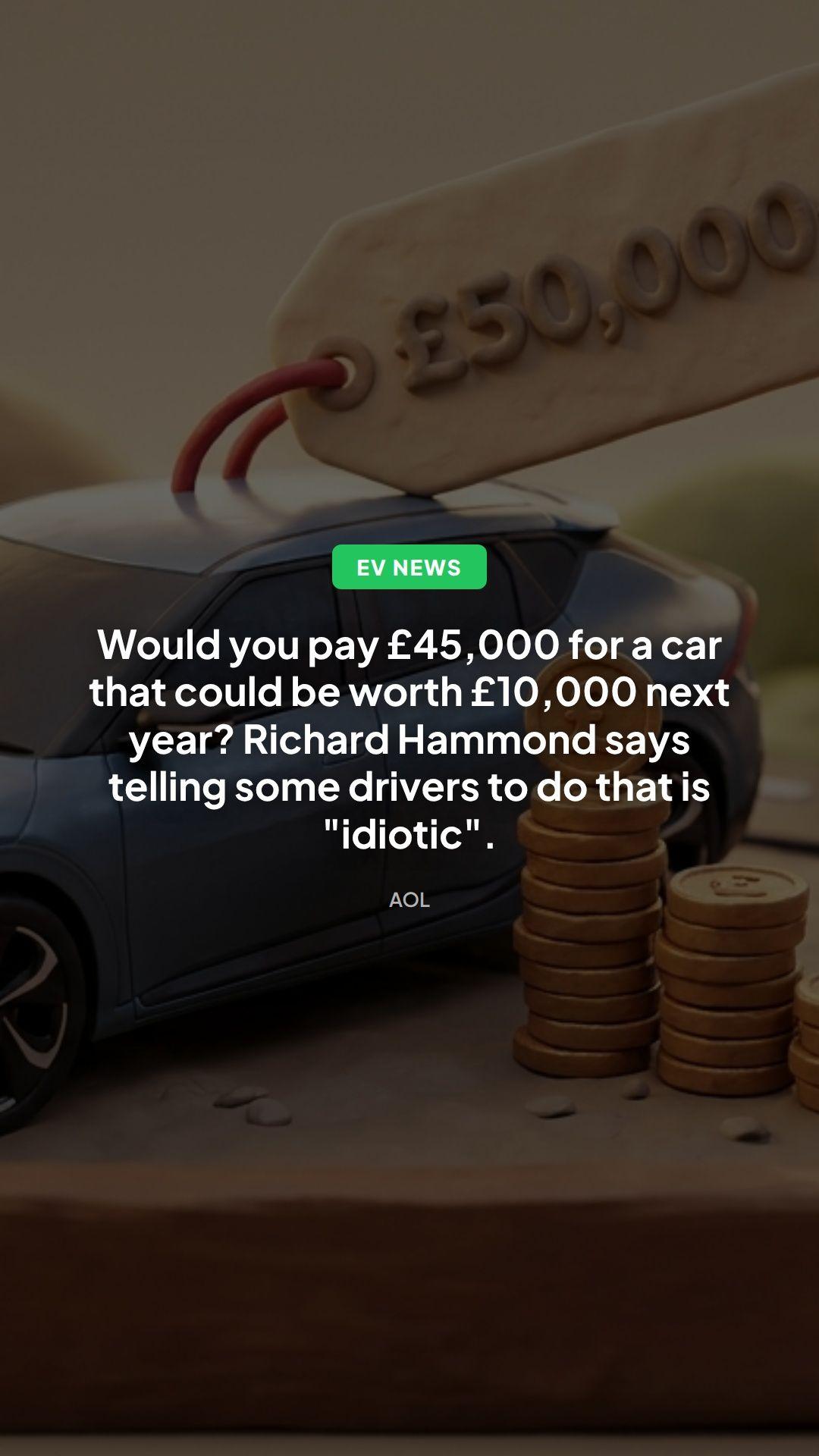
According to an AOL report, the former Top Gear presenter has criticised the UK's transition to electric vehicles. He pointed to two barriers for some drivers: high purchase prices and limited access to home charging. The headline attributes the word "idiotic" to him, though the summary does not spell out exactly what he was describing.
The report adds that the government remains committed to ending new pure petrol and diesel car sales in 2030, with hybrids allowed until 2035.
Hammond is not an obvious EV sceptic, and he is a well-known car enthusiast who has driven plenty of electric machinery. That is partly why the comments travel. But whatever you think of his tone, the two problems he raises are real and well recognised across the industry. The more useful question is what they mean in practice for ordinary drivers.
Why home charging is the real dividing line
Public charging has improved, but home charging remains the foundation of EV economics. Domestic electricity is taxed at the reduced 5% VAT rate, and many suppliers offer cheaper overnight EV tariffs. Public charging has generally carried 20% VAT, although this is an area of active policy debate, so check current rules. Our coverage of the VAT cut on public charging looks at that argument in more detail.
The result is an uncomfortable split. Drivers with off-street parking can plug in at home, often at a lower cost per mile. Drivers without it rely on public chargers, which can cost noticeably more, and they pay in time as well as money. The people best placed to save on running costs are often those who could already afford the upfront price.
That is the fairness problem behind the "uncomfortable truth" framing. A policy that sets a hard date for new sales needs a charging solution for households who cannot simply install a wallbox. For more on why that matters, see our guide to EV charging gullies and plans for drivers without driveways.
Purchase price: the other barrier
Sticker price remains the first hurdle for many buyers. The government has responded with the Electric Car Grant, which offers discounts of up to £3,750 on eligible models. We have explained which EVs qualify separately, and the grant is already narrowing the gap on some smaller models. The used market is also growing, which matters because most households buy second-hand rather than new.
Price is only one half of the equation, though. A cheaper car does not help if you have nowhere sensible to charge it.
The legal angle: what if you want to charge at home?
This is where the debate stops being abstract. If you do have a driveway or garage, installing a chargepoint is usually straightforward, but a few legal points are worth knowing.
1. Planning and permissions
Many domestic chargepoint installations fall under permitted development rights in England, but there are conditions and exceptions, and these can be stricter in conservation areas or around listed buildings. Rules also differ across Scotland, Wales and Northern Ireland. Check with your local planning authority or the official government guidance before assuming you are covered.
2. Smart charging rules
Home chargepoints sold and installed in Great Britain must comply with the Electric Vehicles (Smart Charge Points) Regulations 2021. In simple terms, they need smart functionality, such as the ability to schedule charging outside peak demand times. Use a reputable installer who can confirm compliance.
3. Renting or living in a flat
This is the hardest scenario. As things stand, tenants and leaseholders generally need their landlord's or freeholder's permission before installing a chargepoint, and there is not a straightforward automatic right to demand one. Lease terms matter, and shared parking areas add complexity. It is worth reading your tenancy agreement or lease and asking in writing. Government grants aimed at renters and flat owners have existed, so check gov.uk for what is currently available.
4. The dropped kerb question
If your property has a driveway but no dropped kerb, you cannot simply drive across the pavement. Vehicle crossings need approval from the highway authority under the Highways Act 1980 (section 184). Councils can set their own application processes and fees. Driving over a footway without permission can cause damage, complaints and enforcement. Our guide to parking across a driveway and the rules on dropped kerbs covers the related ground.
5. The cable across the pavement
Many drivers without a driveway consider running a cable from their front window to a kerbside car. This is risky. A trailing cable can be a trip hazard, and a person who wilfully obstructs the highway can fall foul of the Highways Act 1980 (section 137). If someone is injured, you could also face a civil claim. Some councils have trialled approved solutions such as cable channels or gullies, but this is a patchwork. Do not assume a council will turn a blind eye, and check with your own local authority first.
Public charging: your rights and the PCN trap
For drivers who depend on public charging, there are consumer protections. The Public Charge Point Regulations 2023 require, among other things, contactless payment at new chargepoints of 8kW and above, clear price information in pence per kWh, and a free 24/7 helpline. Rapid chargepoint networks are also subject to reliability requirements. If a charger is faulty or the pricing is unclear, keep screenshots and photographs and report it to the operator.
The other risk is parking enforcement. Chargepoints are often in car parks or bays with their own rules, and it is surprisingly easy to be penalised even while charging.
- Private car parks: These operate under contract law, with keeper liability applying under the Protection of Freedoms Act 2012 (Schedule 4) where conditions are met. Terms can include time limits, requiring you to be actively charging, or needing an app registration. Read the signs carefully. We examined why a driver faced a £270 bill and why EV charging bay fines catch drivers out.
- Council bays: On-street and council car park bays are enforced under the Traffic Management Act 2004, which means you can challenge a PCN through the formal representations and tribunal route. The restriction must be properly backed by a traffic order and signed. Our guide to PCN code 71, parking in an EV bay off-street explains the common contravention.
Whether a bay is council-run or privately managed determines your appeal route, so identify who issued the notice first. Our overview of council PCNs versus private charges is a good starting point.
What drivers should know: practical takeaways
This is general information, not legal advice. For your own situation, check official guidance or speak to a qualified adviser.
- Audit your parking first. Before choosing an EV, work out where you will charge it realistically. A driveway, garage or allocated space changes the equation entirely.
- Check permissions early. If you rent or own a leasehold flat, ask your landlord or freeholder in writing before paying for any installation.
- Do not improvise with cables. Trailing a cable across a public pavement can create legal and safety problems. Ask your council what is permitted.
- Compare tariffs. If you can charge at home, look at smart tariffs, but check the terms and any standing charges. Our guide to cutting home EV charging costs covers this.
- Photograph everything at public chargers. Take pictures of the signage, bay markings, the charger screen and any error messages. This evidence is invaluable if you later receive a PCN.
- Read the car park terms. Time limits, app registration and "charging only" conditions are common sources of fines.
- Know your appeal route. Council PCNs can be challenged informally, then formally, then at the Traffic Penalty Tribunal. Private charges follow a different path, including the POPLA or IAS appeals routes. Our formal representations guide can help.
- Look at the grant and used market. If purchase price is your barrier, check the current grant eligibility and consider a used EV.
Looking ahead
Hammond's criticism lands in a year when the 2030 target is under constant scrutiny. We have covered reports that the government could soften its 2030 sales target and the carmakers urging a rethink of the 2035 plans. Per the source report, the government's stated position is that the 2030 date remains in place, with hybrids allowed until 2035.
Whatever happens to the date, the practical test is whether the infrastructure and the price gap keep pace. Three things will matter most:
- On-street charging at scale. Local authority schemes, cable solutions and kerbside chargers need to become routine, not pilots.
- Clearer rights for renters and leaseholders. The current patchwork leaves many households dependent on a landlord's goodwill.
- Fair enforcement. As charging bays multiply, so will PCNs. Clear signage, sensible time limits and transparent rules are needed so that drivers doing the right thing are not penalised.
Hammond may have used blunt language, but the underlying point is hard to dismiss: an electric future works best when everyone can plug in without a driveway, a generous landlord or a lucky parking spot. Until then, drivers should do their homework before buying, charging and parking, because the small print can cost as much as the car.
Written by
The Parking Ticket Pal Editorial Team
Source-checked parking guidance
Ready to Challenge Your Ticket?
Let our AI analyse your PCN and generate a professional appeal letter in minutes.
Start Free Appeal