
Oxford Traffic Filters Trigger City Centre Gridlock
Oxford’s traffic-filter trial has caused long delays near Westgate. See how ANPR enforcement, permits and 7am–7pm restrictions affect drivers in Oxford.

The Parking Ticket Pal Editorial Team
27 October 2026
Oxford's Traffic Filters Trial: Why Gridlock Is the Real Test
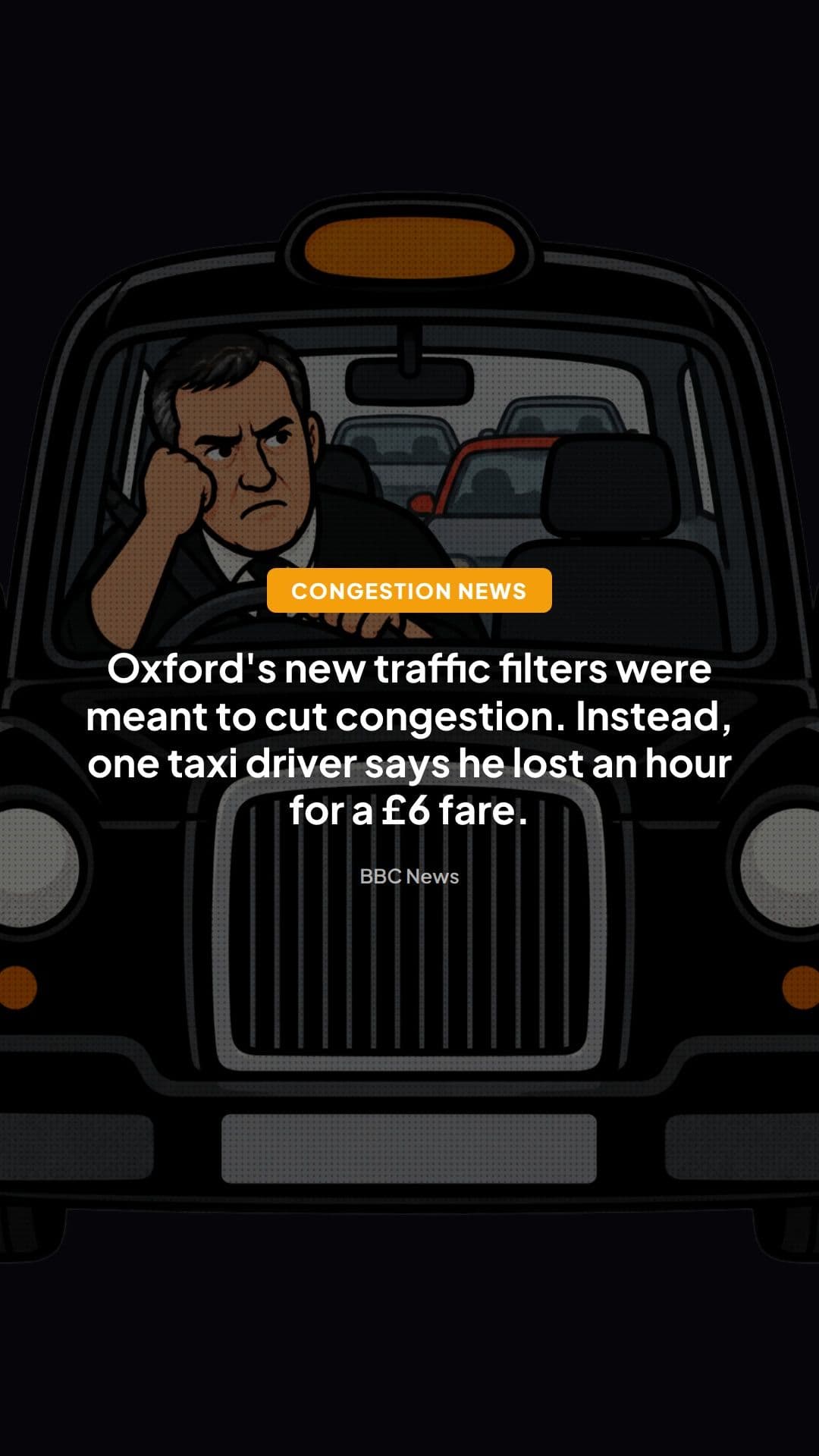
A scheme designed to calm a city centre has, at least in its first days, done the opposite for plenty of people. According to BBC News, drivers and shoppers reported major delays after Oxford began its traffic-filter trial, with congestion hitting roads near the Westgate shopping-centre car park. The filters operate from 07:00 to 19:00 and are enforced by ANPR cameras.
If you drive in or around Oxford, the questions are practical. Where does the traffic go? What happens if you cross a filter by mistake? And is early chaos a sign the scheme is failing, or just a teething problem?
What happened
The trial introduced camera-enforced traffic filters on key routes. These are not road closures in the traditional sense. They are points where certain vehicles may not pass during operating hours unless they are exempt or hold a permit. Because enforcement is automatic, there is no warden and no chance of a warning from an officer. If a camera reads your number plate going through a filter you are not allowed to use, a penalty is generated.
The BBC reported that the first working days brought long queues, with drivers and shoppers caught in delays. Congestion was particularly noticeable around the Westgate area, one of the city's biggest retail draws and home to a large car park.
The reported delays are unsurprising. Any new restriction on a constrained road network causes a period of readjustment. Drivers who know the old routes by heart keep taking them. Sat navs, which update unevenly, may keep suggesting routes that now lead into a filter. Others try to avoid the filters altogether and pile onto the roads that remain open. Meanwhile, buses, taxis, delivery vehicles, and exempt traffic keep moving on the same streets.
The intended result is fewer cars through sensitive central areas. The risk is that traffic gets pushed onto the remaining roads, and at first those roads can seize up.
Why it matters
Displacement is the central argument
Traffic filter schemes rest on the idea that if driving through a particular point becomes impossible or inconvenient, some people will change how they travel. Some will switch to bus, bike, or walking. Others will go at a different time, combine trips, or stop making them. The idea is "traffic evaporation", where some journeys simply disappear.
Supporters of such schemes argue this takes time to bed in. Critics argue that in the meantime, real people, including shift workers, shoppers, carers, and small businesses, are stuck in queues. Both sides are describing something real. A trial is, by definition, a period when the evidence is still being gathered.
Shoppers and city-centre businesses are caught in the middle
The Westgate link in the BBC report matters because it shows the tension in these schemes. A busy retail destination depends on people being able to reach it, and many shoppers come by car. If a filter or the congestion around it makes the journey miserable, some will go elsewhere. If the scheme eventually reduces through traffic and makes the centre more pleasant, it could attract more visitors. Neither outcome can be judged from the first few days.
Early-days confusion drives penalties
New restrictions often produce a spike in penalties because drivers are not yet used to them. That is not unique to Oxford. When a camera-enforced rule appears on a familiar road, people on autopilot get caught. If you want a fuller walk-through of who is exempt and what the rules involve, see our earlier guides on Oxford's traffic filter trial rules, exemptions and costs and what drivers need to know now.
The legal angle
This is general information, not legal advice. Check official guidance for your own situation.
How a trial like this works legally
Schemes like this are typically introduced using an experimental traffic regulation order (ETRO) under the Road Traffic Regulation Act 1984. An ETRO lets a highway authority try a restriction for a limited period, up to 18 months, while monitoring its effects. During that time the authority can consult the public and may amend, make permanent, or abandon the scheme. In practice that means the details of a trial can change, so what applies this month may not apply in six months.
Enforcement by camera
Penalties for entering a restricted route are known as moving traffic contraventions. In England, councils outside London need to have been granted these civil enforcement powers by the Department for Transport under Part 6 of the Traffic Management Act 2004. Where powers are in place, the council can issue a Penalty Charge Notice (PCN) based on ANPR evidence, rather than needing police involvement.
Key points to understand:
- The PCN goes to the registered keeper. If you lent your car or it was hired, the notice still arrives at the keeper's address first, and the keeper may then need to name the driver or pass it on, depending on the circumstances.
- The penalty level is set by the authority within national bands. Outside London, moving traffic penalties have commonly been in the region of £70, often with a discount for prompt payment. Check the amount and deadline printed on your notice rather than relying on a figure you have heard.
- Dates matter. The notice will set out the discount period and the time limits for challenging it.
Your challenge rights
If you receive a PCN, the usual route is:
- Informal challenge, if the notice allows it. This is often the first step, but it does not always pause the clock on any discount, so read the notice carefully.
- Formal representations to the council once a Notice to Owner is issued, normally within 28 days.
- An appeal to the Traffic Penalty Tribunal if the council rejects your representations.
The permitted grounds are set out in regulations and include, for example, that the contravention did not occur, that the signs or road markings were inadequate, that the traffic order was invalid, or that there was a procedural impropriety by the council. A complaint that you "didn't know" or that queues made things confusing is generally not enough by itself. Evidence about signage, timing, and what actually happened is what tends to matter. Our guide to formal representations for PCNs explains how that stage works, and understanding the Traffic Penalty Tribunal process covers the final step.
ANPR is not infallible
Automated cameras read plates quickly, but misreads and cloned plates do happen. If you receive a notice for a vehicle or journey that does not match your own, it is worth checking the photographic evidence closely. Our posts on ANPR camera accuracy and cloned number plates go into more detail.
What drivers should know
Plan before you set off
- Check the council's official filter map and operating times before each journey, especially if you do not drive in Oxford regularly. Filters operate 07:00 to 19:00, according to the source report, so timing can make the difference between a legal and an illegal journey.
- Do not rely blindly on sat nav. Apps may lag behind a new restriction, and a sat nav instruction is not a recognised defence.
- Look for exemptions and permits. Some vehicles and some drivers, such as certain Blue Badge holders or specific categories of residents and operators, may qualify, but you usually need to follow the council's process. Do not assume you are covered.
If you are heading to Westgate or the centre
- Work out your car park route in advance. Know which approach roads are open to you and which are filtered, and have a backup if one is queued.
- Consider park and ride. For many visits, leaving the car on the edge of the city avoids the filters and the queues entirely.
- Build in extra time. Early-stage trials can be unpredictable. Shoppers with timed parking or appointments should allow for delays, particularly if they are paying by the hour. If you are delayed and overstay in a car park, our guide to understanding grace period regulations may help.
If you think you have gone through a filter
- Do not panic or ignore it. Notices arrive by post, sometimes days or weeks later. Check the keeper address on your V5C is correct.
- Keep your evidence. Photos of signs on approach, your route, dashcam footage, and timestamps can all be relevant.
- Read the notice fully. Note the discount deadline and the challenge deadlines.
- Be careful with hire cars and borrowed vehicles. The hire firm will usually pass details on, and you may also be charged an admin fee.
Staying alert in queues
Queuing traffic near a filter creates risky behaviour, such as last-minute lane changes and swerving to avoid a restricted road. Staying calm and taking the next legal turn, even if it adds minutes, is safer and cheaper than an abrupt manoeuvre. Always follow the signs on the day rather than what you expect to see.
Looking ahead
The first days of any trial tell you very little about its long-term effect. What matters is whether the congestion settles as drivers adapt, whether traffic on neighbouring roads stays manageable, and whether bus reliability and city-centre footfall improve or suffer.
Because this is an experimental order, the evidence-gathering period is crucial. The council will be looking at traffic counts, journey times, air quality, and public feedback. Public responses, including from drivers, residents, and businesses, can influence whether the scheme is kept, adjusted, or scrapped. If you are affected by it, formally responding to any consultation is a more effective way to be heard than complaining after the fact.
Expect further changes. Authorities can amend exemptions, adjust timings, and refine signage during a trial. Drivers should watch for updates and not assume that the rules they learned in week one will last. Penalty numbers will also be closely watched. If large numbers of people are caught in the early weeks, that will raise questions about signage and communication as well as driver behaviour.
More broadly, Oxford is a test case. Other English towns and cities are watching to see whether camera-enforced filters can reduce traffic without strangling local trade. Early gridlock does not settle that debate, but it does show that how a scheme is introduced, with clear signs, good information, and workable alternatives, matters as much as the principle behind it.
Key takeaways
- Check the official filter map and operating hours (07:00 to 19:00 per the BBC report) before every Oxford journey.
- Do not rely on sat nav alone. It is not a defence if you cross a filter.
- Allow extra time for the Westgate area while traffic patterns settle, and consider park and ride.
- If you get a PCN, read the deadlines carefully and keep your evidence. Challenge rights exist, but grounds are limited and time limits apply.
- Respond to consultations. Trials can change, and feedback may shape the outcome.
- For anything high-stakes, use the council's own guidance, the Traffic Penalty Tribunal's resources, or independent professional advice.
The early congestion is a warning that big traffic changes need careful rollout. Whether the filters ultimately deliver their promised benefits will take months of evidence to judge. Until then, the safest approach is to plan ahead and stay informed.
Written by
The Parking Ticket Pal Editorial Team
Source-checked parking guidance
Ready to Challenge Your Ticket?
Let our AI analyse your PCN and generate a professional appeal letter in minutes.
Start Free Appeal