
Cloned Number Plates: Why Innocent UK Drivers Face Fines
Record cloned number plates are leaving UK motorists with fines for offences they did not commit. Learn how cloning works, how to appeal and protect yourself.

The Parking Ticket Pal Editorial Team
16 October 2026
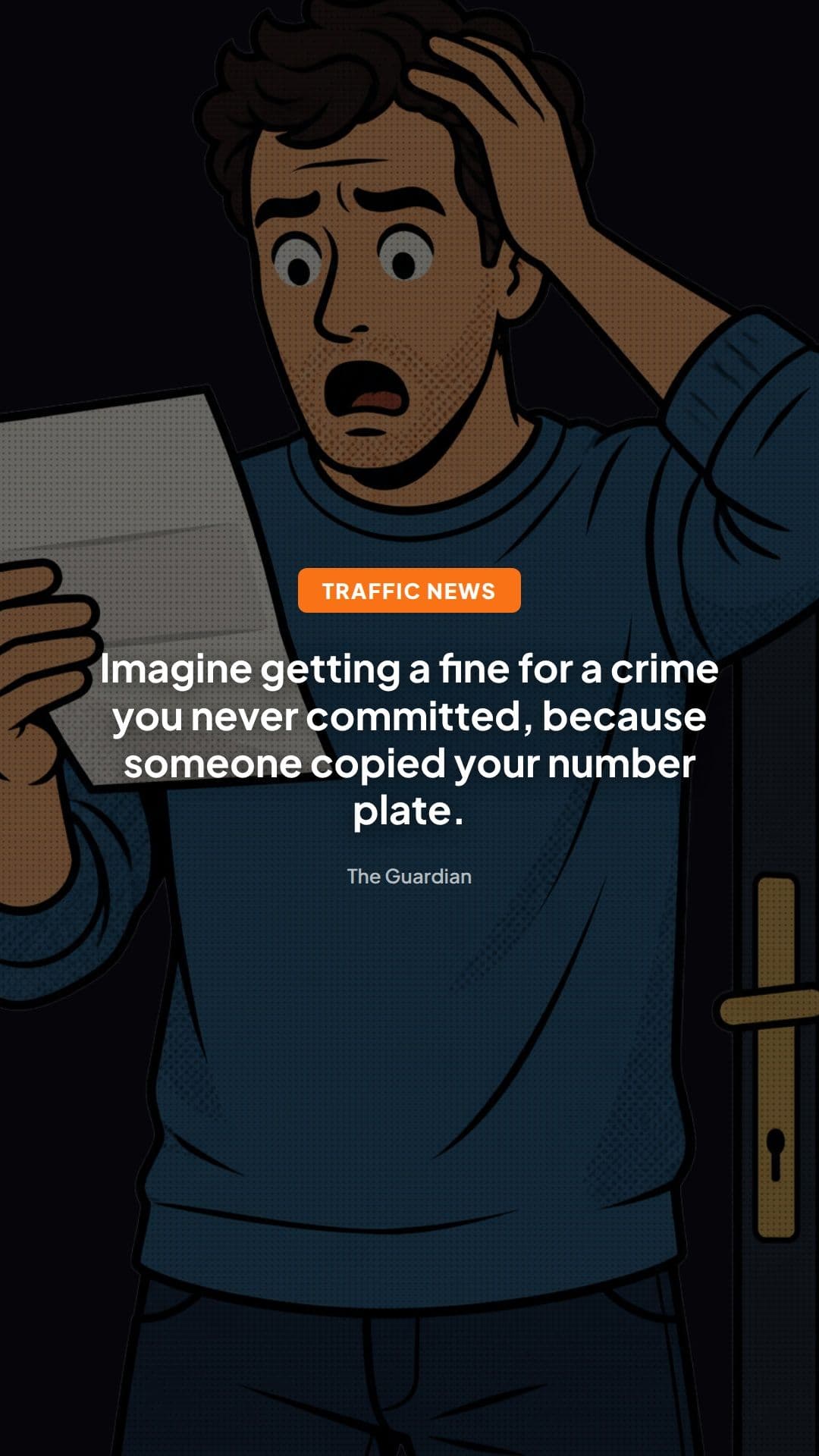
Cloned Number Plates Hit a Record High: What Innocent Drivers Need to Know
Imagine opening a brown envelope and finding a penalty notice for a bus lane in a city you haven't visited in years. The photograph shows a car that looks nothing like yours, but the registration is identical. The letter is addressed to you, and the clock is already ticking.
That is the reality for a growing number of motorists. According to The Guardian, the number of cloned plates on UK roads has reached a record high. More than 11,400 drivers were fined for offences they did not commit after their plates were copied. The story has prompted calls for reform of the enforcement system.
This post goes beyond the headline. It looks at why cloning causes so much damage, what the law says about who is responsible, and what drivers can do if the letter lands on their doormat.
This is general information, not legal advice. If you are facing a real penalty, check the official guidance and consider professional advice.
What the figures tell us
The headline number is stark: more than 11,400 drivers penalised for something they did not do. The Guardian also reports that cloning is at a record high, which suggests the problem is growing rather than fading.
It is worth being careful about what that figure does and does not show. It counts drivers who were wrongly fined. It does not tell us how many other innocent keepers received a letter, challenged it early and had it cancelled. Nor does it capture the stress, lost time and anxiety involved. The cases that reach a formal count are probably the tip of a larger iceberg of hassle. That is analysis rather than data, but it is a fair reading of how these systems work.
How cloning works, and why it works so well
Cloning means copying the registration of a genuine vehicle, usually one of the same make, model and colour, and putting it on a different car. The aim is to avoid detection. Cloned plates are often used to dodge speeding fines, tolls, congestion and clean air zone charges, parking penalties and fuel drive-offs. In some cases they are used in more serious crime.
This differs from a "ghost" plate, where a vehicle has a plate with no genuine registration behind it. Our earlier post on how AI ANPR cameras target ghost number plate drivers explores that side of the problem. Cloning is nastier for innocent people because a real person's identity is attached to the plate.
The weakness is structural. Almost every automated enforcement system in the UK treats the registration mark as a stand-in for the vehicle, and the vehicle as a stand-in for its registered keeper. Cameras read the plate, the system looks up the keeper at the DVLA, and a notice is generated. At no point does anybody have to check that the car in the picture is the car on the record.
For councils and private operators handling large volumes, that is efficient. For the person whose plate has been copied, it means the system starts from the assumption that they are responsible, and they have to prove otherwise.
Why the reform calls matter
The Guardian reports calls for reform of the enforcement system, and the logic is easy to follow. Several fixes could be considered:
- Better checks before a notice is issued. Comparing the vehicle in the photograph with the make, model and colour on the DVLA record is a simple check that can rule out obvious mismatches.
- A way to flag a cloned vehicle. If a keeper has already proved cloning to one enforcer, other authorities need a way to know, rather than the same driver starting from scratch each time.
- Faster cancellation. Once cloning is evidenced, there is a strong case for automatic cancellation across related notices.
- Better data sharing between agencies. Police, DVLA, councils and private operators currently hold different pieces of the picture.
Whether any of these happen is a matter for government and regulators. For now, drivers need to protect themselves within the existing system.
The legal angle: who is liable?
Council penalty charge notices
For most civil parking and moving traffic contraventions in England outside London, liability sits with the registered keeper of the vehicle, under the Traffic Management Act 2004 and its regulations. In London, similar rules apply under the relevant London legislation. If you are the keeper on the record, the notice comes to you.
The grounds for challenging a PCN, set out in the regulations, include that the alleged contravention did not occur. If the vehicle in the images is not yours, that is the heart of your case. The practical question is evidence, such as photographs showing a different make, model or colour.
If an informal challenge is rejected, you can make formal representations to the council. If those fail, you can appeal to the independent tribunal: the Traffic Penalty Tribunal outside London, or London Tribunals within the capital. Our guides on proving a cloned number plate PCN and fighting bogus fines from number plate cloning cover the evidence side in more detail.
Private parking charges
Private operators do not issue penalties in the legal sense. They claim a contractual charge. To pursue the keeper, they usually rely on Schedule 4 of the Protection of Freedoms Act 2012, which has strict wording requirements and timescales. A cloned plate presents a straightforward defence in principle: the car was not yours, and you were not the driver. You can appeal to the operator and, if rejected, to the relevant independent appeals service, such as POPLA for British Parking Association members.
Speeding and other criminal offences
Here the stakes are different. A Notice of Intended Prosecution typically has to be served within 14 days of the offence, under the Road Traffic Offenders Act 1988. A notice may also require you to identify the driver under section 172 of the Road Traffic Act 1988. Failure to respond properly to a section 172 request is itself an offence, which carries penalty points.
That is why a cloning claim should never be a reason to ignore a notice. You need to respond within the stated deadline, setting out that your vehicle was not involved and why. If a notice like this lands, it is sensible to seek advice from a motoring solicitor or a reputable motoring organisation.
The criminal side of cloning
Cloning plates is a crime for the person doing it. Depending on the circumstances, it can involve offences under the Fraud Act 2006 and vehicle registration legislation. That is the route to pursue the wrongdoer. It is separate from the civil process of getting your own penalty cancelled.
Spotting the signs that your plate may be cloned
Cloning is often detected only when the letters begin. Warning signs include:
- Penalty notices or demand letters for places you haven't been
- Charges for tolls, crossings or zones you haven't used
- Photographs showing a different make, model or colour of vehicle
- Letters from enforcement agents or debt collectors about unfamiliar debts
What to do if you think you are a victim
Every case is different, but the following is widely recommended in official and consumer guidance:
- Don't ignore the letter. Unanswered notices can escalate. For council PCNs, that can mean increased charges and eventually enforcement action. For private claims, it can mean court proceedings. Note every deadline.
- Look closely at the evidence. Request the photographs or video if they are not included. Compare make, model, colour, distinguishing features, and the location and time against your own movements.
- Gather your own proof. Your V5C logbook, photographs of your car from several angles, and anything showing where you were at the time, such as work records, receipts or phone data, can all help.
- Challenge in writing. State clearly that the vehicle in the images is not yours, attach the evidence, and keep copies. Include the notice reference on everything.
- Report it. Tell the police and obtain a crime reference number. Use the national fraud reporting service or the non-emergency police line, depending on where you live. Tell the DVLA too, and ask what options exist for your registration record.
- Keep a file. If cloning has occurred once, more notices can follow. A single folder with your evidence and crime reference can save days of effort when the next letter arrives.
- Escalate where necessary. If a challenge is rejected despite clear evidence, the independent tribunal or appeals service is there for exactly that reason.
For a real-world example of how these cases spiral, see our post on a cloned number plate leaving a driver facing £2,800 in fines.
Reducing your risk
You cannot make cloning impossible, but you can make yourself a less appealing target and a better-prepared one:
- Be careful with photographs. Avoid posting clear images of your plate online, especially on sales listings and social media.
- Consider security fixings. Tamper-resistant screws and fixings make it harder to remove plates quickly, though they are not a guarantee.
- Use only reputable suppliers. Legal replacement plates should only be made by registered suppliers who ask for proof of entitlement.
- Check your records. Ensure the DVLA has your correct address, so you actually receive notices in time to respond.
- Keep your own evidence. Photographs of your car, taken regularly, make it far easier to show that a vehicle in an enforcement image isn't yours.
Looking ahead
Record cloning figures point to a system under strain. Enforcement is increasingly automated, and automation is only as reliable as the data it is fed. As ANPR coverage expands and more notices are generated by software, the gap between "the plate matched" and "the right vehicle was involved" will matter more, not less.
Reform could take several forms: more rigorous checks before notices are issued, a way of marking known cloned registrations, and better coordination between the police, the DVLA and enforcers. None of these is guaranteed. Until something changes, the burden falls mainly on the person who has done nothing wrong.
The most useful mindset for drivers is calm persistence. A cloned plate is a genuine defence, but only if you respond, document your case and meet your deadlines. Treat any unexpected notice as something to investigate rather than ignore. If you are unsure of your position, particularly where criminal offences or penalty points are involved, get qualified advice before you reply.
Written by
The Parking Ticket Pal Editorial Team
Source-checked parking guidance
Ready to Challenge Your Ticket?
Let our AI analyse your PCN and generate a professional appeal letter in minutes.
Start Free Appeal