Cloned Number Plate Leaves Driver Facing £2,800 in Fines
A London driver was sent 32 traffic fines worth £2,800 after criminals cloned her registration plate. Learn how to challenge PCNs and protect your rights.

The Parking Ticket Pal Editorial Team
30 August 2026
When Someone Else's Crime Becomes Your Problem: The Cloned Number Plate Nightmare
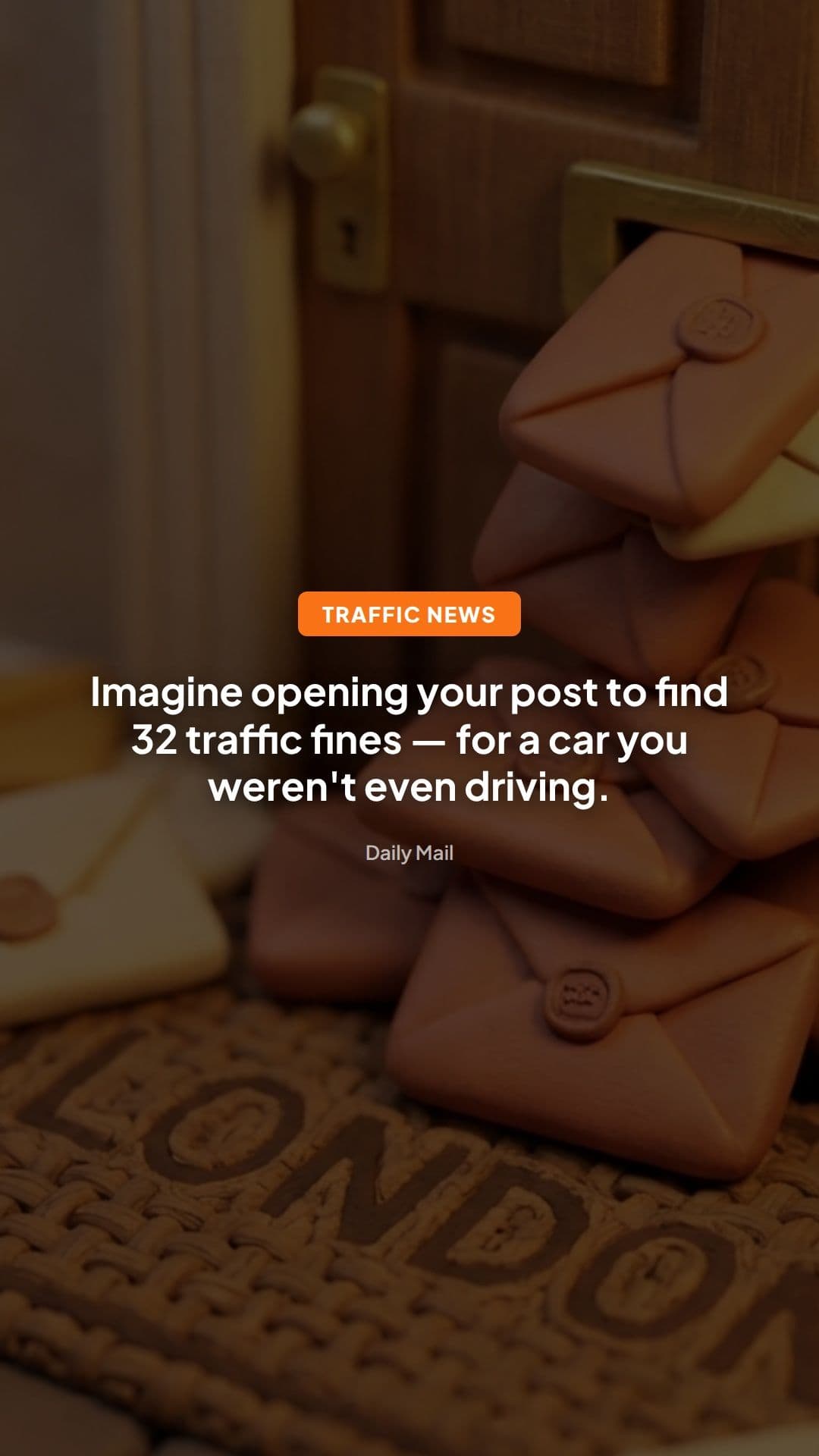
Imagine opening your post one morning to find not one, not five, but 32 separate penalty notices demanding payment, totalling nearly £2,800, for offences you know nothing about. That's the reality a London driver recently faced after criminals cloned her number plate and used it to dodge parking charges, bus lane restrictions, and possibly speed cameras across the capital, according to a report by the Daily Mail. Her ordeal, and the uphill battle she then faced trying to clear her name, exposes a growing and often misunderstood problem on Britain's roads: number plate cloning.
What Happened
According to the Daily Mail's report, the driver was hit with 32 separate fines after fraudsters fitted a cloned version of her registration plate to another vehicle. Every time that vehicle was caught by an automatic number plate recognition (ANPR) camera, be it in a bus lane, a restricted zone, or a car park, the system flagged her genuine vehicle's details, because as far as the camera was concerned, the plate matched hers exactly.
The result was a barrage of penalty charge notices landing on her doormat for locations and times she had no connection to. Worse still, when she tried to appeal, she reportedly ran into significant difficulty getting the fines cancelled, despite having done nothing wrong. This is the sting in the tail of plate cloning: the victim is rarely the one who benefits from the fraud, yet they're the one left fighting to prove their innocence.
Why This Matters More Than You Might Think
Number plate cloning isn't a new phenomenon, but it's one that continues to catch drivers off guard, largely because most people simply don't expect it to happen to them. Criminals typically clone plates from a car of the same make, model, and colour as their own, often sourcing the details from a similar vehicle spotted in a car park or on the street. They then order replacement plates, which is worryingly easy given how loosely some plate suppliers verify ownership documents, and fit them to their own car. From that point on, every parking ticket, bus lane infringement, speeding offence, or even fuel drive-off committed in that vehicle gets pinned on the innocent registered keeper.
The scale of the problem matters because enforcement in the UK increasingly relies on automated systems. ANPR cameras don't check faces, they check plates. Councils, Transport for London, private car park operators and the police all lean heavily on this technology precisely because it's fast and cheap. But that efficiency comes at a cost: the system has no way of knowing that the plate it just photographed belongs to a different, cloned car. It simply matches the registration against the DVLA database and fires off a notice to whoever is listed as the keeper.
For the victim, this creates a peculiar kind of bureaucratic nightmare. You haven't broken any law, yet the burden of proof effectively falls on you to demonstrate that you weren't where the camera says you were. That's a difficult and sometimes expensive position to be in, particularly when the fines start arriving in batches, as they did in this case.
The Legal Angle
Cloning a number plate is a criminal offence in its own right. Fitting false or altered registration plates to a vehicle can amount to fraud by false representation under the Fraud Act 2006, and it also breaches the requirements of the Vehicle Excise and Registration Act 1994, which governs how registration marks must be displayed. In short, whoever cloned this driver's plate committed a crime long before any parking or traffic fine was ever generated.
For the innocent keeper, though, the legal route to clearing their name depends on what type of penalty they've received.
Council and TfL parking or bus lane PCNs fall under the Traffic Management Act 2004. Registered keepers have the right to make formal representations against a penalty charge notice, and one of the recognised statutory grounds is essentially that the keeper wasn't responsible for the contravention because someone else was using a vehicle bearing their registration mark. Crucially, evidence matters enormously here. A police crime reference number confirming that the plate has been reported as cloned carries real weight, as does anything that independently places your actual car somewhere else at the time, such as insurance telematics data, workplace sign-in records, ANPR data from a different location, or dashcam footage.
Notices of Intended Prosecution for speeding or red light offences, issued under section 172 of the Road Traffic Act 1988, require the registered keeper to identify the driver within 28 days. If the vehicle wasn't yours, or wasn't being driven by anyone connected to you, this needs to be stated clearly and promptly, again backed by evidence and ideally a crime reference number, because failing to respond properly to a section 172 notice is itself an offence, regardless of who was actually driving.
The frustrating reality, as this case illustrates, is that even with a legitimate defence, appeals aren't always straightforward. Local authorities and private operators don't always have slick processes for handling cloning cases, and each fine may need to be challenged individually, which is exactly what seems to have happened here with 32 separate notices to contest.
What Drivers Should Know and Do
If you ever find yourself in this situation, there are several steps worth taking early, before the fines pile up further.
- Report it to the police immediately. Cloning is a crime, and you need an official crime reference number. This is one of the single most persuasive pieces of evidence when challenging fines later.
- Check your V5C and keep records. Make sure your vehicle's documentation is in order and consider keeping evidence of your car's whereabouts, such as fuel receipts, dashcam footage, or telematics data, which can help establish where you actually were.
- Respond to every penalty notice individually and promptly. Missing a deadline to appeal, even if the underlying fine is bogus, can lead to enforcement action such as a County Court Judgment or bailiff involvement, which becomes far harder to unwind. If you're facing that stage already, our guide on statutory declarations covers how to deal with penalties that have progressed past the appeal window.
- Escalate to independent adjudication if refused. Council and TfL PCNs can be escalated to London Tribunals or the Traffic Penalty Tribunal if an authority rejects your initial representation. These bodies are independent of the council and can overturn fines where the evidence supports it.
- Consider physically checking your plates. Cloned plates are usually fitted to a different but similar-looking car, so you won't necessarily know it's happening until the fines start arriving. There's no foolproof way to prevent it, but some drivers opt for secure, tamper-resistant fixings as a modest deterrent.
For a deeper dive into the specific evidence and arguments that tend to succeed in cloning cases, our dedicated piece on proving a cloned plate PCN in the UK walks through the process in more detail.
Looking Ahead
Cases like this one raise uncomfortable questions about how much faith enforcement bodies place in ANPR technology without adequate safeguards for victims of fraud. As camera-based enforcement continues to expand across London and other cities, from bus lanes to low emission zones to congestion charging, the potential for cloned plates to cause real financial and administrative harm to innocent drivers grows alongside it.
There's a reasonable argument that councils, TfL and private parking firms need faster, more consistent processes for recognising and resolving cloning cases, given that the police, DVLA and enforcement bodies all hold pieces of the puzzle but rarely join them up automatically. Until that changes, the responsibility to prove innocence unfortunately still rests largely on the driver's shoulders. If it happens to you, moving quickly, documenting everything, and treating each fine as a separate battle to be fought on its own evidence gives you the best chance of putting things right.
Written by
The Parking Ticket Pal Editorial Team
Source-checked parking guidance
Ready to Challenge Your Ticket?
Let our AI analyse your PCN and generate a professional appeal letter in minutes.
Start Free Appeal