
Oxford traffic filters: what drivers need to know now
Oxford's six traffic filters launch on 28 September. Learn where restrictions apply, how access works and what city-centre drivers need to do before travelling.

The Parking Ticket Pal Editorial Team
19 September 2026
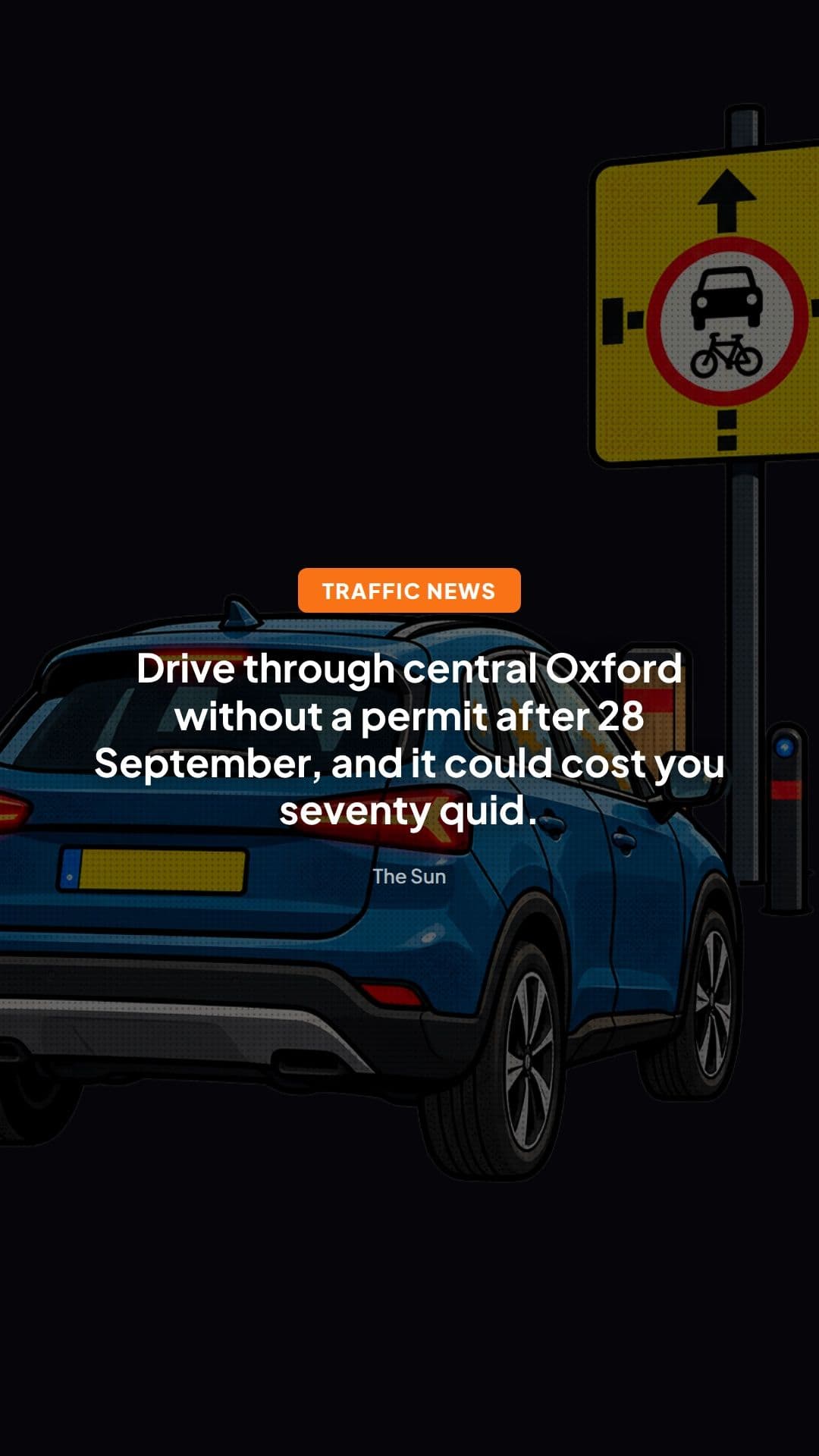
Oxford's Traffic Filters: What the New Scheme Really Means for Drivers
If you drive through Oxford, or you're planning a visit after 28 September, it's worth pausing before you set off. The city is about to change the way it treats private cars in a way that goes well beyond the usual tweak to a one-way system or a new set of yellow lines. Six traffic filters are being switched on across the city centre, and they represent one of the most significant shifts in urban traffic management that England has seen outside London.
The Sun's report flags the headline facts: six locations, a 28 September start date, and fines for drivers who get it wrong. But there's a lot more going on beneath the surface, from the legal mechanics that make this scheme possible to the years of political wrangling that got Oxford here. Here's what you actually need to understand.
What's Actually Happening
Oxford's traffic filters work by restricting general traffic from driving through six key points in the city centre during certain hours. Unlike a blanket ban, the filters are designed to allow buses, taxis, cyclists, and emergency vehicles through, while private cars attempting to pass through those points without a valid exemption will be caught on camera and face a penalty.
This isn't a congestion charge in the traditional London sense, where you pay to enter a zone. Instead, it functions more like a bus gate or a low traffic neighbourhood filter, but applied at a city-wide scale across six separate points simultaneously. Cameras using automatic number plate recognition (ANPR) will monitor each filter point, checking vehicles against a database of exemptions and permits. If your car isn't authorised to pass and you drive through anyway, the system generates a penalty charge notice (PCN) that lands on your doormat rather than a fine issued on the spot.
Why This Matters Beyond Oxford
To understand why this scheme is significant, it helps to know a bit of history. Oxford has been trying to reduce city centre traffic for years. Plans for a workplace parking levy, congestion charging, and various versions of a "Zero Emission Zone" have all been floated, debated, and in some cases shelved amid fierce local opposition. The traffic filters are, in many ways, the version of traffic restraint that has finally made it through the planning and consultation process, following a trial period that tested the concept before permanent implementation.
The scheme has not been without controversy. Campaigners have raised concerns about the impact on residents living just outside the filtered zone, on businesses reliant on passing trade, and on drivers who may not have realistic alternatives to using a car, such as those with mobility issues or those living in areas poorly served by public transport. Legal challenges and judicial reviews have accompanied similar low traffic neighbourhood schemes elsewhere in the country, and Oxford's own history with contentious road schemes means this rollout will be watched closely by both supporters and critics.
More broadly, Oxford is something of a test case for the rest of the country. Other cities, including Cambridge, have discussed similar filter-based approaches to cutting traffic and improving air quality. If Oxford's scheme is seen to work smoothly, or if it runs into serious legal or practical trouble, that will shape how confidently other councils pursue comparable measures.
The Legal Mechanics Behind the Filters
This is where things get genuinely interesting from a drivers' rights perspective. Historically, only London boroughs and Transport for London had the power to enforce "moving traffic contraventions" using camera evidence, things like banned turns, box junctions, and yes, filter or bus gate infringements. Councils outside London had to rely on the police to enforce these rules, which in practice meant they were rarely enforced at all.
That changed under Part 6 of the Traffic Management Act 2004, which the government extended to councils in England outside London from 2022 onwards. This gave local authorities like Oxfordshire County Council the legal power to apply for their own moving traffic enforcement authority, install cameras, and issue civil penalty notices directly, without needing police involvement. Oxford's traffic filters rely on precisely this power. Without that legislative change, this scheme simply wouldn't be enforceable in its current form.
The filters themselves are established through a Traffic Regulation Order (TRO), the same type of legal instrument that underpins yellow lines, one-way streets, and residents' parking zones. A TRO has to go through a statutory consultation process, and any restriction it creates must be clearly signed. This matters enormously if you ever want to challenge a PCN: unclear, missing, or contradictory signage is one of the most common and successful grounds for appeal in moving traffic and parking cases. If you're issued a filter PCN and the signage at that location was ambiguous or obscured, that's a legitimate line of challenge, though it's always worth reviewing the specific circumstances carefully rather than assuming any appeal will succeed.
Because these are civil, not criminal, penalties, no points go on your licence for a filter contravention. It's treated in the same family as a parking or bus lane PCN. That also means you have the same core rights: an initial notice, a right to make informal representations, a formal representation stage if that's rejected, and ultimately a right to escalate an unsuccessful appeal to an independent tribunal.
What Drivers Should Actually Do
If you're planning to drive in or near Oxford after the filters go live, a few practical steps will save you a lot of hassle:
- Check whether your route crosses a filter point. The restrictions apply at specific locations and specific times, not necessarily 24 hours a day. Knowing exactly where the six filters sit lets you plan an alternative route if you're not exempt.
- Establish whether you qualify for an exemption. Categories such as Blue Badge holders, residents within certain zones, and certain business or emergency vehicle users are typically treated differently under these schemes. Don't assume you're automatically covered just because you fall into one of these groups; check the specific criteria and, where required, register your vehicle in advance.
- Don't ignore a PCN if one arrives. As with any penalty charge notice, there are strict time limits for responding, and an early payment discount usually applies if you pay within a set period, though this also usually forfeits your right to appeal. If you believe the PCN was issued in error, for instance because of unclear signage, a mapping error in the ANPR system, or because you held a valid exemption that wasn't correctly recorded, you can make representations rather than simply paying up.
- Keep evidence. Photos of signage, permit confirmation emails, or evidence of your exemption status are all useful if you need to challenge a notice later.
- Understand the appeals route. If a council rejects your formal representations, you have the right to take your case to the independent Traffic Penalty Tribunal outside London, free of charge. This is a genuinely independent body separate from the council that issued the fine, and adjudicators have overturned PCNs in the past where signage or process failures were identified.
Looking Ahead
Oxford's traffic filters are unlikely to be the last scheme of their kind. With councils across England now empowered to enforce moving traffic contraventions directly, and with air quality and congestion targets pushing local authorities toward more active traffic management, it's reasonable to expect other cities to explore similar filter-based systems in the coming years.
For drivers, the direction of travel is clear even if the details vary from place to place. Camera enforcement of restrictions that once relied on rarely-seen traffic police is becoming the norm, not the exception. That makes it more important than ever to understand exemption criteria, keep an eye on local consultations before schemes go live, and know your appeal rights if a penalty notice arrives that you believe is wrong. Oxford's scheme will be a useful bellwether. How smoothly it beds in, and how councils handle the inevitable early wave of contested PCNs, will say a great deal about what's coming to a city near you.
Written by
The Parking Ticket Pal Editorial Team
Source-checked parking guidance
Ready to Challenge Your Ticket?
Let our AI analyse your PCN and generate a professional appeal letter in minutes.
Start Free Appeal