
Motor Insurance Poverty Premiums: Which? Demands Ban
Which? found motor insurance monthly payment APRs up to 53%. See why it wants a ban on ‘poverty premiums’ and what this could mean for UK drivers who pay monthly.

The Parking Ticket Pal Editorial Team
15 October 2026
Which? Wants a Ban on Motor Insurance "Poverty Premiums". Here Is What Drivers Need to Know
You have probably never thought of your monthly car insurance payment as a loan. Legally, though, that is very often exactly what it is. A new investigation from consumer group Which? suggests that some drivers who spread the cost are paying extremely high rates of interest for the privilege, and the group wants action.
For a legal requirement, the cost of staying on the road can look surprisingly like a payday product. Here is what Which? found, why it matters, how the law treats it, and how to avoid overpaying.
What Which? found
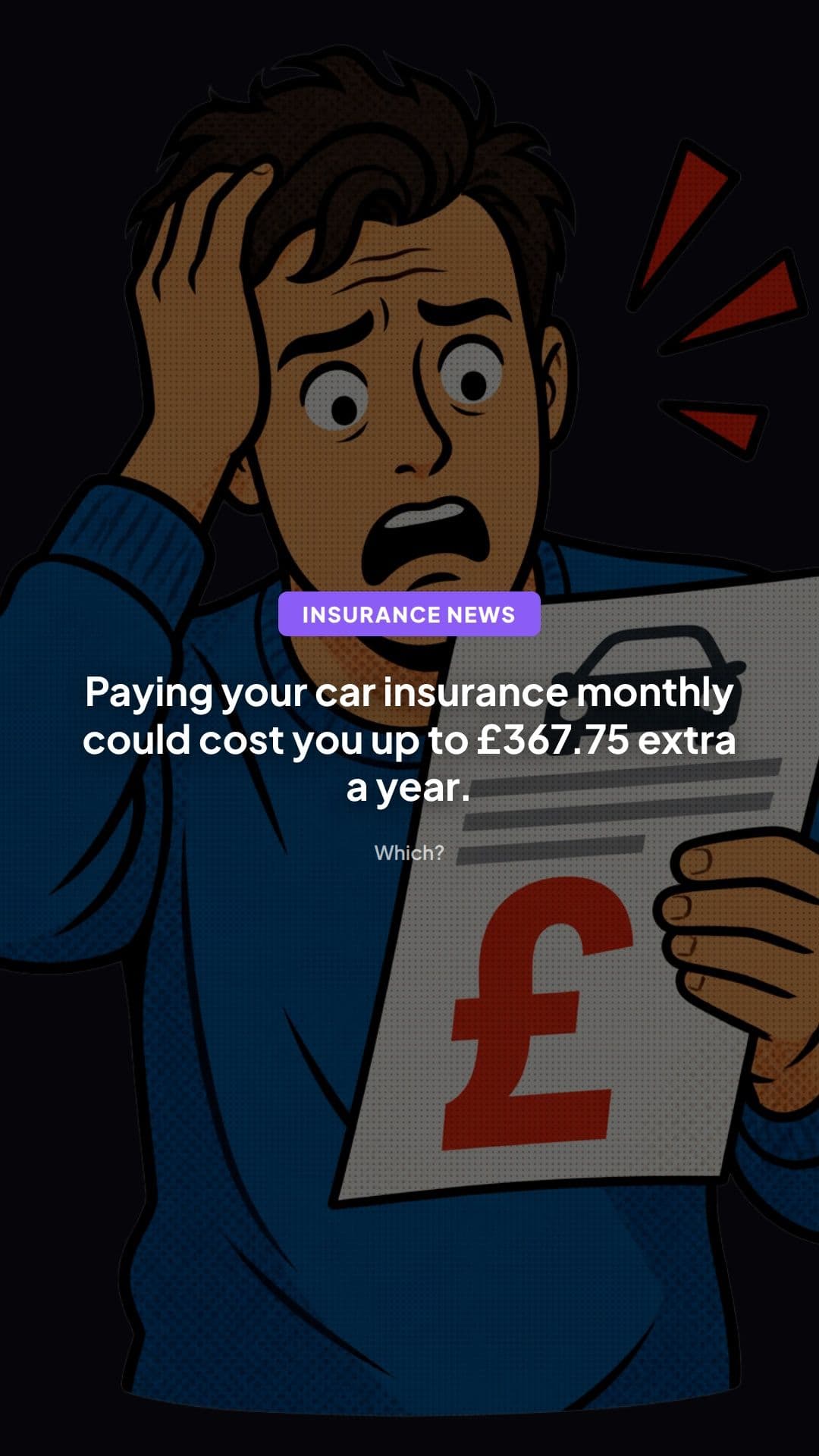
Which? is calling for action against insurers charging high interest on monthly motor insurance payments. Its investigation found APRs as high as 53%, adding hundreds of pounds to some policies. The campaign's headline figure is a "poverty premium" of as much as £370 a year, and it wants insurers barred from charging such premiums.
A "poverty premium" is the extra people on lower incomes pay for essential goods and services because of how they have to buy them. If you cannot pay £700 or £800 upfront for a year's cover, you pay monthly. Paying monthly can cost far more, and the people least able to afford that extra cost end up paying it.
The point is that this is not a luxury. Driving without insurance is a criminal offence, and for many people a car is how they get to work, take children to school or reach medical appointments. When the product is compulsory, the financing of it deserves extra scrutiny.
Why monthly payments cost more
When you "pay monthly" for car insurance, you usually are not paying the insurer in instalments. In most cases the insurer or broker arranges a credit agreement with a finance provider. The lender pays the full annual premium upfront, and you repay it over ten or twelve months with interest.
Several things make this easy to miss:
- The headline price looks manageable. A monthly figure is easy to compare, but it may include a hefty finance charge.
- The interest is not always labelled as interest. It often appears as a line in the paperwork or a representative APR in the small print.
- Comparison sites tend to show the monthly price prominently. The total cost of paying monthly versus annually is not always the first thing you see.
- A big upfront payment is a barrier. Those who can afford to pay in one go avoid the finance charge entirely, so the people paying it are disproportionately those with the tightest budgets.
An APR of 53% is not a figure most people would knowingly accept on a personal loan. It is far above what you would expect from a mainstream credit card or a typical unsecured loan, yet it can sit quietly behind a policy renewal.
Why this matters now
Car insurance has been a pressure point for household budgets for some time. We have looked before at why UK motor insurers paid record claims and at how inflation is pushing premiums up. When premiums rise, more drivers are pushed towards monthly payment, and the cost of finance rises with them.
There is also a fairness issue that goes beyond price. Someone who needs to spread the cost may have no realistic alternative. They may not have access to cheaper credit, may not have a credit card with a spare limit, or may have a thin or damaged credit file. That is what makes this a "poverty premium" rather than a simple matter of consumer choice.
The legal and regulatory angle
I should stress that this is general information, not legal or financial advice. Here is how the framework broadly works.
Insurance is compulsory. Under the Road Traffic Act 1988, you must have at least third-party insurance to use a vehicle on a public road. Driving uninsured can bring a fixed penalty with points, or a court prosecution with potentially heavier penalties. The law also operates continuous insurance enforcement, so a registered vehicle with no insurance on the Motor Insurance Database can attract a penalty even if it is parked up and not being driven (unless it has been declared off the road under SORN). That backdrop is why a lapse caused by unaffordable payments can be so costly.
Premium finance is regulated credit. Spreading an insurance premium over instalments generally involves a regulated credit agreement under the Consumer Credit Act 1974, and the lender is regulated by the Financial Conduct Authority (FCA). That brings certain rights, which I cover below, including pre-contract information and the representative APR.
The FCA has already acted on insurance pricing. Since 2022, FCA rules have banned "price walking" in home and motor insurance, meaning renewal prices should not be higher than the equivalent price offered to a new customer through the same channel. That reform dealt with loyalty penalties on the premium itself. It did not directly cap the cost of paying by instalments, which is the gap Which? is highlighting.
The Consumer Duty applies. The FCA's Consumer Duty, in force since July 2023, requires firms to deliver good outcomes for retail customers, including fair value and clear communication. Firms are expected to consider whether products offer fair value and whether customers, including those in vulnerable circumstances, can understand them. A Which? campaign puts pressure on firms and the regulator to show how high-cost instalment finance fits with that standard. Whether the FCA will go further, for example by capping interest or requiring clearer total-cost disclosure, is a matter for the regulator and potentially Parliament. Which? has called for action, but no new rule has been announced as a result of this story.
Your rights if you pay monthly
If you have a monthly policy, these general rights under consumer credit law may be relevant. Always check your own agreement.
- Cooling-off. Most regulated credit agreements carry a 14-day right to withdraw. Insurance policies have their own cooling-off period, typically 14 days, though insurers may charge for time on cover. Read both sets of terms.
- Early repayment. Under the Consumer Credit Act you generally have the right to settle a regulated agreement early and receive a rebate of future interest, although a modest charge may apply. If you come into some money mid-year, ask for a settlement figure.
- Cancelling cover. Cancelling the insurance does not automatically cancel the credit agreement. If you cancel mid-term, you may still owe the lender, with the insurer's refund (less any cancellation fee) going towards the balance. Check this before you cancel.
- Complaints. If you think you were not given clear information about the finance cost, you can complain to the firm first. If you are unhappy with the response, you can usually take the complaint to the Financial Ombudsman Service, which is free to consumers.
Practical steps before you renew
None of this is specific to your circumstances, but these are sensible questions for any driver to ask.
- Compare the total, not the instalment. Get a quote for annual payment and for monthly payment on the same policy, then add up all the monthly payments including any deposit. The difference is the cost of credit.
- Find the APR. It should be in the pre-contract credit information. If it is not obvious, ask. A figure in the high double digits deserves a second look.
- Check whether the finance is separate. Some insurers use their own finance arm, others a third party. Rates can differ between providers even on the same underlying policy, so it may be worth comparing a different insurer or broker.
- Consider cheaper ways to find the lump sum. Options might include a credit union loan, a 0% purchase card, or a savings plan ahead of renewal. Each has risks and eligibility conditions, so think carefully, particularly about credit cards you could not clear in the promotional period.
- Time your renewal. Quotes are often cheaper when obtained a few weeks before renewal rather than at the last minute. Shopping early also gives you time to arrange a lump sum.
- Keep your details accurate. Cheaper quotes are worthless if the policy is later challenged. We have covered how small errors can be serious in our pieces on a car insurance typo leading to a conviction and on car insurance being voided over stickers.
- Do not let cover lapse. If you are struggling, talk to your insurer or broker before missing payments. Free, impartial help is available from MoneyHelper, Citizens Advice and StepChange. The same applies if arrears have led to a bigger debt problem, where our guide to payment plan arrangements shows how negotiated payment arrangements generally work, albeit in the parking context.
What the insurance industry may say
Insurers and finance providers will likely argue that instalment credit carries real costs: they are lending money, taking on the risk of non-payment, and collecting from people who may cancel or default. A rate that looks high is, they might say, a reflection of that risk. They may also point out that the choice to pay monthly is optional and the costs are disclosed.
Those are reasonable points to raise, and I have not seen the industry's full response to the Which? findings. But the counter-argument is that disclosure alone does not make a price fair if the customer has no practical alternative, and fair value is exactly what the Consumer Duty is meant to test.
Looking ahead
For now, nothing has changed in law as a result of this story. A call for a ban is the start of a campaign, not the end of one. A few things are worth watching:
- Whether the FCA responds. The regulator could review instalment charges under the Consumer Duty, require clearer disclosure of the total cost of credit, or consider something firmer.
- Whether insurers adjust voluntarily. Public pressure sometimes leads firms to lower rates or make costs clearer before regulation arrives.
- Whether government gets involved. A cap on the cost of credit already exists in other parts of the market, notably high-cost short-term credit, so there is precedent for intervention if the evidence is strong.
In the meantime, the most effective protection is information. A monthly payment is a loan, and loans have prices. If you ask what that price is before you commit, you are much better placed to decide whether the convenience is worth it.
This article is general information about UK motoring and consumer rules, not legal or financial advice. For your own circumstances, check your policy and credit agreement, and consider speaking to MoneyHelper, Citizens Advice or a qualified adviser. Source: [Which?](https://www.which.co.uk/policy-and-insight/article/which-calls-for-ban-on-motor-insurers-charging-poverty-premiums-of-as-much-as-370-a-year-amDp06w4gNvb)
Written by
The Parking Ticket Pal Editorial Team
Source-checked parking guidance
Ready to Challenge Your Ticket?
Let our AI analyse your PCN and generate a professional appeal letter in minutes.
Start Free Appeal