Why UK Motor Insurers Paid Record £3.2bn in Claims
UK motor insurers paid a record £3.2bn in claims in Q2 2026. Explore what ABI figures reveal about repair costs, premiums, policy cover and impact on drivers.

Lisa Rodriguez
7 August 2026
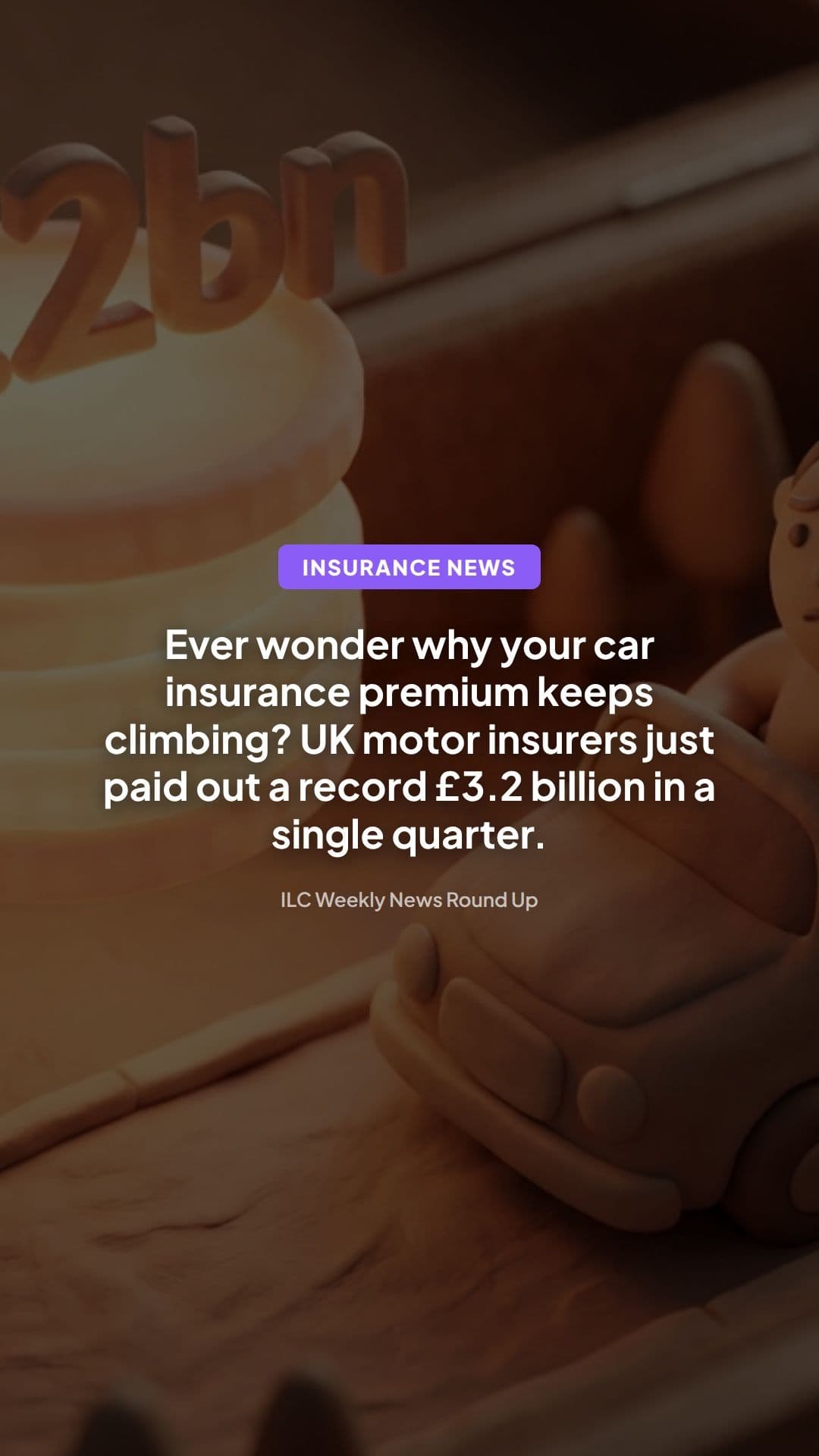
UK Motor Insurers Paid Out a Record £3.2bn in Just Three Months, So Why Is Your Premium Still Rising?
If you've renewed your car insurance recently and winced at the price, you're not imagining things. New figures reported in the ILC Weekly News Round Up show that UK motor insurers paid out a record £3.2 billion in claims during the second quarter of 2026, according to the Association of British Insurers (ABI). That's an enormous sum of money changing hands in just thirteen weeks, and it tells us a great deal about the state of Britain's roads, the cost of fixing modern cars, and why the insurance industry keeps reaching into drivers' pockets for more.
On the surface, a record payout might sound like good news for policyholders. Insurers are, after all, honouring claims and compensating people whose cars have been damaged, stolen, or written off. But dig a little deeper and the story becomes more complicated, with real consequences for how much you'll pay to insure your car this year and next.
What Actually Happened
The ABI collects quarterly data from its member insurers, who between them cover the vast majority of the UK motor insurance market. The £3.2 billion figure for Q2 2026 represents the total value of claims paid out to policyholders for everything from minor bumps and scrapes to total write-offs, theft, and third-party liability claims following accidents.
While the round up doesn't break down every line item, a record quarterly figure of this size fits a pattern the industry has been warning about for several years: claims costs are climbing faster than many drivers realise, driven by a combination of more expensive repairs, pricier replacement parts, higher labour costs at approved bodyshops, and the sheer complexity of modern vehicles.
It's worth remembering that this isn't the first time insurers have flagged record payouts. The trend has been building steadily, with each quarter seemingly outdoing the last as repair bills climb and the cost of replacing sensors, cameras, and computer systems packed into modern cars continues to soar.
Why This Matters to Every Driver, Not Just Claimants
It's tempting to think that record claims payouts are simply an insurance industry problem, a story about balance sheets and profit margins. In reality, this figure has a direct line to your bank account.
Motor insurance operates on a simple principle: the total pot of money collected in premiums has to cover the total cost of claims, plus the insurer's operating costs and profit margin. When claims costs rise, as they clearly have done this quarter, insurers respond by increasing premiums across the board, even for drivers who haven't made a claim in years.
There are several forces pushing claims costs upward at the moment:
- Repair complexity. Cars fitted with advanced driver assistance systems, parking sensors, and cameras cost significantly more to repair after even minor collisions, because a simple bumper scrape can now mean recalibrating a radar sensor or replacing an integrated camera unit.
- Electric vehicle repair costs. EVs in particular have become notably more expensive to fix after crash damage compared with petrol equivalents, partly due to battery pack complexity and specialist labour requirements.
- Parts and labour inflation. Global supply chain pressures and rising wages at bodyshops have pushed up the cost of even routine repairs.
- Vehicle theft and fraud. Organised crime targeting keyless entry systems, along with so called "crash for cash" scams, continues to add pressure to the claims pot.
Each of these factors chips away at insurer profitability, and the industry's response is almost always the same: pass the cost on to policyholders through higher premiums at renewal.
The Legal Framework Behind Your Policy
Motor insurance isn't just a commercial product, it's a legal requirement. Under the Road Traffic Act 1988, it's a criminal offence to drive a vehicle on a public road without at least third party insurance cover. Driving uninsured can result in a fixed penalty of £300 and six penalty points, or a court appearance where the fine is unlimited, along with potential disqualification.
This legal backbone is precisely why record claims figures matter so much to policy design. Insurers are regulated by the Financial Conduct Authority (FCA), which requires them to treat customers fairly, price policies based on genuine risk, and handle claims promptly and reasonably. The FCA's rules on general insurance pricing practices, introduced a few years ago, were specifically designed to stop insurers charging loyal long term customers more than new customers for the same risk, a practice known as the "loyalty penalty."
If you believe your insurer has handled a claim unfairly, delayed payment without good reason, or applied policy terms in a way that seems unreasonable, you have the right to complain. If the insurer's final response doesn't resolve things to your satisfaction, you can escalate the matter to the Financial Ombudsman Service, which can order compensation or force the insurer to reconsider its decision. This route is free to use and doesn't require a solicitor.
It's also worth being aware of the Motor Insurers' Bureau (MIB), which exists to compensate victims of accidents caused by uninsured or untraceable drivers. The MIB is funded by a levy on the insurance industry itself, meaning that rising claims costs and rising instances of uninsured driving both feed into the same pressure cooker of premium increases.
What Drivers Should Know and Do
With claims costs at record levels, there are practical steps every driver can take to protect themselves, both financially and legally.
Shop around at renewal, every time. Loyalty rarely pays in motor insurance. Comparison sites and direct quotes from several insurers can reveal significant differences even for identical cover, and the FCA's fair pricing rules mean insurers can no longer quietly hike your premium simply because you didn't switch last year.
Check your excess and cover level carefully. A cheaper premium often comes with a higher excess or reduced courtesy car provision. Understand exactly what you'd be liable for before choosing a policy purely on headline price.
Consider dashcam footage as evidence. With claims disputes and fraud both on the rise, having clear video evidence of an incident can speed up your claim and protect you against false allegations, particularly in staged accident scenarios that have become a recognised problem on certain stretches of UK road.
Be honest on your application. Any inaccuracy, even an innocent typo in your job title, address, or vehicle details, can give an insurer grounds to void your policy entirely at the worst possible moment. It's always worth double checking every detail before you submit an application.
Understand your rights if a claim is declined. Insurers must give clear reasons for rejecting a claim, and you're entitled to challenge that decision, first through the insurer's internal complaints process and then, if needed, via the Financial Ombudsman Service.
Factor in the total cost of ownership. If you're choosing a new car, particularly an EV, it's worth researching typical repair and insurance costs for that model before you buy, since some vehicles attract significantly higher premiums due to expensive parts or slower parts availability.
Looking Ahead
Record claims figures rarely exist in isolation, and this quarter's £3.2 billion payout is likely to feed directly into premium calculations over the coming months. Drivers should brace for further increases at renewal, particularly if they drive an EV, live in an area with higher theft or fraud rates, or drive a model with notoriously expensive parts.
At the same time, the ABI and consumer groups continue to push insurers and regulators to tackle the underlying causes of rising costs, from cracking down on crash for cash fraud networks to encouraging manufacturers to design vehicles that are cheaper and simpler to repair after minor damage.
For individual drivers, the lesson is straightforward even if the industry dynamics are complex. Insurance costs are shaped by forces well beyond your own driving record, from national fraud trends to the price of a replacement radar sensor. The best defence is to stay informed, compare policies regularly, keep meticulous records in the event of an accident, and understand exactly what rights you have if a claim doesn't go the way you expect. In a market where record payouts have become the new normal, a well informed policyholder is in a far stronger position than one who simply accepts whatever renewal quote lands on the doormat.
Written by
Lisa Rodriguez
Automotive Journalist
Ready to Challenge Your Ticket?
Let our AI analyse your PCN and generate a professional appeal letter in minutes.
Start Free Appeal