Car Insurance Void Over Stickers? UK Driver Rights
Can car stickers invalidate insurance? We examine UK rules on declared modifications, religious decals and what motorists should ask their insurer before driving

Kwame Asante
7 August 2026
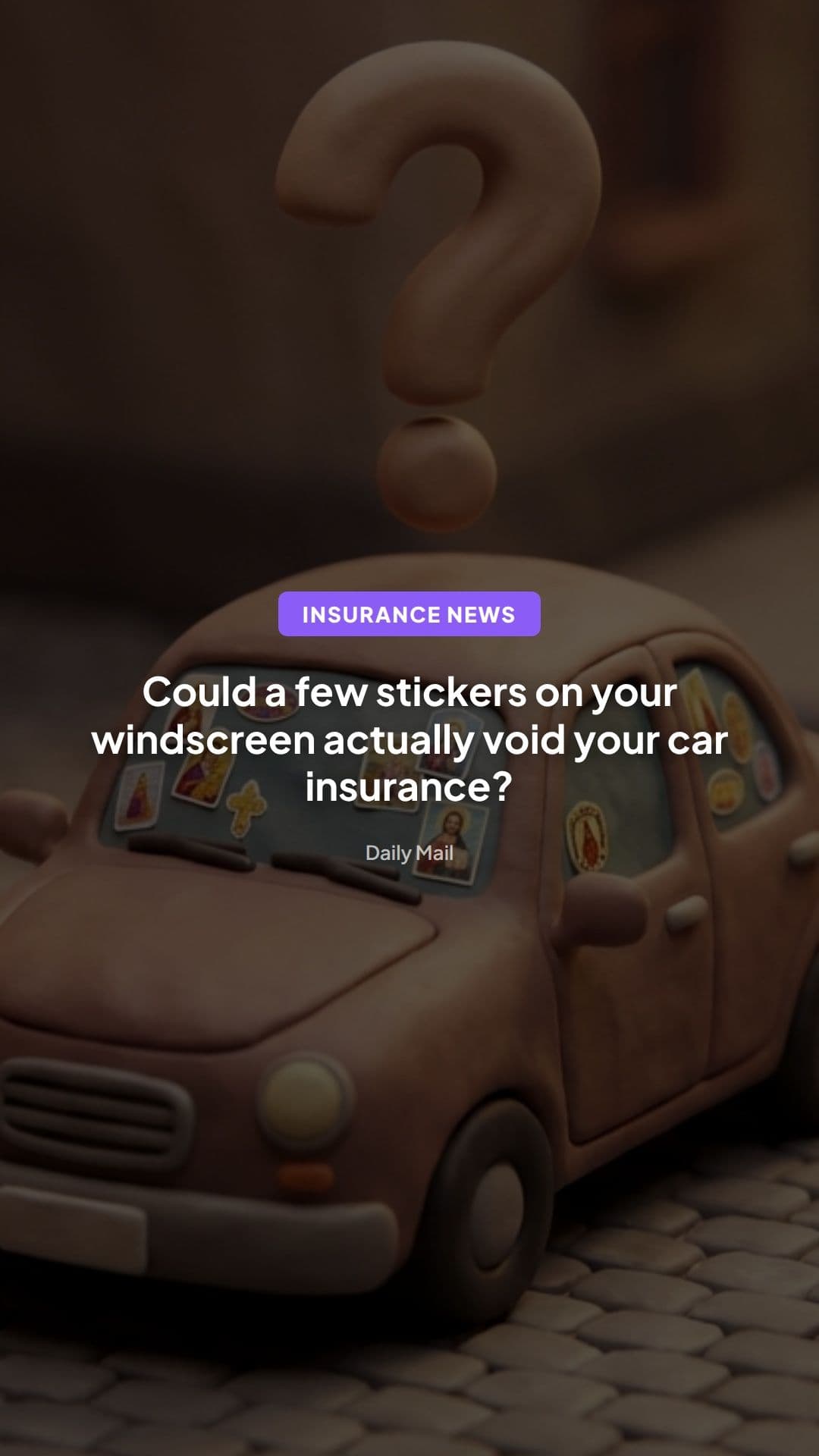
Would a Jesus Sticker Really Void Your Car Insurance? What Every UK Driver Needs to Know
Picture this: you're driving along quite happily with a small sticker on your rear windscreen, perhaps a football badge, a "Baby on Board" sign, or in one Birmingham driver's case, a message reading "Jesus Loves You". Then your insurer tells you it could be treated as an undeclared modification, and your entire policy could be voided as a result.
It sounds almost too strange to be true. But according to a Daily Mail report, that's precisely the dispute now unfolding for one Christian driver in Birmingham, whose insurer flagged religious stickers on his vehicle as a potential problem. It's a story that, on the surface, seems trivial. Dig a little deeper, though, and it exposes a genuinely confusing corner of UK motor insurance that catches out far more drivers than most people realise.
What Actually Happened
The core of the story is straightforward but revealing. A driver in Birmingham had religious stickers, including messages such as "Jesus Loves You", displayed on his car. His insurer contacted him to say the policy could be voided unless the stickers were removed. The insurer's reasoning centred on whether the stickers amounted to an "undeclared modification" to the vehicle.
That single phrase, undeclared modification, is doing a lot of heavy lifting here. In the world of motor insurance, a "modification" typically refers to a change from the vehicle's factory specification that could affect how it looks, performs, or is valued, such as alloy wheels, a body kit, tinted windows, or a modified exhaust. Stickers have never traditionally sat comfortably in that category, which is exactly why this case has raised eyebrows.
The dispute, as reported, hinges on interpretation. Is a religious sticker a decorative addition with no bearing on risk, similar to a novelty air freshener, or does it fall under a broader definition of "modification" that some insurers apply to anything altering the vehicle's external appearance from how it was described at the point of purchasing cover?
Why This Story Matters Beyond One Sticker
It's tempting to dismiss this as a one-off oddity, but the implications stretch much further than a single Birmingham driver and his windscreen.
First, it highlights how vague insurance terminology can be weaponised, intentionally or not. Most drivers assume "modification" means something mechanical or structural. Few would think to declare a sticker, a dashcam sticker, a parking permit, or a charity ribbon magnet as a change to their vehicle. If insurers are able to interpret decorative items as modifications after the fact, that creates real uncertainty for millions of ordinary motorists who have never given such things a second thought.
Second, there's a religious freedom dimension that adds weight to this particular case. If an insurer singles out religious expression specifically, rather than applying a consistent policy to all forms of stickers, bumper stickers, or window decals, that raises questions under the Equality Act 2010, which protects individuals from discrimination on the grounds of religion or belief. It's not yet clear from the reporting whether this is what's alleged, but it's the kind of angle that could escalate a seemingly small dispute into something with broader legal significance.
Third, and perhaps most practically, it's a reminder of just how much power insurers hold to void a policy. Voiding is not the same as cancelling. A voided policy is typically treated as if it never existed, which can leave a driver not just without cover but potentially without a valid claims history, and in the worst cases, facing accusations of driving without insurance if an incident occurs during the disputed period.
The Legal Angle: What UK Law Actually Says
To understand this dispute properly, it helps to separate three distinct legal and regulatory threads.
Compulsory Insurance and the Road Traffic Act 1988
Under the Road Traffic Act 1988, it is a criminal offence to use a vehicle on a public road without at least third-party insurance. If an insurer voids a policy, the driver could technically find themselves uninsured overnight, even if they believed in good faith that their cover was valid. This is why disputes over voided policies are taken so seriously; the consequences of losing cover unexpectedly go well beyond a simple contractual dispute.
The Duty of Fair Presentation
Under the Insurance Act 2015, policyholders have a duty to make a "fair presentation of the risk" when taking out or renewing a policy. This generally covers things that materially affect risk, such as claims history, primary use of the vehicle, or genuine mechanical modifications. Whether a small decorative sticker meets the threshold of a "material fact" that needed to be disclosed is highly debatable, and it's exactly the kind of question that could end up before the Financial Ombudsman Service if a formal complaint is lodged.
The Equality Act 2010
If it transpires that religious symbols or messages are being treated differently to other types of stickers or decals, without a clear, consistently applied risk-based justification, this could potentially engage discrimination protections under the Equality Act 2010. Insurers, like other service providers, are generally required to avoid discriminating against customers on the basis of religion or belief. This doesn't mean every insurance dispute involving a religious item is automatically discriminatory, but it does mean the insurer would need to show its policy is applied consistently and is genuinely risk-related, not targeted at religious expression specifically.
What Drivers Should Know: Practical Takeaways
Regardless of how this particular Birmingham case resolves, there are useful lessons here for any driver.
Check your policy wording on modifications. Most insurers define "modification" fairly narrowly in their terms and conditions, focusing on mechanical, cosmetic, or performance changes such as engine tuning, altered exhaust systems, or bodywork changes. Read this section carefully rather than assuming common sense will prevail.
Be cautious with anything an insurer could construe as altering the vehicle's appearance. This might include window tints, large decals, roof boxes fitted permanently, or branding wraps. Stickers and small decals have rarely been treated this way historically, but as this story shows, interpretations can vary between insurers.
If you're told your policy will be voided, don't simply accept it without challenge. You have the right to ask the insurer to explain, in writing, exactly which clause of your policy they believe has been breached. If you're unhappy with the response, you can escalate a complaint to the Financial Ombudsman Service, which handles disputes between consumers and financial services providers, including insurers, free of charge.
Keep records of communications. If an insurer raises an issue like this, get everything in writing. Screenshots, emails, and letters will matter significantly if the dispute escalates to a formal complaint or ombudsman referral.
Consider whether discrimination protections might apply. If you believe you're being treated differently because of a religious or protected characteristic, rather than because of a genuine, evenly applied underwriting policy, it may be worth seeking advice from a solicitor or a body such as the Equality Advisory and Support Service. This is a nuanced area, and formal legal advice is strongly recommended if you're in a genuine dispute of this kind, rather than relying on general guidance.
Looking Ahead
This story is unlikely to be the last of its kind. As insurers increasingly rely on automated risk assessments, telematics, and broader "know your customer" data gathering, the definitions of what counts as a "declarable" change to a vehicle are likely to be tested more often, not less. Drivers are entitled to clarity, and insurers are entitled to manage genuine risk, but the grey area in between, where decorative items brush up against underwriting rules, is exactly where disputes like this one are born.
For now, the Birmingham case remains unresolved in terms of its wider outcome, but it serves as a useful prompt for every driver to actually read the modifications clause buried in their policy documents, something most of us, if we're honest, have never done. It's a small sticker with a potentially large lesson: in motor insurance, what seems obvious to a driver isn't always obvious to the underwriter, and that gap can prove costly if it's not addressed early and in writing.
Written by
Kwame Asante
Community Rights Advisor
Ready to Challenge Your Ticket?
Let our AI analyse your PCN and generate a professional appeal letter in minutes.
Start Free Appeal