
Martin Lewis' 25-Day Car Insurance Rule: Can It Save £334?
Could buying car insurance 25 days before renewal cut your premium? We unpack Martin Lewis' MSE timing tip, the £334 claim and what UK drivers should check.

The Parking Ticket Pal Editorial Team
13 November 2026
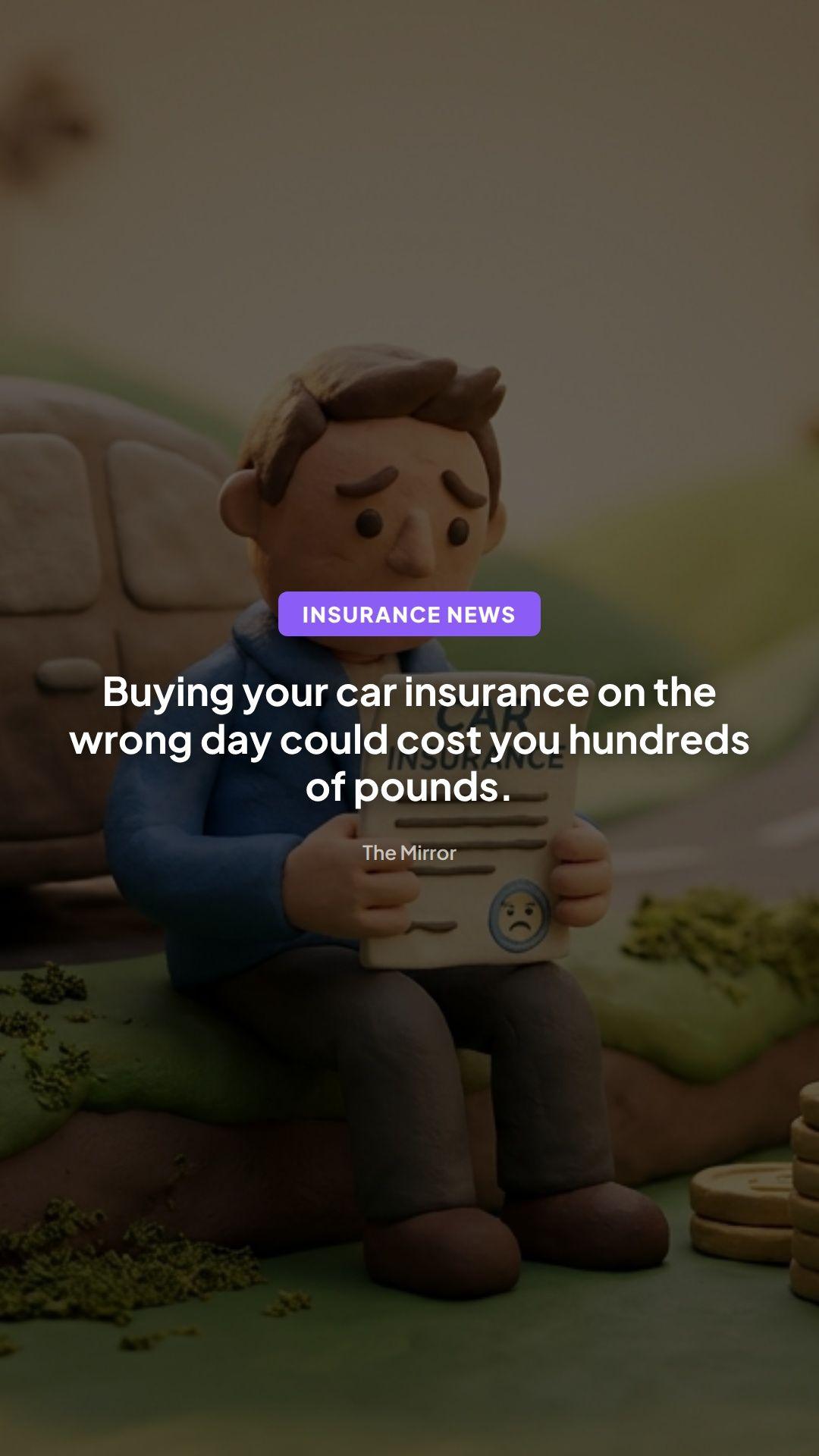
Martin Lewis' 25-Day Car Insurance Rule: Can Timing Really Save You £334?
Most of us treat car insurance renewal like a dentist appointment. We know it's coming, we put it off, and when the letter lands we pay whatever it says to make the problem go away. That habit is expensive, and it is why a simple timing tip from MoneySavingExpert (MSE) founder Martin Lewis has drawn attention.
The Mirror reports on an MSE "25-day rule" that could help drivers cut their premiums by up to £334. Here is what the tip involves, why timing matters, what the law says about your insurance, and how to use the advice sensibly.
What the story says
According to the Mirror's report, MSE's timing tip suggests that when you shop for car insurance can affect what you pay, and that a window of around 25 days before your renewal date is a sweet spot. The headline saving is "up to £334".
Two points about that figure. First, "up to" means a best-case saving, not a typical one. Your result will depend on your age, postcode, vehicle, claims history and current insurer. Second, I haven't seen MSE's underlying data beyond what the Mirror reports, so I won't claim more detail about how the figure was calculated. If you want the methodology, check MoneySavingExpert's own car insurance guidance and the Mirror's original article.
Why timing affects what you pay
Insurers price risk. One thing they appear to weigh is how far ahead of the start date you are asking for cover. Buying very early or very late can be priced differently, because the insurer is making assumptions about the sort of customer who does each.
Someone who gets quotes weeks ahead is often a planner who is organised and shopping around. Someone who buys on the day their cover ends may be seen as rushed, or as facing a gap in cover. How much weight each insurer gives this will vary, and pricing models are commercially secret, so nobody outside the industry can say exactly how it works for your quote. Treat the 25-day figure as a useful rule of thumb that is worth testing, not a guarantee.
The practical point is that the renewal notice from your current insurer is only one price among many, and often not the best.
Why renewal is where drivers lose money
Many drivers renew automatically, and that matters because of how the market has worked historically. Insurers used to offer attractive prices to attract new customers, then raise premiums in later years on the assumption that loyal customers wouldn't check. This was known as "price walking".
The Financial Conduct Authority (FCA) acted on this. Since 1 January 2022, its rules on pricing practices in home and motor insurance have meant that a renewal price must not be higher than the equivalent new business price the insurer would offer through the same sales channel. In plain terms, insurers can't charge existing customers more than they would charge you as a new customer for the same cover.
That is a real improvement, but it doesn't make shopping around pointless. The rule compares an insurer with itself. It does not stop one insurer being far more expensive than another, and it doesn't mean your renewal quote is the cheapest on the market. It only means you shouldn't be penalised for staying. The gap between insurers is exactly where timing tips and comparison shopping pay off.
Costs are also moving. Our piece on car insurance costs set to rise as UK inflation hits 3.1% looks at the wider pressures on premiums, which is a good reason not to accept a renewal figure without checking.
The legal angle: why a gap in cover is the real risk
Timing tips are only useful if you don't create a gap in cover. The law here is strict.
Insurance is compulsory. Under section 143 of the Road Traffic Act 1988, it is an offence to use a vehicle on a road or other public place without at least third-party insurance, or to allow someone else to do so. Penalties can include a fixed penalty of £300 and six penalty points, and in court you can face an unlimited fine and disqualification. These are the headline consequences, and the exact outcome in any case depends on the circumstances.
Having a car without insurance can be an offence even if you're not driving it. Under the Continuous Insurance Enforcement (CIE) rules, a registered keeper must either insure a vehicle or declare it off the road with a Statutory Off Road Notification (SORN). The Motor Insurance Database (MID) is checked against DVLA records, and a vehicle that is neither insured nor declared SORN can trigger a fixed penalty (£100 if paid promptly), with prosecution and a larger fine possible if it's ignored. Our post on DVLA enforcement and what happens if you don't pay vehicle tax or insure covers the wider enforcement picture.
So the lesson from any timing tip is to buy your new policy early and set its start date to match the expiry of the old one, rather than leaving things until the last day.
Your rights when you switch
Some reassurance for anyone nervous about changing insurer:
- Cooling-off period. For most consumer insurance, FCA rules give you a 14-day right to cancel a new policy. Insurers may charge for any days you were covered, and they can levy admin fees, so check the terms before relying on this.
- Cancelling your existing policy. If you cancel mid-term, expect a fee and a pro-rata calculation of your cover. If you're switching at renewal, you usually just let the old policy end, but check whether yours is set to auto-renew and how to opt out. Many policies renew by default.
- Duty to answer accurately. Under the Consumer Insurance (Disclosure and Representations) Act 2012, you must take reasonable care not to make a misrepresentation when you apply. If you do, the insurer's remedies depend on whether the mistake was careless or deliberate. In serious cases that can include avoiding the policy or refusing a claim.
That last point matters more than most people realise when they're racing through comparison forms to save a few pounds. Mistakes can have real consequences, as we covered in a case where an insurance typo led to a conviction and in our explainer on car insurance being voided over stickers.
Practical steps: how to use the 25-day idea
You don't need to treat 25 days as a magic number. Use it as a prompt to get organised.
- Find your renewal date now. Check your policy schedule or your insurer's app. Put a reminder in your calendar around four weeks before, so you have time to act even if you're busy.
- Gather your details. You'll need your licence details, the vehicle registration, annual mileage, where the car is parked overnight, and your no-claims discount proof.
- Get quotes at your target point. Check several comparison sites, because they don't all list the same insurers. Some insurers don't appear on every site, so it's worth checking directly with any you'd like to compare.
- Compare like with like. The cheapest headline price may come with a higher excess, fewer extras, or no courtesy car. Compare the cover, not just the price.
- Enter details accurately. Double-check spellings, vehicle modifications, job title, and any previous claims or convictions. A saving isn't worth it if a claim is later disputed.
- Check the payment method. Paying monthly usually means paying interest, so the annual total can be much higher than paying in full. Look at the total cost, not the monthly figure.
- Test your renewal quote too. Once you have a lower price elsewhere, you can sometimes ask your current insurer whether it can match or beat it. This doesn't always work, but it costs nothing to ask.
- Set the start date carefully. Make sure the new policy begins on the day the old one expires, with no gap and no overlap you don't need. Then confirm the policy appears correctly with your details, and cancel any auto-renewal on the old one.
- Keep your documents. Save your certificate and policy documents. If a dispute ever arises, proof of dates and terms matters.
A few honest caveats
- You may not see £334. The figure in the headline is a maximum. Your saving could be smaller, or you may find your renewal is already competitive.
- Timing isn't everything. The cover you choose, your voluntary excess, your telematics options, your mileage estimates and your car's security can all move the price, sometimes more than the date you buy.
- Cheapest isn't always best. An insurer with a poor claims reputation is a false economy. Look at what the policy actually covers.
- Cost pressures vary by driver. Some groups face higher premiums for reasons that go beyond shopping around. Our look at motor insurance "poverty premiums" explores that broader fairness debate.
Looking ahead
The 25-day rule is a handy hook, but the broader trend is that drivers are being encouraged to act as active customers rather than passive renewers. With the FCA's pricing rules in place, there is more transparency than there once was. But with the cost of living still squeezing household budgets and premiums under pressure, the sensible approach is to treat your renewal date as a yearly financial check-up rather than an administrative chore.
If you take one thing from the story, make it the habit rather than the number. Put the date in your diary, start looking about a month ahead, compare properly, enter your details honestly, and make sure you are never uninsured, even for a day. Do that, and whether or not you hit the exact £334, you give yourself the best chance of a fair price.
This article is general information about UK motoring rules and is not legal or financial advice. For decisions about your own policy, check your policy documents, the FCA's consumer guidance, or speak to a qualified adviser.
Written by
The Parking Ticket Pal Editorial Team
Source-checked parking guidance
Ready to Challenge Your Ticket?
Let our AI analyse your PCN and generate a professional appeal letter in minutes.
Start Free Appeal