
Hospital Parking Fees in England: Reform UK's Pledge
Reform UK vows to scrap hospital parking fees in England. Explore what the pledge could mean for NHS visitors facing charges of up to £20 a day.

The Parking Ticket Pal Editorial Team
29 November 202611 min read
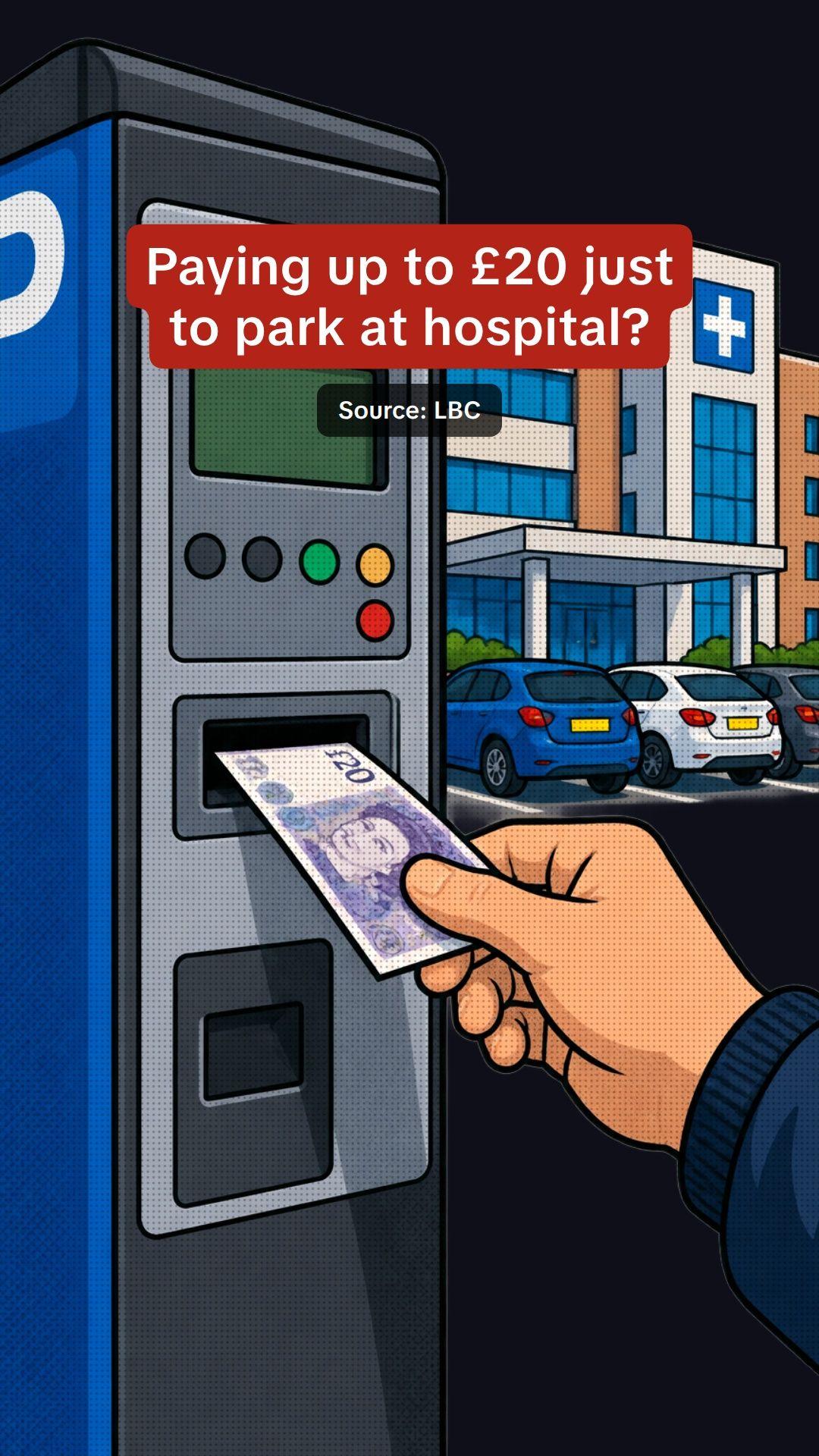
Few car park bills sting like the one at the hospital. You are not there by choice. You might be visiting a frightened relative, sitting through a long outpatient appointment, or waiting on test results. Then you reach the pay machine and find the meter is running at a rate that feels more like a toll than a convenience.
That frustration is now firmly in the political arena. As LBC reported, Reform UK has said it would end hospital parking fees in England if elected. The report notes that NHS trusts set their own charges, that some visitors currently pay as much as £20, and that hospital parking is generally free in Scotland and Wales.
A pledge is not a policy in force, and the detail matters. Here is what sits behind the headline, how hospital parking works legally, and what drivers can do today.
What was announced, and what wasn't
The core of the story is simple. Reform UK says that if it formed a government, hospital parking fees in England would go.
The source report is a short one, so it is worth being clear about what we do not yet know. There is no detailed costing in the material we have, and no timetable. We also do not know whether the pledge would apply to every NHS site or whether it would be delivered by legislation, funding rules or central direction. Those questions decide whether a pledge like this changes anything in practice.
What the report does make clear is the starting point. Parking charges in England are not set centrally. Each NHS trust decides its own approach, which is why a visitor in one town may pay far less than a visitor in another. That patchwork is a big part of why the issue stirs such strong feelings.
Why England is different
Health is a devolved matter. The Scottish and Welsh governments have taken their own decisions on hospital parking, and the LBC report notes that parking at their hospitals is generally free. Note the word "generally". Exceptions have existed, often linked to older long-term contracts for specific sites, so it is wise to check locally rather than assume.
In England, the approach has been to leave charging to individual trusts while setting out national expectations. NHS guidance has long encouraged trusts to offer concessions to groups such as disabled people, frequent outpatient attenders, and the relatives of people who are seriously ill or staying for a long time. The Conservative manifesto of 2019 also promised free parking for those in greatest need, including some of those groups and night-shift staff.
The catch is that guidance is not law. A trust that follows it generously and a trust that follows it grudgingly can end up with very different outcomes for patients. This is the gap a blanket pledge to abolish fees would, in theory, close.
Why trusts charge in the first place
To judge the pledge, you have to understand why the charges exist. Trusts typically give a few reasons:
- Managing demand. Hospital car parks are busy. Charges are meant to discourage commuters or shoppers from using spaces that patients need.
- Covering costs. Running, maintaining, lighting and policing a large car park costs money, and trusts argue that income should not come out of clinical budgets.
- Contractual commitments. Some sites are run by private operators under long contracts, which may complicate any sudden change.
Critics answer that people who need care should not be penalised for turning up, and that charges fall hardest on those who attend most often, such as people having regular treatment. Whether you find the "managing demand" argument or the "paying to be ill" argument more convincing, the practical question for any government is the same: if the income goes, who pays, and what happens to the spaces?
The honest answer is that abolition would shift costs elsewhere, either to central funding or to trusts' own budgets. Any pledge deserves scrutiny on how that gap would be filled, and the available details do not tell us.
The legal angle: what a hospital parking charge actually is
This is where many drivers are surprised. A hospital car park is usually private land, even though it is owned by the NHS. That has several consequences.
It is generally a contract, not a fine
On most hospital sites, you are not being "fined" under road traffic law. The Traffic Management Act 2004 regime, which governs council penalty charge notices on public roads, does not apply on private land. Instead, the rules on the signs create a contract. If you break them, you may be sent a parking charge notice, which is an invoice for breach of contract or trespass.
The leading case on the enforceability of such charges is ParkingEye Ltd v Beavis [2015] UKSC 67, in which the Supreme Court held that a clearly signed charge was not an unenforceable penalty in the circumstances of that case. That does not mean every charge is valid. Signage, the amount, and how the charge is pursued all matter.
Keeper liability
If the operator does not know who was driving, it can pursue the registered keeper only if it complies with Schedule 4 of the Protection of Freedoms Act 2012. That includes strict notice requirements and deadlines. Operators that do not follow the rules can lose the ability to pursue the keeper.
The wider regulatory picture
Private parking is moving towards a statutory code under the Parking (Code of Practice) Act 2019, with proposals such as a cap on charges and a grace period. If you want more on how those changes are expected to work, see our explainer on the new private parking rules, £100 cap and 10 minute grace period. Where an NHS trust runs its own car park, or a contractor operates it, the rules that apply will depend on who is enforcing and what accreditation they hold. Our guide to BPA versus IPC membership explains why that matters for appeals.
An important point: even if a trust abolished pay-to-park, it could still enforce rules on how a car park is used. Blocking ambulance routes, parking in a disabled bay without a badge, and using staff-only spaces would likely still carry consequences. Free parking does not necessarily mean no parking rules.
What drivers should know right now
Nothing changes until a policy is introduced and implemented, so in the meantime, here is how to protect yourself.
1. Check for concessions before you pay. Many trusts publish a concessions policy on their website. Look for terms such as "free parking", "reduced charges" or "patient and visitor parking". Eligible groups can include blue badge holders, frequent outpatient attenders and relatives of seriously ill patients. These are often not automatic, so you may need to ask at reception or the patient services desk, ideally before the appointment.
2. Keep proof of everything. Retain receipts, appointment letters and app confirmations. Take photos of signage and of your vehicle in the bay. If you pay via an app, screenshot the confirmation. Disputes often turn on whether you can show you paid, and for how long.
3. Know that emergencies are different. If you are driving someone in during a genuine emergency, your priority is care, not the meter. Many trusts have processes to cancel charges in genuine emergencies, but you usually need to act promptly and provide evidence. Our piece on NHS parking fine rows and whether A&E visits can cancel a PCN goes into this, and the hospital emergency bay rules are worth reading before you park near an entrance.
4. If you get a charge notice, don't panic or ignore it. Read it carefully. Check the date, the location, the amount, and who is issuing it. Ignoring it can lead to escalating demands. Many people have also had charges cancelled by contacting the trust directly, particularly where medical circumstances were involved. For example, see how one hospital parking charge was cancelled after a maternity permit issue.
5. Understand the appeal route. If the car park is operated by a private firm, your appeal options depend on whether that firm belongs to an accredited trade association. For a broader overview, our guide on whether you have to pay a private parking charge sets out the basics. If you are unsure of your position, consider seeking advice from an independent source such as Citizens Advice, and treat this article as general information rather than advice on your own case.
6. Don't assume "free" means "unrestricted". Even at hospitals where parking is free, time limits, permit zones and designated bays can still apply. Read the signs every time.
Looking ahead: promises, politics and practicalities
Parking charges at hospitals are one of those issues where public sympathy is high, which explains why politicians keep returning to them. The appeal is obvious. Everybody knows someone who has had a stressful hospital visit made worse by a parking bill.
But a pledge is the start of a conversation, not the end of one. Several questions will decide whether abolition would work:
- Funding. Would central government replace the income, or would trusts be expected to absorb it?
- Space management. Without a charge, how would trusts stop spaces being used by commuters or people visiting nearby shops and stations?
- Contracts. What happens to sites run by private operators under long agreements?
- Staff. Would the pledge cover staff parking as well as patients and visitors?
- Delivery. Would this require legislation, or could it be done through funding rules and guidance?
Other parties may also respond with their own proposals, perhaps targeting concessions rather than a blanket ban. There is a policy middle ground between "charge everyone" and "charge no one", and a stricter national concessions framework could deliver much of the benefit for those most affected.
For drivers, the practical position is this. Until a government acts, the charges you face depend on your trust, your circumstances and what you ask for. The pledge has put the fairness of those charges back in the spotlight, and for patients and families who regularly attend hospital, that debate is long overdue.
The bottom line: hospital parking is a patchwork, rules and concessions vary by trust, and nothing changes overnight. Check your hospital's policy, keep your evidence, and challenge any charge you believe is wrong through the proper channels.
This article provides general information about UK parking and motoring rules and is not legal advice. For guidance on your own situation, consult official sources or an independent adviser.
Written by
The Parking Ticket Pal Editorial Team
Source-checked parking guidance