
NHS Parking Fine Row: Can A&E Visits Cancel a PCN?
Joe Lycett’s Birmingham Children’s Hospital PCN highlights how motorists can challenge NHS parking fines when an emergency A&E visit is backed by evidence.

The Parking Ticket Pal Editorial Team
6 November 2026
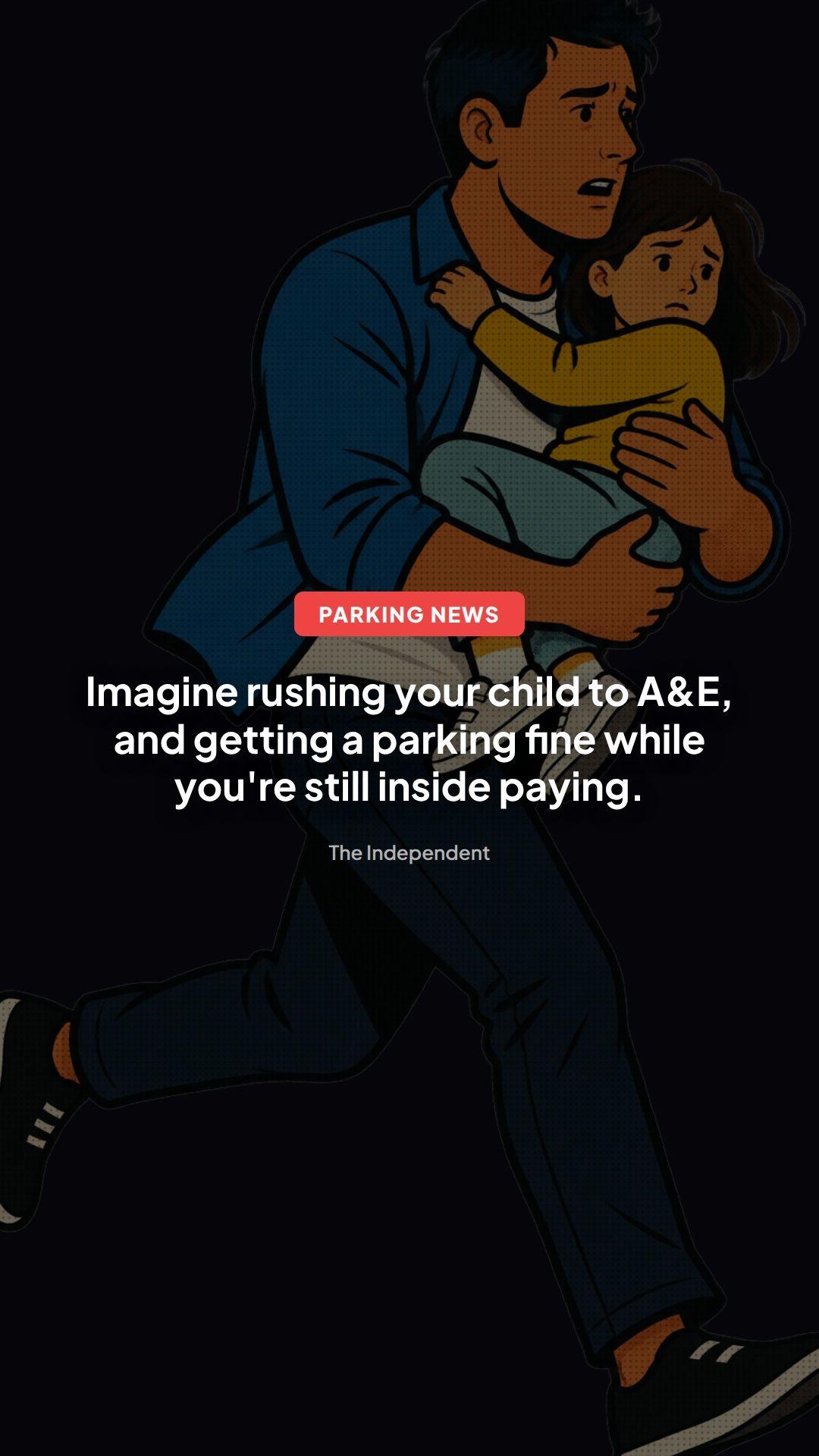
Rushing your child to A&E and coming back to a parking ticket: where do you stand?
Few parking stories prompt as much instant sympathy as this one. You are scared, your child is unwell, and the only thing on your mind is getting through the hospital doors. Parking in a perfectly legal, carefully considered spot is the last thing you are thinking about. Then, days or hours later, a penalty arrives.
That is the situation Joe Lycett, a star of Celebrity Traitors, described after a penalty was issued outside Birmingham Children's Hospital while he was taking his child to A&E, as reported by The Independent. He criticised the fine publicly. The council's response, according to the report, was that it would examine a challenge supported by evidence of hospital attendance.
It is a short sentence, but it contains the whole mechanics of how these disputes work. Here is what it means, why the headline's reference to "NHS fines" may mislead, and what any driver in a similar spot should understand.
What happened, and what we actually know
The reported facts are limited, so it is worth being clear about them. A penalty was issued outside Birmingham Children's Hospital. The driver was, by his account, taking his child to A&E at the time. He criticised the penalty publicly. Birmingham City Council said it would look at a challenge backed by evidence that he had attended the hospital.
The report does not tell us the exact contravention, the amount, or how long the car was left. I will not guess at those details. What matters is the shape of the response: the council did not say the penalty was wrong, and it did not say it would be cancelled. It said it would consider a challenge with evidence. That is the standard route, and it tells you a lot about how to approach any similar situation.
"NHS fines" is not quite the right label
The headline talks about NHS fines, but the council's involvement suggests this was a council-issued penalty on a restricted road, rather than a charge from a private firm on hospital land. We cannot confirm the details from the report alone, but the distinction is important because the rules differ completely.
- Council penalty charge notices (PCNs) are issued by local authorities for contraventions on public roads or in council-run car parks. They fall under the Traffic Management Act 2004 and have a statutory challenge process ending at an independent tribunal.
- Private parking charges on hospital car parks, usually issued by contractors, are contractual or trespass-based claims. They have no statutory appeal ladder, and disputes often go through POPLA or the IAS, depending on which trade body the operator belongs to.
- Hospital trust charges for using NHS car parks are a separate issue from enforcement. They are a charging policy question, which we have covered in our piece on NHS parking charges and what drivers need to know.
A lot of public anger about "hospital parking fines" mixes these up. Knowing which one you have received decides everything about how you respond.
Why this story strikes a nerve
Hospital sites concentrate stress, urgency and tight space. Roads around them are often controlled with double yellow lines, restricted bays, drop-off limits and loading bans, mainly to keep ambulances, buses and staff moving. Those restrictions exist for good reasons. But they are enforced by cameras and civil enforcement officers who see a vehicle, not a frightened parent.
We have seen this pattern before. Our posts on a £100 parking fine after a dog owner's vet emergency and a private parking fine overturned after a medical stop show how often the question becomes: what counts as a good enough reason, and who decides?
The honest answer is uncomfortable. Urgency feels like a defence, but in most council enforcement it is not a legal defence in the strict sense. It is mitigation, and mitigation depends on discretion.
The legal angle: what the law says and what it leaves to discretion
The strict position
For council PCNs in England, outside London, the framework is the Traffic Management Act 2004 and the regulations made under it governing representations and appeals. A formal challenge is generally limited to specific statutory grounds, such as:
- the alleged contravention did not occur
- the penalty exceeded the amount applicable
- there was a procedural impropriety by the authority
- the traffic order was invalid or the signage and markings were inadequate
- the recipient was not the owner, or the vehicle was taken without consent
A medical emergency does not appear as a standalone ground in that list. That does not mean it is irrelevant.
Where emergencies do matter
Councils are expected to consider mitigating circumstances when handling challenges. Statutory guidance for English local authorities on civil parking enforcement encourages them to exercise discretion in appropriate cases and to look at the individual circumstances. In practice, this is where a medical emergency lands: a request that the council use its discretion to cancel the penalty, even where the contravention technically occurred.
If a council rejects a challenge and the case goes to the independent tribunal (the Traffic Penalty Tribunal for most of England outside London), adjudicators can consider whether there are compelling reasons. My understanding is that where an adjudicator finds the contravention occurred but circumstances are compelling, they can refer the case back to the authority with a recommendation to cancel, which the authority is expected to take seriously, but they cannot always force it. If your case may reach that stage, check the tribunal's own published guidance rather than relying on a general summary.
What emergency exemptions do not cover
It is a common misconception that an emergency makes a private car exempt from parking rules. The exemptions for emergency vehicles apply to emergency services vehicles on duty, not to a parent driving a child to hospital. We explain that distinction in our guide to UK emergency vehicle exemptions. Our piece on hospital emergency bay parking rules also covers some of the on-site traps.
What this means for drivers: practical takeaways
This is general information, not legal advice. If you have a penalty you are unsure about, check the notice itself and the council's own guidance, and seek independent advice if the stakes are high.
1. Work out who issued it first
Check the notice. A council PCN will name the local authority, quote a contravention code and set out your rights to challenge. A private parking charge will name a company and typically refer to POPLA or the IAS. Everything else follows from this.
2. Gather evidence while it is fresh
The council's reported approach, looking at a challenge supported by evidence of hospital attendance, is the clue. In a case like this, useful material may include:
- an appointment letter, discharge paperwork or A&E attendance record showing date and times
- a text, email or app notification from the hospital
- photos of where you stopped, the surrounding signs and the road markings
- dashcam footage, if you have it
- a short, factual timeline showing when you arrived, when you went inside and when you returned
Medical details are personal, so share only what is needed to show attendance and timing.
3. Separate the mitigation from the technical points
Do not rely on the emergency alone. Check, calmly and honestly, whether there are technical issues too. Were the signs clear? Were the markings faded? Does the notice contain errors? Our guides on using unclear parking signs as a defence and understanding PCN codes may help you decide whether there is anything beyond mitigation.
4. Challenge promptly and in the right order
Most councils allow an informal challenge first. Pay attention to the dates on the notice. Many councils offer a reduced amount if paid within a set period, and some will re-offer the discount after rejecting an informal challenge, but this varies and should be confirmed on your paperwork rather than assumed. If a Notice to Owner follows, the window for formal representations is time-limited. Missing it can have serious consequences. Our walkthroughs on informal PCN appeals and formal representations explain each stage.
5. Keep the tone factual
A measured, honest letter generally does more for you than an angry one. Explain what happened, attach the evidence, state clearly what you are asking for, and keep copies of everything. Publicity can move things along, as it appears to have done here, but you should not assume it is needed or that it will change the outcome.
6. If someone is seriously unwell, safety comes first
Nothing about parking enforcement should influence whether you seek urgent help. If a situation is life threatening, calling 999 is the right step, and the ambulance service will bring the care to you. If you do drive, a penalty can be challenged afterwards. A child's health cannot be undone.
Looking ahead: what this could mean
The council's reported willingness to examine the challenge points to a broader truth about civil parking enforcement. The system is built on rules applied consistently, but it relies on human discretion at the edges. Cases that resonate publicly tend to be resolved through that discretion, not through a rewrite of the law.
That raises fair questions that campaigners and councils will keep debating:
- Consistency. If discretion depends on who is able to attract attention, drivers without a public platform may be treated differently. Clear, published policies on medical emergencies would help.
- Signage and layout near hospitals. Councils could review whether short-stay drop-off provision, clear signs and sensible enforcement around hospital entrances reduce avoidable penalties.
- Transparency. Publishing how many challenges citing medical emergencies are accepted would help the public judge fairness, though I do not have figures and will not suggest any.
The wider backdrop is a system under scrutiny, from council parking surpluses to hospital charging policy. Stories like this keep that scrutiny alive.
The bottom line
The headline suggests an NHS fine, but the council's involvement points to a council penalty, and that changes your rights and your route to challenge. An emergency is rarely a legal defence in itself, but it can be powerful mitigation if you back it with evidence and ask the right body in the right way, within the deadlines.
If you are ever in Lycett's position, the practical sequence is simple: look after your child first, then keep the paperwork, identify who issued the penalty, gather your evidence, and challenge promptly and calmly. For anything high-stakes, check official guidance or speak to an independent adviser.
Written by
The Parking Ticket Pal Editorial Team
Source-checked parking guidance
Ready to Challenge Your Ticket?
Let our AI analyse your PCN and generate a professional appeal letter in minutes.
Start Free Appeal