
Five Private Parking Fines at One Supermarket: Can You Appeal?
A driver had five private parking charges cancelled after parking at the same supermarket. Learn why it happened and how to challenge a PCN.

The Parking Ticket Pal Editorial Team
17 October 2026
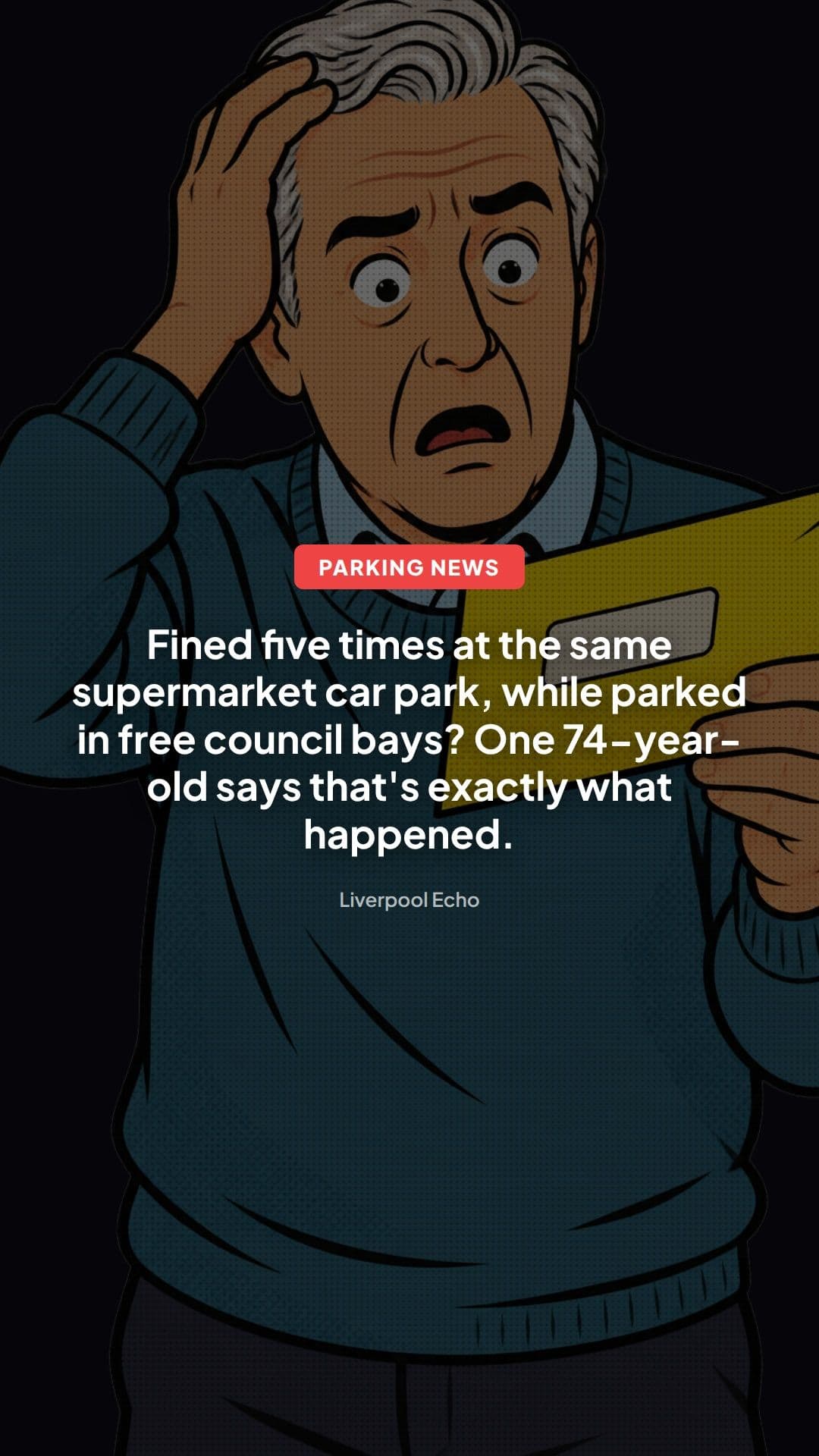
Five Parking Charges, One Supermarket: When Repeat Notices Point to a Bigger Problem
Getting one parking charge you think is wrong is annoying. Getting five from the same supermarket car park, while insisting you did nothing wrong, is something else entirely.
That is the situation reported by the Liverpool Echo, where a motorist says a private parking company issued five notices at the same supermarket car park even though he maintains he was parking legally. The charges were cancelled after he appealed, but the case has prompted concern that other drivers may be caught in similar patterns.
A cancelled charge sounds like a happy ending. In reality, it raises questions about how these notices get issued, why they can be so easy to challenge, and what happens to drivers who do not challenge them.
What happened
Based on the Echo's report, the key points are these:
- A driver received five separate notices from a private parking operator at the same supermarket car park.
- He says he was parking legally on each occasion.
- After he appealed, the charges were cancelled.
- The episode has raised concerns that others may be experiencing something similar.
The report does not, as summarised, give a definitive explanation for why the notices were issued, and it would be wrong to guess. What we can do is look at how repeat notices at a single site typically come about, and what that tells us about the system.
Why repeat notices at one site should raise eyebrows
A single charge can be a one-off: a typo, a missed sign, a moment's confusion. Five at the same location suggests something more systematic. That does not prove wrongdoing by anyone, but it is a pattern worth understanding.
Most supermarket car parks are now monitored by automatic number plate recognition (ANPR) cameras. They log your registration on entry and exit, and the operator calculates your stay. If you exceed the free period, or if the system believes you broke a condition, a charge follows. This is efficient, but it is only as reliable as the data feeding it.
When one driver is repeatedly flagged at one site, plausible explanations in general terms include:
- A camera or system fault, such as a misread plate or a missed exit record, which makes a short visit look like a very long one.
- Misunderstanding of site rules, for example how re-entry is treated, or whether the free period resets.
- Payment or validation problems, such as registration entered incorrectly at a terminal or app, or a validation system that did not register.
- Signage that is hard to see or interpret, so the terms are not clear to a reasonable motorist.
Because the system is largely automated, a single flaw can repeat itself every visit. That is why one driver's run of notices can matter beyond his own case. If the underlying issue is not fixed, it may affect others using the same car park.
Why it matters
Private parking charges have become a huge business in Britain. If you want the bigger picture, our posts on private parking charge volumes and what happens when you do not pay cover the scale and the consequences.
The relevant point here is the imbalance. The operator issues a notice automatically, at little cost. The driver, in order to challenge it, must gather evidence, write an appeal and wait. When notices come in multiples, that burden multiplies. Each notice is a separate charge with its own deadlines and its own appeal.
There is also a quieter risk. Some drivers pay a charge they believe is wrong simply because it is easier, particularly where an early payment discount is offered. Others ignore letters and find the matter escalating to debt recovery. A driver who appeals five times and wins five times has done a lot of unpaid work to reach a result that should arguably never have been needed. A cancelled charge also does not tell us how many similar notices were paid by people who did not challenge them. That is a gap in the evidence, and it would be wrong to put a figure on it.
The legal angle
Private parking operates under a different framework from council enforcement, and the difference matters.
It is contract, not a fine
A private parking charge is not a fine in the legal sense. It is an invoice for an alleged breach of contract (or, in some cases, a claim for damages) arising from the terms displayed on the signs. The Supreme Court considered this in ParkingEye Ltd v Beavis [2015] UKSC 67, upholding a £85 charge at a retail car park because the operator had a legitimate interest in managing the space and the charge was not extravagant. That case is often quoted by operators, but it did not give them a blank cheque. The operator still has to show that the driver agreed to clear terms and breached them.
Keeper liability and POFA
Where the operator does not know who was driving, it can pursue the registered keeper only if it complies with the strict conditions in Schedule 4 of the Protection of Freedoms Act 2012 (POFA). These include requirements about the content and timing of the notice and the information it must contain. If those conditions are not met, the operator generally cannot hold the keeper liable simply because they own the car. Drivers can read the legislation itself on legislation.gov.uk to see exactly what is required.
The appeals route
Appeals follow a two-stage path:
- Appeal to the operator first. The operator reviews it and may cancel or reject.
- Independent appeal. If the operator rejects it, the driver can usually go to an independent appeals service. Which one depends on the trade body the operator belongs to. Operators in the British Parking Association (BPA) use POPLA, while those in the International Parking Community (IPC) use the Independent Appeals Service. Both are free for motorists. Our explainer on BPA versus IPC membership sets out the differences.
In the Echo's case, the charges were reportedly cancelled following appeals, but the summary does not say at which stage. That detail would be useful context for anyone reading the story.
Operator conduct and the new code
Parliament passed the Parking (Code of Practice) Act 2019 to create a single statutory code of practice for private parking. Details such as grace periods and charge caps have been widely discussed. The timetable for implementation has shifted over time, so check current government guidance rather than relying on older articles. Our post on what changes the new private parking rules could bring gives more background.
What drivers should know
This is general information, not legal advice about anyone's own case. With that in mind, here are the points that come up repeatedly in situations like this.
1. Treat each notice as its own matter
A notice for each visit means separate reference numbers and separate deadlines. Appeal windows are usually short, so open and read every letter promptly, even if you have already challenged an earlier one.
2. Evidence wins appeals
Drivers commonly find the following useful:
- Photos of the signs at the entrance and around the bays, showing the terms in force.
- Receipts or bank records showing the time you shopped or paid.
- Screenshots of any app, validation or payment confirmation.
- Photos of where you were parked and the time of day, with dashcam footage if you have it.
- A note of your actual arrival and departure times compared with those the operator alleges.
The operator holds its own ANPR images, and you are entitled to ask to see them. Comparing the plate captured with your actual plate can be revealing.
3. Check the notice carefully
Common points worth checking include whether the registration is correct, whether the date and time make sense, what the alleged contravention is, and whether the notice meets POFA requirements if it is addressed to you as keeper. Our guides to ANPR errors at supermarkets and incorrect registration entries go into these in more detail.
4. Be careful about naming the driver
Operators often ask who was driving. The keeper is generally not obliged to identify the driver in a private parking case, though whether that is wise depends on the facts and on whether the operator can rely on POFA. This is a point where an adviser such as Citizens Advice or a solicitor can help.
5. Do not ignore the correspondence
Ignoring letters does not make them go away. Escalation can lead to debt collection letters and, in some cases, a court claim. Debt collector letters are not court orders, but they should not be dismissed without understanding where the claim stands. Our guide on paying or challenging a private charge sets out what typically follows.
6. Raise the pattern, not just the single ticket
If you receive repeated notices at one site, it is reasonable to point this out in your appeal and to complain to the landowner, in this case the supermarket, which hired the operator. Landowners often have the power to instruct cancellations and to change how their site is managed. You can also complain to the relevant trade body about an operator's conduct.
7. Keep your own records for future visits
If you shop regularly at one site, a quick photo of your parked car and the sign, or a note of the time, costs you little and can save a long dispute later.
Looking ahead
This case is a reminder that automation cuts both ways. ANPR makes enforcement cheap and widespread, but it also means errors can be repeated at scale without anyone noticing, unless a motorist notices and pushes back.
Several developments are worth watching:
- The statutory code of practice, which is intended to bring more consistent standards and complaint handling to the sector.
- Greater scrutiny of ANPR accuracy and of the evidence operators are expected to produce when a notice is disputed.
- Pressure on retailers to take more responsibility for the operators acting on their land, particularly where their own customers are being targeted.
For drivers, the practical lesson is not to assume that a notice, simply because it arrives on official-looking paper, is correct. Equally, a notice is not automatically wrong. Each one deserves to be read, checked against your own records, and challenged if the facts do not add up.
The Liverpool Echo story ended well for the motorist concerned. The harder question is how many drivers in a similar position would have gone through the effort. If you receive more than one notice from a single site, treat it as a signal to look closely, keep your evidence, and use the appeals process that exists for exactly this purpose. Where the sums involved are significant, or a court claim arrives, consider taking independent advice from Citizens Advice or a qualified solicitor.
Written by
The Parking Ticket Pal Editorial Team
Source-checked parking guidance
Ready to Challenge Your Ticket?
Let our AI analyse your PCN and generate a professional appeal letter in minutes.
Start Free Appeal