Supermarket Parking Fines: ANPR Errors & How to Fight
Got a supermarket parking fine? Learn how ANPR mistakes, unclear signs and grace periods can cancel UK private parking charges—plus steps to appeal.

Carlos Mendoza
30 May 2026
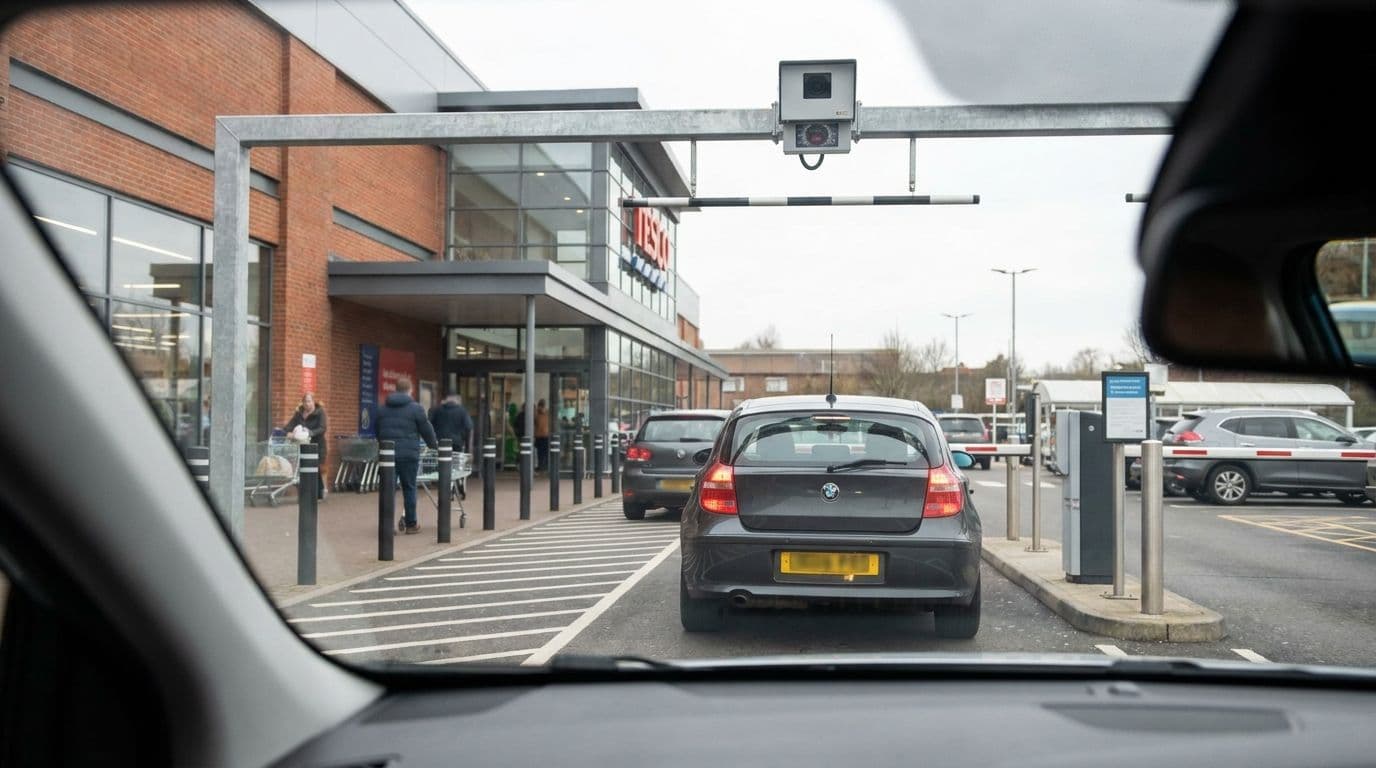
Supermarket Parking Fines: ANPR Errors & How to Fight Back
You pop into Tesco for a few bits, grab a coffee at the in-store café, and head home feeling fairly pleased with yourself. Then, a week later, a letter drops through your letterbox demanding £100 for "overstaying" in the car park. Sound familiar?
Supermarket parking fines have become one of the most common — and most contested — types of private parking charge in the UK. Millions of drivers receive them every year, and a significant number are issued unfairly. Whether it's a dodgy ANPR camera reading, confusing signage, or a grace period that wasn't properly applied, there are real, concrete grounds to fight back. Here's everything you need to know.
Why Supermarket Car Parks Are a Hotbed for Disputes
Unlike council-run car parks where fines are issued as Penalty Charge Notices (PCNs) backed by local authority powers, supermarket car parks are privately operated. The "fine" you receive is actually a Parking Charge Notice — a contractual claim, not a criminal penalty.
That distinction matters enormously. It means the parking operator must prove you breached a contract you knowingly entered into. If their signs were unclear, their cameras malfunctioned, or they failed to follow industry codes of practice, their claim can fall apart entirely.
Most supermarket car parks are managed by private firms like ParkingEye, Euro Car Parks, or ANPR International, operating under either the British Parking Association (BPA) or the International Parking Community (IPC) code of practice. Both codes set strict rules operators must follow — and many don't.
The ANPR Problem: When Cameras Get It Wrong
Automatic Number Plate Recognition (ANPR) cameras are the backbone of modern supermarket parking enforcement. They photograph your number plate on entry and exit, calculate how long you were there, and trigger a charge if you exceed the limit.
The problem? They're not infallible — not even close.
Common ANPR errors include:
- Misreading number plates — particularly on older vehicles, dirty plates, or in poor lighting conditions
- Camera clock errors — if the system's timestamp is even slightly out of sync, your recorded stay could be longer than your actual visit
- Ghost entries — a camera captures a similar plate entering the car park, but your plate leaving, artificially inflating your stay time
- Multiple captures — driving past the entrance or exiting and re-entering briefly can be logged as one continuous stay
Pro tip: If you believe an ANPR error is to blame, request the photographic evidence immediately. Under the BPA and IPC codes of practice, operators are obliged to provide entry and exit photos upon request. If the images are blurry, show a different vehicle, or the timestamps look suspicious, that's solid grounds for appeal.
Grace Periods: A Legal Right, Not a Favour
Here's something many drivers don't realise: grace periods in private car parks are mandatory, not optional.
Under both the BPA and IPC codes of practice:
- Drivers must be given at least 10 minutes after their paid or permitted parking time expires before a charge can be issued
- There must also be a reasonable "consideration period" at the start of your visit — time to read the signs, decide whether to park, and potentially leave if you don't agree to the terms
This means if you were in a supermarket car park for, say, 62 minutes in a 60-minute zone, you should not receive a charge. If you did, that's a clear breach of the code and a strong appeal ground.
The same applies to the entry grace period. If you drove in, read the signs, and decided to leave without shopping — but the ANPR still clocked you — you have a right to challenge that charge.
Unclear Signage: One of the Strongest Defences
For a parking charge to be enforceable, the operator must prove that clear, prominent signage was in place at the time of your visit. This is a contractual requirement — you can only be bound by terms you could reasonably have seen and understood.
Signs that could invalidate a charge:
- Too small or positioned too high to be read from a vehicle
- Obscured by trees, trolleys, or other vehicles
- Contradictory information — for example, one sign saying "2 hours free" and another showing a shorter limit
- No signage near the entrance — the key terms must be visible before you commit to parking
- Faded or damaged signs that make the text illegible
If you visit the car park after receiving a charge, take photographs of every sign you can find. Note their height, position, and legibility. This evidence can be decisive at appeal.
Keeper Liability Under POFA 2012: What It Means for You
The Protection of Freedoms Act 2012 (POFA) is the legislation that allows parking operators to pursue the registered keeper of a vehicle — rather than just the driver — for unpaid charges.
But POFA comes with strict procedural requirements. If the operator doesn't follow them precisely, keeper liability simply doesn't apply.
Key POFA requirements operators must meet:
- The Notice to Keeper must be sent within 14 days of the alleged contravention
- The notice must contain specific prescribed wording
- The operator must have given the driver a Notice to Driver at the time, or sent the keeper notice within the correct timeframe
- The charge must relate to a legitimate breach of clearly displayed terms
If you're the registered keeper but weren't driving, you're not automatically liable. You don't have to name the driver either — though some operators will pressure you to do so. Check the dates and wording on any notice you receive very carefully.
How to Appeal: Step by Step
Step 1: Don't ignore it
Ignoring a parking charge doesn't make it go away. Operators can — and do — escalate to debt collection agencies and, in some cases, county court.
Step 2: Gather your evidence
Before doing anything else, collect:
- Photos of the car park signage (ideally taken on the day, but go back if needed)
- Your shopping receipt or bank statement showing the time and date of your visit
- Any screenshots of parking app payments or pay-and-display tickets
- CCTV or dashcam footage if relevant
Step 3: Submit an informal appeal to the operator
Write to the parking company directly, setting out your grounds clearly. Keep it factual and firm. Common grounds include:
- ANPR error (with evidence)
- Grace period not applied
- Unclear or inadequate signage
- POFA procedural failure
- You were a genuine customer of the supermarket
Step 4: If rejected, escalate to an independent adjudicator
If the operator rejects your appeal, you have the right to escalate — for free — to an independent appeals service:
- POPLA (Parking on Private Land Appeals) — for BPA members
- IAS (Independent Appeals Service) — for IPC members
POPLA in particular has a reasonable track record of upholding appeals where signage is inadequate or ANPR evidence is questionable. Submit all your photographic evidence and keep your appeal concise and focused.
Pro tip: When writing your POPLA appeal, address each ground separately with its own heading. Adjudicators process hundreds of cases — a clear, structured appeal is far more persuasive than a rambling letter.
What If the Supermarket Is on Your Side?
This is worth trying before you even submit a formal appeal. Many supermarkets — particularly larger chains — have customer service teams who can contact the parking operator directly and request that a charge be cancelled as a goodwill gesture.
Tesco, Sainsbury's, and Asda have all been known to intervene on behalf of genuine customers. Keep your receipt as proof of your visit, and contact the store manager or customer services with a polite, clear explanation of what happened.
Your Action Plan
If you've received a supermarket parking charge, here's what to do right now:
- Check the notice carefully — note the date it was issued and the date of the alleged contravention
- Return to the car park and photograph all signage
- Request ANPR evidence from the operator — entry and exit photos with timestamps
- Check POFA compliance — was the notice sent within 14 days?
- Contact the supermarket — ask them to intervene on your behalf
- Submit a formal appeal to the operator within the deadline shown on the notice
- Escalate to POPLA or IAS if your appeal is rejected
Supermarket parking charges feel intimidating — but they're far from unbeatable. With the right evidence and a clear understanding of the rules, thousands of drivers successfully cancel these charges every year. Yours could be next.
Written by
Carlos Mendoza
Parking Technology Analyst
Ready to Challenge Your Ticket?
Let our AI analyse your PCN and generate a professional appeal letter in minutes.
Start Free Appeal