
£2,270 Litter Fine After Parking Ticket: Driver Warning
A Cornwall motorist was fined £2,270 after throwing a parking ticket at an officer. We examine littering enforcement, penalties and drivers’ rights in UK.

The Parking Ticket Pal Editorial Team
21 October 2026
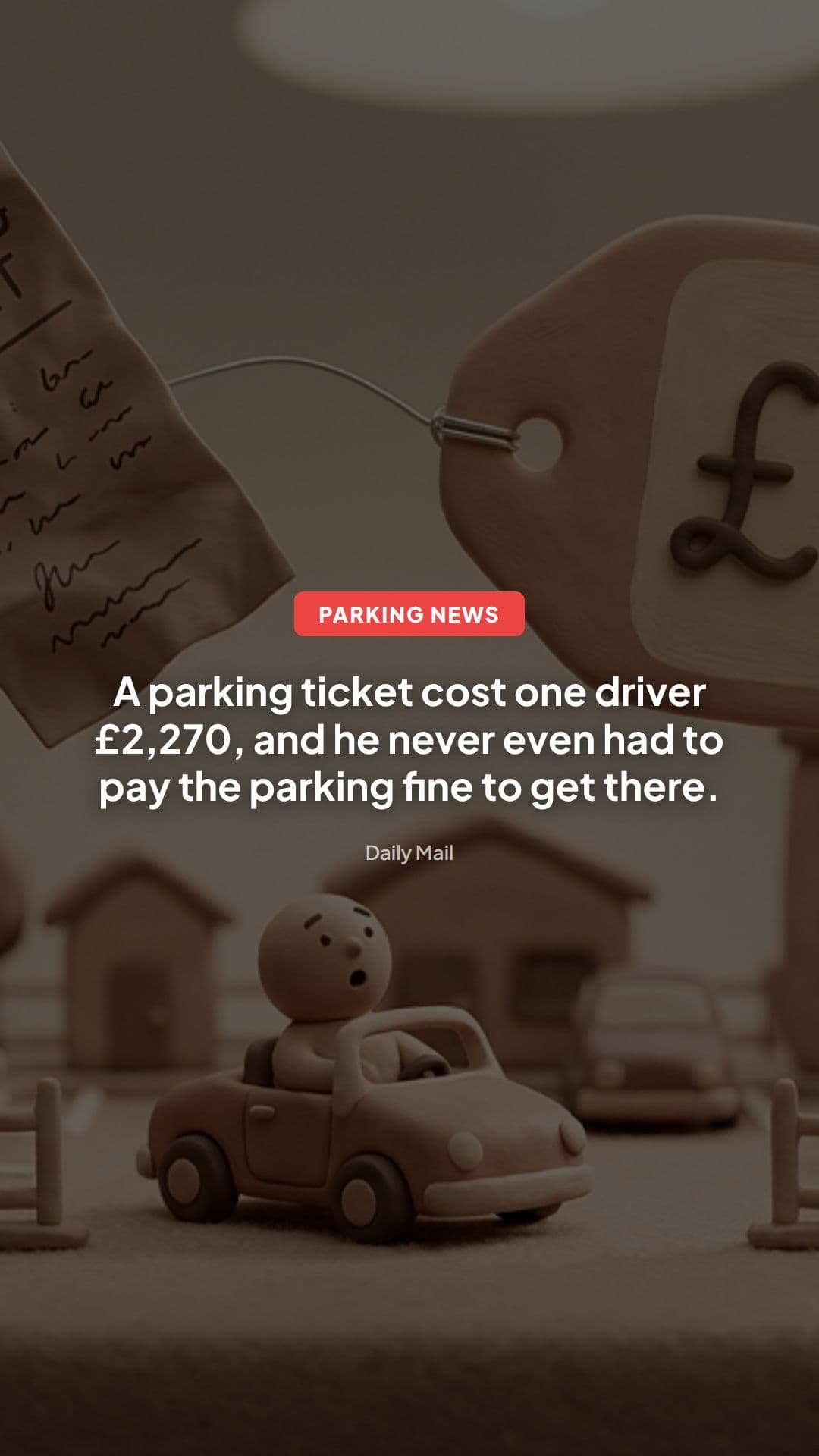
Thrown Parking Ticket Costs Driver £2,270: How a PCN Became a Littering Conviction
Most drivers who get a parking ticket have the same instinct: scrunch it up, mutter something unprintable and shove it in the glovebox. One Cornwall motorist took a different route and threw the ticket at the officer who issued it. According to the Daily Mail, that moment of temper ended with a £2,270 fine for littering.
The original penalty, for parking outside a marked bay, would have been a fraction of that. It is a useful reminder that how you respond to a ticket can cost far more than the ticket itself.
What happened
The reported facts are brief. A driver in Cornwall was penalised for parking outside a marked bay. Rather than taking the notice and walking away, they threw it at the enforcement officer. The matter went to court, where the driver was fined £2,270 for littering.
The summary doesn't say whether that figure is the fine alone or includes prosecution costs and other court charges. In magistrates' court cases the total sum ordered often includes more than the headline fine, so it's worth checking the full report if the breakdown matters to you. I'm only working from what has been published, and I won't guess at the rest of the incident.
Two things stand out. First, the offence was littering, not something dramatic like assault. Second, the sum is eye-catching. For comparison, a standard council parking charge outside London typically sits in the tens of pounds, with a discount for prompt payment. The reaction to the ticket cost many times more than the ticket.
Why this story matters
Tempers and tickets
A parking ticket feels personal in a way few other penalties do. Someone is standing there, often holding a handheld device or wearing a body-worn camera, and you can see them issue the charge. The frustration is understandable, especially if you believe the markings were unclear or you were only there for a minute.
But civil enforcement officers (the modern term for traffic wardens) are doing a regulated job. They don't set the penalty, write the council's policy or decide appeals. Directing anger at them achieves nothing for your case, and as this story shows, it can create a second, much more expensive problem.
Two separate systems
Drivers often blur two separate legal tracks:
- The parking contravention, which is normally a civil matter. A penalty charge notice (PCN) issued by a council under the Traffic Management Act 2004 is not a criminal conviction. You can challenge it through a structured appeals process.
- Your behaviour afterwards, which can be a criminal matter. If you break a criminal law while disputing a civil penalty, you can face prosecution regardless of whether the original PCN was valid.
That is the heart of this story. Even if the driver had a strong argument against the PCN, it would not have excused the littering offence. Equally, being convicted of littering says nothing about whether the PCN was right.
Enforcement officers are increasingly protected
Local authorities and parking contractors have become more vocal about abuse of enforcement staff. We have covered related incidents, such as a Kent parking row that turned violent and school crossing patrol abuse rising amid road rage. Many officers now wear body-worn video, which can capture precisely what was said and done. Where a case reaches court, that kind of footage can make the prosecution's job easier.
The legal angle
I'm not a solicitor, and this is general information rather than legal advice. Here is how the relevant law generally works.
Littering as an offence
Littering is covered by section 87 of the Environmental Protection Act 1990. In England and Wales it is an offence to drop, throw down or otherwise deposit litter in a public place and leave it. Litter is interpreted broadly, and a piece of paper such as a parking ticket falls squarely within the ordinary meaning.
Most littering is dealt with by a fixed penalty notice (FPN) from a local authority rather than a court prosecution. In England the permitted range for littering FPNs is set nationally, and councils choose an amount within it. If someone doesn't pay an FPN, or the authority decides to prosecute instead, the case can go to a magistrates' court. On conviction, the maximum fine for littering is a level 4 fine, currently £2,500. That ceiling is relevant here: the reported £2,270 sits just below it.
How court fines are worked out
Magistrates in England and Wales set fines using sentencing guidelines, which link the amount to the seriousness of the offence and to the offender's financial circumstances. Courts can also order a defendant to pay prosecution costs and a victim surcharge. This is why the total at the end of a case can be considerably higher than people expect. As noted, I can't tell from the summary how the Cornwall sum was made up.
Other offences that can arise
Throwing something at another person can, depending on the circumstances, raise other offences, such as public order offences or common assault. Whether any of those apply is a question of facts that I don't have. The reported outcome was a littering fine, and I'm not suggesting anything beyond that.
The parking penalty itself
Parking outside the markings of a bay is a recognised PCN contravention. If you want to understand how those notices are worded and when they can be challenged, our guide to PCN code 24, not parked within the markings of a bay walks through it. For broader context on the codes councils use, see understanding PCN codes.
In general, a driver who receives a council PCN has the right to challenge it. The usual path in England outside London runs roughly like this:
- Informal challenge to the council, typically within the early payment window.
- Notice to Owner, if the council rejects the challenge or you don't respond.
- Formal representations to the council, within the time limit stated on the notice.
- Independent tribunal appeal if those representations are rejected. Outside London this is typically the Traffic Penalty Tribunal.
Time limits and discount periods matter and are printed on your paperwork, so always check the notice itself.
What drivers should know
1. Take the ticket, then take a breath
If an officer issues a PCN while you're present, the best move for any later dispute is to stay calm and, if you want to, ask neutral questions. Raising your voice or making a gesture can only hurt you. You are entitled to dispute the ticket afterwards, with all the time and evidence the process allows.
2. Never dispose of the notice carelessly
The PCN contains key details: the contravention code, the date and time, the location, the vehicle details and the payment and challenge instructions. Throw it away, literally or figuratively, and you've lost the reference you need. Keep it safe, even if you're furious.
3. Document the scene properly
If you think the ticket is wrong, gather evidence while you're there:
- Photographs of the bay markings, including any faded or worn lines.
- Photographs of signs, and of where your vehicle's wheels sit relative to the lines.
- Wider shots showing the context, such as whether the space was clearly marked.
- Time-stamped images, since the time can matter.
Evidence like this is what typically supports a challenge. Anger is not evidence. For wider tips, our essential guide to avoiding parking fines in the UK covers the basics, and the guide on formal representations for parking fines explains how to present your case in writing.
4. Understand what "outside the bay" can mean
A vehicle that sits partly over a line can attract a PCN, depending on the council's rules and the signage. Whether the markings were clear and correctly maintained is often a legitimate point to raise on appeal. It doesn't help to argue it with the officer on the pavement, but it is something to put in writing later.
5. Keep your complaints in the right channel
If you believe an officer behaved improperly, councils have complaints procedures. Using them creates a record and may be taken seriously. Confronting the officer physically, or throwing things, almost certainly won't.
6. If a situation escalates, seek proper advice
If you are ever accused of an offence arising from an altercation, don't assume it's trivial because the original trigger was a parking ticket. Citizens Advice, a solicitor or a duty solicitor at the police station can explain your position. This post cannot tell you where you stand in a specific case.
Looking ahead
Several trends make stories like this more likely to appear.
More enforcement, more friction. Councils have been expanding their use of cameras and officers, and parking income is under scrutiny. As enforcement grows, so does the number of face-to-face disputes. Our coverage of council parking fines and penalty trends gives a sense of the scale.
Evidence is more available than ever. Body-worn cameras, dashcams, phone footage and CCTV mean that an incident is rarely a case of one person's word against another's. That cuts both ways: it can protect officers and also help drivers who have been treated badly.
Consequences are real. Authorities have shown they will pursue offences linked to enforcement incidents. A story with a headline sum of £2,270, attached to what began as a routine parking penalty, is a strong deterrent message.
The practical lesson is simple, and it has nothing to do with whether your ticket was fair. If you think a PCN was wrongly issued, the system gives you structured ways to say so, and many appeals succeed on evidence about signs, markings or procedure. Those routes are far cheaper and far more effective than a gesture on the pavement.
Key takeaways
- A parking ticket is generally a civil matter, but your behaviour afterwards can be criminal.
- Littering carries a maximum fine of £2,500 on conviction in a magistrates' court, and court costs and surcharges may be added.
- Challenging a PCN has proper channels, with time limits shown on the notice, so keep it safe.
- Evidence such as photographs and clear records beats frustration every time.
- If you face a criminal accusation of any kind, seek qualified advice rather than relying on general articles.
For the original report, see the Daily Mail article. For official guidance on challenging a council PCN, check the information on your notice and your local authority's website, or seek independent advice such as Citizens Advice.
Written by
The Parking Ticket Pal Editorial Team
Source-checked parking guidance
Ready to Challenge Your Ticket?
Let our AI analyse your PCN and generate a professional appeal letter in minutes.
Start Free Appeal