
Supermarket Car Park Age Rules: Avoid a Private PCN
Drivers using Morrisons, Tesco, Asda and Sainsbury’s car parks should know the parent-and-child bay age rules, private PCNs and out-of-hours charges too.

The Parking Ticket Pal Editorial Team
11 October 2026
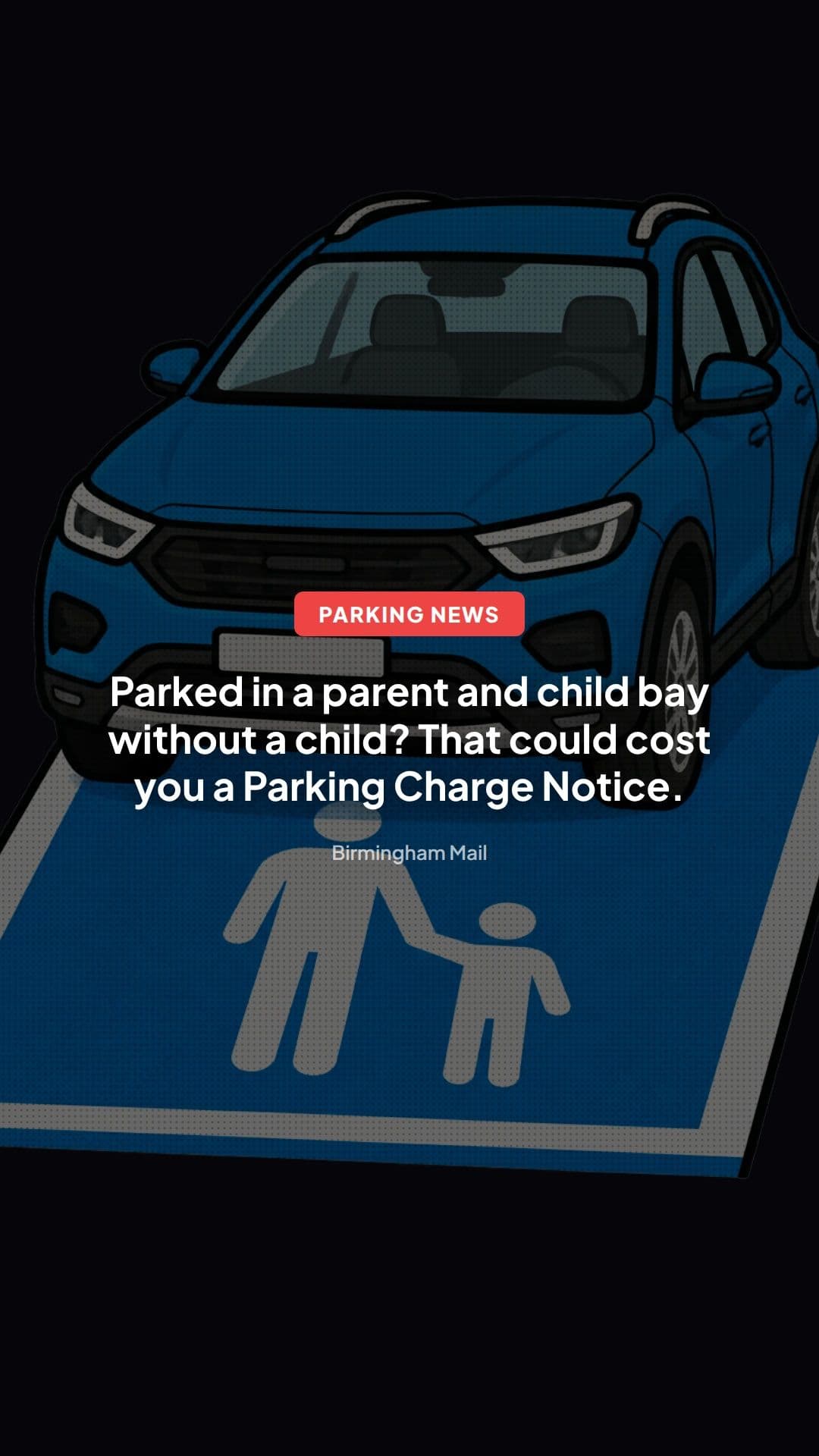
The supermarket car park "age rule" that catches out drivers: can you really be fined for using a parent-and-child bay?
You pull into a busy supermarket car park on a wet Saturday. The only free space near the door is a wide bay with a cheerful pictogram of an adult holding a child's hand. You are only popping in for milk, so what is the harm?
According to a recent Birmingham Mail report on the car parks of big names such as Morrisons, Tesco, Asda and Sainsbury's, the harm could be a Parking Charge Notice (PCN) dropping through your letterbox. The story also flags charges for parking outside opening hours, another way a quick stop can turn into a bill.
Calling it an "age rule" is a bit misleading, though. There is no law saying you must have a child of a certain age with you to use these bays. What exists is a patchwork of private rules, enforced through contract law and signage. Understanding that difference is the key to knowing where you stand.
What the story is about
The core warning is simple. Parent-and-child bays are marked out by supermarkets and their parking contractors for customers travelling with young children. Drivers who use them without a child in the car can be issued with a private PCN. The report also highlights that parking outside a store's stated opening hours can trigger a charge, which catches out people who leave cars overnight or stop in the car park after the shop has shut.
Two things are worth noting at the outset.
- These are not fines in the legal sense. A council issues a Penalty Charge Notice under statutory powers. A private operator issues a Parking Charge Notice, which is an invoice for an alleged breach of contract. The abbreviation is the same but the legal footing is completely different.
- The rules vary from site to site. The same retailer may use different parking companies at different stores, each with its own signs, wording and enforcement habits. Whether a bay has an age limit, how it is described and how strictly it is policed depends on the individual car park.
Why parent-and-child bays exist in the first place
These bays are a customer-service feature rather than a safety regulation. They are typically wider than standard bays, to give room to open doors fully and lift in a child seat or a pushchair, and they are usually placed close to the entrance. That keeps young children away from the busiest traffic routes in the car park.
The problem is that demand for the best spaces never matches supply. Retailers want the bays to be used as intended, which is why many have moved from polite requests to active enforcement through their parking contractors. Because the bays sit nearest the doors, they are also tempting to anyone in a hurry.
The tricky bit is that "a child" is rarely defined clearly. Some signs mention an age, some simply show a symbol, and some say nothing about who counts. A grandparent collecting a toddler, a childminder, a pregnant shopper or a parent whose child is at school at that moment may all have a different view of whether they qualify. That ambiguity is where most disputes begin.
The legal angle: contract, not criminal law
How private parking enforcement works
When you park on private land, the operator's signs act as an offer. If you stay, you are treated as accepting the terms, and breaching them can lead to a charge. This is why signs matter so much. The Supreme Court case of ParkingEye v Beavis [2015] UKSC 67 confirmed that a clearly signed parking charge can be enforceable, even where it is more than a simple fee. The court emphasised that the terms were prominently displayed and that the operator and landowner had a legitimate interest in managing the car park.
That ruling is often quoted by operators. It does not mean every charge is valid. It means that a charge will be tested on the clarity and prominence of the signs, the fairness of the terms, and whether the operator can show a breach.
Keeper liability and the 2012 Act
If the operator does not know who was driving, it can try to pursue the registered keeper under Schedule 4 of the Protection of Freedoms Act 2012 (POFA), but only if it follows strict procedures. Where the notice is not handed over at the time, the notice to the keeper generally has to arrive within a set window after the parking event, which the Act puts at between 28 and 56 days, and it must contain specific wording. A notice that misses the mark may leave the operator unable to hold the keeper liable, although it could still pursue the driver if identified.
Private operators can only obtain keeper details from the DVLA if they belong to an accredited trade association, which means they must follow its code of practice. Those codes cover signage, grace periods, and how appeals are handled.
Is a parent-and-child bay legally enforceable?
There is no statute that creates or defines parent-and-child bays. They are enforceable only to the extent that:
- the signs and bay markings clearly communicate the restriction;
- the charge is properly applied in line with the operator's code of practice;
- the operator can evidence the breach, including that no child was with the driver, which is often difficult to prove from a photograph of an empty car.
That last point matters. Enforcement is frequently done by patrol staff or ANPR (automatic number plate recognition) cameras. Cameras are good at recording when a vehicle entered and left. They are not good at recording who was in the car. This is why operators who enforce these bays often rely on staff patrolling and photographing vehicles at the time.
Parking outside opening hours: another trap
The source also covers charges for parking outside opening hours. This is a different type of restriction but the same legal logic applies. A supermarket car park exists, in the retailer's view, for customers while the store is open. Signs commonly say something like "customer parking only while the store is open" or specify times when the car park is closed.
This catches out several groups of people:
- shoppers who finish late and leave their car while they go for a meal or a drink nearby;
- people who park in a supermarket car park overnight because it feels convenient or safe;
- drivers who park up before the store opens, for example to meet a friend or head to a nearby station.
Some car parks also have a maximum stay on top of the opening hours rule. Others have barriers or ANPR systems that make overnight breaches easy to record. If you are staying close to the margin, it is worth finding out whether the operator offers a grace period. Trade body codes require a short grace period at the end of a permitted stay, and tougher national rules have been proposed. For the details, see our explainer on the 10-minute grace period in private car parks.
What drivers should know: practical steps
This is general information, not legal advice. If you have received a charge and a significant amount of money is at stake, official guidance or a qualified adviser is the safest place to turn. With that in mind, here are some sensible habits.
Before you park
- Read the sign by the bay, not just the one at the entrance. Look for age limits, hours, and any mention of who qualifies.
- Take a moment to check the marking. A pictogram without wording can still be enforced, but the absence of clear terms may matter later.
- If you are not travelling with a child, do not use the bay. Even if the spaces nearby are full, it is not worth the gamble.
- Check opening hours and any stay limits before leaving your car, particularly if you plan to be away for a while.
If you do receive a PCN
- Do not ignore it, and do not panic. Charges often arrive weeks after the visit, and the amount usually drops if paid within a short period. That does not mean you must pay.
- Work out who issued it and under which trade body. The notice should say whether the operator is a member of the BPA or the IPC. Our guide to BPA vs IPC membership explains why this affects your appeal route.
- Gather evidence quickly. Photographs of the bay, the signs (or the lack of them), your receipt, and any proof you had a child with you, such as a child's seat in the car, can all help.
- Challenge with the operator first. If that fails, an independent appeals service will be available through the relevant trade body. Our walkthrough of the POPLA appeals process covers the BPA route in detail.
- Look for weaknesses in the notice itself. Unclear wording, hidden signs and incorrect details can all be grounds to challenge. We have a separate piece on using unclear signs as a defence.
- Think carefully about the keeper's position. Whether the operator has met the POFA requirements can affect who is liable, so read the notice dates carefully.
For the bigger picture on what you do and do not owe, see Private parking charge: do you have to pay in the UK?. If your supermarket ticket involves a camera error or a mistyped registration, our guide to supermarket parking fines covers the common problems.
A word about genuine need
Some drivers use wider bays for reasons unrelated to children. A person with a mobility problem who does not hold a Blue Badge may struggle with a narrow space, for instance. Whether an operator will make allowances varies, and the Equality Act 2010 may be relevant in some situations. This is an area where it is worth seeking specialist advice rather than relying on a general article. Raising it with the store directly, in writing, can also help where there is a genuine need.
Looking ahead
The wider private parking system is in transition. The Parking (Code of Practice) Act 2019 requires the government to produce a single statutory code covering private operators in England, Scotland and Wales, and that work has been ongoing for several years. The headline proposals, which have included a cap on parking charges, a longer minimum grace period and a single appeals process, would make a real difference to how disputes like these are handled. Our post on new private parking rules, the £100 cap and the 10-minute grace period sets out the detail as it stood. Check the government's website for the latest on what is in force and when, as timings have moved.
Even if the new code tightens things up, it is unlikely to create a legal definition of a parent-and-child bay. These bays will stay a matter of private rules and clear signage. If anything, better-regulated enforcement could make operators more careful about spelling out exactly who a bay is for and who is not covered.
For retailers, the lesson is straightforward. Clear, specific signs reduce disputes and complaints. For drivers, the message is equally simple. The bay nearest the door is not a free-for-all, and a few seconds spent reading the sign costs far less than a PCN.
The key takeaways
- There is no national age rule for parent-and-child bays. Enforcement depends on private terms and the signs at each site.
- A private Parking Charge Notice is not a council penalty, and it is enforced through contract law rather than criminal or statutory powers.
- Opening hours restrictions are enforced in the same way, so overnight or after-hours parking can lead to a charge.
- Operators must follow their trade body's code and, where they pursue the keeper, the POFA 2012 rules.
- Keep photographs and evidence, and use the proper appeals route before considering payment.
- If a significant sum is involved, check official guidance or speak to a qualified adviser before deciding what to do.
The next time that wide bay by the door beckons, it is worth asking whether the convenience is worth the risk.
Written by
The Parking Ticket Pal Editorial Team
Source-checked parking guidance
Ready to Challenge Your Ticket?
Let our AI analyse your PCN and generate a professional appeal letter in minutes.
Start Free Appeal