
Pavement Parking Ban Plans: Could Your Area Be Next?
Oxfordshire is considering pavement parking restrictions. Find out what England-wide reform could mean for drivers, pedestrians and local enforcement.

The Parking Ticket Pal Editorial Team
17 November 202611 min read
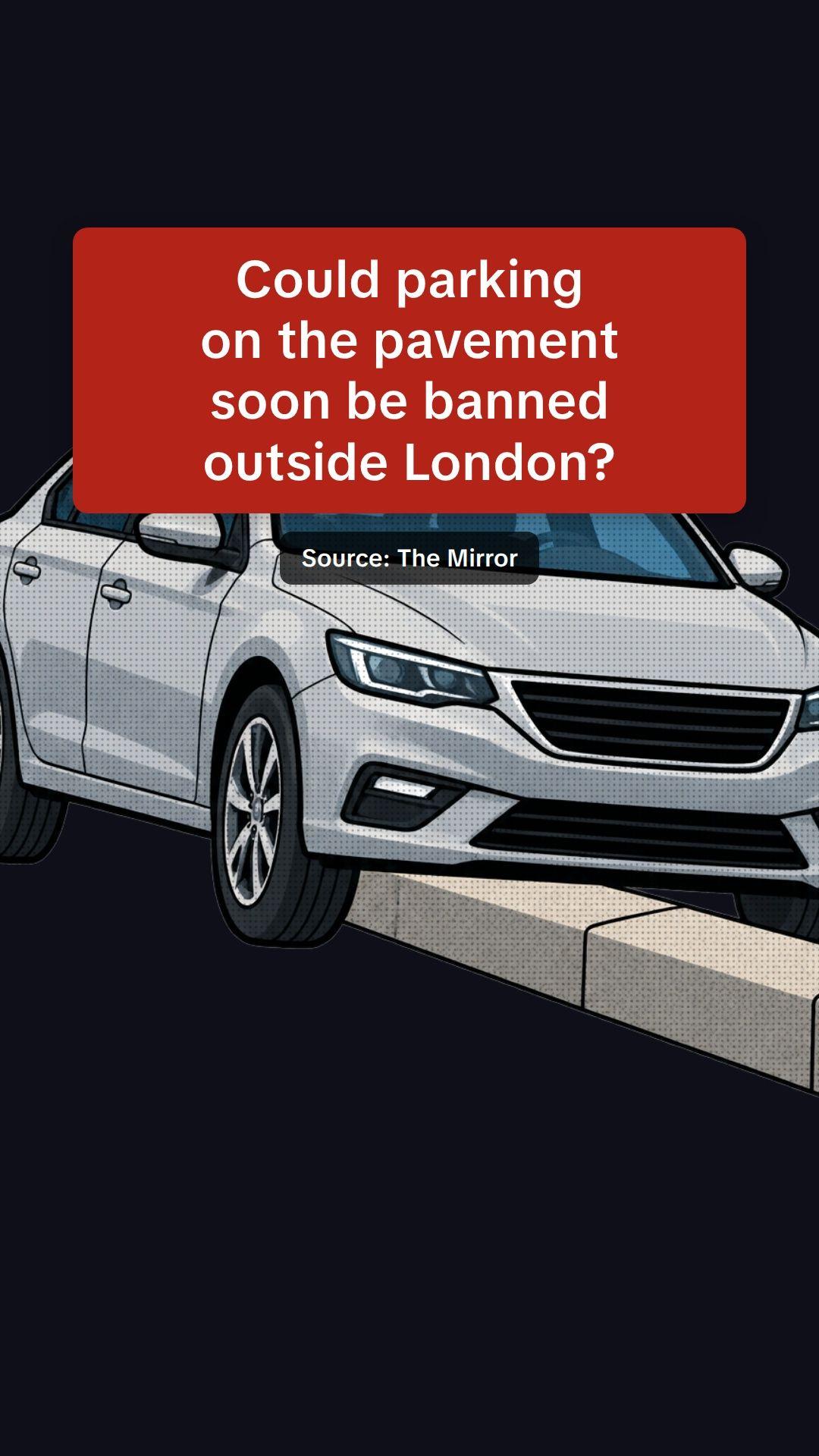
Pavement Parking Bans Are Coming: What Oxfordshire's Next Step Means for Drivers
Anyone who has squeezed a wing mirror in and nudged two wheels onto the kerb to leave room for passing traffic knows the feeling. It seems neighbourly. But walk that same street with a pushchair, a mobility scooter or a white cane and the picture changes. A pavement that looks wide enough from the driver's seat can become an obstacle course.
That tension sits behind a story from The Mirror, which reports that Oxfordshire County Council is considering preparatory work for restrictions on pavement parking. The aim, according to the report, is to tackle problems faced by pedestrians, wheelchair users, pram users and people with visual impairments. The headline suggests other areas are named too, but Oxfordshire is the clearest example of a council taking a practical first step.
This post looks at what "preparatory work" usually involves, why England's pavement parking rules are such a patchwork, and what drivers can sensibly do now.
What has actually been reported
It is worth being precise. Based on the source, Oxfordshire is considering preparatory work. That is not the same as announcing a county-wide ban with a start date and a fine. We should not read more into it than that. Councils often do early groundwork well before any restriction goes live, and plans can change after surveys, consultation and budget decisions.
So what might that groundwork look like in practice? Typically, a highway authority would need to:
- Identify which streets have a pavement parking problem and which have genuine need for parking on the footway.
- Check street widths, to see whether banning pavement parking would leave enough carriageway for emergency vehicles and bin lorries.
- Decide whether to restrict individual streets or whole zones.
- Plan signage and road markings.
- Run formal consultation and legal processes.
- Assess enforcement costs, including staff and cameras.
None of this is glamorous, but it is where most of the real decisions are made, and where residents get a chance to have a say.
Why England's rules are such a muddle
Many drivers assume pavement parking is simply illegal everywhere. It isn't, and that is exactly the problem.
London has had a general prohibition for decades, through the Greater London Council (General Powers) Act 1974. Parking on the footway is banned across the capital unless signs say otherwise.
Scotland introduced its own national ban under the Transport (Scotland) Act 2019, which councils began enforcing from the end of 2023, with exemptions available.
England outside London is different. There is no blanket ban. Instead, drivers face a mixture of rules:
- Driving on the pavement can be an offence under section 72 of the Highway Act 1835, but that covers driving, not parking.
- Unnecessary obstruction is covered by regulation 103 of the Road Vehicles (Construction and Use) Regulations 1986, and wilful obstruction of the highway by section 137 of the Highways Act 1980. These are police matters and depend on circumstances.
- Dropped kerbs and double parking can be enforced by councils under the Traffic Management Act 2004, which is why you can receive a council PCN for blocking a dropped footway.
- Traffic Regulation Orders (TROs) let a council ban parking on specific pavements, but each one needs a legal process and proper signs or markings.
The Highway Code reflects this split. Rule 244 says you must not park partially or wholly on the pavement in London, and should not do so elsewhere unless signs permit it. That "should not" is advisory language, and it tells you everything about why enforcement has been so inconsistent.
The upshot is that a council like Oxfordshire's can only crack down efficiently if it either goes through the TRO process street by street, or if national rules change to make area-wide restrictions easier. Preparatory work is, in effect, getting ready for the second possibility. We have covered the national reform debate in our post on what the 2026 pavement parking crackdown means, so this piece concentrates on the local, practical side.
Why it matters: the people the pavement is for
The reasons campaigners give are straightforward. A pavement is part of the pedestrian network, and when a car sits on it, the gap left can be too narrow for a wheelchair, a double buggy or someone being guided by a companion. People with visual impairments may be forced into the road, often with little warning of oncoming traffic. Parents with young children face the same choice.
There is also an infrastructure argument. Pavements are not generally built to carry the weight of vehicles, so repeated parking can crack slabs and damage the surface, and that in turn creates trip hazards. Some councils make this argument too when explaining why they act.
Yet the counter-argument deserves a fair hearing, because it is the one most affected residents will make:
- Older, narrower streets. In many terraced areas, parking fully on the carriageway can leave too little room for fire engines, ambulances or refuse vehicles. Part-pavement parking is sometimes how streets have operated for decades.
- Lack of off-street parking. Households without driveways can have nowhere else to leave their cars.
- Displacement. Banning pavement parking does not remove cars. It moves them to other streets, or to the carriageway, which can create new pinch points.
Oxfordshire is a particularly interesting test case because its historic streets, university areas and fast-growing towns mix tight Victorian terraces with newer estates, and it already has strong views on traffic management. If you drive in the city, our guide to Oxford's traffic filters shows how local rules there are already evolving.
The legal angle: how a ban becomes enforceable
For drivers, the most important point is that a ban is only enforceable if the legal groundwork has been done. Councils cannot simply announce a crackdown and issue penalties the next day.
Civil enforcement. Outside London, councils that hold civil parking enforcement powers issue Penalty Charge Notices under the Traffic Management Act 2004 and its regulations. Where a restriction exists, such as a TRO prohibiting parking on the footway, a PCN can follow. The PCN levels outside London are set nationally in bands, with a discount for prompt payment. Check your local council's current figures, as there have been proposals to raise penalties and I would not want to quote a number that may have moved.
Signs and markings matter. A valid restriction usually has to be properly communicated, either with signs, with road markings, or by a clearly signed zone. If signs are missing, obscured or misleading, that can be a ground for challenging a PCN. Our guide on using unclear signs as a defence explains how that argument works in general terms.
Dropped kerbs are already enforceable. Drivers sometimes forget that the existing rule against parking next to a dropped footway can already lead to a council PCN in many parts of England. See our explainer on PCN code 27 for how this contravention works. Exemptions can apply, such as for loading or where a vehicle is attended by a person genuinely driving or dealing with an emergency, but the details depend on the wording of the rules.
The challenge route. If a PCN is issued, the standard process outside London is an informal challenge, then formal representations if the council rejects it, then an appeal to an independent tribunal, which is the Traffic Penalty Tribunal for most English councils. Our guide to formal representations walks through that stage.
What drivers should know now
This is general information, not advice on any individual case, but there are some sensible habits worth building, wherever you live.
- Do not assume pavement parking is allowed because others do it. The fact that a street is full of half-parked cars tells you little about whether a restriction exists. Look for signs, lines and any posted notices. In some areas, signs permit pavement parking in marked bays, and a few feet away it may be prohibited.
- Read the street, not just the lamp-post. Restrictions can be indicated by signs at the entry to a zone, so look at the entrance to the road as well as where you park.
- Check your council's website. If your council is consulting or has proposed new orders, notices are usually published online and sometimes posted on lamp-posts. Consultations are the best time to raise concerns about practical access.
- Respond to consultations. If you rely on part-pavement parking because your street is narrow, say so, and say why. Councils do take account of emergency access and refuse collection. Equally, if you are a pedestrian or carer affected by blocked pavements, evidence of the problem is useful.
- Photograph where you park. If you do receive a PCN, dated photographs showing the signs, markings, and your vehicle's position can be crucial. Take them at the time, not afterwards.
- Think about driveways and neighbours. Where you have a driveway, using it fully, and avoiding overhang across the footway, keeps you on the right side of both the law and neighbourly goodwill. Our guide on parking across a driveway and dropped kerbs covers common misunderstandings.
- Plan alternatives early. If a ban arrives on your street, you may need to rethink where you park, whether that is a nearby car park, a private space you can rent, or a different time of day. It is better to have a plan before enforcement starts.
- Be aware of the grace of a warning period. Some councils issue warning notices when a new restriction begins, but this is a local choice and not a guarantee. Do not rely on it.
Looking ahead
Oxfordshire's move fits a broader pattern. Councils across England are increasingly interested in tidying up footway parking, and many want clearer powers than the current mix of local orders and general offences. Whether the national rules change, and how quickly, is a matter for the Department for Transport and Parliament, so check official government guidance for the latest position rather than relying on headlines.
What seems realistic is that enforcement will arrive in stages, probably area by area. Some streets will be restricted entirely, others will keep marked bays where parking on the pavement is formally allowed, and plenty will sit in a grey area for a while yet. The biggest practical differences will come from the details: how wide the pavement is, whether emergency access is protected, what exemptions apply, and how clearly the council signs it all.
For drivers, the message is not to panic, but not to be complacent either. A restriction that looks distant today can become enforceable quickly once the legal steps are completed. For pedestrians and wheelchair users, the hope is that the groundwork leads to genuinely clearer, safer pavements.
For now, treat Oxfordshire's preparatory work as an early warning rather than a final rule. Keep an eye on local council announcements, take part in consultations where you can, and always check the signs before you leave your car half on the kerb.
This article provides general information about UK parking and motoring rules and is not legal advice. If you have received a PCN or are unsure about a specific restriction, check your council's official guidance or seek independent professional advice.
Written by
The Parking Ticket Pal Editorial Team
Source-checked parking guidance